All-solid-state batteries (ASSBs) are increasingly recognized as a transformative technology, offering a safer and potentially more energy-dense alternative to conventional lithium-ion batteries. Their widespread adoption, however, hinges critically on the development of solid electrolytes that can facilitate rapid ion movement, a property often referred to as superionic conductivity. The traditional methods for identifying such materials—involving painstaking synthesis, experimental characterization, and existing computational models—have proven to be time-consuming and often inadequate, particularly when dealing with the complex, disordered behavior of ions at operational temperatures. A recent breakthrough, detailed in the online edition of AI for Science, introduces an innovative machine learning (ML) accelerated workflow designed to overcome these long-standing hurdles, promising to significantly expedite the discovery of next-generation battery materials.
The Urgent Need for Solid-State Battery Innovation
The global push for sustainable energy solutions and advanced electronics has placed an immense demand on battery technology. Lithium-ion batteries, while ubiquitous, present inherent limitations, primarily concerning safety due to their flammable liquid electrolytes and the risk of thermal runaway. Furthermore, their energy density, while significantly improved over the years, is approaching theoretical limits for many applications, including long-range electric vehicles (EVs) and grid-scale energy storage. ASSBs address these concerns by replacing liquid electrolytes with solid counterparts, eliminating fire hazards, potentially allowing for higher energy densities by enabling the use of lithium metal anodes, and promising longer lifespans and faster charging capabilities.
However, the path to commercializing ASSBs is fraught with scientific and engineering challenges. A primary obstacle is the identification and optimization of solid electrolytes that exhibit ionic conductivity comparable to or exceeding that of liquid electrolytes. These "superionic conductors" are rare, and their mechanisms of rapid ion transport are often complex, involving intricate interactions within the crystal lattice. Understanding and predicting when ions transition from a relatively static, hopping motion to a more fluid, "liquid-like" movement within a solid structure is paramount. This phenomenon, critical for high performance, has historically been challenging to model computationally, as it involves dynamic disorder that strains conventional simulation techniques.
The Computational Conundrum: Modeling Dynamic Disorder
For decades, researchers have relied on ab initio calculations, such as Density Functional Theory (DFT), and molecular dynamics (MD) simulations to predict material properties at the atomic level. While powerful, these methods face severe limitations when attempting to accurately model the dynamically disordered systems characteristic of superionic conductors at elevated temperatures. Calculating the properties of such systems demands extraordinary computational resources, rendering large-scale screening studies—which are essential for exploring the vast chemical space of potential battery materials—impractical due to prohibitive time and cost. The sheer number of possible material compositions and structures means that an exhaustive experimental or traditional computational search is simply not feasible within realistic timelines.
This computational bottleneck has created a significant impediment to the pace of materials discovery. The inability of existing models to precisely capture the nuances of ion movement, especially the subtle shifts that signify a transition to liquid-like behavior, has meant that many promising candidates might be overlooked or their potential misjudged.
A Machine Learning Paradigm Shift: Bridging Simulation and Spectroscopy
To address these profound challenges, a team of researchers developed an innovative machine learning-accelerated workflow. This cutting-edge approach integrates ML force fields—which learn interatomic forces from high-fidelity ab initio calculations—with tensorial ML models. The primary goal of this integrated framework is to simulate Raman spectra, a powerful spectroscopic technique, with unprecedented accuracy and efficiency.
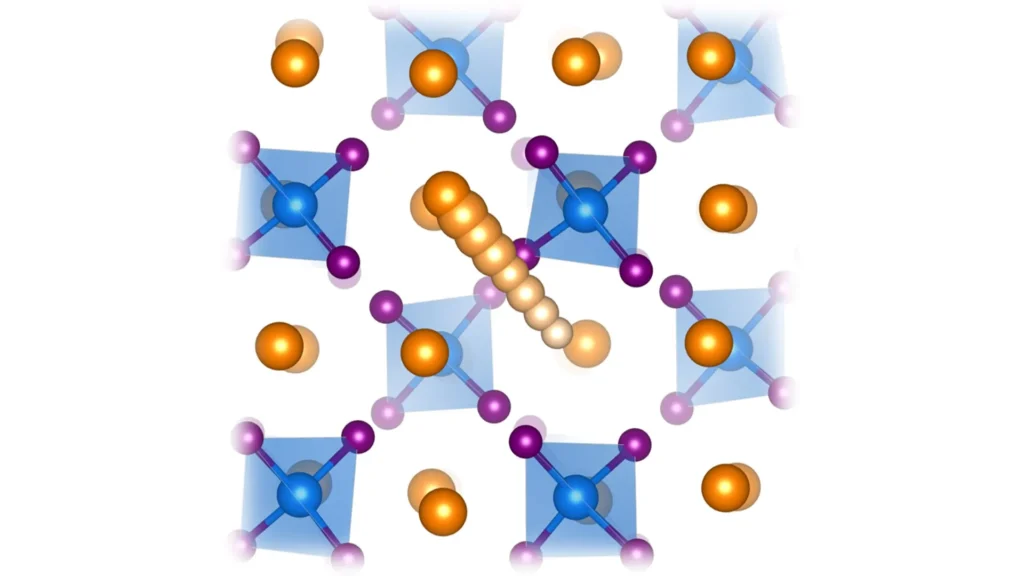
The core insight behind this methodology is the identification of strong low-frequency Raman intensity as a clear spectroscopic indicator of liquid-like ionic conduction. When ions within a crystal lattice begin to move in a fluid-like, highly mobile manner, their motion temporarily perturbs the local symmetry of the lattice. This transient disturbance has a profound effect on the material’s vibrational properties, specifically relaxing the usual Raman selection rules. This relaxation, in turn, produces distinctive low-frequency Raman scattering signals that can be directly correlated with high ionic mobility. In essence, the liquid-like movement of ions creates a unique vibrational "fingerprint" that this ML-accelerated approach can detect and predict.
This new computational strategy allows scientists to simulate the vibrational spectra of complex and disordered materials at realistic operating temperatures with near-ab initio accuracy. Crucially, it achieves this while dramatically reducing computational costs, potentially shrinking simulation times from months to mere hours or days for complex systems. This efficiency gain is not merely incremental; it represents a fundamental shift in the feasibility of exploring and understanding material properties on a scale previously deemed impossible.
Raman Spectroscopy: A Diagnostic Window into Ion Dynamics
Raman spectroscopy is a non-destructive chemical analysis technique that provides detailed information about molecular vibrations, rotations, and other low-frequency modes in a system. It relies on the inelastic scattering of monochromatic light, typically from a laser, where the scattered light contains information about the vibrational states of the molecules in the sample. Traditionally, Raman selection rules dictate which vibrational modes are "Raman active," meaning they will produce a signal. These rules are strongly dependent on the symmetry of the molecule or crystal lattice.
The innovation presented by the researchers lies in recognizing how dynamic disorder in superionic conductors alters these fundamental rules. As ions move fluidly, they momentarily break the local symmetry of the host lattice. This "symmetry breaking" is not a permanent structural change but a dynamic, transient phenomenon that relaxes the Raman selection rules, allowing otherwise "forbidden" low-frequency modes to become Raman active. These newly active modes manifest as strong, broad peaks in the low-frequency region of the Raman spectrum. The intensity and breadth of these features provide a direct measure of the degree of liquid-like ion motion and, consequently, the material’s ionic conductivity. This makes Raman spectroscopy, when interpreted through the lens of this ML model, an exceptionally powerful diagnostic tool for identifying and characterizing fast-ion conductors.
Validation and Application: Illuminating Sodium-Ion Conductors
To validate their innovative workflow, the researchers applied the method to well-known sodium-ion conducting materials, specifically Na3SbS4. Sodium-ion batteries are gaining attention as a potential alternative to lithium-ion batteries, leveraging the abundance and lower cost of sodium. The ML-accelerated simulations successfully predicted and revealed pronounced low-frequency Raman features in Na3SbS4, which were directly attributable to the symmetry breaking caused by rapid ion transport. These predicted signals provided a reliable indicator of fast ionic conduction, aligning with existing experimental data and helping to explain earlier empirical observations that lacked a comprehensive theoretical framework.
The study further tested the method on a broader range of sodium-ion conducting systems. The workflow consistently identified distinct Raman signatures linked to liquid-like ion motion. Materials that displayed strong low-frequency Raman features were concurrently shown to possess high ionic diffusivity and dynamic relaxation of the host lattice—the very characteristics of superionic behavior. Conversely, materials where ion transport primarily occurred through discrete hopping between fixed positions, a less efficient mechanism, did not produce these tell-tale Raman signatures. This clear distinction highlights the profound capability of the ML-accelerated Raman analysis to differentiate between various underlying transport mechanisms within a material, offering unprecedented insight into their operational characteristics.
Broader Implications for Materials Discovery and Industry
This groundbreaking study extends the understanding of Raman selection rule breakdown beyond traditional superionic systems, establishing a broader theoretical framework for interpreting diffusive Raman scattering across a wide array of materials. The ML-accelerated Raman pipeline seamlessly connects atomistic simulations with experimental measurements, creating a powerful feedback loop that allows scientists to evaluate candidate materials more efficiently and with greater confidence.
The implications of this research are far-reaching:
- Accelerated Research and Development: By providing a rapid, accurate, and cost-effective method for screening potential superionic conductors, the workflow could drastically cut down the time and resources required for materials R&D. This acceleration is critical for meeting the aggressive timelines set by governments and industries for developing next-generation battery technologies.
- High-Throughput Screening: The reduced computational cost makes high-throughput screening of vast material databases a realistic prospect. Researchers can now sift through thousands, or even millions, of hypothetical material compositions to identify those with the most promising ionic conductivity, rather than relying on serendipitous discovery or tedious trial-and-error.
- Enhanced Understanding of Ion Transport: Beyond mere identification, the method offers a deeper, atomistic understanding of the mechanisms governing ion transport. This fundamental insight is invaluable for designing new materials with tailored properties, rather than just discovering existing ones.
- Economic Competitiveness: For nations and corporations heavily investing in battery technology, this data-driven approach offers a significant competitive advantage. Faster innovation translates directly into quicker market entry for superior products, from longer-lasting smartphones to more affordable and capable EVs.
- Impact on Energy Storage and Beyond: While immediately impactful for solid-state batteries, the principles of this ML-accelerated approach could be extended to other areas requiring the discovery of materials with specific dynamic properties, such as catalysts, fuel cells, and thermoelectric devices.
The Road Ahead: A New Era of Data-Driven Materials Science
The publication of these findings in AI for Science underscores the growing convergence of artificial intelligence and fundamental scientific research. This study is a testament to how ML is not merely an optimization tool but a transformative force capable of redefining the boundaries of scientific inquiry.
While the immediate focus is on solid-state battery materials, the methodology sets a precedent for applying advanced ML techniques to interpret complex spectroscopic data and unravel the mysteries of dynamic processes in disordered systems. Future research may involve applying similar ML pipelines to other spectroscopic techniques, further enriching our understanding of material behavior at the atomic scale.
As the world continues its transition towards a more sustainable energy future, the demand for advanced energy storage solutions will only intensify. This ML-accelerated discovery platform represents a powerful new route for data-driven innovation in energy storage research. By helping researchers quickly identify and characterize fast-ion conductors, it significantly accelerates the development of high-performance solid-state battery technologies, moving us closer to a future powered by safer, more efficient, and more sustainable batteries. The era of rapid, intelligent material discovery is not just on the horizon; it is already here, reshaping the landscape of scientific and technological advancement.