In a landmark discovery that challenges the traditional boundaries between the microscopic and macroscopic worlds, researchers at the TU Wien (Vienna) have successfully identified high-level quantum entanglement within a centimeter-sized crystal. The study, which utilizes a specialized material known as a "strange metal," provides the first compelling evidence that the most counterintuitive features of quantum mechanics are not confined to the realm of subatomic particles but can manifest in objects large enough to be held in a human hand. By employing a sophisticated analytical tool from quantum information science called Quantum Fisher Information (QFI), the international team of physicists has bridged a long-standing gap between condensed matter physics and quantum information theory.
For decades, the prevailing scientific consensus suggested that quantum phenomena—such as superposition and entanglement—were fragile states that could only exist under extreme isolation. In the chaotic, "noisy" environment of larger objects, these states typically undergo decoherence, reverting to the predictable laws of classical physics. However, the new findings published by the TU Wien team, in collaboration with the University of Innsbruck, the University of Würzburg, and the Institut Laue-Langevin (ILL), demonstrate that under specific conditions, billions of particles can act in a coordinated, entangled fashion across a macroscopic solid.
The Evolution of the Quantum Scale Debate
The question of whether quantum mechanics can govern large-scale systems has been a central pillar of theoretical physics since the 1930s. Erwin Schrödinger famously proposed his "Schrödinger’s Cat" thought experiment to highlight the perceived absurdity of quantum states—specifically superposition—applying to macroscopic entities. In the experiment, a cat is described as being simultaneously alive and dead until an observer intervenes. While Schrödinger intended this as a critique, modern physics has spent nearly a century attempting to see just how large a "quantum cat" can be.
The TU Wien approach, led by Professor Silke Bühler-Paschen of the Institute of Solid State Physics, shifts the focus from putting a whole object into a single quantum state to examining the internal collective behavior of its constituents. Rather than attempting to make a crystal exist in two places at once, the researchers investigated whether the particles within the crystal were "entangled"—a state where the properties of one particle are instantaneously linked to another, regardless of distance.
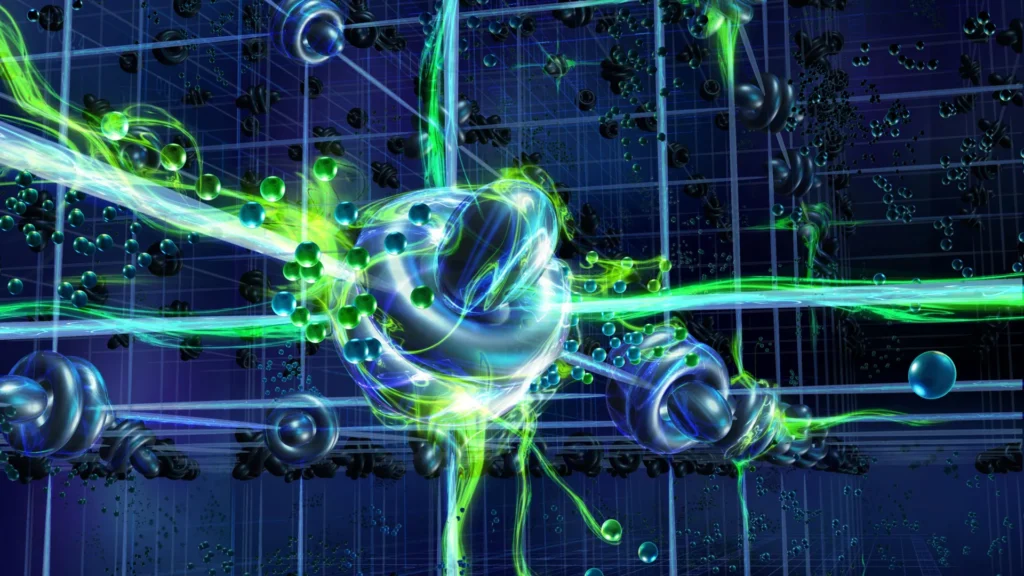
To illustrate this, Bühler-Paschen employs the analogy of an anthill. In a traditional material, particles behave like a crowd of individual pedestrians, each moving independently. In the strange metal crystal, however, the particles behave like a highly organized ant colony. When the colony is disturbed, the response is not a collection of individual reactions but a singular, unified movement of the entire collective. This collective response is the hallmark of quantum entanglement on a massive scale.
The Role of Quantum Fisher Information
To detect this hidden entanglement, the research team turned to a theoretical framework developed by Peter Zoller and his colleagues at the University of Innsbruck. The tool, known as Quantum Fisher Information (QFI), serves as a mathematical metric to determine the degree of entanglement within a multi-particle system.
In a system of independent particles, the sensitivity to external changes is limited to the sum of its parts. However, if the particles are entangled, the system’s sensitivity increases exponentially. This enhanced sensitivity is what the researchers measured. By observing how the crystal responded to external perturbations, they could calculate the QFI and, by extension, the level of entanglement.
"The quantum Fisher information quantifies how sensitively a quantum system responds to a change," says Professor Bühler-Paschen. "If the particles are entangled, the entire system can respond more strongly than the sum of its individual parts. This is not just a theoretical curiosity; it is a vital resource for quantum metrology, where the goal is to detect the smallest possible signals with unprecedented precision."
Investigating the "Strange Metal" Phenomenon
The material at the heart of this discovery is a crystal composed of cerium, palladium, and silicon ($Ce3Pd20Si_6$). This specific composition belongs to a class of materials called "strange metals." Unlike conventional metals like copper or gold, where electrical resistance changes with the square of the temperature, strange metals exhibit a linear relationship between resistance and temperature. This behavior has long baffled scientists because it suggests that the standard "quasiparticle" model—where electrons move through a lattice as individual units—breaks down entirely.
The experiment was conducted at the Institut Laue-Langevin (ILL) in Grenoble, France, where PhD student Federico Mazza performed neutron scattering experiments on the crystal. By firing neutrons at the material and measuring how they were deflected and how much energy they lost, the team could probe the internal dynamics of the crystal.
The data analysis revealed a startling result: the response of the crystal to the neutron bombardment could not be explained by the behavior of individual, independent electrons. Instead, the data showed that groups of at least nine quantum-entangled entities were acting in unison. This represents a significant degree of "multipartite entanglement" in a macroscopic solid, providing a direct link between the material’s "strangeness" and its underlying quantum architecture.
Timeline of Discovery and Supporting Research
The path to this discovery has been paved by several years of incremental breakthroughs in both material science and quantum theory:
- 2010–2020: Theoretical physicists, including those from the University of Innsbruck, refine the Quantum Fisher Information protocols, making them applicable to complex, many-body systems.
- Early 2024: The TU Wien team selects $Ce3Pd20Si_6$ as a candidate material due to its known "quantum critical point," a state where quantum fluctuations dominate the material’s behavior at absolute zero temperature.
- Mid-2024: Neutron spectroscopy trials at ILL Grenoble provide the raw data needed to map the dynamical susceptibility of the crystal.
- Late 2024: Data analysis using QFI confirms that the entanglement is not just present but is a defining characteristic of the material’s physical state.
- 2025 Context: Related research conducted by TU Wien and Rice University discovers that electrical current in strange metals moves with significantly lower "shot noise" than in normal metals. This suggests that electrons do not move individually but flow like a continuous "quantum fluid," a finding that aligns perfectly with the newly discovered entanglement data.
Expert Reactions and Theoretical Implications
The implications of this research extend far beyond the laboratory. Lead theorist Fakher Assaad from the University of Würzburg emphasizes that this is not merely a quirk of one specific crystal. "What we see here is not a detail of one particular material, but a general physical principle," Assaad noted. "Strong entanglement appears to be directly linked to the unusual behavior of strange metals, including their electrical conductivity and thermal properties."
The discovery also offers a potential roadmap for understanding high-temperature superconductors. Many materials that conduct electricity without resistance at relatively high temperatures also exhibit "strange metal" behavior in their normal state. If entanglement is the engine behind strange metals, it may also be the key to unlocking the secrets of room-temperature superconductivity—a "holy grail" of modern physics that could revolutionize energy grids and transportation.
Broader Impact on Future Technologies
The successful measurement of entanglement in a macroscopic crystal opens the door to several practical applications in the field of quantum technology:
- Quantum Metrology: Because entangled systems are hyper-sensitive to external influences, they can be used to create sensors that detect gravitational waves, magnetic fields, or chemical signatures with a level of precision that is physically impossible for non-quantum sensors.
- Quantum Computing: Understanding how entanglement survives and operates within a solid-state crystal could lead to the development of more robust qubits. Currently, quantum computers require near-absolute zero temperatures and extreme isolation; strange metals might provide a pathway to materials that protect quantum information more naturally.
- Materials Science: The ability to "measure" entanglement directly allows scientists to categorize and design new materials from the bottom up, using quantum information metrics as a guide.
As the scientific community digests these findings, the TU Wien team is already planning follow-up experiments. They intend to explore how these entangled states react to even more extreme conditions, such as high magnetic fields, to see if the "collective" behavior of the crystal can be manipulated for technological use.
The study serves as a definitive answer to the questions posed by the founders of quantum mechanics. It confirms that the "spooky" world of the very small is not a separate reality, but a fundamental layer of the physical world that, under the right circumstances, can emerge into the light of the macroscopic day. By transforming a centimeter-sized crystal into a laboratory for quantum information, researchers have proved that the anthill of the quantum world is just as organized, and just as real, as the individual ants that comprise it.