In the rugged expanse of Canada’s northern wilderness, where the legacy of the Klondike Gold Rush meets modern technological ingenuity, the city of Whitehorse is asserting its position as a burgeoning hub for the global maker movement. As the capital of the Yukon Territory and the traditional home of the Kwanlin Dün First Nation and the Ta’an Kwäch’än Council, Whitehorse has long been defined by a spirit of self-reliance and creative problem-solving. This month, that spirit is being showcased through the second edition of Maker Faire Yukon, an event that brings together inventors, artists, engineers, and hobbyists to celebrate the intersection of traditional craftsmanship and high-tech innovation.
Organized by Yukonstruct, the territory’s premier makerspace and innovation hub, the event serves as a testament to the community’s resilience and its commitment to the "culture of dreaming and doing." Since its inception in September 2014, Yukonstruct has acted as a catalyst for local creativity, providing the tools and community necessary for northerners to thrive in an environment that often demands extreme resourcefulness. The Maker Faire represents the culmination of these efforts, offering a platform for a population of 30,000 to demonstrate how "making" is not just a hobby in the North, but a way of life.
The Evolution of Northern Ingenuity: From Gold Rush to Makerspace
The historical context of Whitehorse is inseparable from the concept of making. During the Klondike Gold Rush of the late 19th century, prospectors and settlers were forced to build their own tools, shelters, and transportation systems to survive the sub-arctic climate. This historical necessity has evolved over a century into a sophisticated ecosystem of innovation.

The establishment of Yukonstruct in 2014 marked a pivotal moment in this evolution. As the first regional makerspace in the North, it provided a centralized location for woodworkers, metalworkers, and digital fabricators to collaborate. One of the organization’s most enduring programs, Repair Café Whitehorse, has been running since the hub’s opening. This monthly drop-in event encourages residents to bring in broken household items, from toasters to textiles, to be repaired by volunteers. This initiative does more than just reduce landfill waste; it facilitates the transfer of practical DIY skills across generations, reinforcing the community’s "waste-not-want-not" ethos.
Event Highlights: Combat Robots and Kinetic Engineering
The second edition of Maker Faire Yukon features a diverse array of attractions that highlight both the technical and whimsical sides of the maker movement. A central draw for this year’s event is the combat robot competition. Earlier this month, Yukonstruct hosted a "build-your-own robot" workshop, where aspiring engineers were provided with Viper kits supplied by Fingertech Robotics. Based in Saskatchewan—the producers of Maker Faire Saskatoon—Fingertech has become a vital partner in fostering robotic competition across the Canadian prairies and the North.

The competition at Maker Faire Yukon is not merely a battle of attrition; it is a showcase of iterative design. Participants have spent weeks at home and in the makerspace customizing their robots with 3D-printed armor, specialized weaponry, and improved motor controllers. The event allows these "new pilots" to test their modifications in a controlled, high-stakes environment, providing a practical application for lessons in physics, electronics, and mechanical engineering.
Complementing the high-tech battles is the "Rocket Eggs" challenge, a northern take on the classic egg-drop experiment. In this iteration, the challenge is amplified by speed and propulsion. Eggs are mounted onto CO2-powered sleds and launched down a track. Participants must design aerodynamic housings and impact-absorption systems that can withstand high-velocity travel and sudden deceleration. This activity serves as an entry point for younger participants to engage with the scientific method, testing hypotheses on drag and structural integrity.

Cultural Synthesis: The Cyberpunk Ball and Traditional Crafts
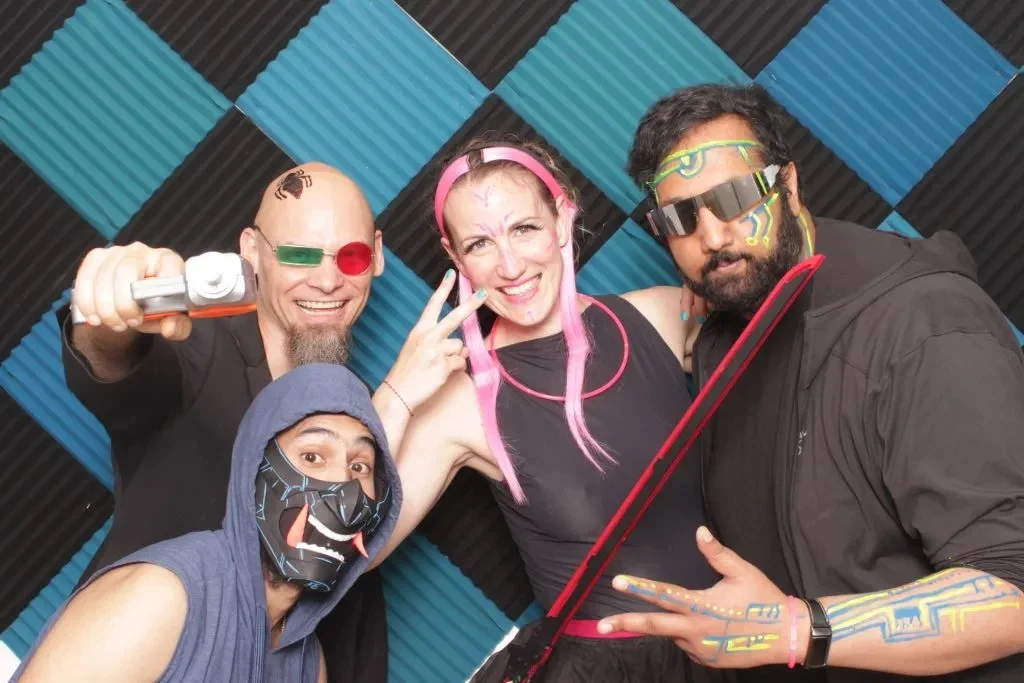
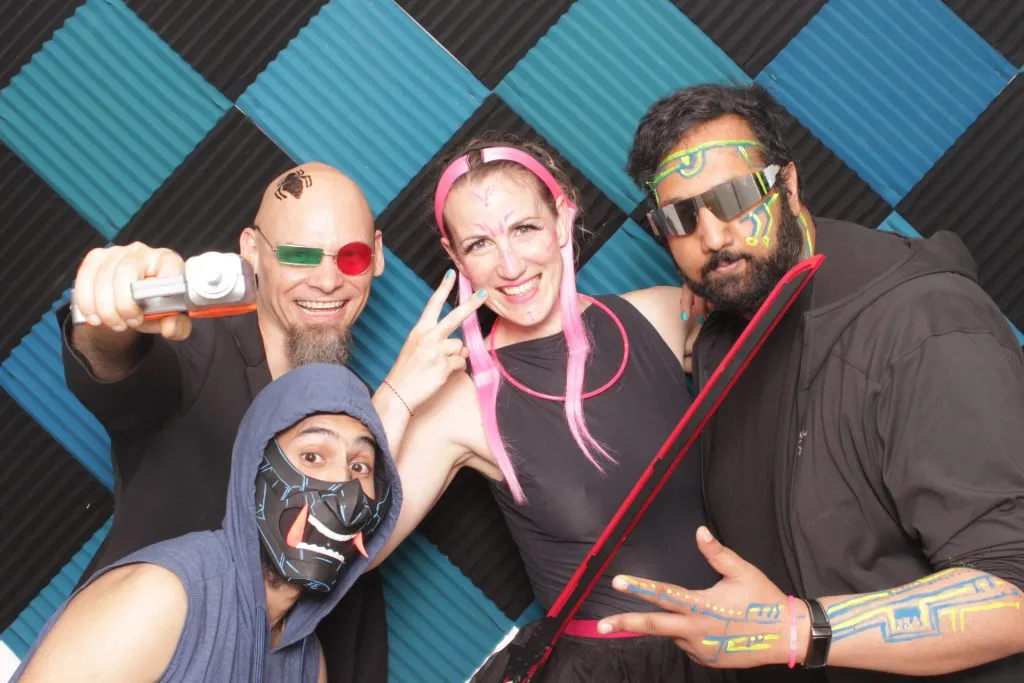
Maker Faire Yukon distinguishes itself from its southern counterparts by blending avant-garde subcultures with traditional northern crafts. The "Cyberpunk Ball" represents the event’s social pinnacle—an LED and blacklight-fueled costume party that invites makers to explore dystopian aesthetics and wearable technology. The ball features circus performers and glow-in-the-dark refreshments, but its true purpose is to encourage "wearable making." From 3D-printed masks with integrated circuitry to fiber-optic garments, the ball showcases the community’s ability to merge fashion with digital fabrication.
Simultaneously, the Faire remains deeply rooted in the materials of the North. Several activations highlight "northern edge" making, where local natural resources are integrated into functional tools. A prominent example is the workshop for creating birdcage awls. Rather than using store-bought components, makers utilize recycled chainsaw files for the metal tips and locally sourced antlers for the handles. This practice reflects a broader trend within the Yukon maker community: the repurposing of industrial waste and natural byproducts into high-quality artisanal goods.

Other hands-on activities include:
- Blacksmithing and Wood Turning: Demonstrations of traditional forging and lathing techniques.
- Fractal Wood Burning: The use of high-voltage electricity to create lightning-like patterns on wooden surfaces.
- Local Glass Blowing: Collaborative sessions with Whitehorse’s glass studios to explore the chemistry of molten silica.
- Soldering and Jewelry Making: Introductory stations designed to teach basic electronics and fine-motor craftsmanship to the general public.
Chronology of Innovation: A Timeline of the Yukon Maker Movement
The growth of the maker movement in the Yukon can be traced through several key milestones that have shaped the territory’s current innovation landscape:

- 1898: The height of the Klondike Gold Rush establishes a culture of rugged self-reliance and mechanical improvisation in the Yukon.
- September 2014: Yukonstruct opens its doors in Whitehorse, providing the first public-access workshop and innovation hub north of the 60th parallel.
- 2014–Present: Repair Café Whitehorse launches, eventually becoming one of the longest-running continuous repair programs in Canada.
- 2023: The inaugural Maker Faire Yukon is held, proving the demand for a large-scale public celebration of northern creativity.
- August 2024: Yukonstruct hosts intensive robot-building workshops to prepare for the second edition of the Faire.
- September 2024: The second Maker Faire Yukon takes place, expanding its scope to include the Cyberpunk Ball and inter-provincial robotic collaborations.
Supporting Data: The Impact of Makerspaces on Northern Communities
Data from the global maker movement suggests that spaces like Yukonstruct play a disproportionately large role in remote regions. In urban centers, makerspaces are often seen as luxury amenities; in the North, they are essential infrastructure.
- Economic Diversification: By providing access to CNC routers, laser cutters, and 3D printers, Yukonstruct has allowed local entrepreneurs to prototype products within the territory, reducing the need for expensive shipping and outsourcing to southern Canada or the United States.
- Retention of Talent: Innovation hubs help combat "brain drain" by providing high-tech opportunities for youth and skilled workers who might otherwise leave the territory for technical hubs like Vancouver or Toronto.
- Sustainability: Programs like the Repair Café have a measurable impact on waste reduction. Based on average weights for small appliances and electronics, a single year of monthly repair events can divert hundreds of kilograms of complex waste from sensitive northern landfills.
Official Responses and Philosophical Foundations
Organizers at Yukonstruct emphasize that the Faire is more than just a collection of booths; it is a stewardship of a long-standing tradition. "The Yukon has a culture of dreaming and doing; a place where we embrace challenges, apply ingenuity, and thrive because of it," the organization stated in its mission briefing. "At Yukonstruct, we are stewards of that tradition."

This sentiment is echoed by participants who view the Faire as a vital social glue. For many makers living in isolated cabins or small communities outside of Whitehorse, the event provides a rare opportunity for peer-to-peer learning and the exchange of specialized northern knowledge, such as how to maintain machinery in -40°C temperatures or how to integrate solar power into off-grid workshops.
Broader Impact and the Canadian Context
The success of Maker Faire Yukon is part of a larger surge in Canadian making. While the Yukon event showcases the unique challenges of the North, it remains connected to a national network. For instance, as the Yukon concludes its festivities, the inaugural Maker Faire Waterloo is set to launch on September 13th in Ontario. This bi-coastal (and arctic) activity highlights Canada’s status as a leader in the global maker movement, with events spanning from the tech corridors of the south to the 60th parallel.

The implications of the Maker Faire Yukon extend beyond the weekend’s festivities. By fostering a community that values repair over replacement and creation over consumption, Yukonstruct is building a resilient social framework. As the world faces supply chain disruptions and environmental challenges, the skills fostered in a small makerspace in Whitehorse—resourcefulness, technical literacy, and community collaboration—are becoming increasingly relevant on a global scale.
In conclusion, Maker Faire Yukon is a vivid reminder that innovation is not exclusive to Silicon Valley or major metropolitan centers. It thrives wherever there is a challenge to be met and a community willing to pick up a tool and find a solution. In the shadows of the Yukon’s mountains, the next generation of makers is proving that even in the most remote corners of the world, the human drive to create remains as bright as the neon lights of a Cyberpunk Ball.