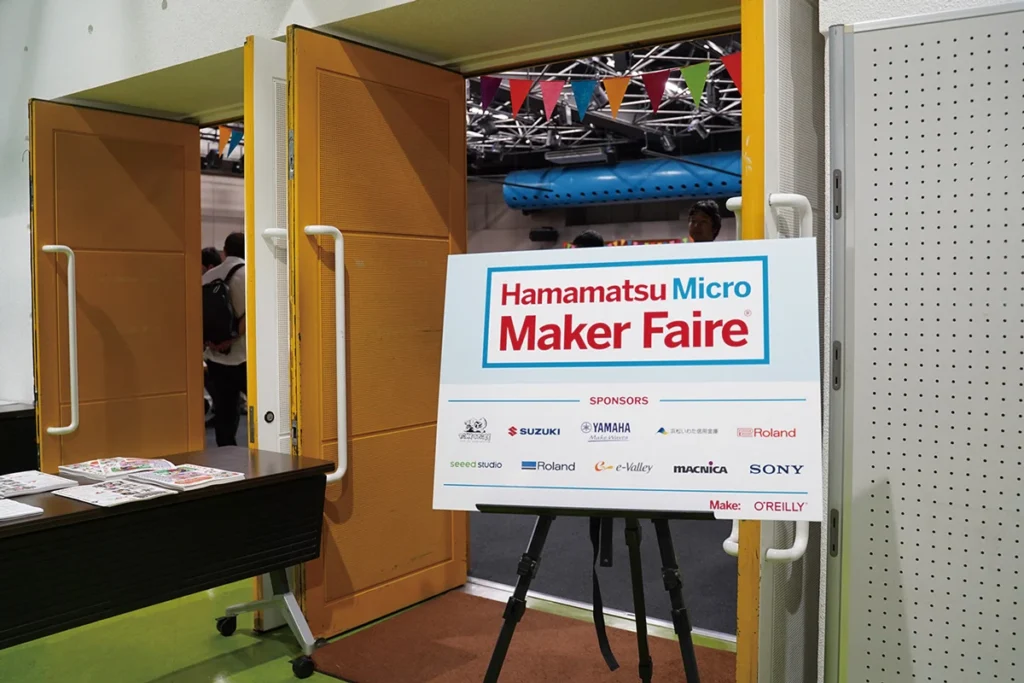
The Hamamatsu Science Museum served as the epicentral hub for Japanese innovation on July 4, 2026, as it hosted the latest iteration of the Micro Maker Faire Hamamatsu. While smaller in physical footprint than the flagship gatherings in Tokyo or Kyoto, this regional event showcased a concentrated assembly of the country’s most inventive minds. The gathering highlighted the unique intersection of Shizuoka Prefecture’s industrial heritage and the contemporary "maker" subculture, a movement that continues to redefine the boundaries between professional engineering and hobbyist creativity. Hamamatsu, historically recognized as Japan’s "City of Music," provided a symbolic backdrop for an event that merged acoustic traditions with cutting-edge digital fabrication and electronics.
Located geographically between the industrial powerhouses of Tokyo and Osaka, Hamamatsu has long been the cradle of Japanese precision manufacturing. The city’s reputation is built upon the legacies of global giants such as Yamaha, Honda, and Suzuki. These corporations did not emerge in a vacuum; they were the products of a local philosophy known as "yaramaika"—a regional dialect term translating to "let’s give it a try." This spirit of proactive experimentation was palpable throughout the museum’s exhibition halls, where individual makers presented projects ranging from particle physics visualizations to automated percussion instruments.

Historical Context and the "Yaramaika" Spirit
To understand the significance of Maker Faire Hamamatsu, one must look at the city’s timeline of innovation. The lineage of craftsmanship in the region dates back to 1887, when Torakusu Yamaha repaired a broken reed organ, an event that eventually led to the birth of the world’s largest musical instrument manufacturer. This culture of "fixing and making" laid the groundwork for the post-war industrial boom, where engineers like Soichiro Honda and Michio Suzuki transitioned from textiles and basic mechanics into global automotive leadership.
Today, this heritage is preserved and promoted through institutions like the Hamamatsu Museum of Musical Instruments, which houses over 1,500 artifacts. However, the Micro Maker Faire represents the evolution of this heritage. It is no longer just about the factory floor; it is about the democratization of technology. The "yaramaika" spirit has moved from the corporate R&D lab to the personal workbench, where 3D printers, microcontrollers, and open-source software allow individuals to produce complex systems that once required industrial-scale resources.
Featured Innovations: Bridging Science and Art
The 2026 faire featured a diverse array of projects that exemplified the "quirky yet sophisticated" nature of the Japanese maker scene. These projects were categorized not just by their utility, but by their ability to provoke curiosity and demonstrate technical mastery.

ATP Lab: Real-Time Cosmic Ray Visualization
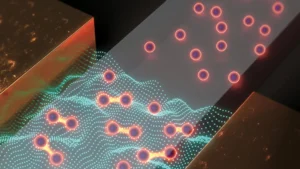
One of the most scientifically ambitious displays was the Super-Kamiokande 3D Monitor, developed by ATP Lab. The project sought to bring the mysteries of neutrino physics into the domestic space. By accessing the real-time data stream from the Super-Kamiokande website—a massive neutrino detector located 1,000 meters underground in Gifu Prefecture—the maker converted 2D cosmic ray detection maps into a cylindrical 3D visualization. Controlled by a Raspberry Pi, the device serves as both a scientific instrument and a piece of high-tech interior decor, allowing observers to "see" the invisible particles that constantly bombard the Earth.
Feng: The Evolution of MIDI Synthesis
In a city defined by music, Feng’s "Super Octet!" MIDI sound module drew significant attention from audiophiles and electronic engineers. The device is a General MIDI-compliant module featuring a custom-built software FM (Frequency Modulation) sound source with up to eight operators. In a technical feat of optimization, the module supports 42-note polyphony and is powered entirely via a single USB-C connection. Feng also showcased "SPRITE!", a module that repurposes karaoke machine soundboards and eVOCALOID technology, demonstrating a common theme in the maker movement: the upcycling of legacy hardware into modern creative tools.
Pokorinta Laboratory: Robotic Percussion
The "Pokorinta" by Pokorinta Laboratory represented the pinnacle of mechanical synchronization at the event. This automatic playing cajon (a box-shaped percussion instrument) features a transparent acrylic casing that reveals a complex internal architecture. The system utilizes over 30 solenoids to strike the cajon, cymbals, and tambourines. The integration of vibrant LED arrays synchronized with the mechanical strikes provided a multi-sensory experience. The project highlighted the maker’s ability to design custom circuit boards capable of driving high-current mechanical components within a compact, aesthetically pleasing form factor.

Kirakudo & Company: Precision Randomness
Kirakudo & Company presented the "Loopian" series, which explored the concept of "controlled luck." By modifying traditional board game roulettes with wireless controllers and hidden motors, the makers created a system where a user could specify exactly which number the wheel would land on, regardless of the force of the manual spin. A second iteration applied this logic to a dart-style roulette, where the rotation of the target is adjusted mid-flight to ensure a specific outcome. While whimsical in application, the underlying tech—low-latency wireless communication and precision motor braking—showcased a high level of engineering competence.
The Intersection of Tradition and Modernity
While much of the faire focused on digital technology, the event also acknowledged Hamamatsu’s traditional roots. The city is famous for "Chusen," a unique style of textile dyeing used for summer kimonos (yukata). This process involves a meticulous application of resist paste through stencils onto long bolts of fabric.
Observers at the faire noted the parallels between the precision of Chusen dyeing and the precision of modern PCB (Printed Circuit Board) design. Both require a deep understanding of materials, a steady hand, and a respect for the "process." The inclusion of these cultural touchpoints serves to ground the high-tech exhibits in a broader historical narrative, suggesting that the makers of 2026 are the direct descendants of the textile artisans of the Meiji era.

Chronology and Event Evolution
The Maker Faire brand, managed in Japan by O’Reilly Japan and Impress Corporation, has seen steady growth since its inception. The Hamamatsu Micro Maker Faire was established to provide a more intimate, community-focused alternative to the massive Tokyo events.
- 2012–2018: The maker movement gains traction in Japan, primarily centered in Tokyo.
- 2019: Regional "Micro" faires begin to sprout, aimed at fostering local ecosystems.
- 2023: Hamamatsu hosts a pivotal event that proves the viability of music-tech as a specialized niche within the maker community.
- 2026: The current event sees record participation from student groups and independent engineers, signaling a robust "post-pandemic" resurgence in hands-on collaborative creativity.
Analysis: The Socio-Economic Impact of the Maker Movement
The Micro Maker Faire Hamamatsu is more than a hobbyist exhibition; it is a vital component of Japan’s broader innovation strategy. As the nation faces a shrinking workforce and increased competition from global tech hubs, fostering a "maker" mindset is seen as a way to encourage entrepreneurship and technical literacy among the youth.
By providing a platform for independent makers to show their work, these events lower the barrier to entry for product development. Several projects seen at previous Hamamatsu faires have gone on to become successful crowdfunding campaigns or have led to the formation of small-scale startups. The "yaramaika" philosophy acts as a cultural catalyst, transforming passive consumers into active creators.

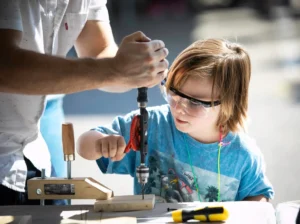
Furthermore, the collaboration between the faire and the Hamamatsu Science Museum highlights the importance of "STEAM" (Science, Technology, Engineering, Arts, and Mathematics) education. The event attracts families, providing children with a tangible look at how mathematics and physics can be applied to create music, art, and entertainment.
Future Outlook and Broader Implications
As the 2026 event concluded, the consensus among participants and organizers was one of optimistic growth. The "City of Music" is successfully rebranding itself as a "City of Creative Technology." The synergy between established giants like Yamaha and the independent makers at the faire suggests a future where industrial precision and individual creativity coexist.
The success of Micro Maker Faire Hamamatsu 2026 demonstrates that the value of the maker movement lies not in the scale of the event, but in the quality of the ideas presented. As technology becomes increasingly abstract and "black-boxed," the makers of Hamamatsu are committed to opening those boxes, understanding their contents, and building something entirely new. For a city that has spent over a century making the world’s music, the future looks—and sounds—exceptionally bright.