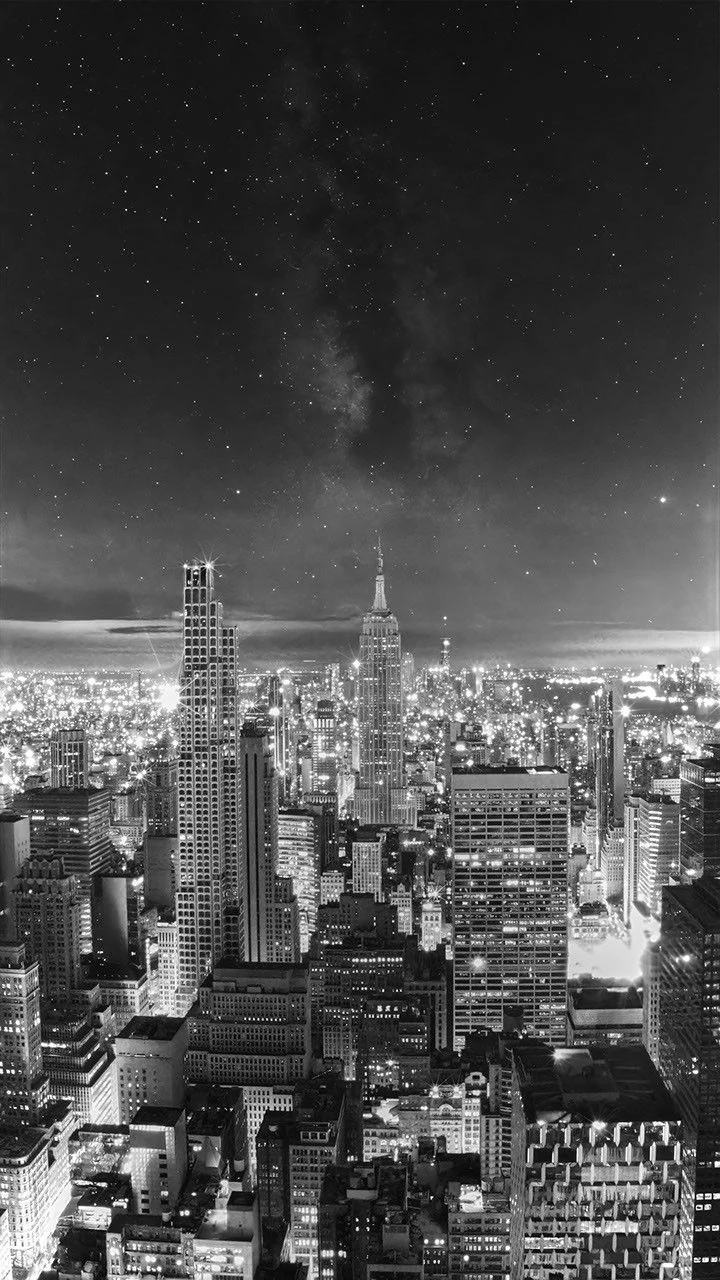
In a remarkable feat of astrophotography and innovative technology, the faint, ethereal glow of the Milky Way galaxy has been captured peeking through the formidable light pollution of New York City’s Manhattan skyline. This stunning image, featured as NASA’s Astronomy Picture of the Day (APOD) on October 15, 2026, offers a poignant reminder that even amidst the most vibrant urban landscapes, the grandeur of the cosmos remains accessible, albeit requiring a special perspective. The photograph, a black and white composition, artfully merges the iconic architectural silhouettes of Manhattan with a night sky surprisingly speckled with stars and a discernible, though delicate, band of our home galaxy.
The creation of this image is not a testament to a sudden abatement of urban luminescence but rather a triumph of scientific ingenuity. The astrophotographers, Jason Kurth and Ty Buckley, employed a sophisticated filtering technique that selectively captures light within the near-infrared spectrum. This deliberate choice is crucial, as it allows them to bypass the dominant wavelengths of visible light that constitute the overwhelming majority of city glare. Traditional incandescent and some neon lights, while still bright in the visible spectrum, emit less intensely in the near-infrared. More importantly, modern lighting technologies such as fluorescent and LED bulbs, which are increasingly prevalent in urban environments and contribute significantly to light pollution, emit very little in this specific infrared band. Stars, however, including those in the Milky Way, are inherently bright in the near-infrared, making them detectable even through the residual atmospheric glow.
The Challenge of Urban Astronomy
Light pollution, the excessive or misdirected artificial light emanating from urban and suburban areas, has long been a formidable adversary for astronomers and stargazers alike. The International Dark-Sky Association estimates that at least 80% of the world’s population lives under light-polluted skies, with North America and Europe experiencing the most severe impacts. This pervasive illumination not only obscures celestial objects but also has significant ecological and health implications, disrupting natural circadian rhythms in wildlife and potentially impacting human well-being.
For centuries, major metropolises like New York City, famously dubbed "The City That Never Sleeps," have been centers of human activity and innovation. Their dazzling displays of artificial light, while symbolizing progress and vitality, have historically rendered the night sky above them an opaque canvas, devoid of the celestial wonders visible in darker regions. The notion of observing the Milky Way, a luminous band of billions of stars, gas, and dust stretching across our galaxy, from the heart of Manhattan was, until recently, an almost unfathomable prospect.
A Technical Breakthrough in Observation
The technique employed in this APOD image represents a significant stride in making astronomical observation more accessible in light-polluted environments. By focusing on the near-infrared spectrum (approximately 0.7 to 1.0 micrometers), the photographers were able to isolate the faint light of distant stars while filtering out much of the scattered visible light from the city. This region of the electromagnetic spectrum falls just beyond what the human eye can perceive, requiring specialized equipment and filters.
The implications of this approach are far-reaching. It suggests that even in densely populated areas, with the right technological adaptations, a connection to the universe can be re-established. This could democratize astronomy, allowing more people to experience the awe of the cosmos without needing to travel to remote dark-sky preserves. It also highlights the ongoing evolution of astrophotography, pushing the boundaries of what is possible in challenging observational conditions.
Background and Context: The Milky Way and Light Pollution
The Milky Way, our galactic home, is a barred spiral galaxy containing an estimated 100 to 400 billion stars. From Earth, it appears as a luminous band stretching across the night sky, a breathtaking vista that has inspired humanity for millennia. Ancient civilizations used the stars and the Milky Way for navigation, mythology, and understanding their place in the universe. However, with the advent of widespread artificial lighting, this celestial spectacle has become increasingly elusive for a significant portion of the global population.
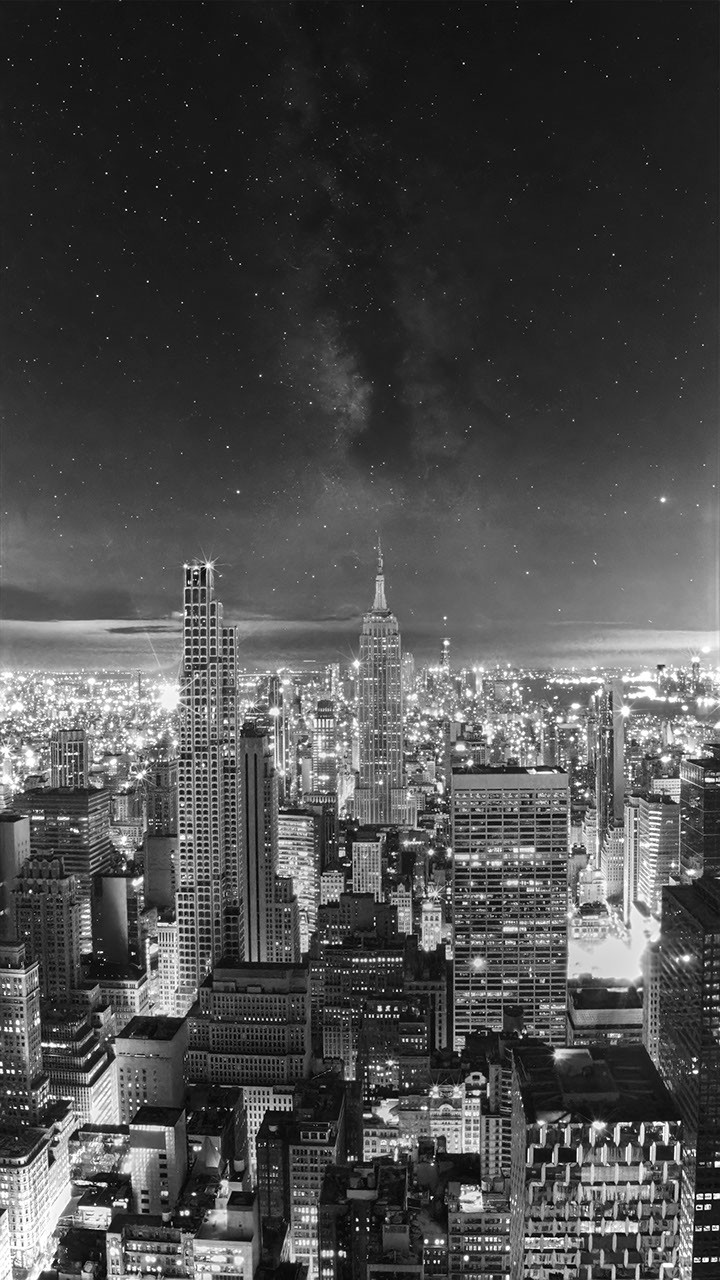
The development of specialized filters for astrophotography has been a gradual process. Early efforts focused on blocking specific wavelengths associated with common urban lighting sources, such as sodium vapor lamps. However, the shift towards more energy-efficient technologies like LEDs, which emit a broader spectrum of light, presented new challenges. The success of Kurth and Buckley’s image underscores the effectiveness of targeting the near-infrared, a spectral region less affected by many modern artificial light sources.
A Collaboration of Expertise
This particular APOD feature is a testament to collaborative efforts in science communication and outreach. The image itself was captured by Jason Kurth and Ty Buckley. The accompanying explanation was authored by a team of esteemed scientists and editors: Cecilia Chirenti, Robert Nemiroff, Jerry Bonnell, and Keighley Rockcliffe. Their collective expertise ensures that the scientific intricacies of the image are communicated accurately and engagingly to a broad audience. The service is provided by NASA’s Astrophysics Science Division (ASD) at Goddard Space Flight Center, in partnership with NASA Science Activation and Michigan Technological University, underscoring a commitment to making cutting-edge scientific discoveries accessible to the public.
Timeline of Innovation in Light Pollution Mitigation
- Mid-20th Century: Increased urbanization and the widespread adoption of bright, energy-intensive lighting technologies begin to noticeably degrade night sky visibility in cities.
- Late 20th Century: The term "light pollution" gains traction, and the first organized efforts to address its impacts emerge. Astronomers begin to quantify the problem.
- 1980s-1990s: The International Dark-Sky Association (IDA) is founded, advocating for responsible outdoor lighting practices and the preservation of dark skies. Early research into the spectral characteristics of different light sources begins.
- Early 21st Century: Advancements in digital imaging and filter technology enable astrophotographers to capture fainter objects under less-than-ideal conditions. The rise of LED lighting presents new challenges and opportunities for mitigation strategies.
- 2010s-2020s: Sophisticated spectral filters, like those used in the Manhattan Milky Way image, become more accessible. Research into the ecological and health impacts of light pollution intensifies. Public awareness campaigns and legislative efforts to control light pollution gain momentum globally.
Supporting Data and Scientific Principles
The effectiveness of the near-infrared filtering relies on fundamental principles of light and electromagnetic radiation. Different light sources emit photons with varying energies, which correspond to different wavelengths. Visible light, the portion of the spectrum our eyes can detect, ranges from approximately 400 to 700 nanometers. The near-infrared spectrum extends from about 700 to 1,000 nanometers.
- Incandescent bulbs: Produce light by heating a filament. They emit a broad spectrum, with significant output in both visible and infrared regions.
- Neon lights: Utilize gas discharge. While some neon lights have strong emissions in specific visible wavelengths, others can have components in the near-infrared.
- Fluorescent lights: Use a phosphor coating to convert ultraviolet light (generated by an electrical discharge) into visible light. They have distinct spectral peaks.
- LED lights: Employ semiconductor diodes. Their spectral output can be tailored, but many white LEDs are designed to minimize infrared emission for energy efficiency and to avoid excessive heat.
- Stars: Emit light across a broad spectrum, with the peak wavelength depending on their temperature. Cooler stars emit more in the red and infrared, while hotter stars peak in the blue and ultraviolet. Crucially, even hotter stars emit substantial energy in the near-infrared.
By employing a filter that preferentially transmits near-infrared light and blocks visible light, the photographers effectively reduce the "noise" from urban illumination while amplifying the signal from the stars. This is analogous to using noise-canceling headphones to isolate a desired sound in a noisy environment.
Broader Impact and Implications
The "Manhattan Milky Way" image is more than just a visually striking photograph; it carries profound implications for our relationship with the cosmos and our understanding of urban environments.
- Democratization of Astronomy: This success story suggests that the pursuit of astronomical observation is not solely the domain of those living in remote areas. With technological advancements, urban dwellers can increasingly engage with the universe. This could foster greater scientific literacy and inspire future generations of scientists and explorers.
- Rethinking Urban Lighting: The image serves as a powerful argument for more thoughtful and efficient urban lighting design. By understanding the spectral properties of different light sources and their impact on astronomical observation, cities can implement lighting strategies that reduce light pollution without compromising safety and functionality. This could involve using shielded fixtures, directing light downwards, and employing warmer color temperatures that emit less blue light, which is particularly disruptive to nocturnal ecosystems.
- Connecting Humanity to the Universe: The fundamental message conveyed by APOD is that we all share a common sky. This image reinforces that connection, reminding us that regardless of our location on Earth, we are all part of a vast and awe-inspiring universe. It encourages a sense of wonder and curiosity about our place within it.
- Technological Innovation: The development of specialized filters and imaging techniques highlights the continuous innovation in scientific instrumentation and photographic technology. These advancements have the potential to unlock new discoveries and perspectives across various scientific disciplines.
Official Responses and Acknowledgements
While specific direct statements from city officials regarding this particular image are not available, the ongoing efforts to mitigate light pollution in cities like New York are well-documented. The New York City Department of Buildings, for example, has regulations concerning lighting, and various advocacy groups work with the city to promote darker sky initiatives. NASA’s continued highlighting of such achievements through APOD serves as an implicit endorsement of the importance of astronomical observation and the need to protect our view of the universe. The credit given to Jason Kurth and Ty Buckley, along with the editorial team, acknowledges their significant contribution to public understanding of science.
Looking Ahead: Tomorrow’s Picture
The article concludes with a tantalizing hint about the next APOD feature: "Chasing the ISS." This suggests a continuation of the theme of observing celestial phenomena from Earth, possibly with a focus on the International Space Station, another testament to humanity’s endeavors in space and our ongoing quest to understand the universe. The juxtaposition of the ISS, a symbol of human technological prowess in orbit, with the natural wonder of the Milky Way, captured through an ingenious filtering technique in a dense urban landscape, paints a comprehensive picture of our evolving relationship with the cosmos.
In essence, the "Manhattan Milky Way" image is a beacon of hope for stargazers in urban environments. It demonstrates that with ingenuity and a deeper understanding of the light that surrounds us, the wonders of the night sky are not lost, but merely waiting to be revealed through a different lens.