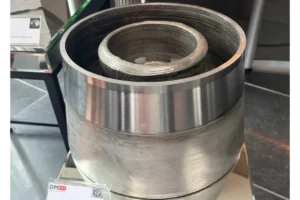
Cambridge, MA – In a significant leap forward for materials science and additive manufacturing, engineers at the Massachusetts Institute of Technology (MIT) have successfully developed a novel aluminum alloy with unprecedented strength, remarkable heat tolerance, and the crucial ability to be 3D printed. This groundbreaking material boasts strength levels five times greater than conventionally manufactured aluminum, positioning it as a game-changer for industries ranging from aerospace and automotive to advanced cooling systems.
The development, detailed in the latest issue of the journal Advanced Materials, represents the culmination of a sophisticated approach that merges cutting-edge computer simulations with the power of machine learning. This synergistic methodology dramatically accelerated the discovery process, circumventing the laborious and time-consuming task of manually evaluating millions of potential material compositions.
The Genesis of a Material Breakthrough: From Classroom Challenge to Laboratory Triumph
The origins of this transformative alloy can be traced back to a challenging graduate course in computational alloy design at MIT in 2020, led by Professor Greg Olson. The course tasked students with the ambitious goal of creating a 3D-printable aluminum alloy that surpassed existing strength benchmarks. Professor Olson, a distinguished figure in the field of materials science, emphasized the critical role of a material’s microstructure – specifically, the size and density of microscopic internal features known as "precipitates" – in dictating its mechanical properties. Generally, smaller and more densely packed precipitates lead to a stronger metal.
Students initially employed extensive computational modeling to explore various elemental combinations and concentrations, aiming to predict which formulations would yield the strongest alloys. However, despite these advanced simulations, the effort did not ultimately produce a material that significantly outperformed current state-of-the-art printable aluminum designs. This outcome, while not achieving the initial objective, served as a crucial impetus for a more innovative approach.
Mohadeseh Taheri-Mousavi, who was a postdoctoral researcher at MIT during this period and is now an assistant professor at Carnegie Mellon University, recognized the limitations of purely simulation-based methods when dealing with the complex, nonlinear interactions that govern material properties. "At some point, there are a lot of things that contribute nonlinearly to a material’s properties, and you are lost," Taheri-Mousavi explained. "With machine-learning tools, they can point you to where you need to focus, and tell you for example, these two elements are controlling this feature. It lets you explore the design space more efficiently."
Harnessing Machine Learning for Optimized Alloy Design
Picking up the thread from the classroom project, Taheri-Mousavi and her colleagues embarked on a new study leveraging machine learning (ML) algorithms. These sophisticated tools are adept at sifting through vast datasets of elemental properties, identifying subtle patterns and intricate relationships that traditional simulation methods might overlook. The goal was to design an aluminum alloy that not only possessed superior strength but was also amenable to the rapid cooling processes inherent in 3D printing.
The ML model proved instrumental in narrowing down the vast landscape of potential material recipes. Instead of the more than one million combinations that would have been prohibitively challenging to evaluate conventionally, the machine learning system reduced the search space to a mere 40 promising options. From this curated list, the optimal formula for the new alloy was identified. This dramatic reduction in experimental scope not only saves significant time and resources but also significantly de-risks the discovery process.
The Synergistic Power of Alloy Composition and Additive Manufacturing
The newly developed alloy is a testament to the power of carefully orchestrated elemental synergy. While specific details of the elemental composition remain proprietary for now, it is understood to be an aluminum base enhanced with several carefully selected additive elements. These additions, guided by the ML model, are crucial for achieving the desired microstructural characteristics.
The researchers then turned to additive manufacturing, commonly known as 3D printing, as the fabrication method of choice. This decision was deliberate, as conventional casting methods, which involve slow cooling of molten metal, can lead to the growth of larger precipitates, thereby diminishing the material’s ultimate strength. In contrast, 3D printing processes, particularly laser powder bed fusion (LPBF), allow for rapid cooling and solidification.
In LPBF, a high-powered laser selectively melts thin layers of metal powder, fusing them together to build a three-dimensional object layer by layer. This rapid freezing process, occurring within seconds or minutes, is critical for preserving the fine, densely packed precipitate structure that the machine learning model predicted would confer exceptional strength.
"Sometimes we have to think about how to get a material to be compatible with 3D printing," commented John Hart, the Class of 1922 Professor and head of MIT’s Department of Mechanical Engineering, and a key collaborator on the project. "Here, 3D printing opens a new door because of the unique characteristics of the process — particularly, the fast cooling rate. Very rapid freezing of the alloy after it’s melted by the laser creates this special set of properties."
Validation and Unprecedented Performance Metrics
To rigorously test their findings, the research team commissioned the production of a printable metal powder based on their novel alloy formula. This powder, a sophisticated blend of aluminum and five additional elements, was sent to collaborators at Paderborn University in Germany. There, using advanced LPBF equipment, small test samples were meticulously printed.
Upon their return to MIT, these printed samples underwent extensive mechanical testing and microscopic analysis. The results were nothing short of remarkable, validating the machine learning predictions with compelling data. The 3D-printed alloy demonstrated a strength five times greater than a conventionally cast version of the same material. Furthermore, it exhibited a 50 percent increase in strength compared to aluminum alloys that were designed using traditional simulation techniques alone.
Beyond its exceptional strength, the alloy also displayed impressive thermal resilience, maintaining stability at temperatures up to 400 degrees Celsius (approximately 750 degrees Fahrenheit). This elevated heat tolerance is a significant advantage, particularly for applications in high-temperature environments where conventional aluminum alloys would falter. Microscopic imaging confirmed the presence of the desired dense population of ultrafine precipitates, underscoring the effectiveness of the integrated ML and 3D printing approach.
Transformative Implications Across Multiple Industries
The potential applications for this advanced printable aluminum alloy are vast and could catalyze significant advancements across a spectrum of industries.
Aerospace: The most immediate and perhaps impactful application lies in the aerospace sector. Currently, critical components like fan blades for jet engines are typically manufactured from titanium or advanced composite materials. Titanium, while strong and heat-resistant, is over 50 percent heavier and can be up to ten times more expensive than aluminum. Advanced composites, while offering weight savings, can present their own manufacturing challenges and cost considerations.
"If we can use lighter, high-strength material, this would save a considerable amount of energy for the transportation industry," stated Taheri-Mousavi. The ability to replace heavier, more expensive materials with a strong, lightweight, and printable aluminum alloy could lead to substantial reductions in aircraft weight, translating directly into improved fuel efficiency and lower operational costs. This could also enable the design of more aerodynamically efficient engine components.
Automotive: In the automotive industry, the quest for lighter, stronger, and more fuel-efficient vehicles is perpetual. This new alloy could be used to fabricate critical structural components, engine parts, and performance-enhancing elements, contributing to both vehicle safety and environmental sustainability. The complex geometries that 3D printing enables could also lead to more integrated and optimized automotive designs, reducing the number of individual parts and assembly steps.
Advanced Cooling Systems and Data Centers: The rapid growth of data centers and the increasing demand for high-performance computing have placed immense pressure on cooling technologies. Heat dissipation is a critical challenge, and materials that can efficiently conduct heat away from sensitive components are in high demand. This new aluminum alloy, with its superior thermal conductivity and structural integrity, could be used to create more efficient heat sinks, cooling fins, and other thermal management solutions.
"Because 3D printing can produce complex geometries, save material, and enable unique designs, we see this printable alloy as something that could also be used in advanced vacuum pumps, high-end automobiles, and cooling devices for data centers," added Professor Hart. The ability to print intricate designs tailored for optimal heat transfer, combined with the material’s inherent thermal properties, makes it an ideal candidate for these demanding applications.
Vacuum Pumps and Other Industrial Machinery: Beyond these primary sectors, the alloy’s properties make it suitable for a range of other high-performance industrial applications. For instance, advanced vacuum pumps, which require materials that can withstand vacuum pressures and potential outgassing, could benefit from the strength and stability of this new alloy.
The Future of Alloy Design: A Scalable and Adaptable Methodology
The success of this project extends beyond the creation of a single material. The methodology itself – the fusion of computer simulations and machine learning for accelerated alloy discovery and optimization – represents a paradigm shift in materials science. This approach is not limited to aluminum alloys; it can be readily adapted to explore and design a wide array of advanced materials with tailored properties for diverse applications.
"Our methodology opens new doors for anyone who wants to do 3D printing alloy design," Taheri-Mousavi enthused. "My dream is that one day, passengers looking out their airplane window will see fan blades of engines made from our aluminum alloys."
The research team is already looking ahead, applying the same machine learning techniques to further refine other properties of the alloy, such as its corrosion resistance, fatigue life, and machinability. The ongoing work aims to unlock the full potential of this remarkable material and pave the way for its widespread adoption in industries that demand the highest levels of performance and innovation. The collaborative effort involved researchers from MIT, Paderborn University in Germany, and Carnegie Mellon University, highlighting the international nature of advanced scientific discovery. This breakthrough underscores MIT’s continued leadership in pioneering materials science and driving the future of advanced manufacturing.