The fashion industry, a colossal economic engine, also generates an equally colossal environmental burden, particularly in the realm of textile waste. After a closet cleanout, the options for responsibly disposing of old garments are startlingly limited. Beyond donating used clothes, a robust, widespread process for recycling textiles, akin to the established systems for bottles and cans, remains largely absent. This systemic deficiency contributes to an alarming statistic: the average American discards approximately 81 pounds of clothing each year. Cumulatively, this amounts to more than 11 million tons of textiles annually, destined for either overflowing landfills or environmentally damaging incinerators. However, a groundbreaking innovation from engineers at the Massachusetts Institute of Technology (MIT) offers a glimmer of hope, aiming to significantly reduce this burgeoning mountain of textile waste with the development of a novel, fully recyclable yarn.
The Mounting Crisis of Textile Waste: A Global Perspective
The problem of textile waste is not merely an aesthetic one of overflowing bins; it represents a complex environmental and economic challenge. The rise of "fast fashion," characterized by rapid production cycles, low prices, and fleeting trends, has dramatically accelerated garment consumption and shortened their lifespan. Consumers are buying more clothes than ever before and disposing of them faster, treating garments as disposable rather than durable goods. This behavioral shift, coupled with inadequate end-of-life solutions, has exacerbated the waste crisis.
Globally, an estimated 92 million tons of textile waste are generated each year, a figure projected to rise to 134 million tons by 2030 if current trends persist. The United States, as highlighted by the 11 million tons mentioned, is a significant contributor to this problem. When textiles end up in landfills, they can take hundreds of years to decompose, releasing methane, a potent greenhouse gas, and leaching toxic dyes and chemicals into the soil and groundwater. Incineration, while reducing volume, releases carbon dioxide and other harmful pollutants into the atmosphere.
Furthermore, the environmental footprint of textile production itself is immense, consuming vast quantities of water, energy, and chemicals. Cotton, for instance, is one of the most water-intensive crops, while synthetic fibers like polyester are derived from fossil fuels. The difficulty in recycling mixed-fiber garments means that even if collection systems improve, the technological hurdles for material separation and reprocessing are significant. This is particularly true for elastic fabrics, which have become ubiquitous in modern apparel.
MIT’s Breakthrough: A Recyclable Alternative to Spandex
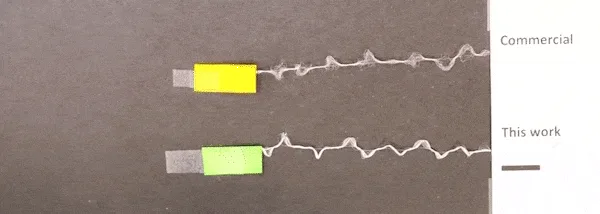
At the heart of MIT’s solution is a newly engineered yarn crafted from a form of plastic commonly used in everyday items such as milk bottles and grocery bags: polyethylene. This choice of material is deliberate and strategic. Polyethylene is a thermoplastic, meaning it can be melted down and reshaped multiple times without significant degradation, making it inherently recyclable. The MIT team has successfully designed this polyethylene yarn to possess a feel and performance similar to traditional sewing thread, capable of being woven into stretchy, lightweight clothing.
The true innovation lies in its end-of-life potential. Researchers envision a future where a garment made from this polyethylene yarn could be melted down entirely and redrawn into new yarn. This new yarn could then be re-woven into fresh clothing or even molded into other plastic accessories like buttons or belt buckles, creating a truly circular economy for these materials. To rigorously test this concept, the MIT team conducted a compelling demonstration: they spun a spool of the new yarn, melted it down, and then re-spun it into new yarn, repeating this process multiple times. Their findings were remarkable; even after 10 cycles, the recycled yarn maintained the strength and flexibility comparable to conventional, newly manufactured thread.
This breakthrough is particularly significant because it targets a major impediment to textile recycling: the prevalence of elastic fabrics. Eighty percent of textiles currently on the U.S. market contain some amount of spandex, a material that, when blended with other fibers like polyester or nylon, renders the entire garment non-recyclable through conventional means. "Eighty percent of textiles on the U.S. market currently contain some amount of spandex, which makes them nonrecyclable," states Svetlana Boriskina, a research scientist in MIT’s Department of Mechanical Engineering, emphasizing the scale of the challenge. "There’s no widely adopted technology now that recycles textiles into textiles. With our new yarn, we hope to change that."
Boriskina and her colleagues, including first author SeongHyeon Kim, Duo Xu, Volodymyr Korolovych, Domingo Flores-Hernandez, Kaniz Moriam, and Daniel Braconnier, have detailed their findings and the intricacies of this novel yarn in a study published in the prestigious journal ACS Materials Letters.
The Core of the Problem: Unpacking Spandex’s Recycling Dilemma
To fully appreciate the significance of MIT’s innovation, it’s crucial to understand why spandex, despite its invaluable properties, poses such a formidable challenge to recycling efforts. Spandex, also known by its brand name Lycra, is a polyurethane-based synthetic fiber renowned for its exceptional elasticity and ability to return to its original shape. However, it is not particularly strong on its own. To create the durable, stretchy fabrics we commonly wear, spandex is typically used as a core fiber, which is then wrapped or sheathed with tougher materials like polyester or nylon. This combination of materials provides the unique balance of stretch and strength that makes elastic yarns so desirable for activewear, denim, and countless other garments.
The very characteristic that gives these yarns their performance—the blend of different polymer types—is precisely what makes them nearly impossible to recycle efficiently. Current recycling technologies struggle with mixed-material textiles. To separate the polyester or nylon sheath from the spandex core would require complex and often harsh chemical treatments. While such chemical separation technologies exist in theory, they are rarely implemented on an industrial scale for textile recycling due to several prohibitive factors. "Even though chemical separation technologies exist, they add extra cost and complexity, and usually require toxic chemicals that are harmful to the environment," Boriskina explains. "That’s why most stretchy garments go to the dump." The economic viability and environmental implications of these chemical processes typically outweigh the benefits, leading to the unfortunate reality that spandex-containing garments are almost universally destined for landfill or incineration.
Polyethylene: From Grocery Bags to High-Performance Textiles
Polyethylene is the most common type of plastic globally, omnipresent in everything from food packaging and water bottles to industrial pipes and children’s toys. Its widespread use stems from its versatility, durability, and low cost. Critically, polyethylene is a thermoplastic, meaning it can be melted and reformed repeatedly, making it inherently amenable to mechanical recycling processes. Yet, despite these advantages, polyethylene had not traditionally been considered a viable material for textiles, largely due to its perceived lack of comfort, breathability, and aesthetic appeal compared to natural fibers or established synthetics like polyester.
However, Boriskina’s group at MIT has been exploring the untapped potential of polyethylene in textiles for several years. In 2021, they demonstrated that polyethylene could indeed be spun into yarn and woven into various garments, highlighting its promising moisture-wicking, stain-resisting, and cooling properties. This earlier work laid the groundwork for their latest advancement.
In their new study, the team specifically aimed to tailor polyethylene yarn to directly mimic the strength and flexibility of spandex, while crucially ensuring its recyclability. This involved a meticulous process of material selection and engineering. They began by researching and evaluating numerous chemical variations of polyethylene, scouring scientific literature and industrial reports to identify formulations that could provide the desired characteristics.
Boriskina vividly describes the chemical structure of polyethylene: "The chemical structure of polyethylene is like Christmas garland — a backbone of carbon, carbon, carbon, and also these dangling ‘decorations’ of hydrogen atoms or short branches with the same structure as a backbone." She adds, "How these chains are arranged can change the properties of the whole structure." First author SeongHyeon Kim further elaborates, "Polyethylene can give us a wide range of properties, depending on how you make it."
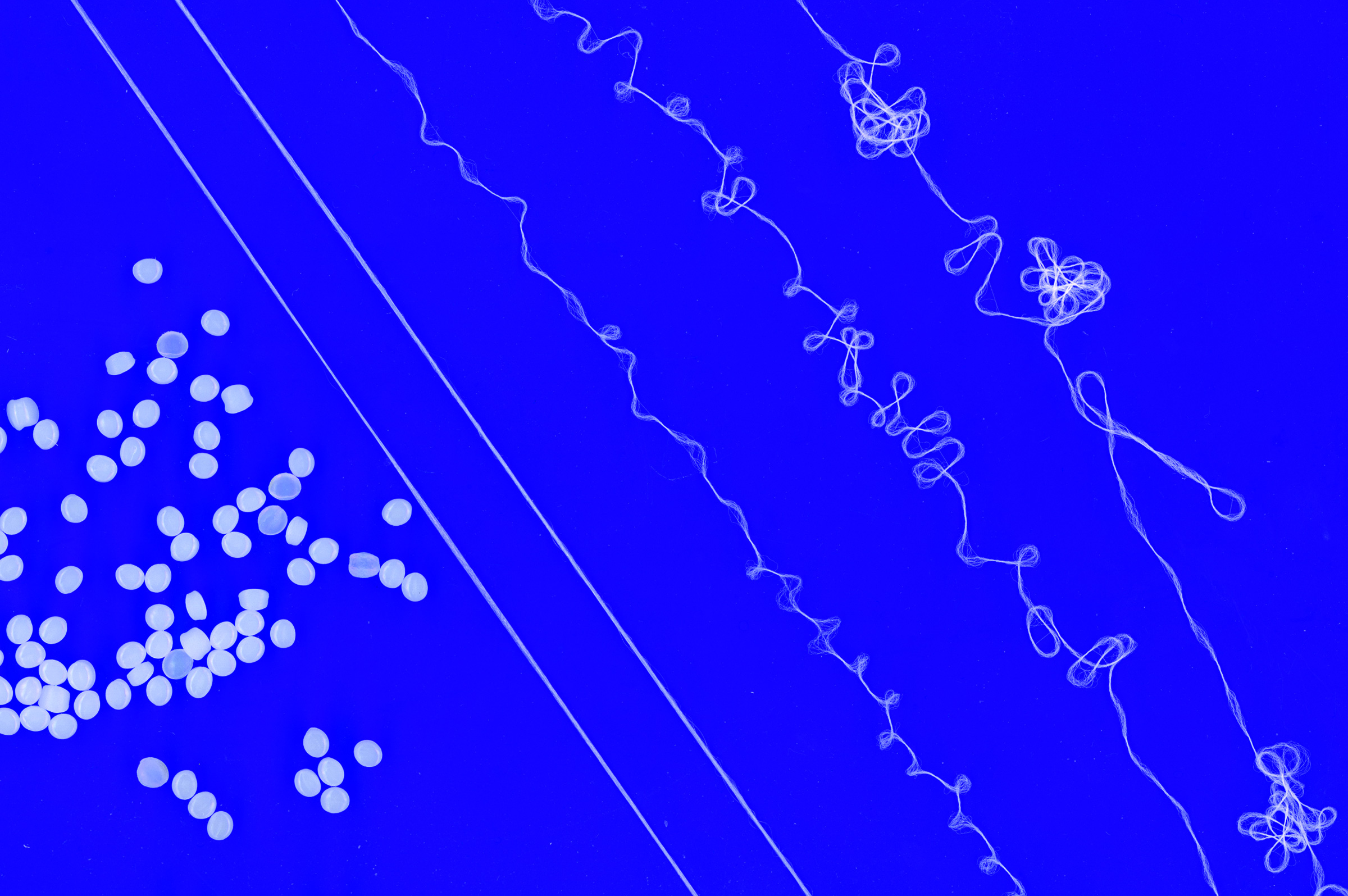
For the elastic core of their new yarn, the team selected a specific polyethylene-based resin known for its stretchy fiber properties. For the sturdier sheath that would surround the core, they chose a different, stiffer polyethylene resin. These resins, obtained as pellets from a chemical manufacturer, then underwent a standard fiber fabrication process. The pellets were heated to approximately 350 degrees Fahrenheit, past their melting point, and the molten polyethylene was then drawn through small extruders to create hair-thin fibers. Kim likens the process to a common kitchen appliance: "You just melt it in a barrel with a heater, and then you extrude and spin it into fibers. It’s like a spaghetti machine." Finally, an industrial yarn spinner was used to wind the sheath fibers around the core fiber, creating the final, elastic yarn.
The critical genius of this approach lies in the material homogeneity. Because both the yarn’s core and its sheath are derived from the same chemical family of polyethylene, they are chemically compatible. This means that, unlike spandex-based elastic yarns, the materials do not need to be painstakingly separated before recycling. The entire yarn, and by extension, the entire garment, can be melted down as a whole and reformed into new yarn or other plastic products. "Because they are exactly the same chemistry, they play nicely together," Boriskina affirms. "That’s what makes this yarn very recyclable."
Paving the Way for a Circular Fashion Economy
The demonstration of the yarn’s robust recyclability underscores its transformative potential. The team’s experiment, involving twisting an elastic core-sheath yarn, melting it down, and re-spinning it 10 times, provided conclusive evidence. Each iteration involved meticulous testing of the yarn’s mechanical properties, measuring its pulling force and the point at which it broke. The results consistently showed that the recycled versions of the yarn retained the strength and integrity of the original sheath yarn. These high-quality recycled yarns can then be used to create new stretchy yarns by wrapping them around a newly spun elastic core, completing the loop.
With this proof of concept firmly established, the next stage for the MIT team is scaling up production and integrating the yarn into actual fabric manufacturing. "Now we have something that can be knitted and woven," Boriskina notes, signaling the transition from laboratory demonstration to practical application. The team is confident that their innovative recipe for polyethylene yarn can be scaled up to produce industrial-sized spools, ready for commercial weaving and knitting processes. Just like conventional spandex fibers, kilometers of this new yarn would be required to weave a single textile garment.
The ultimate vision is a truly sustainable, circular fashion and textile economy. Imagine a future where polyethylene garments, once worn out, are simply dropped into a dedicated recycling bin. From there, they would be sent to a specialized facility, melted down, and re-spun into new yarn, ready to become another garment. This closed-loop system holds the promise of dramatically reducing the demand for virgin textile materials and minimizing waste. "Hopefully it will prevent the need for making more and more textile materials, because you can keep recycling a large portion of it," Boriskina concludes, encapsulating the profound environmental benefits of this innovation.
Broader Impact and the Road Ahead for Sustainable Fashion
The implications of MIT’s recyclable polyethylene yarn extend far beyond simply diverting waste from landfills. This breakthrough represents a significant step towards decoupling fashion from its current linear "take-make-dispose" model and transitioning to a circular economy. Such a shift could lead to:
- Reduced Environmental Footprint: Less reliance on virgin resources, decreased energy and water consumption in production, and a substantial reduction in landfill waste and associated pollution.
- Economic Opportunities: Creation of new industries and jobs in textile collection, sorting, reprocessing, and manufacturing of recycled materials.
- Innovation in Design: Encouraging designers to think about a garment’s entire lifecycle, fostering design for recyclability from the outset.
- Policy and Infrastructure Development: The existence of a truly recyclable material provides a strong impetus for governments and municipalities to invest in robust textile collection and recycling infrastructure.
However, challenges remain. Scaling this technology from a laboratory setting to industrial production will require significant investment and collaboration across the entire value chain, from chemical manufacturers to textile mills and fashion brands. The cost-effectiveness of this new yarn will also be a critical factor in its widespread adoption, needing to compete with the established, often cheaper, synthetic fibers currently in use. Consumer awareness and participation in dedicated textile recycling programs will also be crucial for the success of a circular system.
This MIT innovation joins a growing wave of research and development aimed at addressing textile waste, including other mechanical recycling methods, advanced chemical recycling processes that break down polymers into their constituent monomers, and even biological approaches using enzymes. What sets the polyethylene yarn apart is its elegant simplicity in using a single, widely recyclable polymer family for both the elastic and structural components, bypassing the complex and costly separation steps that plague current multi-material textiles.
This pioneering work was made possible in part by the generous support of the DEVCOM Soldier Center through the U.S. Army Research Office, the Office of Naval Research Global via Tecnologico de Monterrey, and the MIT Portugal Program, highlighting the broad interest in finding sustainable solutions for critical material challenges. As the fashion industry grapples with increasing pressure to become more sustainable, MIT’s recyclable polyethylene yarn offers a tangible, scalable, and environmentally conscious pathway forward, potentially redefining the future of stretchy fabrics and moving the world closer to a truly circular textile economy.