Following a recent wardrobe refresh, many consumers are confronted with a stark reality: the options for recycling old clothing are alarmingly limited. Beyond simply donating used garments, a comprehensive, systemic process for textile recycling, akin to that for bottles and cans, largely remains elusive. This deficiency contributes significantly to an escalating environmental problem, with the average American discarding approximately 81 pounds of clothing annually. Cumulatively, this amounts to a staggering 11 million tons of textiles destined for landfills or incinerators each year, representing a massive loss of resources and a substantial environmental burden. However, a groundbreaking innovation from engineers at the Massachusetts Institute of Technology (MIT) offers a beacon of hope, promising to disrupt this unsustainable cycle with the development of a novel, fully recyclable yarn.
This pioneering team at MIT has engineered a yarn derived from a form of plastic widely utilized in everyday items such as milk bottles and grocery bags. The new material, which exhibits a tactile quality remarkably similar to conventional sewing thread, possesses the versatility to be woven into stretchy, lightweight garments. Crucially, the researchers envision a closed-loop system: at the culmination of its functional life, a garment spun from this innovative yarn could be melted down and subsequently redrawn into new yarn. This recycled material could then be rewoven into fresh apparel or even molded into various plastic accessories like buttons and belt buckles, thereby establishing a truly circular economy for textiles.
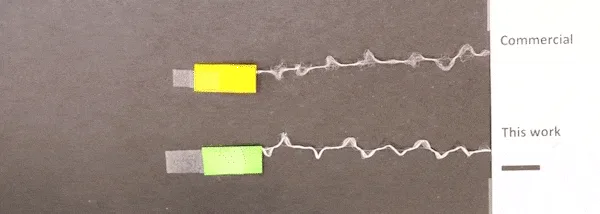
To unequivocally demonstrate the yarn’s inherent recyclability, the MIT researchers conducted a rigorous test. They spun a spool of their polyethylene-based yarn, then melted it down and re-spun it into new yarn, repeating this entire process multiple times. Their findings were highly encouraging: even after ten complete cycles of melting and re-spinning, the regenerated yarn retained its original strength and flexibility, proving to be as robust and pliable as conventional thread. This remarkable durability through repeated recycling cycles underscores the material’s potential for long-term sustainability.
The team specifically positions this new yarn as a viable and superior alternative to existing elastic materials such as spandex-polyester or spandex-nylon blends. The critical drawback of these widely used combinations lies in their multi-fiber composition, which renders them virtually impossible to recycle together effectively. In stark contrast, MIT’s innovative yarn is meticulously crafted from a precise combination of polyethylene-based plastic materials. This thoughtful design not only successfully mimics the desirable tough and stretchy characteristics of traditional spandex yarns but also ensures easy, integrated recyclability, circumventing the complex and often environmentally harmful separation processes required for mixed-fiber textiles.
The Pervasive Challenge of Textile Waste
The scale of the global textile waste crisis is immense and rapidly expanding, driven largely by the advent of "fast fashion." This business model encourages rapid consumption of inexpensive, trend-driven clothing, leading to shorter garment lifespans and increased disposal rates. According to the U.S. Environmental Protection Agency (EPA), textile waste in municipal solid waste (MSW) reached 17 million tons in 2018, with only 2.5 million tons being recycled, resulting in a dismal recycling rate of 14.7%. The vast majority—11.3 million tons—ended up in landfills, while 3.2 million tons were combusted for energy recovery. These figures represent a dramatic increase from just 2 million tons of textile waste generated in 1960, highlighting the accelerating nature of the problem.
Beyond the sheer volume, the environmental repercussions of textile waste are multifaceted. Landfilling textiles contributes to greenhouse gas emissions, particularly methane from decomposing natural fibers in anaerobic conditions. Synthetic fibers, such as polyester, nylon, and spandex, are essentially plastics that do not biodegrade for hundreds of years, fragmenting instead into microplastics that pollute ecosystems and enter the food chain. Incineration, while reducing volume, releases pollutants into the atmosphere and wastes the embodied energy and resources used in manufacturing. Furthermore, the production of virgin textiles is incredibly resource-intensive, demanding vast quantities of water, energy, and often hazardous chemicals for dyeing and finishing. A circular economy for textiles, where materials are continually reused and recycled, is therefore not just desirable but increasingly imperative for environmental sustainability.
Svetlana Boriskina, a research scientist in MIT’s Department of Mechanical Engineering and a lead figure in this research, underscores the gravity of the current situation: “Eighty percent of textiles on the U.S. market currently contain some amount of spandex, which makes them nonrecyclable.” She adds, “There’s no widely adopted technology now that recycles textiles into textiles. With our new yarn, we hope to change that.” This statement encapsulates the ambitious goal of the MIT team: to introduce a scalable, practical solution that can fundamentally alter the landscape of textile manufacturing and disposal.
The detailed findings of this groundbreaking research have been formally documented and published in the esteemed journal ACS Materials Letters. The article, titled "Polyethylene-Based Thermo-Mechanically Recyclable Elastic Yarns for Circular Textiles," lists SeongHyeon Kim as the first author, alongside Duo Xu, Volodymyr Korolovych, Domingo Flores-Hernandez, Kaniz Moriam, and Daniel Braconnier as co-authors from MIT. Their collaborative efforts represent a significant stride in materials science and sustainable engineering.
The Core of the Problem: Mixed-Material Complexity
At the heart of the textile recycling challenge lies the inherent complexity of modern elastic yarns. Spandex, a polyurethane-based synthetic fiber, is renowned for its exceptional elasticity but lacks significant inherent strength. To overcome this, elastic yarns are typically constructed as a composite: a core of spandex is meticulously enveloped by a sheath of tougher, more durable polyester or nylon. This ingenious combination bestows elastic yarns with their characteristic blend of stretch and strength, making them indispensable in everything from activewear to everyday apparel.
However, this very material mixture, while functional, presents an insurmountable barrier to conventional recycling. To even contemplate recycling such a composite yarn, the polyester or nylon sheath would first require chemical separation from the spandex core. While the polyester-based sheath material could theoretically be melted down and reused after separation, there currently exists no viable or economically scalable method to recycle the yarn as a whole without this intricate and costly chemical treatment.
Boriskina elaborates on these hurdles: “Even though chemical separation technologies exist, they add extra cost and complexity, and usually require toxic chemicals that are harmful to the environment.” She concludes, highlighting the unfortunate outcome: “That’s why most stretchy garments go to the dump.” The environmental and economic inefficiencies associated with current recycling methodologies for mixed-fiber textiles underscore the urgent need for fundamentally new material solutions.
Pioneering Polyethylene as a Textile
The foundational work for this recent breakthrough began in 2021, when Boriskina’s group first successfully developed a novel yarn from polyethylene. Polyethylene is globally the most ubiquitous type of plastic, underpinning the manufacture of a vast array of products, from everyday grocery bags and water bottles to industrial pipes and various consumer goods. Critically, polyethylene is a thermoplastic, meaning it possesses the invaluable property of being able to be melted down and subsequently reformed, making it inherently recyclable.
Historically, polyethylene had not been seriously considered for textile applications due to perceived limitations in comfort, drape, and dyeability. However, Boriskina and her colleagues challenged this perception. In their previous work, they demonstrated the feasibility of spinning polyethylene into yarn, which they then successfully wove into various garments. In those initial experiments, their focus was on leveraging polyethylene’s unique properties, such as its moisture-wicking capabilities, stain resistance, and inherent cooling characteristics, paving the way for its re-evaluation as a high-performance textile fiber.
The "Spaghetti Machine": Crafting Recyclable Elasticity
In their latest study, the MIT team’s primary objective was twofold: to specifically tailor polyethylene yarn to emulate the strength and flexibility characteristic of spandex, and to definitively prove the material’s full recyclability. Their approach was systematic and comprehensive.
They first embarked on an extensive search for formulations of stretchy, polyethylene-based copolymers that could effectively serve as a monomaterial analog for a spandex elastic core. Concurrently, they engineered distinct polyethylene yarns capable of acting as the sturdier sheath component. This meticulous exploration involved delving deep into scientific literature and poring over industrial reports, evaluating numerous chemical variations of polyethylene to identify the optimal candidates for each component of the composite yarn.
Boriskina provides an insightful analogy to explain the chemical versatility of polyethylene: “The chemical structure of polyethylene is like Christmas garland — a backbone of carbon, carbon, carbon, and also these dangling ‘decorations’ of hydrogen atoms or short branches with the same structure as a backbone.” She further clarifies, “How these chains are arranged can change the properties of the whole structure.” This structural flexibility is key to engineering polyethylene with diverse properties.
First author SeongHyeon Kim reinforces this point, adding, “Polyethylene can give us a wide range of properties, depending on how you make it.” This inherent adaptability of polyethylene allowed the team to precisely tune its characteristics for textile applications.
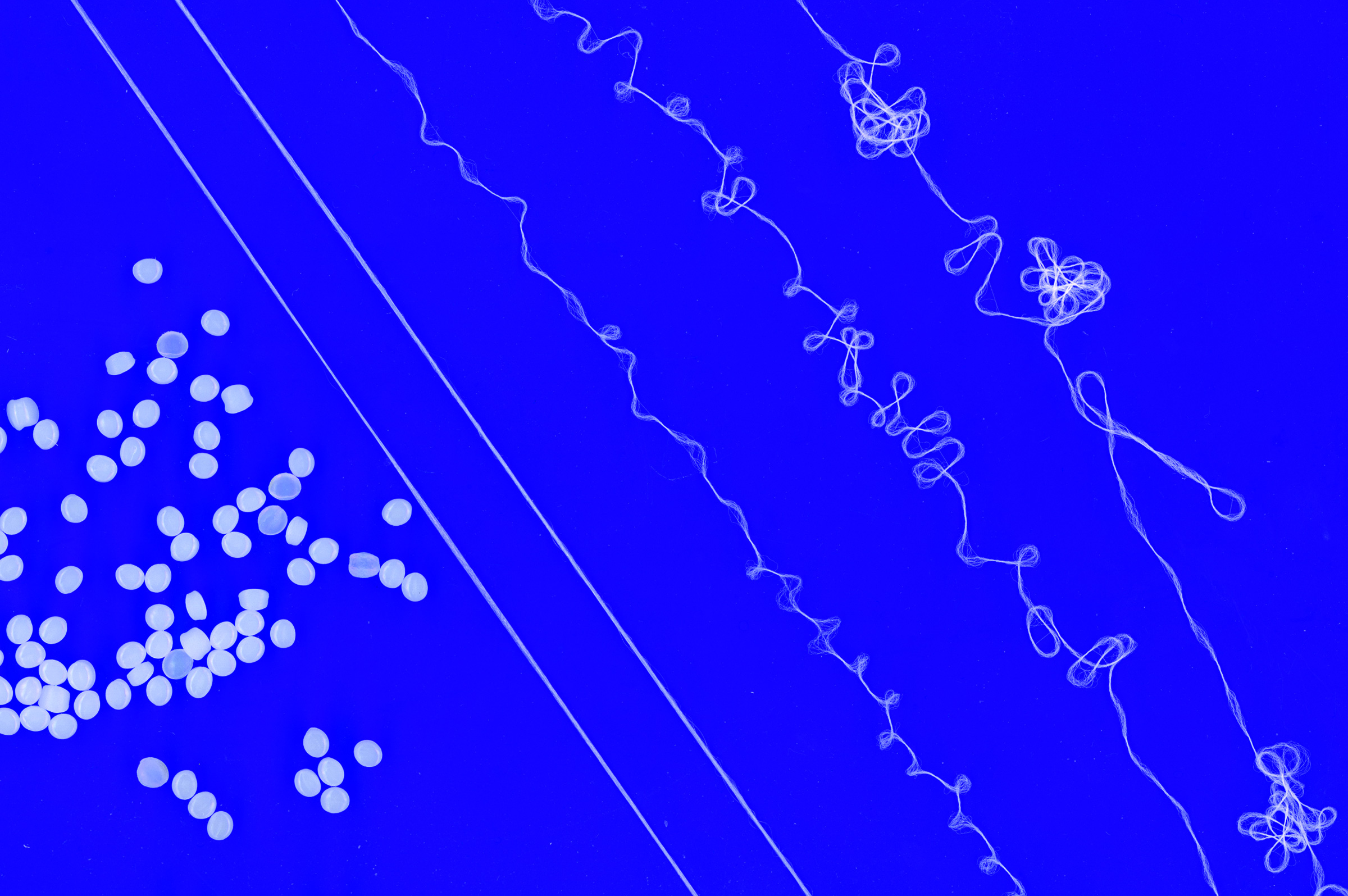
For the core component of their innovative yarn, the team selected a specific polyethylene-based resin known to yield a more inherently stretchy fiber. For the yarn’s sheath, they opted for a second, stiffer polyethylene resin. The researchers procured pellets of each resin type directly from a chemical manufacturer. These pellets then underwent a specialized fiber fabrication process: they were poured into a hopper, heated to approximately 350 degrees Fahrenheit—well past their melting temperature—and the resulting molten polyethylene was then meticulously drawn through small extruders to create hair-thin fibers.
Kim likens this process to a common kitchen appliance: “You just melt it in a barrel with a heater, and then you extrude and spin it into fibers. It’s like a spaghetti machine.” This simplified, mechanical process highlights the potential for industrial scalability.
The final step in creating the elastic yarn involved using an industrial yarn spinner to precisely wind the sheath fibers around a central core fiber. This composite structure forms the final, highly elastic and strong yarn.
The critical innovation lies in the material homogeneity. Because both the yarn’s core and its sheath are derived from the same fundamental chemical family—polyethylene—Boriskina emphasizes that, unlike spandex-based elastic yarns, these materials do not necessitate separation prior to recycling. The new yarn can be melted down in its entirety and reformed into new yarn or other plastic products without complex, energy-intensive, or toxic chemical processes.
“Because they are exactly the same chemistry, they play nicely together,” Boriskina affirms. “That’s what makes this yarn very recyclable.” This chemical compatibility is the cornerstone of its sustainable design.
Demonstrating Durability and Paving the Way for a Circular Economy
To rigorously validate their claims, the MIT team conducted a compelling demonstration of the yarn’s recyclability. They meticulously twisted an elastic core-sheath yarn, then subjected it to a melting process, followed by re-spinning, repeating this cycle a remarkable ten times. After each cycle, they performed precise mechanical property tests. This involved carefully stretching a thread and measuring the exact pulling force required for the thread to eventually break. Their findings were conclusive: the recycled versions of the yarn consistently exhibited strength levels comparable to the original sheath yarn. This indicates that the material integrity is maintained through multiple recycling loops. Moreover, these recycled yarns can subsequently be used to create new stretchy yarns by being twisted around a newly spun elastic core, further closing the loop.
Boriskina expresses enthusiasm for the immediate next steps: “Now we have something that can be knitted and woven. That is the next stage.” This signals the transition from laboratory demonstration to practical application, where the yarn will be integrated into textile production processes.
The team confidently asserts that their innovative recipe for polyethylene yarn is inherently scalable and can be readily adapted for industrial-sized spools. Just like conventional spandex fibers, the production of a single textile would necessitate kilometers of this specialized yarn. However, once woven into a garment and reaching the end of its useful life, the team envisions a future where a polyethylene garment could be conveniently deposited into a dedicated recycling bin. From there, it would be sent to a specialized facility, melted down, and re-spun into new yarn, thus enabling a more sustainable and truly circular fashion and textile economy.
Boriskina articulates the overarching vision: “Hopefully it will prevent the need for making more and more textile materials, because you can keep recycling a large portion of it.” This perspective underscores the potential for a paradigm shift, moving away from a linear "take-make-dispose" model towards a regenerative system where materials are continuously valued and recirculated.
Broader Implications and the Future of Fashion
The development of MIT’s recyclable polyethylene yarn carries profound implications for the fashion industry, environmental policy, and consumer behavior. For fashion brands grappling with increasing consumer demand for sustainability and mounting regulatory pressure, this innovation offers a tangible pathway to significantly reduce their environmental footprint. Brands could potentially design collections with end-of-life recyclability in mind, fostering greater transparency and circularity in their supply chains. This could lead to a new generation of "eco-activewear" or "sustainable everyday wear" that doesn’t compromise on performance or style.
However, the widespread adoption of this technology will not be without its challenges. Establishing the necessary collection and recycling infrastructure on a global scale will require substantial investment and collaboration between manufacturers, recyclers, and governments. Consumer education will also be crucial to ensure proper disposal and participation in new recycling schemes. Furthermore, the cost-competitiveness of polyethylene yarn compared to established alternatives like spandex-polyester blends will be a key factor in its market penetration. Yet, as the environmental costs of conventional practices become increasingly apparent, the economic viability of sustainable alternatives is likely to improve.
This MIT research is part of a broader global movement towards sustainable textiles, which includes advancements in enzymatic recycling of cotton, development of bio-based synthetic fibers, and sophisticated mechanical sorting technologies for mixed textiles. The polyethylene yarn offers a particularly elegant solution for elasticity, tackling a notoriously difficult segment of textile waste. By focusing on a monomaterial approach that is both high-performing and easily recyclable, the MIT team has made a significant contribution to the ongoing quest for a truly circular economy in the textile sector.
This critical work was made possible through the generous support of several key organizations, including the DEVCOM Soldier Center, facilitated by the U.S. Army Research Office, the Office of Naval Research Global via Tecnologico de Monterrey, and the MIT Portugal Program. This backing highlights the strategic importance of this research not only for environmental sustainability but also for potential applications in performance textiles for military and defense sectors, where durability and resource efficiency are paramount. As the world confronts the growing environmental toll of its consumption habits, innovations like MIT’s recyclable yarn offer a promising glimpse into a more sustainable future for the clothes we wear every day.