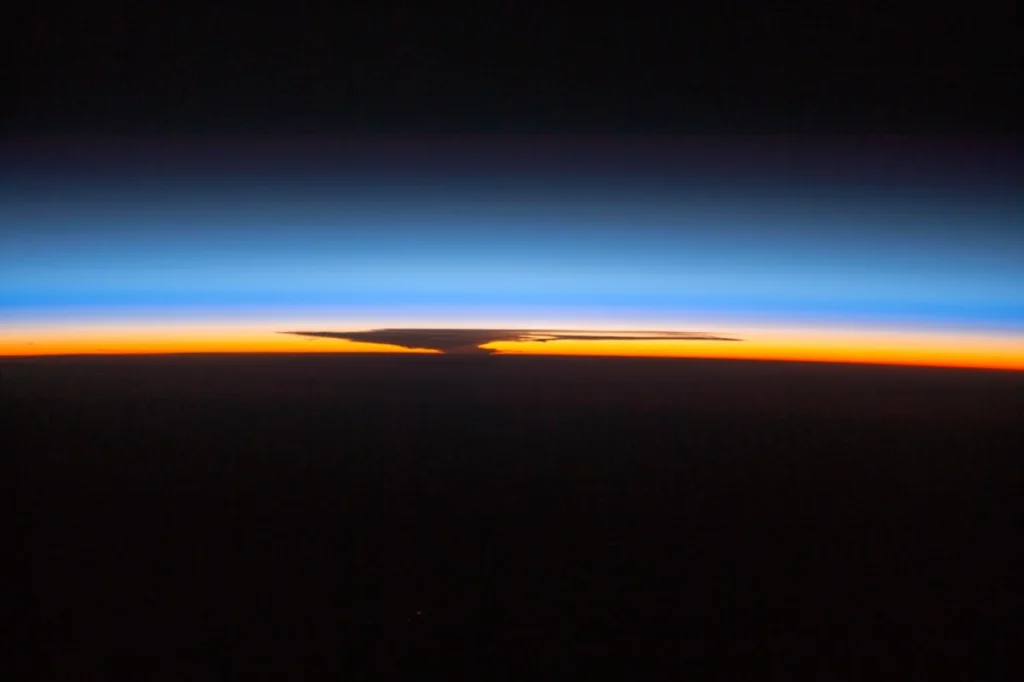
The stratosphere, a critical region of Earth’s atmosphere located between approximately 10 and 50 kilometers above the surface, serves as the planet’s primary shield against lethal ultraviolet radiation. Within this region lies the ozone layer, a concentration of triatomic oxygen molecules that absorbs the bulk of the sun’s high-frequency UV light. While professional meteorological agencies and organizations like NASA utilize sophisticated satellite arrays and high-altitude balloons to monitor this layer, a new frontier of citizen science has emerged. By employing high-precision electrometer-grade amplifiers and specialized optical components, amateur researchers can now accurately measure the vertical distribution and height of the ozone layer from the ground. This process, known as twilight photometry, relies on the physical principles of light absorption and atmospheric geometry to provide data that rivals professional observations.
The Scientific Foundation of Twilight Photometry
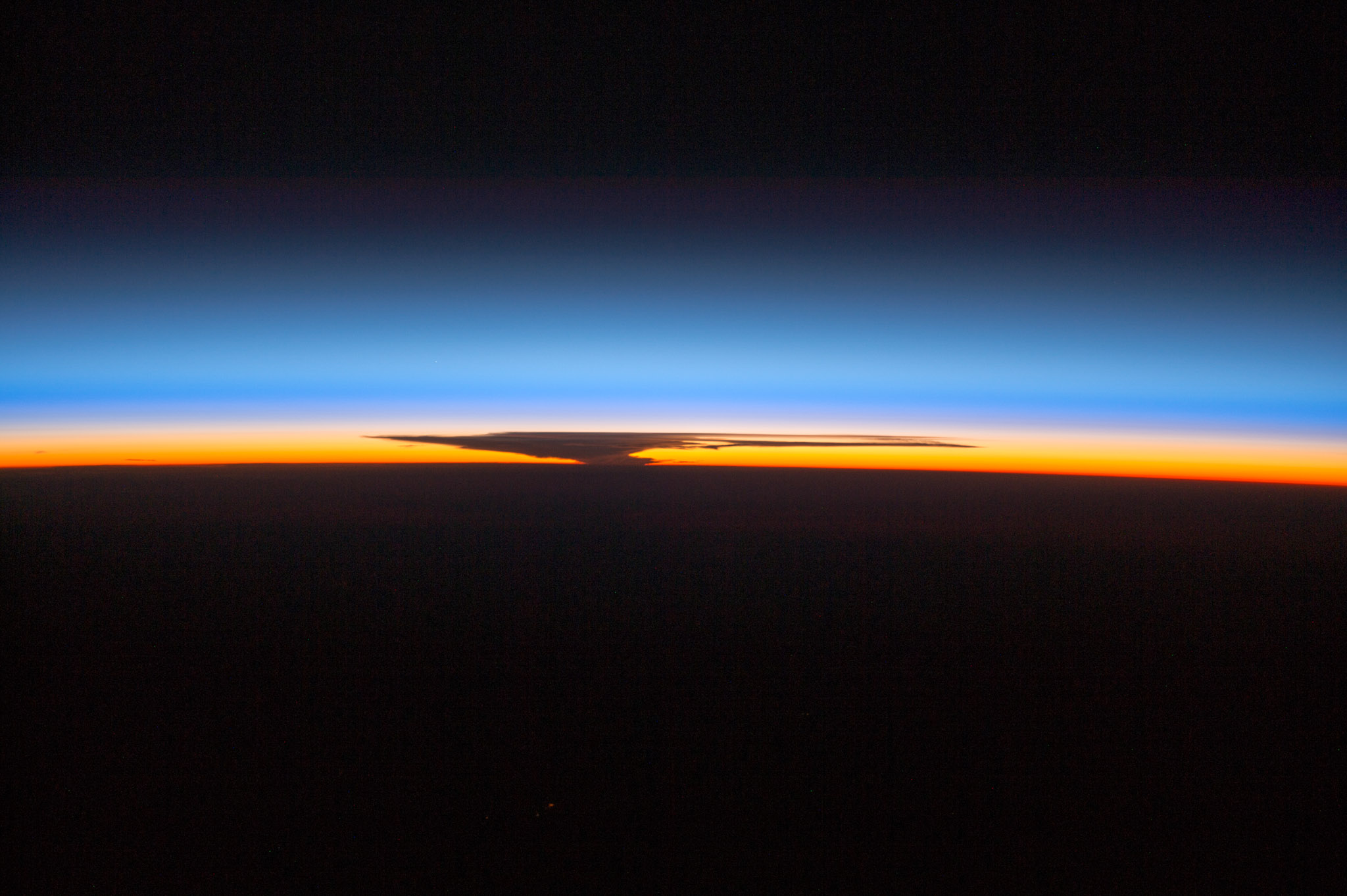
The methodology for measuring the ozone layer from the ground rests on the Chappuis absorption band. Ozone molecules have a specific absorption cross-section in the visible spectrum, particularly between 500 and 700 nanometers, peaking near 600 nanometers (red light). During twilight—the period just before sunrise or just after sunset—the sun is positioned below the horizon from the perspective of a ground observer. However, the upper atmosphere remains illuminated.

As the sun sinks further below the horizon, the "shadow" of the Earth moves upward through the atmosphere. The light reaching a ground-based photometer must pass tangentially through the atmosphere, traveling a much longer path through the ozone layer than it would at midday. By measuring the intensity of red light (620nm) as the Earth’s shadow climbs, researchers can identify the altitudes where the light intensity drops most significantly, which corresponds to the peak concentration of ozone.
Hardware Specifications and Engineering Precision
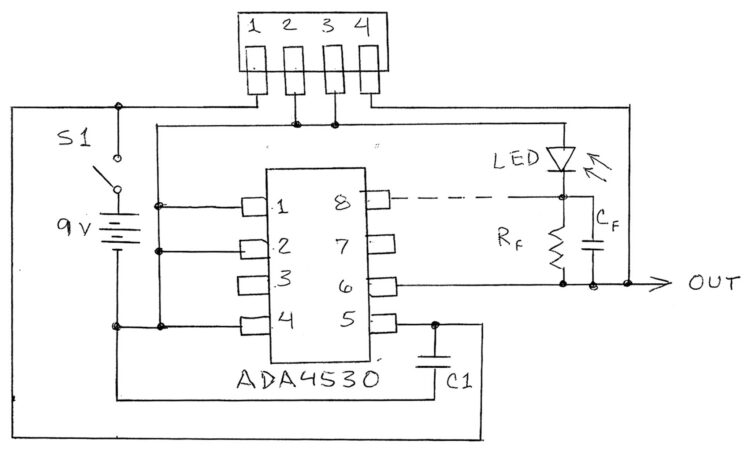
To capture these subtle changes in light intensity, the instrumentation must be capable of detecting extremely low signals. The heart of the modern amateur ozone photometer is the ADA4530-1, an electrometer-grade operational amplifier. This chip is designed for ultra-low input bias currents, making it sensitive enough to process the femtoampere-level signals generated by an LED used in reverse-bias or photovoltaic mode.
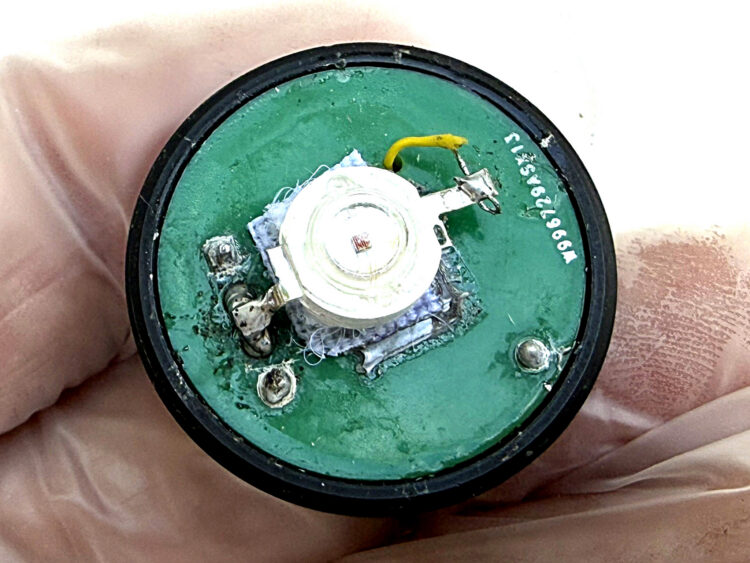
The sensor itself is a standard 620nm red LED. While LEDs are typically used to emit light, they function as highly wavelength-specific photodiodes when exposed to external light. The 620nm LED is chosen specifically because its spectral response aligns with the Chappuis absorption band. To convert the tiny current from the LED into a measurable voltage, a massive feedback resistor—typically 5 GΩ to 10 GΩ (Gigaohms)—is used. This level of amplification requires extreme care in assembly, as even a fingerprint or a microscopic layer of dust on the circuit board can create a conductive path that overwhelms the atmospheric signal.
Chronology of Assembly and Protocol
The construction of a twilight photometer is a multi-stage process that prioritizes environmental control and technical precision. The following chronology outlines the development of a high-gain photometer system.
Phase 1: Sterilization and Component Preparation
The assembly begins in a controlled, dust-free environment. Because the ADA4530-1 is sensitive to currents as small as 20 femtoamperes, the printed circuit board (PCB) must be chemically cleaned. This involves a thorough wash with high-purity isopropyl alcohol and the use of canned air to remove any residue. From this point forward, the technician must wear disposable vinyl gloves to prevent skin oils from contaminating the high-impedance traces.
Phase 2: Semiconductor Integration
The ADA4530 amplifier is a surface-mount device (SMD) that requires specialized handling. A critical step in the assembly is the isolation of Pin 8, the input pin. To prevent "leakage" currents from the board itself, Pin 8 is often bent away from the board and soldered directly to the sensor leads in mid-air—a technique known as "dead-bug" wiring or guarding. This ensures that the signal from the LED enters the amplifier without being degraded by the PCB material’s inherent resistance.
Phase 3: Optical Housing and Lens Alignment
The electronic assembly is housed within a light-tight enclosure. For maximum accuracy, the LED is placed at the focal point of a high-quality glass lens. Professional-grade lens tubes, such as those manufactured by Thorlabs, are often used to provide a rigid, threaded environment that allows for precise focus adjustment. The lens narrows the field of view, ensuring the photometer is measuring a specific column of the atmosphere rather than scattered light from the horizon.
Phase 4: Integration with Data Logging Systems
The output of the amplifier is connected to a high-resolution data logger, such as a 16-bit Onset system. Because the changes in twilight intensity occur over several orders of magnitude, a high-resolution analog-to-digital converter is necessary to capture the nuances of the ozone absorption curve.
Supporting Data and Field Observations
Field tests conducted at a latitude of 29.6 degrees North (Texas, USA) demonstrate the efficacy of this amateur-built hardware. During a series of cloud-free twilight sessions, researchers recorded the vertical profile of the atmosphere from the ground up to approximately 150 kilometers.

The data typically reveals a "bulge" or a distinct change in the rate of light decay when the Earth’s shadow reaches the stratosphere. In these specific trials, the average peak height of the ozone layer was measured at 25.13 kilometers. This ground-based result shows a remarkable correlation with satellite data provided by NASA’s Ozone Monitoring Instrument (OMI), which averages the ozone peak at approximately 25 kilometers for the same latitude.
However, the data is not without challenges. Atmospheric aerosols—such as dust from the Sahara, smoke from forest fires, or volcanic ash—can cause secondary peaks in the data. To account for this, advanced amateur scientists are now experimenting with dual-wavelength measurements. By simultaneously recording light at 885nm (near-infrared), where ozone absorption is negligible, they can subtract the effects of aerosols from the 620nm ozone signal, resulting in a cleaner measurement of the gas concentration.
The Evolution of Ozone Monitoring
The ability of private citizens to measure the stratosphere marks a significant shift in the history of atmospheric science. For decades, ozone monitoring was the exclusive domain of national governments. The Dobson Spectrophotometer, developed in the 1920s, was the standard for ground-based measurement but remained too expensive and complex for individual use.

The 1987 Montreal Protocol, which phased out ozone-depleting substances like chlorofluorocarbons (CFCs), sparked a global interest in tracking the "ozone hole." While the ozone layer is currently in a state of slow recovery, it remains vulnerable to climate change and new industrial pollutants. Low-cost, high-precision amateur photometers provide a "ground-truthing" mechanism, offering localized data that can supplement the broad-swath measurements taken by satellites.
Broader Impact and Implications
The implications of widespread amateur ozone monitoring are both educational and scientific. In an era where data transparency is paramount, the ability for independent researchers to verify atmospheric conditions fosters a more informed public.
Furthermore, the hardware used for ozone photometry has applications beyond environmental science. The skills required to build ultra-high-gain electrometers—managing femtoampere currents, mastering SMD soldering, and understanding optical physics—are the same skills needed in medical imaging, particle physics, and aerospace engineering.
As the technology continues to mature, the scientific community is beginning to recognize the value of "crowdsourced" atmospheric data. A network of amateur photometers distributed across various latitudes could provide real-time monitoring of the Junge Layer (an aerosol layer at 20km) and track the movement of high-altitude pollutants with higher temporal resolution than current satellite orbits allow.
In conclusion, the transition of ozone measurement from high-budget government laboratories to the workshops of amateur scientists represents a democratization of environmental surveillance. By combining a 620nm LED, a Gigaohm resistor, and a disciplined assembly protocol, the "amateur scientist" can look upward through the twilight and accurately gauge the thickness of the very shield that makes life on Earth possible. This endeavor is a testament to the power of precision electronics and the enduring human drive to understand the invisible structures of our world.