A burgeoning global crisis of textile waste, characterized by overflowing landfills and the environmental strain of incineration, may soon find a significant solution through a groundbreaking innovation from engineers at the Massachusetts Institute of Technology (MIT). Their recent development introduces a novel, recyclable yarn crafted from a form of plastic commonly associated with milk bottles and grocery bags, offering a viable pathway to a truly circular economy for fashion and textiles. This material, which mimics the tactile properties of traditional sewing thread, can be woven into flexible, lightweight garments and, critically, melted down and re-spun into new yarn or even molded into other plastic components like buttons and belt buckles, without degradation in quality.
The problem of textile waste is immense and growing. Annually, the average American discards approximately 81 pounds of clothing, contributing to a staggering 11 million tons of textiles that are either landfilled or incinerated. Globally, these figures escalate dramatically. The World Bank estimates that the fashion industry is responsible for 10% of global carbon emissions and is the second-largest consumer of the world’s water supply, with a significant portion of clothing produced being disposed of quickly. This rapid consumption and disposal cycle is largely fueled by the rise of "fast fashion," where trends change quickly, and garments are produced cheaply, encouraging frequent purchases and rapid obsolescence. Unlike glass bottles or aluminum cans, there is currently no widely adopted, scalable process for recycling textiles back into new textile fibers, especially when dealing with the complex blends of materials that characterize modern clothing.
The Pervasive Challenge of Textile Waste
The scale of textile waste is a critical environmental and economic issue. Landfills are rapidly filling with non-biodegradable synthetic fibers, which can take hundreds of years to decompose, releasing microplastics and harmful chemicals into the soil and water. The incineration of textile waste, while reducing volume, releases greenhouse gases and other pollutants into the atmosphere. Beyond disposal, the production of textiles is resource-intensive. Growing cotton requires vast amounts of water and pesticides, while manufacturing synthetic fibers like polyester relies heavily on fossil fuels. The dyeing process also contributes significantly to water pollution.
Current attempts at textile recycling face numerous hurdles. Donation centers, while a noble effort, are often overwhelmed, with only a fraction of donated clothes actually being resold or reused. Much of what is donated, especially lower-quality or damaged items, still ends up in landfills. Mechanical recycling, which involves shredding textiles into fibers, often results in shorter, lower-quality fibers suitable only for insulation, carpet padding, or other downcycled products, rather than new apparel. Chemical recycling processes, still largely in their infancy, aim to break down fabrics into their original monomers or polymers, but these methods are typically energy-intensive, complex, costly, and can involve hazardous chemicals, making them difficult to scale and environmentally problematic themselves.
The most significant barrier, and the specific target of MIT’s innovation, lies in blended fabrics. Modern apparel frequently combines different fiber types to achieve desired properties like stretch, durability, and comfort. A prime example is the ubiquitous spandex, often blended with polyester or nylon to create stretchy garments. These blends are notoriously difficult to recycle because the different materials require distinct separation processes, often chemical in nature, before they can be individually recycled.
MIT’s Breakthrough: A Recyclable Polyethylene Yarn
Addressing this formidable challenge, the MIT team has engineered a polyethylene-based yarn that offers a compelling alternative. Polyethylene (PE) is the most common plastic globally, found in everything from grocery bags and water bottles to industrial pipes. Crucially, PE is a thermoplastic, meaning it can be melted down and reformed repeatedly without significant material degradation, making it inherently recyclable. However, despite its ubiquity, polyethylene has not historically been considered a viable textile material.
This current research builds upon earlier work by Svetlana Boriskina’s group at MIT. In 2021, the team successfully demonstrated the ability to spin yarn from polyethylene, which they then wove into garments. Their initial experiments focused on harnessing PE’s inherent properties for moisture-wicking, stain resistance, and cooling, showcasing its potential beyond traditional plastic applications. The present study, however, pushes the boundaries further, specifically tailoring polyethylene yarn to emulate the strength and flexibility of spandex while rigorously proving its recyclability.
The innovation centers on creating a yarn with a core-sheath structure, similar to conventional elastic threads. Traditional elastic yarns consist of a stretchy spandex core wrapped in a more robust sheath of polyester or nylon. The MIT team replicated this design using only variations of polyethylene. They meticulously researched and evaluated numerous chemical formulations of polyethylene-based copolymers to identify one that could serve as the stretchy core and another, stiffer polyethylene resin for the sheath.
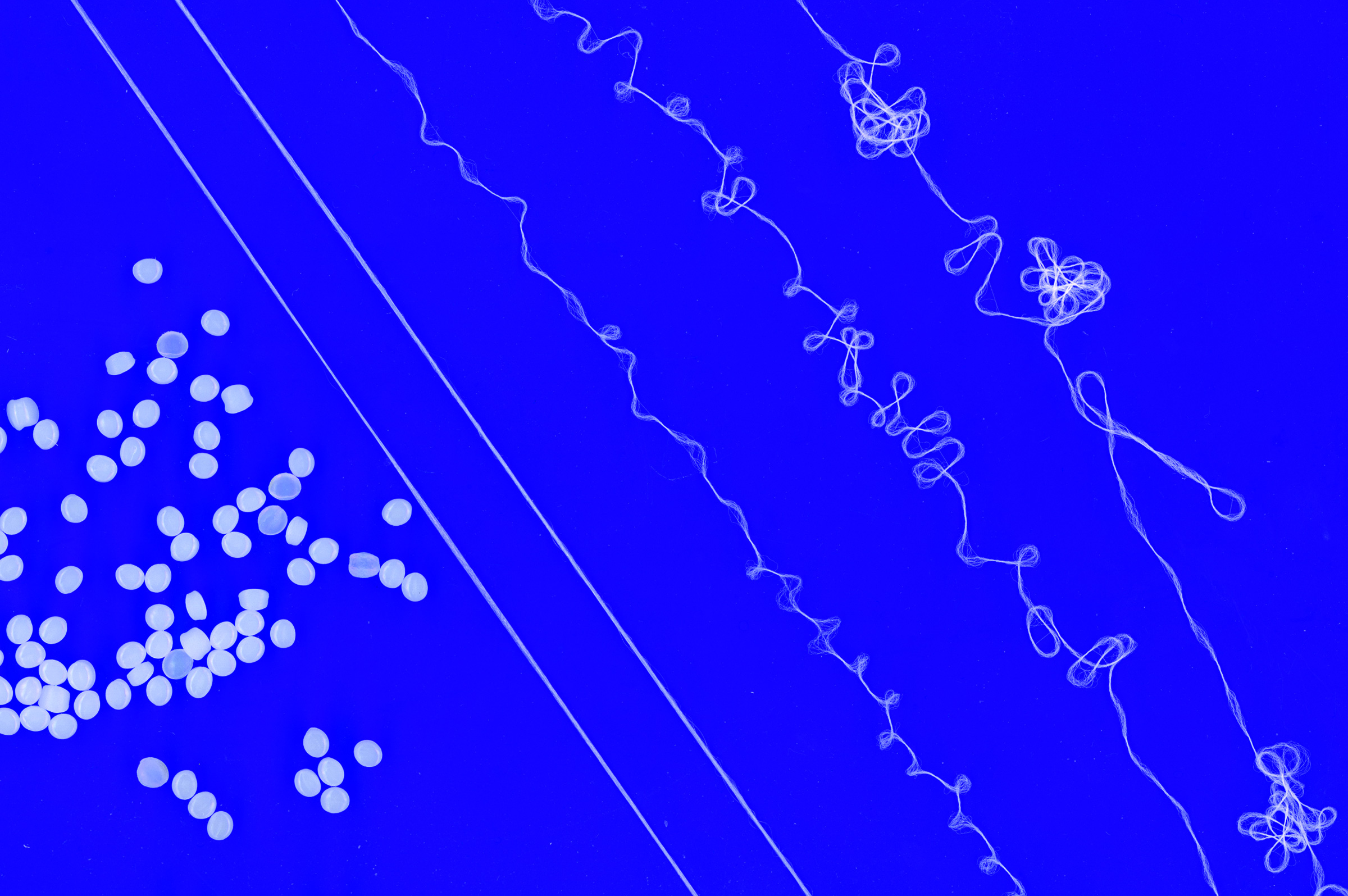
The fabrication process, described by first author SeongHyeon Kim as akin to a "spaghetti machine," begins with polyethylene resin pellets. These pellets are heated to approximately 350 degrees Fahrenheit, melting them into a viscous liquid. This molten polyethylene is then extruded through fine openings to create hair-thin fibers. An industrial yarn spinner then winds the stiffer sheath fibers around the more elastic core fiber, creating the final composite yarn.
The critical advantage of this approach lies in the chemical uniformity of the materials. "Eighty percent of textiles on the U.S. market currently contain some amount of spandex, which makes them nonrecyclable," explains Svetlana Boriskina, a research scientist in MIT’s Department of Mechanical Engineering. "There’s no widely adopted technology now that recycles textiles into textiles. With our new yarn, we hope to change that." She further elaborates, "Even though chemical separation technologies exist, they add extra cost and complexity, and usually require toxic chemicals that are harmful to the environment. That’s why most stretchy garments go to the dump." In contrast, because both the core and the sheath of the MIT yarn are derived from the same chemical family of polyethylene, they "play nicely together," as Boriskina puts it. This means the materials do not require arduous and costly chemical separation before recycling. The entire yarn can be melted down as a whole and reformed into new yarn or other polyethylene products.
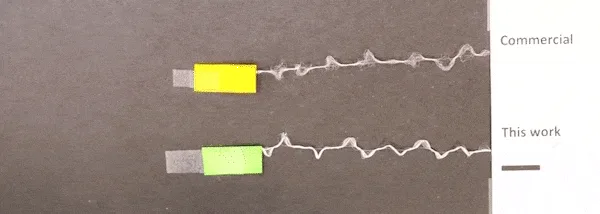
To robustly demonstrate the yarn’s recyclability, the researchers subjected it to an intensive testing protocol. They spun a spool of the new yarn, then melted it down and re-spun it into new yarn, repeating this process an impressive ten times. After each cycle, the yarn’s mechanical properties were assessed by stretching a thread and measuring the force required to break it. The results were highly encouraging: even after ten recycling cycles, the yarn retained its original strength and flexibility, performing comparably to conventional thread. This finding is pivotal, as it indicates the potential for true closed-loop recycling without significant downcycling or material degradation.
The Spandex Dilemma and a New Path Forward
The widespread use of spandex (Lycra, elastane) has been a double-edged sword for the textile industry. Its unique elastic properties revolutionized activewear, denim, and countless other garments, providing unparalleled comfort and fit. However, its polyurethane-based chemistry and the necessity of blending it with other fibers have created an insurmountable recycling barrier for the vast majority of stretchy textiles. The chemical structure of polyethylene, as Boriskina describes, is like "Christmas garland – a backbone of carbon, carbon, carbon, and also these dangling ‘decorations’ of hydrogen atoms or short branches with the same structure as a backbone. How these chains are arranged can change the properties of the whole structure." This versatility allows MIT engineers to manipulate polyethylene’s properties to achieve both stretch and strength within the same material family.
By developing a polyethylene-based yarn that mimics the tough and stretchy properties of spandex yarns, MIT has effectively sidestepped the core problem of blended materials. Instead of needing to separate chemically distinct components, the entire garment, when made from this new yarn, can be processed as a single material. This simplification drastically reduces the complexity, cost, and environmental footprint associated with textile recycling, paving the way for a practical and scalable solution.
Broader Impact and Implications for a Sustainable Future
The implications of this breakthrough extend far beyond the laboratory, potentially ushering in a paradigm shift across the entire textile and fashion ecosystem.
Economic Implications:
A truly recyclable yarn could foster a new circular economy for textiles, reducing the industry’s reliance on virgin raw materials and mitigating price volatility associated with their extraction. It could also spur innovation in textile recycling infrastructure, creating new jobs and business models. Companies that adopt this technology could gain a significant competitive advantage in a market increasingly driven by sustainability concerns, potentially leading to lower production costs in the long run by utilizing recycled materials. The "next stage" of scaling up production to industrial-sized spools and integrating it into existing knitting and weaving processes will be crucial for economic viability.
Environmental Implications:
The environmental benefits are profound. A widespread adoption of this recyclable polyethylene yarn could drastically reduce the volume of textiles sent to landfills and incinerators, cutting down on greenhouse gas emissions and pollution. By enabling closed-loop recycling, it would decrease the demand for new plastic production, conserving fossil fuel resources. Furthermore, if the production of this yarn and its subsequent recycling proves to be less water and energy-intensive than traditional textile manufacturing, it would contribute significantly to reducing the overall environmental footprint of the fashion industry.
Societal and Consumer Implications:
For consumers, this innovation promises genuinely sustainable clothing options. The current landscape of "eco-friendly" fashion often involves complex supply chains and vague promises, making it difficult for consumers to make truly informed choices. A clear, demonstrably recyclable material could simplify this, allowing consumers to participate directly in a circular economy by simply placing their old garments in a dedicated recycling bin. This could also shift consumer perceptions of synthetic fabrics, traditionally viewed as less sustainable than natural fibers, by highlighting their potential for circularity.
Policy Implications:
The availability of such a readily recyclable material could also influence policy. Governments and regulatory bodies might be incentivized to develop new frameworks for textile collection and recycling, including Extended Producer Responsibility (EPR) schemes that hold manufacturers accountable for the end-of-life management of their products. This could create a robust ecosystem that supports the widespread adoption and effective recycling of these new materials.
Challenges and the Road Ahead
While the MIT team’s innovation is highly promising, several challenges remain before it can achieve widespread impact. Scaling up production from laboratory samples to industrial quantities will require significant investment and collaboration with textile manufacturers. Ensuring that the yarn performs comparably to existing materials in terms of comfort, drape, breathability, and aesthetic appeal will be critical for consumer acceptance. The development of a dedicated collection and processing infrastructure for polyethylene textiles will also be essential to close the loop effectively.
Despite these hurdles, the research, detailed in a study published in the journal ACS Materials Letters by SeongHyeon Kim, Duo Xu, Volodymyr Korolovych, Domingo Flores-Hernandez, Kaniz Moriam, Daniel Braconnier, and Svetlana Boriskina, represents a monumental step forward. The work, supported in part by the DEVCOM Soldier Center through the U.S. Army Research Office, the Office of Naval Research Global via Tecnologico de Monterrey, and the MIT Portugal Program, underscores the critical role of material science in addressing global sustainability challenges.
As Boriskina concludes, "Now we have something that can be knitted and woven. That is the next stage." The vision is clear: a future where a polyethylene garment, once worn out, can be simply dropped into a recycling bin, melted down, and reborn as new yarn or other useful plastic products. This holds the promise of dramatically reducing the need for virgin textile materials and fostering a genuinely sustainable, circular fashion and textile economy for generations to come. The era of truly recyclable clothing, once a distant dream, appears to be drawing closer to reality, thanks to the ingenuity of MIT’s engineers.






