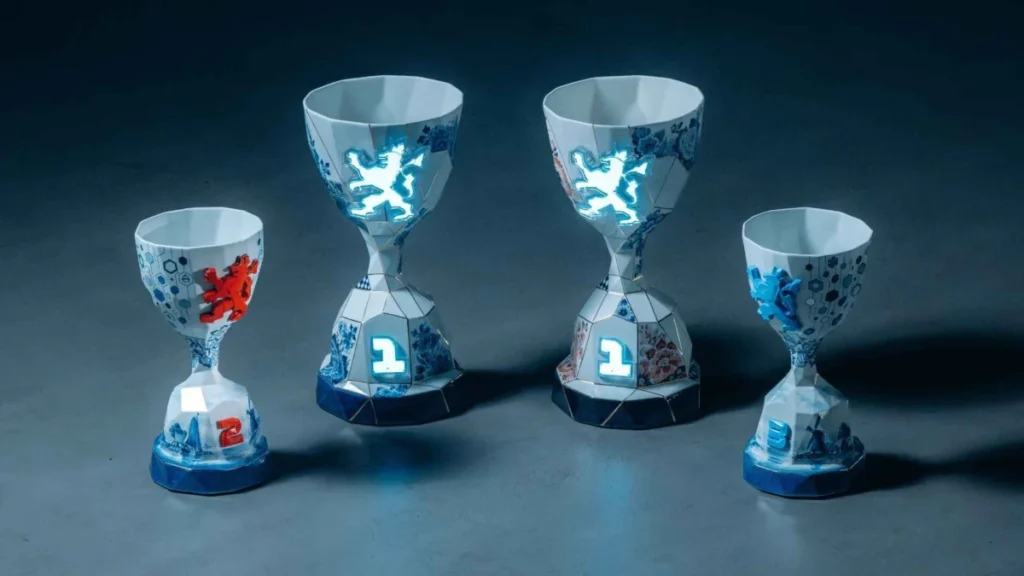
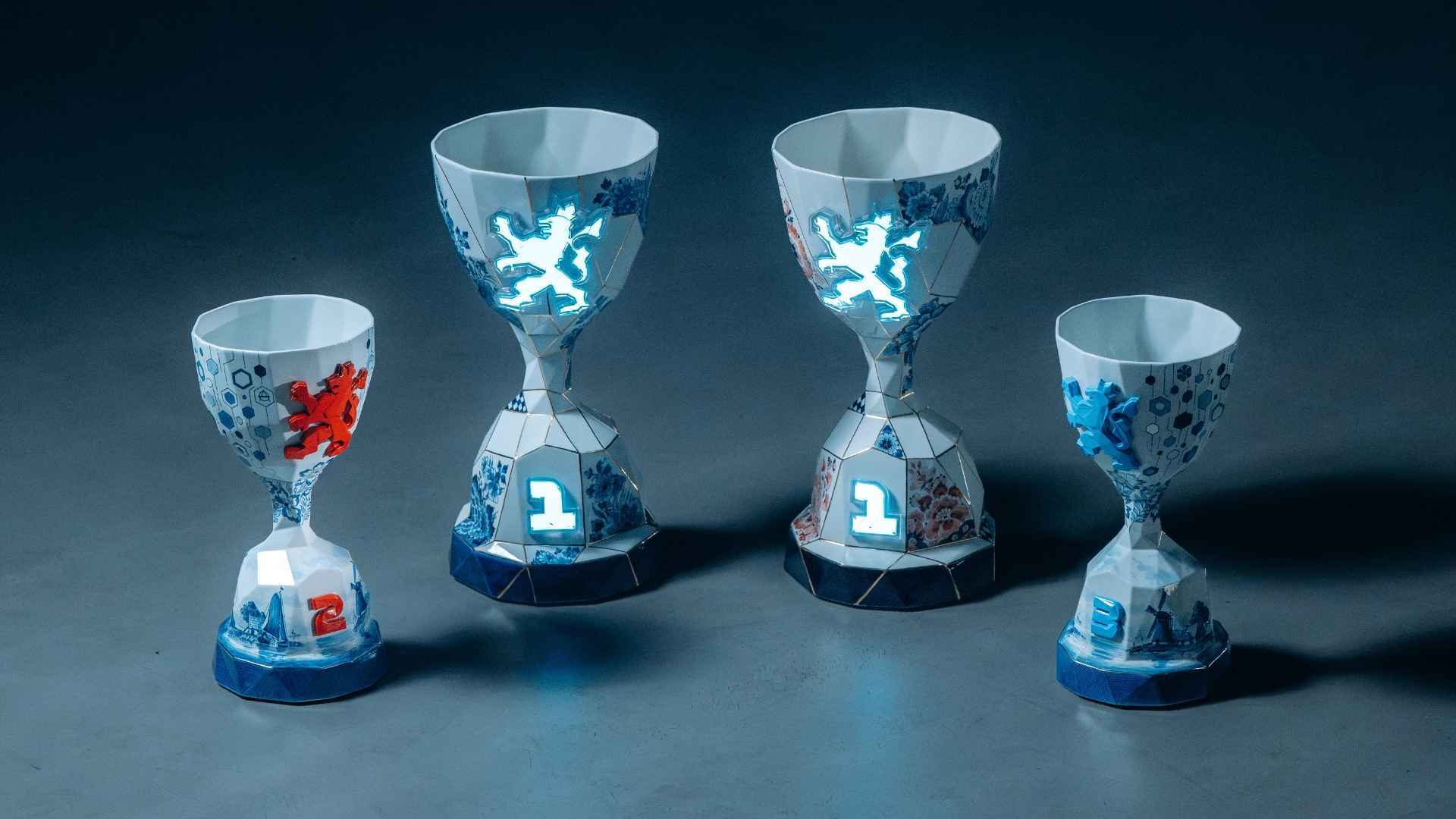
The trophies for the winner and the winning constructor represent a departure from static sporting memorabilia. By embedding specially developed electroluminescent materials into the iconic Dutch lion and the numerical designations on each piece, Wipprecht has transformed the porcelain into a living medium. This integration of technology into ceramic—a material known for its fragility and historical weight—highlights a new era of interactive design where objects possess their own expressive language.
The Convergence of Heritage and High-Tech Innovation
Royal Delft, established in 1653 as De Porceleyne Fles, is the last remaining original producer of Delft Blue porcelain in the Netherlands. For over three centuries, the company has maintained a reputation for meticulous hand-painting and high-quality glazing. Bringing this heritage into the high-octane world of Formula 1 required a delicate balance. The 2026 trophies maintain the classic cobalt blue and white aesthetic that has made Royal Delft a global household name, but they are now augmented by circuitry that mirrors the speed and energy of the Zandvoort circuit.
Anouk Wipprecht, known for her "Robotic Couture" and "Spider Dresses" that react to the wearer’s environment, brought her expertise in hardware and sensor integration to the project. Unlike her usual work in wearable technology, which focuses on the human body, this project required her to apply her skills to the rigid, kiln-fired medium of porcelain. The challenge lay in embedding electronic components within the ceramic structure without compromising the integrity of the material or the elegance of the hand-painted designs.
The inclusion of Don Diablo, a pioneer in the "Future House" music genre and a digital artist who has successfully bridged the gap between physical and NFT art, added a layer of modern cultural resonance. His influence is felt in the sleek, digital-forward aesthetic of the light patterns, which are designed to capture the "spark" of the race—the moment of triumph where mechanical precision meets human endurance.
Technical Specifications and Design Philosophy
The 2026 trophies utilize a proprietary electroluminescent (EL) material. Unlike standard LEDs, which provide point-source lighting, EL materials offer a uniform, soft glow that can be shaped into intricate patterns. Wipprecht specifically chose this medium to highlight the Dutch lion, a symbol of national pride, and the finishing position of the driver. The light is not merely an aesthetic addition; it is programmed to pulse with a rhythm that evokes the high-frequency vibrations of a Formula 1 engine.
Wipprecht’s design philosophy for this project was centered on "expression through technology." She argues that technology in art should not be used for its own sake, but rather to give an object a voice it did not previously have. In the context of the Dutch Grand Prix, the light represents the translation of kinetic energy—the speed of the cars on the track—into a visual medium that can be held in the hands of the victor.
The constructor’s trophy follows a similar design language, ensuring a cohesive visual identity for the podium ceremony. Each piece is hand-painted by Royal Delft’s master painters, a process that takes dozens of hours before the technological components are carefully integrated. This juxtaposition of a master painter’s brushstroke and a technician’s soldering iron represents a unique moment in the history of Dutch industrial design.
From the Circuit to Couture: The F1 Circuit Dress
True to her roots in FashionTech, Anouk Wipprecht did not stop at the trophies. To complement the presentation, she engineered the "F1 Circuit Dress," a wearable piece of technology that serves as a tribute to the Zandvoort track itself. This garment is more than a fashion statement; it is a data-driven piece of engineering designed to "wear the race."
The dress incorporates elements of the Zandvoort circuit’s layout and is equipped with lighting systems that react to the environment. This project, titled "From Circuit to Couture," explores the concept of "dressed for speed." It allows the wearer to embody the atmosphere of the Grand Prix, using the same electroluminescent technology found in the trophies to create a synchronized visual experience. For Wipprecht, the dress and the trophy are two halves of the same story: the human desire to capture and wear the intangible energy of a moment.

Chronology of the Royal Delft and Dutch Grand Prix Partnership
The partnership between Royal Delft and the Dutch Grand Prix began in 2021, marking the return of Formula 1 to the Netherlands after a 36-year hiatus. The evolution of the trophy design over these four years reflects the growing confidence and technological ambition of the organizers:
- 2021: The inaugural return saw a classic Delft Blue trophy, focusing on the revival of Dutch tradition on the world stage. It celebrated the heritage of Zandvoort and the national pride surrounding Max Verstappen’s rise.
- 2022-2024: Subsequent editions experimented with different shapes and patterns, occasionally incorporating recycled materials or subtle modern flourishes, while maintaining the hand-painted ceramic core.
- 2025: The penultimate edition began exploring more aggressive, aerodynamic forms in the porcelain, mirroring the evolution of F1 car design.
- 2026: The final edition introduces active technology. By bringing in Wipprecht and Don Diablo, the organizers have opted for a "grand finale" that looks toward the future of sports memorabilia and interactive art.
This four-year arc demonstrates a shift from looking backward at history to looking forward at the possibilities of "Smart Craftsmanship."
Broader Impact on Sports, Art, and Technology
The introduction of interactive, light-emitting trophies at a major sporting event like the Formula 1 Dutch Grand Prix has significant implications for the future of sports branding and memorabilia. As digital and physical worlds continue to merge, the demand for "phygital" (physical plus digital) objects is increasing. The 2026 trophies serve as a case study in how luxury brands and sporting organizations can modernize their traditions without losing their soul.
From a technological standpoint, the project pushes the boundaries of what is possible with ceramic materials. Ceramic is an insulator, making it an interesting housing for electronics, but its manufacturing process—involving extreme heat in kilns—presents significant hurdles for integrated circuitry. Wipprecht’s success here may pave the way for new applications of electronics in home decor, architecture, and other traditional craft sectors.
Furthermore, the collaboration highlights the Netherlands’ position as a hub for creative technology. By pairing a 373-year-old company with modern innovators, the Dutch Grand Prix organizers have reinforced the national identity of the "Maker" culture—a blend of pragmatic engineering and artistic flair.

Official Reactions and Podium Ceremony
The 2026 Formula 1 Heineken Dutch Grand Prix is scheduled to reach its climax on Sunday, August 23. The winner’s trophy will be presented by King Willem-Alexander of the Netherlands, a gesture that underscores the national significance of the event and the artistry involved.
While the racing community remains focused on the championship standings and the technical performance of the cars, the artistic community has lauded the collaboration. Critics have noted that Wipprecht’s work brings a "humanizing" element to the often-sterile world of high-tech racing. By using light to simulate a heartbeat or an engine’s pulse, she has created a trophy that feels alive.
Royal Delft representatives have expressed pride in this final installment of their F1 journey, stating that the project allowed their master painters to see their work in a literally new light. As the final Dutch Grand Prix trophies to be produced by the legendary pottery, these pieces are expected to become highly coveted items in the world of sports and art collecting.
As the engines cool and the lights on the 2026 trophies fade after the podium celebration, the legacy of this collaboration will remain. It stands as a testament to the idea that tradition is not the worship of ashes, but the preservation of fire—or in this case, the preservation of light within the heart of Delft Blue.