In the pursuit of the next generation of electronic components, the field of condensed matter physics has increasingly turned its attention toward quantum materials. These substances exhibit properties that defy classical physics, often hosting multiple electronic phases—such as magnetism and superconductivity—simultaneously. A recent study led by researchers at the Massachusetts Institute of Technology (MIT) has provided a significant breakthrough in understanding these complex interactions. Published today in the journal Nature Physics, the research details how two distinct phases of electron behavior emerge and coexist within a single quantum material, erbium tritelluride ($ErTe_3$).
The study, led by Nuh Gedik, the Donner Professor of Physics at MIT, alongside an international team of collaborators, demonstrates that these phases do not emerge in the same manner. While one phase follows the traditional, gradual transition described in physics textbooks, the second emerges in a sudden, "pocketed" fashion reminiscent of water freezing into ice. This discovery offers a powerful new lens through which scientists can view the hidden dynamics of quantum transitions, potentially paving the way for the development of high-performance quantum devices that could eventually replace silicon-based technology.
The Science of Coexisting Phases
To understand the significance of the MIT findings, one must first look at the concept of phase duality in everyday life. A glass of ice water represents a system where two phases of the same molecular compound—liquid and solid—coexist in equilibrium. In the quantum realm, electrons can similarly organize themselves into different phases. However, unlike the visible transition of water to ice, electronic phases are governed by quantum mechanics and are far more difficult to isolate and observe.
The material at the center of this study, erbium tritelluride, belongs to a class of rare-earth materials known for their layered structures. Under normal conditions, the electrons within $ErTe_3$ are distributed uniformly. However, as the material is cooled to cryogenic temperatures, the electrons undergo a collective reorganization. They spontaneously form a "charge density wave" (CDW), where the density of electrons fluctuates in a wave-like pattern across the crystal lattice.
In $ErTe_3$, this phenomenon is particularly complex because the material can host two such waves simultaneously. As the temperature drops, a "dominant" wave forms first in one direction. Upon further cooling, a "subdominant" wave emerges perpendicular to the first, creating an electronic checkerboard pattern.
Experimental Methodology: The Shake and Listen Approach
To untangle these coexisting phases, the MIT team employed a sophisticated technique described by Professor Gedik as "shake and listen." This method utilizes ultrafast laser spectroscopy to disturb the electronic order and then observe its recovery in real-time.
The researchers first cooled the $ErTe_3$ samples to approximately -230 degrees Celsius (around 43 Kelvin). At this temperature, the material is firmly in its checkerboard state, with both CDW phases fully established. The team then used a "pump" laser pulse to "shake" the system, effectively dissolving the electronic order. The intensity of this pulse could be adjusted to vary the level of disruption.
Immediately following the pump pulse, a second "probe" pulse of high-energy photons was used to eject electrons from the material. By measuring the energy and momentum of these ejected electrons—a technique known as time-resolved photoemission spectroscopy—the physicists could capture high-resolution snapshots of the material’s electronic structure as it attempted to return to its equilibrium state.
"We see the destroying of these phases, and then if we wait long enough, they come back," Gedik explained. "And depending on how you hit them, the two phases respond differently."
A Tale of Two Transitions
The most striking revelation of the study was the difference in how the two CDW phases recovered. The dominant phase, which forms at higher temperatures (-8 degrees Celsius), exhibited what physicists call a "second-order" phase transition. Regardless of the strength of the initial laser "kick," this phase reemerged gradually and uniformly across the entire material. This is the classic behavior expected in most electronic transitions, where the order parameter grows smoothly from zero.
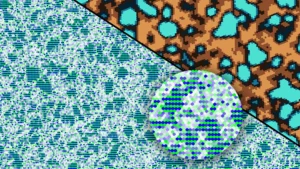
In contrast, the subdominant phase—the one that appears at lower temperatures (-113 degrees Celsius)—behaved in an entirely unexpected "first-order" manner. Instead of reforming uniformly, the electrons organized into isolated pockets or "nuclei" that then expanded to cover the material. This is analogous to the way ice crystals form in liquid water or how bubbles of steam appear in boiling water.
"The mechanism responsible for the emergence of this second phase has long been debated," Gedik stated. "Our approach provides a powerful new way to uncover the hidden physics behind phase transitions in quantum materials."
Supporting Data and Chronology of Research
The investigation into rare-earth tritellurides has been a subject of intense focus for over a decade. Previous research had established the transition temperatures for $ErTe_3$: the first CDW transition occurs at roughly 265 Kelvin (-8°C), and the second occurs at 160 Kelvin (-113°C).
The MIT study builds upon this foundation by providing the first temporal map of the recovery dynamics. The data indicated that the dominant phase recovered on a picosecond timescale (one-trillionth of a second) through a process of collective oscillation and damping. The subdominant phase, however, showed a distinct delay in its recovery, characteristic of the time required for spatial "islands" of the phase to nucleate and merge.
Lead author Yifan Su, who recently completed his PhD at MIT, emphasized the importance of using CDWs as a model. "The power of CDWs is that they are a much simpler form of matter compared to superconductivity. They offer a playground for fundamental understanding."
Technical Analysis: Implications for Quantum Computing
The findings have profound implications for the future of electronics and quantum computing. For decades, the semiconductor industry has relied on the miniaturization of silicon transistors. However, as these components approach the atomic scale, they face physical limits related to heat dissipation and quantum tunneling.
Quantum materials offer a potential alternative. By utilizing materials that can switch between different electronic phases, engineers could design "phase-change" devices that are faster and more energy-efficient than current silicon technology. Alfred Zong, a co-author of the study and now an assistant professor at Stanford University, noted that the cornerstone of replacing silicon lies in materials that possess multiple coexisting phases.
"Our experiment provides a very neat way to study these multiple phases," Zong said. "Understanding whether these phases reinforce one another, compete, or coexist independently is crucial for controlling electronic behavior at the quantum level."
Furthermore, the study provides insight into high-temperature superconductivity. In many "unconventional" superconductors, such as cuprates, charge density waves are known to coexist and often compete with the superconducting state. By understanding the "first-order" vs. "second-order" dynamics in a simpler system like $ErTe_3$, physicists can better predict how to manipulate these phases in materials that can carry electricity without resistance at higher temperatures.
Collaborative Effort and Funding
The research was a collaborative effort involving several institutions. While the primary experimental work was conducted at MIT, the atomically thin samples of erbium tritelluride were synthesized by experts at Stanford University. Other contributors included researchers from multiple international laboratories, highlighting the global interest in quantum material dynamics.
The study received support from several prestigious organizations, including the U.S. Department of Energy (DOE), the U.S. National Science Foundation (NSF), and the Gordon and Betty Moore Foundation’s EPiQS Initiative. This level of funding underscores the strategic importance of quantum materials research in maintaining technological competitiveness.
Future Horizons in Solid-State Physics
As the scientific community digests the results of the Gedik lab’s study, the focus will likely shift toward other rare-earth compounds and complex oxides. If the "pocketed" emergence of electronic phases is a widespread phenomenon, it could change the way physicists model phase transitions in a variety of contexts, from magnetism to topological insulators.
The MIT team’s "shake and listen" technique is also expected to become a standard tool in the field. By perturbing systems out of equilibrium, researchers can observe "hidden" states that are not visible under static conditions. This "dynamic" approach to material science is revealing a universe of electron behavior that was previously inaccessible.
In conclusion, the discovery that electronic phases in $ErTe_3$ emerge through different physical mechanisms—one smooth and one erratic—solves a long-standing mystery in solid-state physics. It provides a blueprint for how engineers might one day "tune" quantum materials to achieve specific electronic properties, bringing the era of post-silicon quantum electronics one step closer to reality.