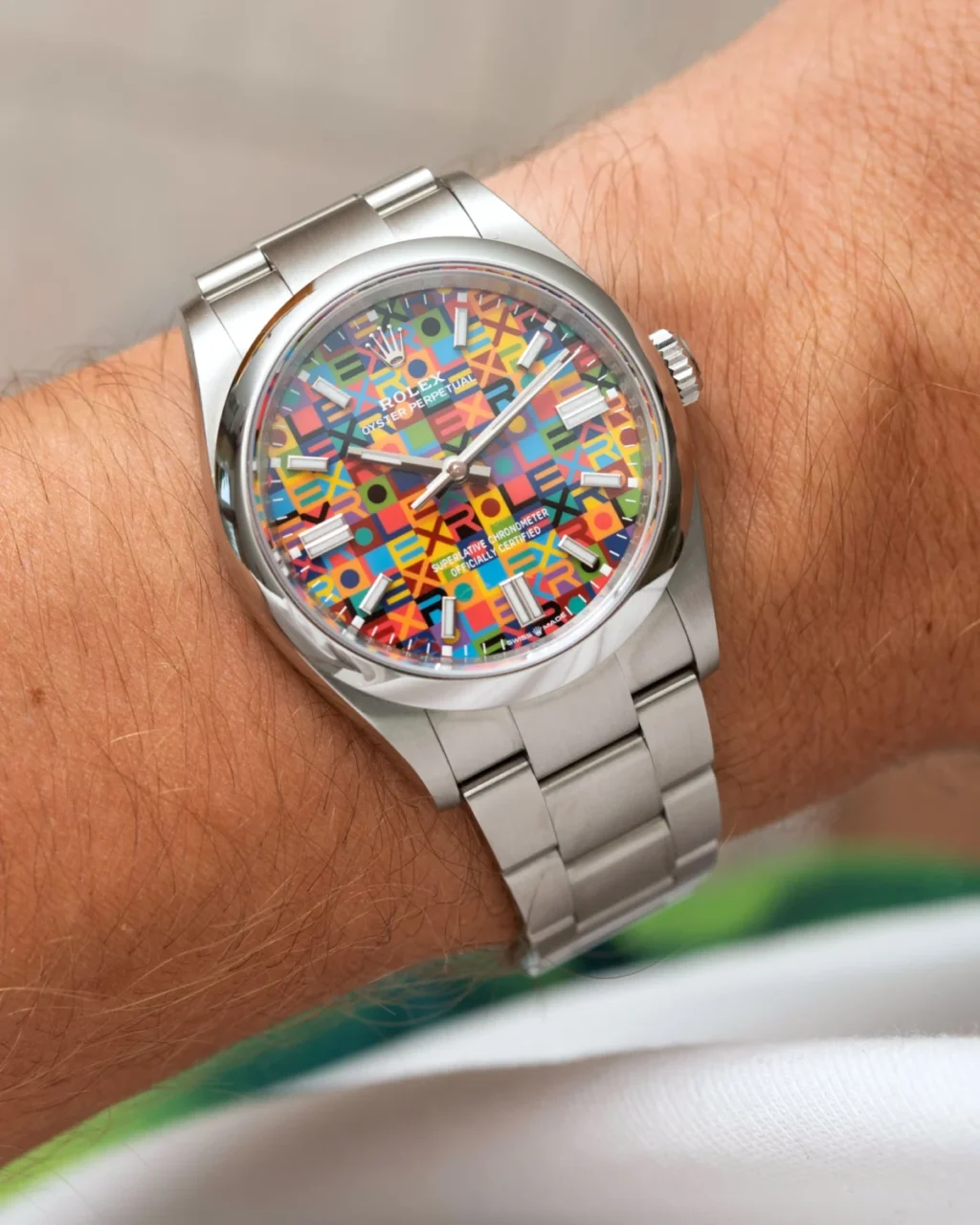
The Rolex Oyster Perpetual collection, a cornerstone of the brand’s accessible luxury offerings, has long served as an entry point into the esteemed world of Swiss watchmaking. However, recent iterations, particularly the Oyster Perpetual 36 with its vibrant Jubilee dial (reference 126000), represent a significant evolution, challenging past perceptions of the collection and showcasing Rolex’s unwavering commitment to intricate craftsmanship and innovative design. This model, retailing at $6,750 USD, stands as a compelling case study in how a seemingly straightforward timepiece can embody a complex interplay of heritage, technological advancement, and a redefinition of value in the luxury watch market.

A Reimagined Entry-Level Classic
The Oyster Perpetual line, named after Rolex’s pioneering waterproof Oyster case (celebrating its centennial in 2026) and the self-winding Perpetual mechanism (debuting in 1931), has historically occupied a unique position. It has often been viewed as the most understated and budget-friendly Rolex, a role that, for a period in the 2010s, led to some models feeling less substantial or detailed than expected for their price point. This sentiment was articulated by some observers who felt that certain luxury watches, even those from established brands, were beginning to exhibit a perceived lack of intricate finishing or premium feel.
A prior critique highlighted a specific Rolex Oyster Perpetual model, noting that its CNC-etched clasp appeared incongruous with its significant retail price. This observation underscored a broader concern within the horological community regarding the perceived value proposition of certain luxury goods. The introduction of the Jubilee dial on the Oyster Perpetual 36, however, signals a deliberate shift by Rolex, aiming to imbue its entry-level collection with a level of detail and aesthetic appeal that transcends its foundational status.

The Evolution of the Oyster Perpetual Dial
The Oyster Perpetual’s journey through the 2010s saw it introduce a range of quasi-colorful dials. While intended to inject personality, these early efforts were often criticized for a perceived mismatch between the base dial color and the hour markers, resulting in an aesthetic that some found uninspired or even discordant. This period might be characterized as a tentative exploration of color, lacking the bold design direction that would later define the collection.
A significant design overhaul occurred around 2020, when Rolex revamped the entire Oyster Perpetual lineup. This refresh included adjustments to case proportions, the discontinuation of certain sizes, and, crucially, a departure from the more subdued dial options in favor of bolder, more design-forward, and exciting palettes. This strategic move successfully elevated the Oyster Perpetual’s appeal, transforming it from a hesitant offering into a highly sought-after model, often appearing on secondary markets at multiples of its retail price. Dials in shades like "Tiffany-blue," yellow, and coral became particularly popular, alongside the special "Celebration" dial released in 2023.

The Debut of the Jubilee Dial: A Technological Masterpiece
The latest addition to this vibrant lineage is the "Jubilee" dial, a design that pays homage to Rolex’s history of patterned dials, often referred to as "Rolex motif" or "Rolex computer dials." While historical Jubilee dials typically featured an etched, almost guilloché-like pattern of the Rolex logo letters, creating a circuit board-like appearance reminiscent of the 1980s and 90s PC revolution, the new iteration takes a different approach. This contemporary Jubilee dial is not etched but printed, a distinction that hints at a new level of manufacturing complexity.
The genesis of this new dial design can be traced back to its presentation at Watches & Wonders Geneva in 2026. Prototypes, particularly in the 41mm size, were showcased, offering a glimpse into Rolex’s ambitious design direction. Initial close examination of these prototypes revealed a dial of remarkable intricacy, featuring ten distinct colors – double the number found on the Celebration dial. The manufacturing process, which Rolex has not officially detailed but is understood through industry insights, involves a highly complex, multi-stage printing technique.

Unpacking the Printing Process: A Symphony of Precision
The creation of the Jubilee dial is a testament to Rolex’s mastery of automated manufacturing and meticulous precision. It is understood that each of the ten colors is printed multiple times, potentially two or three times each, leading to an estimated 25 to 30 individual printing sessions. This is followed by a critical drying period, often expedited in ovens, to ensure the paint adheres correctly and consistently. The accuracy required for each print is exceptionally high, as even minute misalignments would be compounded with each subsequent layer, resulting in a visibly flawed dial.
The contrast between the early prototypes and the final production pieces is stark and revealing. While prototypes at industry events sometimes showcase the conceptual ambition, they can also highlight the challenges of mass production. Reports from Watches & Wonders Geneva 2026 indicated that the prototype Jubilee dials exhibited noticeable imperfections: misaligned squares within the pattern, instances of paint bleed around letter edges, and even suggestions of re-printed letters due to minor positional errors. These observations, captured through macro photography, underscore the extreme difficulty in achieving the perfect alignment and crispness demanded by a multi-layered print.

In contrast, the production-ready Rolex Oyster Perpetual 36 Jubilee dial represents a triumph of industrial precision. The alignment is flawless, the edges are razor-sharp, and the colors are rendered with an extraordinary level of clarity. This remarkable execution suggests that Rolex has leveraged its advanced automation capabilities, possibly involving highly specialized machinery and rigorous quality control protocols, to overcome the inherent challenges of such a complex printing process. The difference between the prototype and the final product is so pronounced that it suggests a significant investment in refining the manufacturing techniques.
Background and Context: The Rolex Oyster Perpetual’s Historical Significance
The Oyster Perpetual collection has been a consistent presence in Rolex’s catalog since its inception. The Oyster case, introduced in 1926, was a revolutionary step in watchmaking, providing unprecedented water resistance and durability. The Perpetual self-winding mechanism, patented in 1931, further enhanced the practicality and user-friendliness of wristwatches. Together, these innovations laid the foundation for many of Rolex’s iconic models.
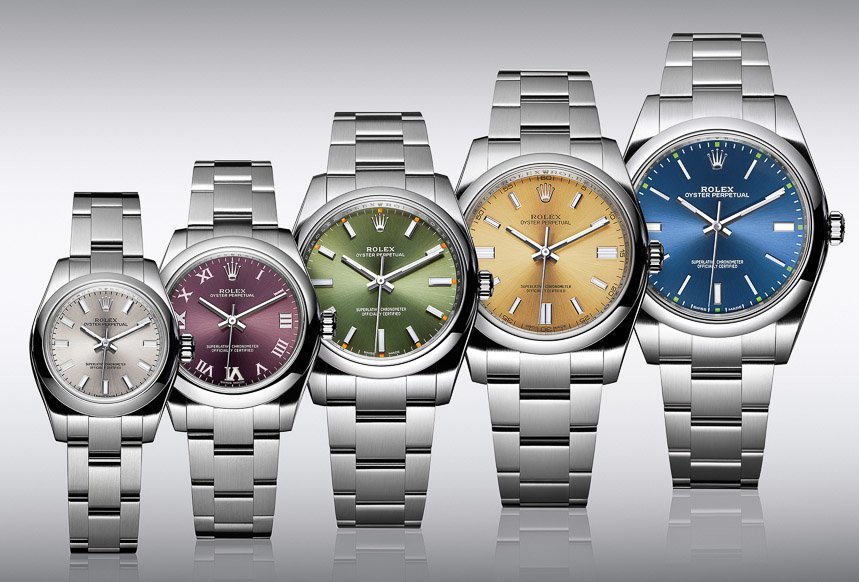
Over the decades, the Oyster Perpetual has evolved, adapting to changing design trends and technological advancements. While often overshadowed by sportier or more elaborately featured Rolex models, it has maintained its appeal as a timeless, versatile timepiece suitable for any occasion. The introduction of new dial colors and textures, like the Jubilee dial, demonstrates Rolex’s ongoing commitment to refreshing and enhancing its classic offerings.
Analyzing the Implications: A New Standard for Entry-Level Luxury
The Jubilee dial on the Oyster Perpetual 36 is more than just a decorative element; it is a statement about Rolex’s manufacturing prowess and its strategy to elevate its more accessible collections. By investing such significant resources into the intricate production of this dial, Rolex is setting a new benchmark for what can be expected from an entry-level luxury watch.

This development has several implications:
- Reinforcement of Brand Value: It reaffirms Rolex’s reputation for exceptional quality and meticulous attention to detail, even in its more affordably priced models. This can strengthen customer loyalty and justify the brand’s premium positioning in the market.
- Industry Benchmark: The complexity and flawless execution of the Jubilee dial serve as a challenge to other watch manufacturers. It demonstrates the potential for advanced manufacturing techniques to create highly intricate and visually striking dials on a large scale.
- Market Demand: The popularity of the Oyster Perpetual collection, particularly with its more colorful and expressive dials, indicates a strong consumer appetite for watches that offer both understated elegance and a touch of personality. The Jubilee dial, with its unique pattern and vibrant yet sophisticated color palette, is well-positioned to capitalize on this demand.
- Perceived Value: At $6,750, the Oyster Perpetual 36 with the Jubilee dial offers a level of craftsmanship that many might consider exceptional for the price. This perception of high value is crucial in a competitive luxury market.
Production Timeline and Challenges
While Rolex does not publicly disclose specific production timelines for individual components, industry sources suggest that the creation of a single Jubilee dial can take approximately ten days. This extended timeframe, which accounts for the numerous printing steps, drying periods, quality checks, and logistical processes, highlights the intensive labor and technological sophistication involved.

The challenge of integrating such complex dials into mass production is immense. Each step requires absolute precision to avoid compounding errors. The success of the Jubilee dial underscores Rolex’s ability to scale up highly intricate processes, a feat that few other manufacturers can replicate.
The Watchmaker’s Perspective: In-House Expertise
The development and implementation of the Jubilee dial are a testament to Rolex’s in-house capabilities. The brand’s integrated manufacturing model, which controls every aspect of watch production from raw materials to final assembly, allows for unparalleled oversight and innovation. This control is particularly evident in the creation of dials, where Rolex invests heavily in research and development to push the boundaries of decorative techniques.

The fact that Rolex continues to introduce such intricate dial designs into core collections like the Oyster Perpetual demonstrates a strategic vision to offer compelling value and sophisticated aesthetics across its entire product range.
On the Wrist: Aesthetics and Wearability
The Rolex Oyster Perpetual 36, reference 126000, presents a balanced and historically proportionate aesthetic. Measuring 11.5mm in thickness, it offers excellent wearability, easily fitting under shirt cuffs without snagging. The 36mm case size, often considered a sweet spot for many wrist sizes, contributes to its discreet elegance. The integration of the Oyster bracelet is seamless, and the finishing, characterized by a predominantly brushed surface on the lugs and bracelet links, is complemented by polished elements on the bezel and case sides, providing a subtle yet refined contrast.

The domed bezel is a noteworthy detail, offering a distortion-free, mirror-like finish that enhances the visual appeal of the watch. While the vibrant colors of the Jubilee dial are striking, they are rendered with a sophisticated saturation. In real-world lighting conditions, the colors appear more neutral and less intensely saturated than might be suggested by heavily processed online images. This nuanced presentation ensures that the dial is eye-catching without being overwhelming, allowing the intricate pattern to be appreciated fully.
The 18k white gold hour markers, applied by hand, stand out with their polished bevels, adding a touch of jewelry-like quality to the otherwise utilitarian design of the Oyster Perpetual. Legibility is generally good, although the busy dial pattern requires a fraction of a second more to orient the hands accurately. However, the hands themselves are well-proportioned, with the minute hand precisely indicating the minute markers and the seconds hand extending further, adhering to established principles of good watch design.

The Caliber 3230: The Heart of Precision
Powering the Oyster Perpetual 36 Jubilee dial is the Rolex Caliber 3230. This self-winding movement is a paragon of modern watchmaking, renowned for its refinement, durability, and accuracy. Its performance is exemplary, consistently meeting Rolex’s stringent internal standards for timekeeping, which are more demanding than standard chronometer certifications.
Key features of the Caliber 3230 include:

- Accuracy: Certified chronometer, with an average accuracy of -2/+2 seconds per day (after casing).
- Power Reserve: Approximately 70 hours, providing ample autonomy for daily wear.
- Shock Absorption: Equipped with Rolex’s proprietary Paraflex shock absorbers for enhanced resilience.
- Escapement: Features the Chronergy escapement, designed for increased energy efficiency and reliability.
- Winding System: A virtually silent Perpetual self-winding rotor ensures efficient and unobtrusive winding.
The user experience of interacting with the Caliber 3230 is equally impressive. The crown, when setting the time, exhibits no wobble and precise hand movement. Pushing the crown back in results in a solid click and the watch restarting without any unwanted manipulation of the hands. Winding the crown feels smooth, mechanical, and reassuring, a testament to the quality of its internal components. These seemingly minor details, often overlooked in less meticulously engineered movements, are indicative of Rolex’s commitment to a superior user experience across all its timepieces.
Conclusion: A Beacon of Hope in Luxury Watchmaking
The Rolex Oyster Perpetual 36 Jubilee Dial 126000 is a compelling timepiece that masterfully balances aesthetic appeal with unparalleled engineering. It serves as a powerful counterpoint to the notion that luxury watch details are consistently diminishing. The intricate, multi-layered printing process of the Jubilee dial, executed with astonishing precision on a mass scale, showcases Rolex’s leadership in horological manufacturing.

While the overall execution of the Oyster Perpetual 36, with its predominantly brushed finishes and lack of certain complications, might be perceived by some as understated, the Jubilee dial injects a vibrant and sophisticated personality. The meticulous craftsmanship of the movement, the robust construction, and the enduring design ensure that this watch offers significant value. Priced at $6,750 USD, the Rolex Oyster Perpetual 36 Jubilee dial is not just a timekeeping instrument; it is a statement of enduring quality and a beacon of hope for the future of detailed, high-value luxury watchmaking.
Learn more on the official Rolex website.