The fundamental behavior of matter is often defined by its phase—the specific state in which its molecules or electrons organize themselves based on external conditions like temperature and pressure. While the transition of water from liquid to ice is a common sight, the world of quantum materials presents far more complex scenarios where multiple phases of matter do not just follow one another but coexist and interact in intricate ways. A groundbreaking study by physicists at the Massachusetts Institute of Technology (MIT), published today in the journal Nature Physics, has provided a transformative look at these dualities, revealing how two distinct phases of electron behavior emerge within the same quantum material. This discovery offers a new blueprint for understanding the "hidden physics" that governs high-performance materials, potentially accelerating the development of quantum devices that could one day replace traditional silicon-based electronics.
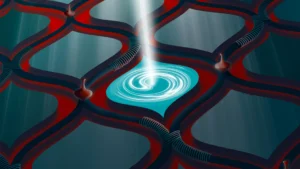
The research team, led by Nuh Gedik, the Donner Professor of Physics at MIT, focused their investigation on a rare-earth material known as erbium tritelluride (ErTe3). In its standard state, the electrons within this material are distributed uniformly, much like the molecules in a gas or a liquid. However, as the material is cooled toward absolute zero, its electronic structure undergoes a radical transformation. The electrons begin to spontaneously organize into a wave-like pattern, a state physicists refer to as a "charge density wave" (CDW). What makes erbium tritelluride particularly fascinating is that it does not stop at one phase transition. Upon further cooling, a second charge density wave emerges, oriented perpendicularly to the first, creating a complex, checkerboard-like pattern of electronic density.
The Quest for Post-Silicon Materials
The motivation behind this research extends far beyond academic curiosity. As the limits of silicon-based semiconductors become increasingly apparent—particularly regarding heat dissipation and miniaturization—engineers are looking toward quantum materials as the next frontier. "People believe the cornerstone of replacing silicon lies in quantum materials that have multiple coexisting phases," explains study co-author Alfred Zong, an assistant professor at Stanford University who co-led the research during his time as a graduate student at MIT. "Our experiment provides a very neat way to study these multiple phases and understand how they can be manipulated for future technologies."
Quantum materials are defined by their ability to host exotic electronic states, such as superconductivity, where electricity flows without resistance, or complex forms of magnetism. In many of these materials, different phases are in a constant state of competition or cooperation. Understanding the rules of this engagement is critical. If engineers can learn to toggle these phases on and off or control their emergence, they can design devices with unprecedented speed and efficiency.
The "Shake and Listen" Methodology
To observe the birth of these electronic phases, the MIT team utilized a sophisticated experimental setup that they describe as a "shake and listen" approach. The challenge in studying erbium tritelluride lies in the fact that once the phases have formed, they are difficult to distinguish from one another in a static state. To solve this, the researchers decided to disrupt the system and watch it recover.
The team obtained atomically thin samples of ErTe3, synthesized by collaborators at Stanford University. These samples were cooled to approximately -230 degrees Celsius (around 43 Kelvin), a temperature low enough to ensure both charge density waves were fully established in their checkerboard configuration. Once the material reached this equilibrium, the researchers hit it with a "one-two punch" of ultrafast laser pulses.
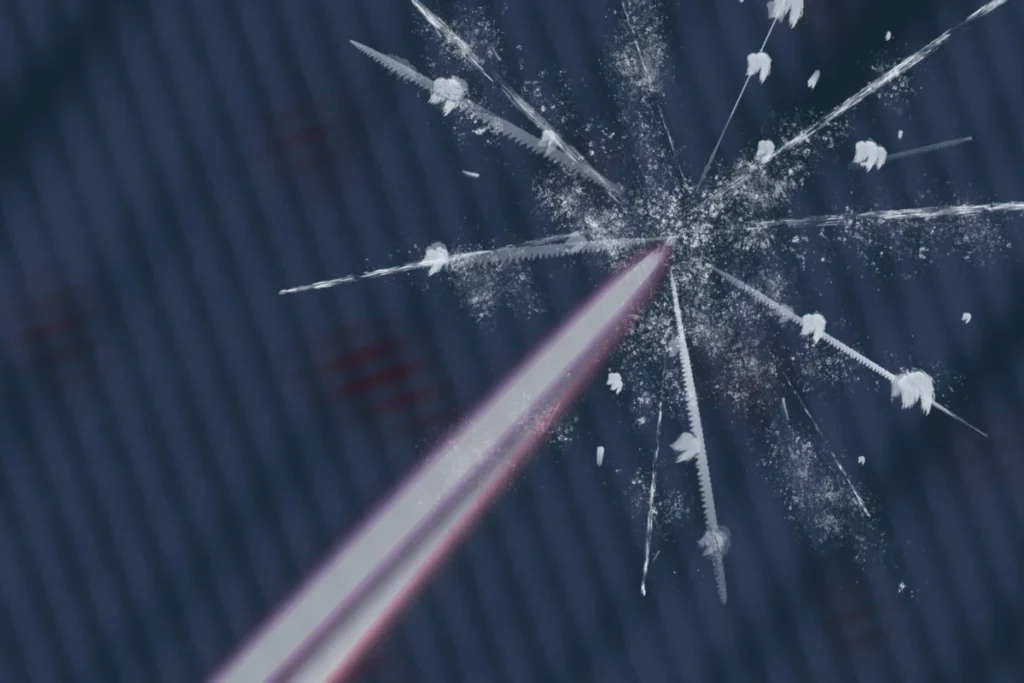
The first pulse, the "pump," acted as the "shake." It delivered a burst of energy that dissolved the electronic checkerboard, momentarily knocking the electrons back into a state of disorder. The researchers could vary the intensity of this pulse to see how the material responded to different levels of disruption. The second pulse, the "probe," followed at intervals of mere quadrillionths of a second. This pulse consisted of high-energy photons that knocked electrons out of the material—a process known as photoemission. By measuring the energy and momentum of these ejected electrons, the team could reconstruct snapshots of the material’s electronic structure as it attempted to rebuild its lost phases.
A Tale of Two Transitions: Gradual vs. Abrupt
The results of the "shake and listen" experiment revealed a surprising divergence in how the two electronic phases reemerged. The first, or "dominant," charge density wave—which typically forms at -8 degrees Celsius—recovered in a manner consistent with classic thermodynamic theories. It emerged gradually and uniformly across the entire material, regardless of how hard the laser pulse had "shaken" it. This is known in physics as a second-order phase transition, similar to how a piece of iron slowly gains its magnetic properties as it cools.
However, the second, or "subdominant," phase—which appears at -113 degrees Celsius—behaved in an entirely unexpected way. Instead of a smooth, uniform recovery, the electrons organized into small, isolated "pockets" or nuclei that then expanded to fill the material. This is a first-order phase transition, much like the way water crystallizes into ice by forming small seeds of ice that eventually grow and merge.
"The mechanism responsible for the emergence of this second phase has long been debated," says Professor Gedik. "Our approach provides a powerful new way to uncover the hidden physics behind phase transitions in quantum materials. We were able to see that even within the same material, the physics of how a phase is born can be radically different."
Chronology of Electronic Discovery
The study of charge density waves dates back decades, but the ability to observe them with such temporal and spatial resolution is a recent development. The timeline of this specific breakthrough involves several years of interdisciplinary collaboration:
- Synthesis (2020-2022): Researchers at Stanford University perfected the growth of high-purity erbium tritelluride crystals, ensuring the material was thin enough for advanced laser probing.
- Equilibrium Studies: Initial tests confirmed the temperature thresholds for the two phases (-8°C and -113°C), establishing the baseline for the experiment.
- Ultrafast Implementation (2023): The MIT team integrated the samples into their ultrafast laser spectroscopy lab, developing the "pump-probe" sequence necessary to capture the recovery of the electrons.
- Data Analysis (Late 2023): Lead author Yifan Su and the team processed the momentum data of the kicked-out electrons, identifying the distinct signatures of the first-order and second-order transitions.
- Publication (2024): The findings were peer-reviewed and published in Nature Physics, offering a new model for electronic phase competition.
Supporting Data and Technical Analysis
The significance of this discovery is rooted in the mathematical and physical distinction between the two types of transitions. In a second-order transition, the "order parameter" (a measure of the phase’s strength) changes continuously from zero. In a first-order transition, the order parameter jumps abruptly.
The data from the MIT study showed that the subdominant phase in ErTe3 was suppressed by the dominant phase. When the dominant phase is present, it "crowds out" the subdominant phase, forcing it to emerge through nucleation (pockets) rather than uniform growth. This interaction suggests that the two phases are in direct competition for the same pool of electrons. This "competitive coexistence" is a hallmark of high-temperature superconductors, where superconductivity often competes with charge density waves for dominance.
Broader Impact and Future Implications
The implications of this research extend into the realm of "quantum design." By understanding that different phases can emerge through different mechanisms, engineers can potentially find ways to "seed" certain phases while suppressing others. This could lead to the creation of ultra-fast switches for quantum computers, where the state of a bit is determined by the specific electronic phase of the material.
Furthermore, the study provides a simpler "playground" for understanding more complex materials. "In systems that are much more complex, like high-temperature superconductors, you see there are multiple phases—magnetism, superconductivity, charge density waves—and they all exist together," Gedik explains. "The lessons we learn here about how these waves interact, compete, or reinforce one another can be applied to these much more complex materials."
The research was supported by a coalition of high-level scientific bodies, including the U.S. Department of Energy, the U.S. National Science Foundation, and the Gordon and Betty Moore Foundation’s EPiQS Initiative. As the global race for quantum supremacy intensifies, such fundamental insights into the behavior of electrons are likely to be the catalyst for the next generation of technological breakthroughs.
By peeling back the layers of how electronic phases are born and interact, the MIT team has moved the scientific community one step closer to a future where we can manipulate the quantum world with the same precision we currently manipulate the flow of electricity in a silicon chip. The "checkerboard" of erbium tritelluride is no longer just a laboratory curiosity; it is a map for the future of material science.