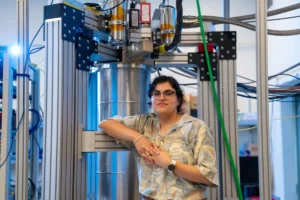
In the competitive and often high-pressure environment of elite scientific research, the distinction between a technical advisor and a true mentor can be the difference between a student’s burnout and their long-term success. At the Massachusetts Institute of Technology (MIT), Professor Anna-Christina Eilers has been recognized for bridging this gap, demonstrating that the pursuit of cosmic origins does not have to come at the expense of human connection. As a faculty member in the MIT Department of Physics and a member of the Kavli Institute for Astrophysics and Space Research, Eilers has recently been named a recipient of the "Committed to Caring" (C2C) honor. This award, which is driven by graduate student nominations, highlights faculty members who go above and beyond their academic duties to foster a supportive, inclusive, and mentally healthy environment for their mentees.
The recognition comes at a time when the academic community is increasingly scrutinizing the mental health and well-being of graduate researchers. Eilers, an observational astrophysicist, has built a research group where the rigors of studying the early universe are balanced by a culture of mutual respect and intentional kindness. Her students describe an environment where mentorship is not a formal periodic review, but a series of small, consistent gestures that build a foundation of trust.
The Science of the Cosmic Dawn: Eilers’ Research Context
To understand the significance of Eilers’ mentorship, one must first understand the scale of the challenges her students face. Eilers’ research focuses on the "cosmic dawn," the era during the first billion years of the universe’s existence when the first stars and galaxies began to form. This period is critical to understanding the evolution of the cosmos, yet it remains one of the most difficult epochs to observe.
Specifically, Eilers investigates the formation and growth of supermassive black holes. These celestial giants, which can be millions or even billions of times the mass of our sun, are found at the centers of most galaxies. A central mystery in modern astrophysics—and a primary focus of the Eilers group—is how these black holes grew so large so quickly in the very early universe. By observing quasars, the extremely bright centers of distant galaxies powered by these black holes, Eilers and her team are able to peer back more than 13 billion years into the past.
This research requires mastery of complex data from the world’s most advanced observatories, including the James Webb Space Telescope (JWST) and the Keck Observatory in Hawaii. The technical demands are immense, often requiring students to navigate massive datasets and complex theoretical models. In such a demanding field, the emotional and professional support provided by a mentor becomes a critical variable in a researcher’s ability to innovate.
The Committed to Caring Program: A Chronology of Support
The Committed to Caring initiative was established by MIT’s Office of Graduate Education (OGE) to recognize faculty who demonstrate excellence in mentoring. Since its inception, the program has sought to highlight the "hidden work" of academia—the hours spent providing emotional support, career advice, and personal guidance that are rarely captured in traditional metrics of faculty success, such as publication counts or grant funding.
The selection process for the C2C award is rigorous and entirely student-led. Graduate students submit nominations detailing specific instances where their advisors provided exceptional support. These nominations are then reviewed by a committee that looks for patterns of care, inclusivity, and a commitment to the holistic development of the student. By receiving this honor, Eilers joins a select group of MIT faculty recognized for setting a gold standard in graduate advising.
The chronology of Eilers’ impact at MIT is marked by the steady growth of her research group and the subsequent success of her students. Since joining the faculty, she has prioritized the creation of a lab culture that values the person as much as the project. Her students report that this culture was not built overnight but is the result of a deliberate, daily commitment to presence and accessibility.
Mentorship Through Consistency and Presence
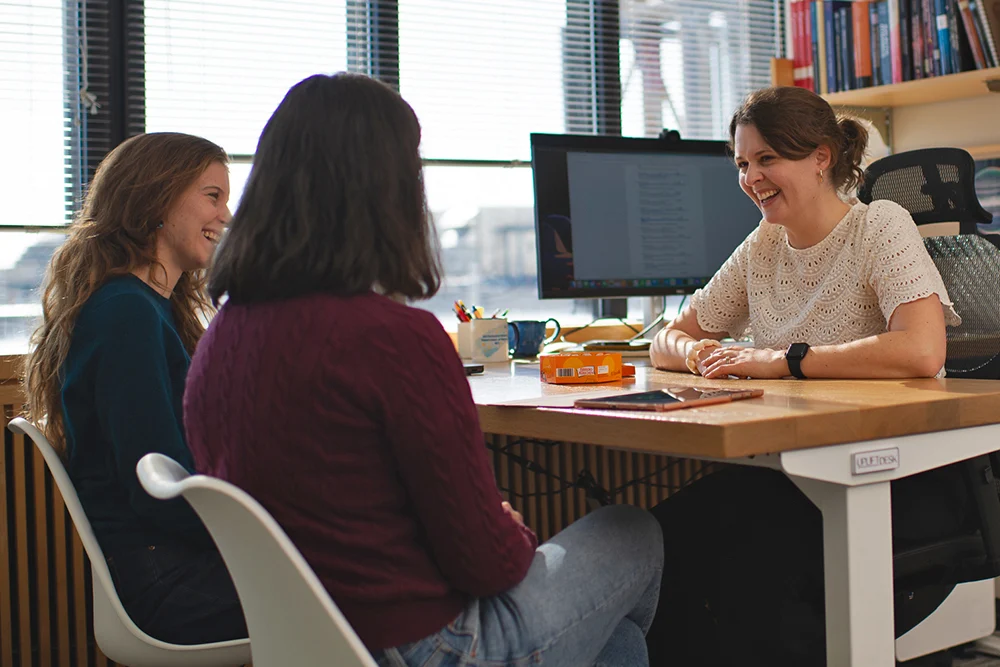
The core of Eilers’ mentorship philosophy, as described by her students, is consistency. In the nomination letters, her advisees noted that Eilers is reliably available for feedback, regardless of the demands of her own research and teaching schedule. This availability extends beyond simple availability for meetings; it includes the quality and timeliness of her feedback on research drafts and grant proposals.
"As Christina’s advisees, we are both extremely grateful for the professional and emotional support we constantly receive," two students wrote in their joint nomination. "She always keeps an eye out for us."
This "keeping an eye out" manifests in several practical ways. Students highlighted her ability to sense when a researcher is struggling with a technical roadblock or personal stress. Rather than waiting for a student to reach a breaking point, Eilers often intervenes early, offering a check-in or a strategy to pivot when a particular line of inquiry becomes unproductive. This proactive approach prevents the "imposter syndrome" and isolation that often plague graduate students in the physical sciences.
Furthermore, Eilers is noted for her advocacy. When research collaborations become difficult or when external obstacles threaten a student’s progress, she steps in to mediate or provide the necessary resources to clear the path. This level of active sponsorship is often cited as a key factor in the retention of underrepresented groups in STEM fields.
Building Community: From Peer Learning to Local Treats
A distinctive feature of the Eilers research group is its emphasis on community. In many research labs, graduate work can be a solitary endeavor, with students focused entirely on their own specific sub-fields. Eilers has actively worked to dismantle this siloed approach through group traditions that foster both social and intellectual exchange.
One such tradition involves the sharing of local specialties. Whenever a member of the group returns from a conference, a telescope observation run, or a research visit, they bring back a treat—cookies, chocolates, or regional delicacies—to share at the next group meeting. While seemingly a small gesture, this practice serves a dual purpose. Socially, it creates a relaxed atmosphere where group members can bond over something other than work. Intellectually, it provides a platform for the traveler to share insights from the conference, discuss new researchers they met, and present ideas that might benefit the entire group.
This tradition transforms individual professional development into a collective gain. It ensures that the knowledge gained by one student is disseminated among their peers, creating a more informed and versatile research team. Additionally, the celebration of small wins, such as the publication of a paper, is marked by Eilers herself, who frequently brings favorite desserts to meetings to honor her students’ achievements. These rituals of recognition reinforce the idea that the group’s success is shared.
The Importance of the "Outside" Self
Perhaps the most significant aspect of Eilers’ mentorship is her emphasis on work-life balance. In the high-stakes environment of MIT, there is often an unspoken expectation that research should be a 24/7 commitment. Eilers explicitly rejects this notion, advising her students to maintain identities and interests outside the laboratory.
"I always recommend to incoming graduate students to find a hobby outside of work that they enjoy, and ideally where they interact with people they don’t work with," Eilers stated. She reflects on her own time in graduate school, noting how easy it is for one’s research to become their entire identity. By encouraging students to step away from the lab, she believes they can return with more clarity, creativity, and long-term stamina.
This philosophy is backed by broader data on graduate student success. Studies in academic psychology have consistently shown that students with diverse social networks and active lives outside of their research are less likely to experience burnout and are more resilient in the face of the inevitable failures that come with scientific inquiry. Eilers’ approach aligns with a growing movement in higher education to treat graduate students as "whole people" rather than just "research producers."
Influences and Future Implications
Eilers attributes her mentoring style to the influences of her own advisors. Having been mentored by scientists who balanced scientific rigor with personal integrity and connection, she views her role as passing on that legacy. This "pay it forward" model of mentorship is vital for the health of the scientific ecosystem.
The implications of Eilers’ approach extend beyond the walls of her lab. As the scientific community grapples with issues of diversity, equity, and inclusion, the role of the mentor has never been more critical. Research indicates that supportive mentorship is one of the most significant factors in the success of women and minority students in physics—a field that has historically struggled with representation. By modeling a culture of care, Eilers is helping to train the next generation of physicists to be not only brilliant researchers but also empathetic leaders.
As she continues her work uncovering the secrets of the early universe, Professor Anna-Christina Eilers stands as a testament to the fact that academic excellence and human compassion are not mutually exclusive. In the vast, cold expanses of the "cosmic dawn," her lab remains a warm, grounded space where the next generation of astrophysicists can thrive. The "Committed to Caring" award is a formal recognition of what her students have known for years: that the most profound discoveries are often made when researchers feel seen, supported, and valued as individuals.