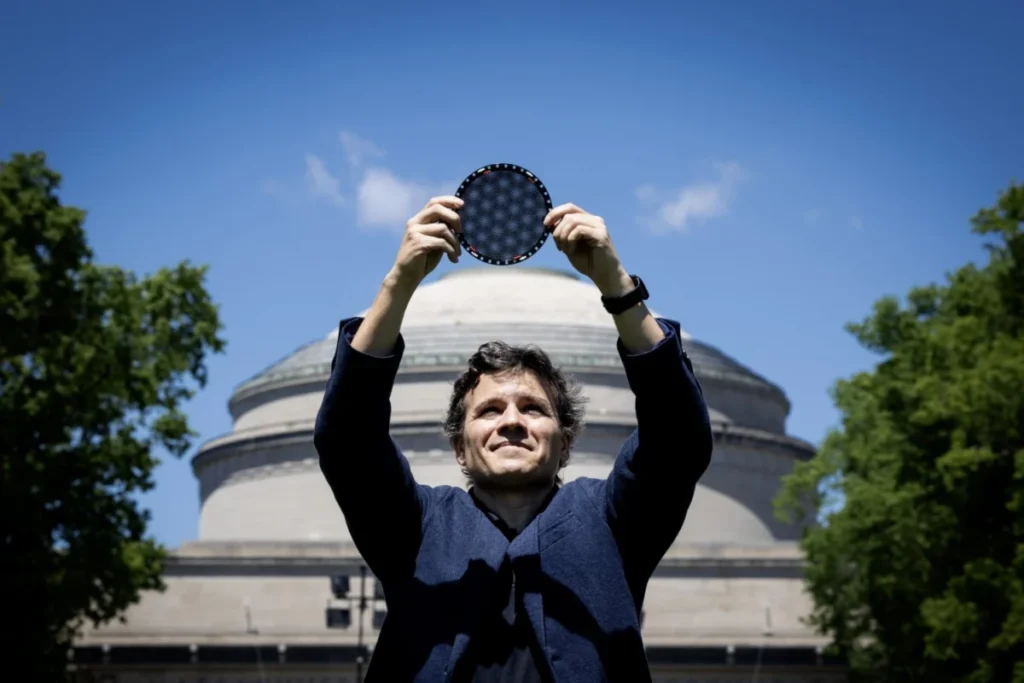
The Norwegian Academy of Science and Letters has announced that Pablo Jarillo-Herrero, the Cecil and Ida Green Professor of Physics at the Massachusetts Institute of Technology (MIT), is a co-recipient of the 2026 Kavli Prize in Nanoscience. This prestigious international award, often regarded as one of the highest honors in the scientific community, recognizes Jarillo-Herrero for his foundational work that established the field of "twistronics." He shares the honor with two other distinguished physicists: Professor Eva Y. Andrei of Rutgers University and Professor Allan MacDonald of the University of Texas at Austin.
The three laureates are being celebrated for their collective contributions to the theoretical foundation and experimental validation of a transformative approach to materials science. By rotating layers of two-dimensional materials, such as graphene, to specific "magic angles," the researchers demonstrated that it is possible to manipulate the electronic properties of a substance without changing its chemical composition. This discovery has unlocked new frontiers in the study of superconductivity, magnetism, and other emergent quantum phenomena, providing a new toolkit for the design of future electronic and quantum technologies.
The Kavli Prize is a collaborative partnership among the Norwegian Academy of Science and Letters, the Norwegian Ministry of Education and Research, and the Kavli Foundation. Awarded every two years, the prize honors scientists for breakthroughs in three specific categories: astrophysics, nanoscience, and neuroscience. These fields are chosen because they represent the study of "the big, the small, and the complex." Each prize category carries a cash award of $1 million, which the laureates in each field share. Jarillo-Herrero’s recognition marks a significant milestone for MIT, bringing the total number of the institute’s faculty recipients of the Kavli Prize to nine.
The Genesis of Twistronics: A Paradigm Shift in Materials Design
The field of twistronics represents a departure from traditional condensed matter physics. For decades, the primary method for altering the properties of a material was through chemical "doping"—the process of adding impurities to a crystal lattice to change its conductivity. However, the work of Andrei, MacDonald, and Jarillo-Herrero proved that geometric orientation could be just as powerful as chemistry.
The journey toward this discovery began in 2009 with the work of Eva Y. Andrei. Using scanning tunneling microscopy and spectroscopy, her research group at Rutgers University examined graphene, a single layer of carbon atoms arranged in a hexagonal honeycomb structure. They observed that even slight variations in the twist angle between overlapping layers of graphene profoundly modified the material’s electronic structure. This was the first experimental evidence that the physical orientation of layers could dictate the behavior of electrons within a material. This demonstration of geometric control served as the spark that launched the field.
Building upon these experimental observations, Allan MacDonald provided the necessary theoretical framework in 2011. He and his team at the University of Texas at Austin developed a quantitative model to explain how electronic structures emerge at specific, discrete "magic angles." MacDonald’s theory predicted that when two layers of graphene are twisted to exactly 1.1 degrees, the electrons’ kinetic energy is suppressed, creating "flat bands." In this state, electrons slow down and begin to interact strongly with one another, a condition that is a prerequisite for many exotic quantum states. This theoretical framework became the roadmap for subsequent research into what are now known as moiré materials.
The 2018 Breakthrough: Superconductivity at the Magic Angle
The most significant validation of these theories came in 2018, when Pablo Jarillo-Herrero’s group at MIT published a pair of landmark papers in the journal Nature. The team observed that when two layers of graphene were twisted to the "magic angle" of 1.1 degrees and cooled to near absolute zero, the material could behave as either a correlated insulator or a superconductor.
This discovery was revolutionary for several reasons. First, it showed that a material consisting solely of carbon—which is typically not a superconductor—could be tuned to conduct electricity with zero resistance simply by changing its orientation. Second, the simplicity of the system allowed physicists to study the mechanisms of superconductivity in a much more controlled environment than is possible with complex high-temperature superconductors like cuprates.
"It was a big surprise, because the technique we used, though conceptually straightforward, was hard to pull off in the lab," Jarillo-Herrero remarked recently. The process, often referred to as the "tear and stack" method, involves exfoliating a single layer of graphene, tearing it in half, and then carefully placing one half on top of the other with sub-degree precision. The resulting platform combines atomic-scale structural simplicity with unprecedented electronic tunability.
Academic and Institutional Responses
The recognition of Jarillo-Herrero has been met with widespread acclaim from the MIT community and the broader scientific world. Nergis Mavalvala, the dean of the MIT School of Science and the Curtis and Kathleen Marble Professor of Astrophysics, praised the laureate’s impact on the field.
"Pablo’s groundbreaking research has once again been given well-deserved recognition," Mavalvala stated. "Pablo and his co-recipients have pioneered twistronics, very fundamental scientific research that has opened up a new field with myriad possibilities for novel quantum materials."
Deepto Chakrabarty, the head of the MIT Department of Physics and the William A. M. Burden Professor in Astrophysics, highlighted the potential technological ramifications of the discovery. "Pablo’s research has helped spark a revolution in condensed matter physics and nanoscience, inspiring physicists worldwide to explore superconductivity and other emergent phenomena in engineered quantum materials," Chakrabarty said. "This work could potentially lead to the creation of superconductors at room temperature, which would have an enormous technological impact."
For his part, Jarillo-Herrero expressed deep humility regarding the award. In an essay describing his journey, he emphasized the importance of supporting basic science. "I want to also emphasize that this award honors fundamental physics research in nanoscience," he wrote. "It is incredibly important for society to continue to support fundamental research: Although it often doesn’t have a direct near-term application, in the long run it happens to be the most transformative and impactful in society."
Supporting Data and Technical Context
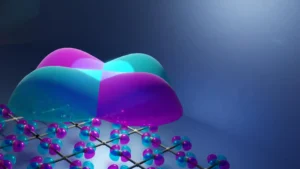
The significance of twistronics is rooted in the concept of the "moiré pattern." When two periodic lattices are overlaid with a slight twist, a new, much larger periodic pattern emerges. In twisted bilayer graphene, this moiré pattern creates a new set of energy levels for electrons.
Key data points from the research include:
- The Magic Angle: The specific angle of 1.1 degrees is where the "flat bands" occur, leading to strong electron-electron correlations.
- Superconductivity: The transition to a superconducting state occurs at temperatures around 1.7 Kelvin. While this is very cold, the physics involved mirrors that of materials that remain superconductors at much higher temperatures.
- Electronic Tunability: By applying an external electric field (using a "gate" voltage), researchers can shift the material from being an insulator to being a superconductor without changing the device. This level of control is unique in the history of materials science.
The Legacy of the Kavli Prize at MIT
Jarillo-Herrero joins an elite group of MIT faculty who have been honored by the Kavli Foundation. The institute has a storied history with the prize, reflecting its leadership in the three core disciplines. Previous MIT winners include:
- 2024: Nancy Kanwisher (Neuroscience), Bob Langer (Nanoscience), and Sara Seager (Astrophysics).
- 2016: Rainer Weiss (Astrophysics), who later won the Nobel Prize for his work on gravitational waves.
- 2014: Alan Guth (Astrophysics), for his theory of cosmic inflation.
- 2012: Mildred Dresselhaus (Nanoscience), a pioneer in carbon science; Ann Graybiel (Neuroscience); and Jane Luu (Astrophysics).
The inclusion of Jarillo-Herrero in this list underscores the continuity of excellence in fundamental research at the institute.
Broader Implications and Future Outlook
The establishment of twistronics has far-reaching implications that extend beyond the laboratory. While the current research is conducted at cryogenic temperatures, the insights gained from magic-angle graphene are providing a roadmap for the development of room-temperature superconductors. If achieved, such materials would revolutionize the energy sector by eliminating power loss in electrical grids and enabling ultra-efficient maglev transportation.
Furthermore, twistronics offers a new platform for quantum computing. The ability to precisely control the quantum states of electrons in 2D materials could lead to the development of more stable qubits, the building blocks of quantum computers. The field is also expanding beyond graphene to include other 2D materials, such as transition metal dichalcogenides, which offer their own unique sets of properties when twisted.
As the scientific community continues to explore the "twist" in various material combinations, the work of Jarillo-Herrero, Andrei, and MacDonald remains the cornerstone of this burgeoning discipline. The 2026 Kavli Prize in Nanoscience serves as a testament to the power of curiosity-driven research and the profound impact that a simple change in perspective—or angle—can have on our understanding of the physical world.