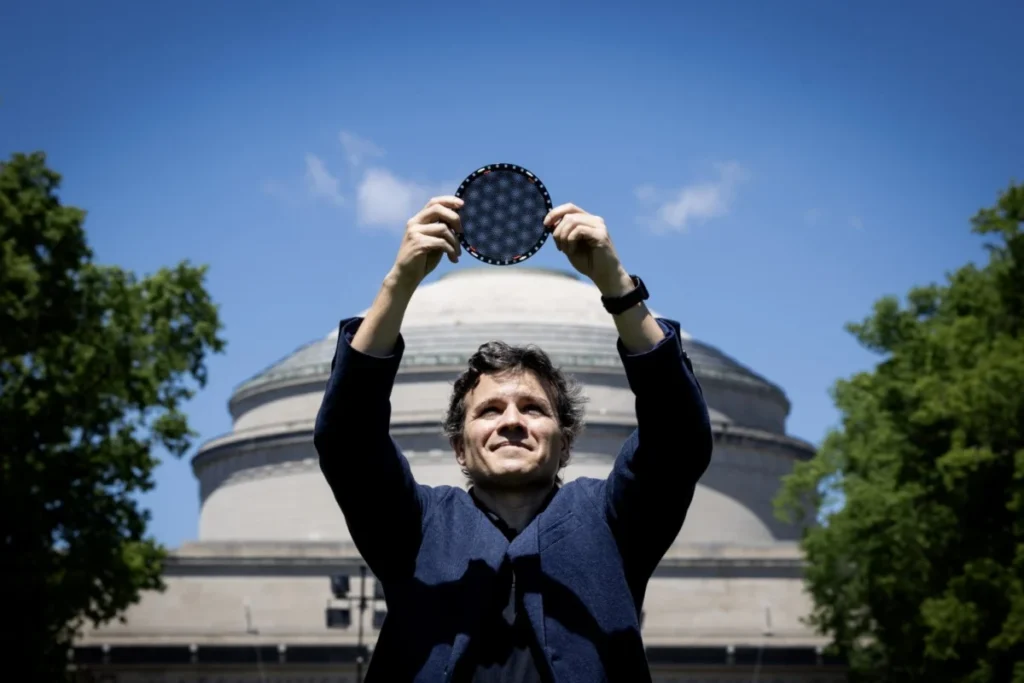
The Norwegian Academy of Science and Letters has officially announced that Pablo Jarillo-Herrero, the Cecil and Ida Green Professor of Physics at the Massachusetts Institute of Technology (MIT), is a co-recipient of the 2026 Kavli Prize in Nanoscience. This prestigious international award recognizes Jarillo-Herrero alongside two other distinguished physicists, Professor Eva Y. Andrei of Rutgers University and Professor Allan MacDonald of the University of Texas at Austin. The trio is being honored for their transformative contributions to the creation and validation of "twistronics," a revolutionary field of study that explores how the mechanical rotation of atom-thick layers can fundamentally alter the physical properties of materials.
The Kavli Prize, often regarded as one of the highest honors in the scientific community, is a partnership between the Norwegian Academy of Science and Letters, the Norwegian Ministry of Education and Research, and the Kavli Foundation. Awarded biennially, the prize recognizes breakthroughs in three specific disciplines: astrophysics, nanoscience, and neuroscience. These fields represent the "big" (the universe), the "small" (the atomic and molecular scale), and the "complex" (the human brain). Each category carries a $1 million cash prize, which the three nanoscience laureates will share.
The 2026 citation specifically commends the laureates for "foundational work that established the field of twistronics." By demonstrating that the electronic properties of two-dimensional materials—most notably graphene—can be manipulated through precise geometric alignment rather than chemical modification, these researchers have opened a new frontier in condensed matter physics.
The Genesis of Twistronics: A New Paradigm in Materials Science
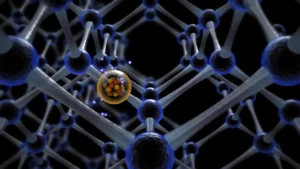
To understand the magnitude of the laureates’ achievement, one must first look at the material that started it all: graphene. Discovered in 2004, graphene is a single layer of carbon atoms arranged in a hexagonal, honeycomb-like lattice. While graphene is renowned for its strength and electrical conductivity, its properties were long thought to be static unless altered through "doping," a process of adding chemical impurities.
The field of twistronics changed this assumption. The term, a portmanteau of "twist" and "electronics," refers to the ability to tune the electronic characteristics of a material system by rotating one layer of a 2D material relative to another. When two sheets of graphene are stacked and twisted at a specific angle, they create a moiré pattern—a physical interference pattern that looks like a larger-scale version of the atomic lattice. This moiré pattern creates a new periodic potential for electrons, drastically slowing them down and forcing them to interact with one another in ways they otherwise would not.
This interaction is the key to unlocking "strongly correlated" physics. At certain "magic angles," the electrons in the graphene layers become highly sensitive to their neighbors, leading to the emergence of exotic states of matter, including superconductivity (the ability to conduct electricity with zero resistance) and magnetism.
A Chronology of Discovery: From Theory to Experimental Validation
The development of twistronics was not an overnight success but rather the result of nearly two decades of theoretical foresight and experimental persistence. The timeline of this discovery highlights the collaborative nature of scientific progress.
The first major milestone occurred in 2009. Professor Eva Y. Andrei and her research group at Rutgers University utilized scanning tunneling microscopy and spectroscopy to study graphene. They observed that even minute variations in the twist angle between graphene layers could profoundly modify the material’s electronic structure. This was the first experimental hint that geometry—specifically the orientation of the layers—could be used as a "tuning knob" for material properties. This discovery laid the groundwork for the idea that scientists could engineer materials through physical manipulation rather than just chemistry.
In 2011, Professor Allan MacDonald of the University of Texas at Austin provided the theoretical framework that would guide the field for the next decade. MacDonald and his colleagues predicted that at a very specific "magic angle"—approximately 1.1 degrees—the electronic bands in twisted bilayer graphene would become "flat." In physics, a flat band means that electrons have very little kinetic energy, which allows their mutual repulsion (Coulomb interaction) to dominate their behavior. MacDonald’s quantitative model predicted that this state would lead to fascinating and perhaps unprecedented electronic phenomena.
Despite the theoretical prediction, the "magic angle" proved incredibly difficult to achieve in a laboratory setting. The precision required to stack two atomic layers with an accuracy of 0.1 degrees was a monumental engineering challenge.
The breakthrough came in 2018 when Pablo Jarillo-Herrero and his team at MIT published two landmark papers in the journal Nature. They successfully fabricated a device consisting of two layers of graphene twisted to exactly 1.1 degrees. To the surprise of the global scientific community, Jarillo-Herrero’s team observed two distinct states: the material first acted as a "correlated insulator," where electron-electron interactions prevented current flow, and then, with a slight adjustment of the electric field, it transformed into a superconductor.
The Impact of the 2018 Breakthrough
Jarillo-Herrero’s observation of superconductivity in magic-angle twisted bilayer graphene is considered one of the most significant discoveries in physics in the 21st century. Before this discovery, superconductivity was typically found in complex alloys or ceramic compounds (cuprates) that are difficult to study and manipulate.
The MIT experiment proved that superconductivity could be induced in a simple, pure carbon system. This provided physicists with a "clean" platform to study the mechanisms of superconductivity. Because the properties of twisted graphene can be tuned by simply changing the voltage applied to the device, researchers can move between insulating, conducting, and superconducting states in a single sample. This level of tunability is unheard of in traditional materials science.
"Pablo’s groundbreaking research has once again been given well-deserved recognition," said Nergis Mavalvala, dean of the MIT School of Science. "Pablo and his co-recipients have pioneered twistronics, very fundamental scientific research that has opened up a new field with myriad possibilities for novel quantum materials."
Official Responses and Scientific Implications
The announcement of the 2026 Kavli Prize has been met with widespread acclaim within the academic community. Deepto Chakrabarty, head of the MIT Department of Physics, emphasized the transformative nature of Jarillo-Herrero’s work.
"Pablo’s research has helped spark a revolution in condensed matter physics and nanoscience, inspiring physicists worldwide to explore superconductivity and other emergent phenomena in engineered quantum materials," Chakrabarty noted. He further highlighted the long-term potential of the field: "This work could potentially lead to the creation of superconductors at room temperature, which would have an enormous technological impact."
The quest for a room-temperature superconductor is often called the "Holy Grail" of materials science. Currently, superconductors require extreme cooling—often using liquid helium or nitrogen—to function. If a material could superconduct at room temperature, it would revolutionize power grids by eliminating energy loss during transmission, enable ultra-fast maglev trains, and lead to the development of powerful, compact quantum computers.
In his own reflections on the award, Jarillo-Herrero remained focused on the importance of basic science. "I want to also emphasize that this award honors fundamental physics research in nanoscience," he stated in an essay for the Kavli Foundation. "It is incredibly important for society to continue to support fundamental research: Although it often doesn’t have a direct near-term application, in the long run it happens to be the most transformative and impactful in society."
MIT’s Legacy of Excellence in the Kavli Prize
The inclusion of Pablo Jarillo-Herrero among the 2026 laureates further solidifies MIT’s standing as a global leader in scientific innovation. Jarillo-Herrero is the ninth MIT faculty member to receive a Kavli Prize since the award’s inception in 2008.
The list of previous MIT winners reflects the institute’s broad impact across the three Kavli disciplines. In 2024 alone, MIT saw three winners: Nancy Kanwisher (Neuroscience), Bob Langer (Nanoscience), and Sara Seager (Astrophysics). Other notable past recipients include Rainer Weiss (Astrophysics, 2016), who later won the Nobel Prize for his work on gravitational waves, and Alan Guth (Astrophysics, 2014), the father of cosmic inflation theory. Mildred Dresselhaus, known as the "Queen of Carbon Science," was the recipient of the Nanoscience prize in 2012, making Jarillo-Herrero’s win in the same category particularly poignant given his work with carbon-based graphene.
Looking Forward: The Future of Quantum Materials
While the 2026 Kavli Prize celebrates the foundations of twistronics, the field is rapidly expanding. Researchers are now looking beyond graphene, experimenting with "twisted" stacks of other 2D materials like molybdenum disulfide and tungsten diselenide. These materials, known as transition metal dichalcogenides (TMDs), offer different electronic and optical properties, potentially leading to new types of sensors, LEDs, and solar cells.
The discovery of twistronics has also birthed a new era of "moiré gravity" and "moiré excitons," where the principles of twisted layers are applied to study light-matter interactions and even simulate general relativity in a solid-state system.
The work of Jarillo-Herrero, Andrei, and MacDonald has effectively turned the periodic table on its head. Instead of searching for new elements or complex chemical mixtures, scientists are now looking at how the simple act of "twisting" can redefine the limits of what matter can do. As the scientific community gathers in Oslo later this year to celebrate the 2026 laureates, the focus will remain on the vast, untapped potential of the very small.