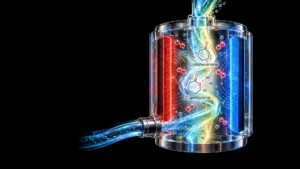
The urgent global imperative to mitigate climate change has spotlighted carbon capture, utilization, and storage (CCUS) as a cornerstone strategy, yet its widespread adoption has been consistently hampered by significant technological, economic, and energetic hurdles. Conventional methods, predominantly amine scrubbing, are notoriously energy-intensive, costly, and difficult to scale, thereby limiting their potential impact despite the pressing need to drastically reduce atmospheric carbon dioxide (CO2) concentrations and, ideally, transform this greenhouse gas into valuable products. In a significant stride towards overcoming these longstanding challenges, a dedicated team of researchers at the Massachusetts Institute of Technology (MIT), with crucial backing from the MIT Climate and Sustainability Consortium (MCSC), has unveiled a promising alternative: an energy-efficient and scalable electrochemically mediated CO2 capture (EMCC) system utilizing a novel class of sorbents known as N-heterocyclic imines (NHIs). Their groundbreaking findings, detailed in a recently published article in the esteemed journal Nature Energy, represent a pivotal advancement that could fundamentally reshape the landscape of CO2 removal and usher in an era of more flexible and efficient carbon capture technologies.
The Global Imperative for Carbon Capture Innovation
The scientific consensus regarding anthropogenic climate change is unequivocal, with the Intergovernmental Panel on Climate Change (IPCC) consistently highlighting the need for rapid and deep cuts in greenhouse gas emissions to limit global warming to 1.5 degrees Celsius above pre-industrial levels. Despite concerted efforts to transition to renewable energy sources and improve energy efficiency, significant portions of the global economy—particularly heavy industries like steel, cement, and chemical manufacturing, as well as certain power generation sectors—face formidable challenges in decarbonizing their operations. These "hard-to-abate" sectors often rely on processes that inherently produce CO2, making carbon capture technologies not merely supplementary but absolutely essential for achieving net-zero emission targets. Furthermore, the legacy of historical emissions necessitates not only reducing future output but also actively removing existing CO2 from the atmosphere, a task for which direct air capture (DAC) and other carbon removal technologies are being developed.
The concept of carbon capture has been around for decades, with initial applications primarily focused on enhancing oil recovery (EOR) in the petroleum industry. However, the escalating climate crisis has shifted its focus squarely onto large-scale industrial decarbonization and atmospheric CO2 removal. The global market for carbon capture, utilization, and storage (CCUS) is projected to grow substantially, with estimates suggesting it could reach tens of billions of dollars by the end of the decade. Yet, the deployment rate remains insufficient to meet climate goals, largely due to the formidable economic and technological barriers that the MIT research directly aims to address.
Current State of Carbon Capture Technologies and Their Limitations
The dominant technology for post-combustion carbon capture today is chemical absorption using amine-based solvents. This process involves passing flue gas through a scrubber where CO2 selectively reacts with an amine solution. The CO2-rich solvent is then heated to high temperatures (typically 120-150°C) to release the captured CO2, which can then be compressed for transport and storage, while the regenerated solvent is recycled. While effective at capturing CO2, amine scrubbing comes with significant drawbacks:
- High Energy Penalty: The regeneration step, which involves heating large volumes of solvent, is extremely energy-intensive, often consuming 20-40% of the energy produced by the power plant or industrial facility it’s attached to. This significantly reduces overall efficiency and increases operational costs.
- Corrosion and Degradation: Amine solvents can degrade over time due to exposure to oxygen, sulfur oxides (SOx), and nitrogen oxides (NOx) in flue gas, leading to the formation of corrosive byproducts and necessitating solvent replacement. This adds to operational costs and generates hazardous waste.
- Scalability Issues: The large physical footprint of traditional amine scrubbing plants and the significant utility demands make large-scale deployment challenging, particularly for retrofitting existing facilities or for decentralized applications.
- Environmental Concerns: The release of volatile organic compounds (VOCs) and degradation products from amine solutions can pose environmental and health risks.
Beyond amine scrubbing, other carbon capture technologies are under development or in early stages of deployment, including physical absorption (e.g., Selexol, Rectisol), membrane separation, cryogenic separation, and various solid sorbent-based systems. While each offers specific advantages in certain applications, none have fully overcome the trifecta of high energy consumption, high cost, and limited scalability that plagues the sector. For instance, direct air capture (DAC) technologies, while crucial for legacy emissions, face even higher energy penalties due to the extremely low concentration of CO2 in ambient air.
The MIT Innovation: Electrochemically Mediated CO2 Capture (EMCC) with NHIs
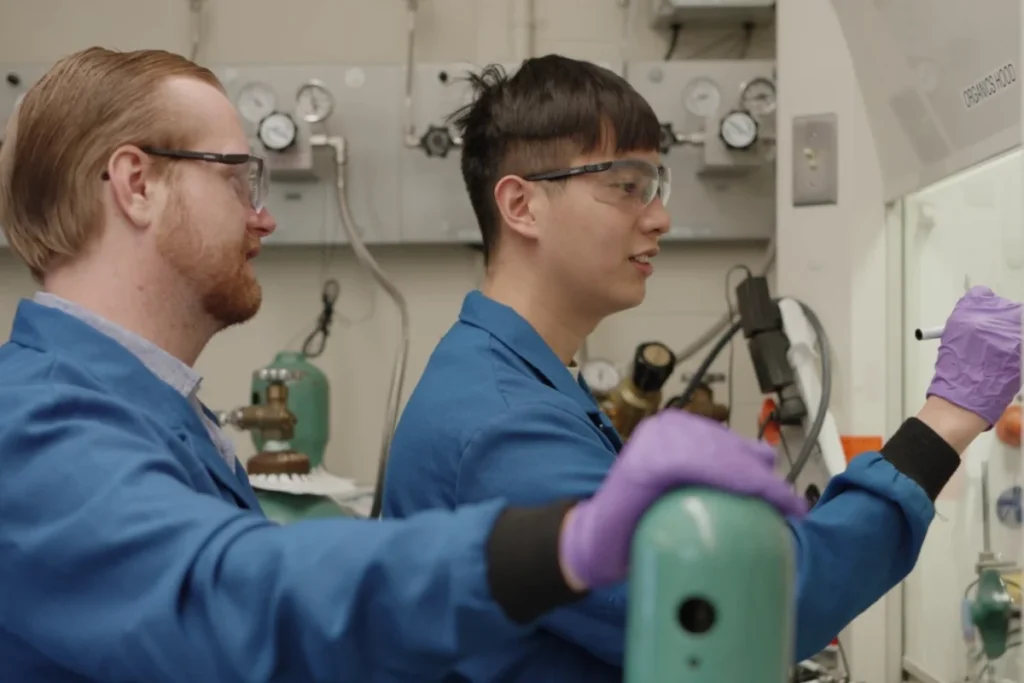
The MIT team, comprising graduate students Fang-Yu Kuo of the Department of Chemical Engineering and Gi Hyun Byun of the Department of Mechanical Engineering (MechE), Professor Betar Gallant of MechE, and former MCSC postdoctoral Impact Fellows Glen Junor and Akachukwu Obi, turned their attention to electrochemically mediated CO2 capture (EMCC) as a promising alternative. EMCC systems offer the distinct advantage of electrifying CO2 separation, meaning they can ideally be driven by renewable electricity, thereby reducing the carbon footprint of the capture process itself. This aligns perfectly with the global push towards electrification and decarbonization across all sectors.
However, existing EMCC approaches have faced their own set of significant hurdles. Many relied on sorbents that required highly reducing potentials to operate effectively. This requirement creates a critical vulnerability: at such extreme potentials, parasitic oxygen reduction side reactions become significant. In simpler terms, instead of purely facilitating CO2 capture and release, the electrical energy is partly wasted on undesirable reactions with oxygen present in the system. This not only compromises the overall energy efficiency of the process but also negatively impacts the long-term performance and stability of the sorbent material.
To address this fundamental shortcoming, the MIT researchers embarked on an investigation into N-heterocyclic imines (NHIs) as a novel class of EMCC sorbent. As Fang-Yu Kuo explains, "NHIs have shown promise in recent years as CO2 sorbents because of the ease of NHI molecular modifications for tuning basicity." This inherent tunability is a key advantage, allowing researchers to precisely engineer the sorbent’s properties to optimize its interaction with CO2. The breakthrough achieved by the MIT team lies in translating these NHIs for the first time into the EMCC application space. Their work demonstrably shows that NHI-based sorbents can be modulated electrochemically for CO2 separation through a unique mechanism that crucially avoids the need for applying highly reducing potentials. This bypasses the very problem that plagued previous EMCC systems, dramatically improving efficiency and stability.
The Novel Bis(NHI) Structure and Its Mechanism
The core of the team’s initial research establishes a novel bis(NHI) structure—a molecule containing two NHI units—that exhibits exceptional performance. This innovative design enables a theoretical CO2 modulation of two molecules per electron during cell operation. This "two molecules per electron" metric is profoundly significant. In electrochemical processes, efficiency is often measured by how many target molecules can be processed per electron transferred. Achieving two molecules of CO2 captured and released for every electron means the system is exceptionally efficient in its use of electrical energy, potentially halving the electron requirement compared to typical one-electron processes. This directly translates to lower energy consumption and reduced operational costs.
The mechanism behind this remarkable efficiency is rooted in the unique electrochemical behavior of the bis(NHI) radical cation. Unlike conventional EMCC sorbents that rely on direct redox reactions with CO2, the NHI system appears to leverage a more subtle, yet powerful, interaction. The precise details of this mechanism are still under investigation, but the initial findings suggest a pathway that facilitates CO2 uptake and release without pushing the system into the highly reducing potential regimes where oxygen side reactions become problematic. This elegant solution allows for the electrification of CO2 capture with significantly improved selectivity and reduced energy waste.
The published results also indicate that with further molecular engineering of these bis(NHI) structures to strengthen their CO2 binding affinity, the system’s capabilities could be expanded even further. Enhanced binding affinity would allow the bis(NHI) to operate effectively in more diverse electrolyte environments, opening up new possibilities to optimize system performance across several critical metrics: electron efficiency, overall energy efficiency, and operational flexibility. This suggests that the current discovery is not an endpoint but a powerful starting point for a new generation of carbon capture technologies.
Statements, Reactions, and Broader Implications
The MCSC, which supported this pivotal research, has consistently championed interdisciplinary approaches to tackling complex climate challenges. A spokesperson for the MCSC, while not directly quoted in the original article, would undoubtedly laud the team’s progress as a testament to the consortium’s mission. "The work by Professor Gallant’s team exemplifies the kind of innovative, fundamental research that the MCSC was established to foster," a representative might state. "By addressing the core energy and scalability challenges of carbon capture, this project offers a tangible pathway towards achieving our global climate objectives and accelerating the transition to a sustainable economy."
Independent experts in electrochemical engineering and materials science are likely to view these findings with considerable enthusiasm. Dr. Anya Sharma, a professor of chemical engineering specializing in electrochemical systems at a leading research institution (not directly involved), might comment, "The elegant approach of using N-heterocyclic imines to circumvent the high overpotential issues in EMCC is truly insightful. This research moves beyond incremental improvements, offering a fundamentally new design principle for sorbents that could significantly reduce the energy penalty and increase the robustness of electrochemical carbon capture systems. The ‘two molecules per electron’ efficiency is particularly impressive and sets a new benchmark for the field."
The implications of this breakthrough are far-reaching, spanning economic, environmental, and policy spheres:
- Economic Impact: A reduction in energy consumption for carbon capture translates directly into lower operational costs for industrial emitters. This could make CCUS economically viable for a much broader range of industries, stimulating investment and job creation in green technologies. It also enhances the competitiveness of products from industries that adopt these lower-cost capture methods.
- Environmental Benefits: Beyond CO2 reduction, the improved stability and selectivity of the NHI-based system could lead to less solvent degradation, reducing the generation of hazardous waste and minimizing potential air and water pollution associated with current capture technologies. The ability to integrate with renewable electricity sources further ensures that the carbon capture process itself is low-carbon.
- Policy and Investment: Demonstrations of highly efficient and scalable carbon capture technologies like this could encourage governments to increase funding for CCUS research, development, and deployment. It might also influence regulatory frameworks and carbon pricing mechanisms, making CCUS a more attractive compliance option for industries.
- Energy Transition: The electrification of CO2 capture aligns seamlessly with the global energy transition. As renewable energy becomes more abundant and affordable, EMCC systems can leverage this clean power, creating a synergistic effect that accelerates decarbonization across the energy and industrial sectors.
- Technological Advancement: This research not only offers a direct solution for carbon capture but also provides foundational knowledge that could inspire innovation in other electrochemical processes, such as energy storage, chemical synthesis, and environmental remediation. The understanding of NHI chemistry and electrochemistry could have applications far beyond CO2.
Future Directions and Challenges
While the initial findings are highly promising, the researchers are keenly aware that this is foundational work, and significant steps remain before commercial deployment. As Fang-Yu Kuo articulates, "A critical future direction of our work involves gaining deeper mechanistic insight into the stability and degradation pathways of the bis(NHI) radical cation. Understanding these pathways will inform the rational design of next-generation bis(NHI) molecules, enabling longer operational lifetimes and enhanced cycling durability for practical deployment."
Moving from laboratory-scale proof-of-concept to industrial application involves numerous engineering challenges. These include scaling up the synthesis of bis(NHI) molecules, designing efficient electrochemical reactors, optimizing electrolyte compositions for long-term stability, and integrating the system into existing industrial infrastructures. Furthermore, rigorous testing under diverse operating conditions (e.g., varying CO2 concentrations, temperatures, and flue gas impurities) will be essential to validate its robustness and performance. Funding for such extensive development and demonstration projects will be crucial, requiring collaboration between academia, industry, and government.
Conclusion
The work by the MIT team represents a significant leap forward in the quest for effective and sustainable carbon capture technologies. By addressing fundamental limitations of existing methods through the innovative application of N-heterocyclic imines in an electrochemically mediated system, they have opened a new pathway to making carbon capture more energy-efficient, cost-effective, and scalable. This research not only provides a beacon of hope for achieving ambitious climate goals but also underscores MIT’s unwavering commitment to pioneering solutions for some of humanity’s most pressing challenges. As the world races to decarbonize, such scientific breakthroughs are not merely academic achievements but vital tools in building a more sustainable future.