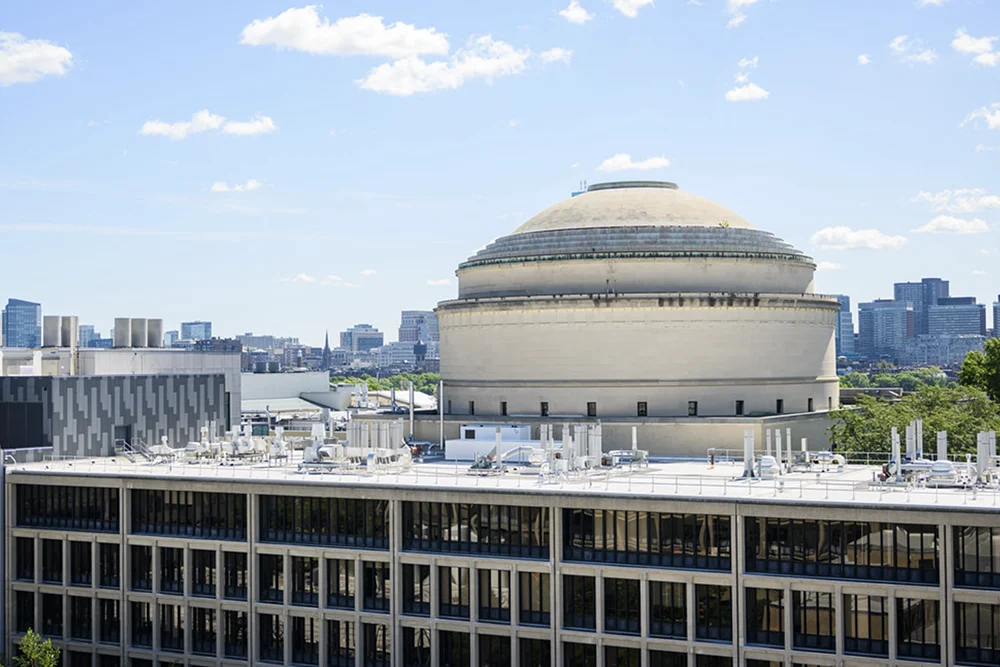
The National Science Foundation (NSF) has officially designated the Massachusetts Institute of Technology (MIT) as the lead institution for a new Materials Research Science and Engineering Center (MRSEC), a move that signals a significant federal investment in the future of medical diagnostics, sustainable industrial manufacturing, and semiconductor technology. According to an announcement released by the NSF on July 30, the center is part of a broader $108 million initiative to bolster the nation’s materials science infrastructure. The MIT-led center is expected to receive approximately $18 million in research funding over an initial six-year period, pending the finalization of formal research agreements. This new hub will integrate 16 distinct research groups from nine academic departments across four premier institutions, creating a multidisciplinary powerhouse aimed at solving some of the most pressing technical challenges of the 21st century.
The MIT MRSEC will be directed by Rafael Jaramillo, an Associate Professor in the Department of Materials Science and Engineering (DMSE) and the Stavros V. Salapatas Career Development Professor. He will be joined by Professor Caroline Ross of DMSE, who will serve as the center’s associate director. Administratively, the center will be anchored within the MIT Materials Research Laboratory (MRL), a facility with a long-standing history of fostering collaborative breakthroughs. The center’s mission is twofold: to revolutionize the hardware behind medical and industrial imaging and to pioneer environmentally sustainable methods for producing the metals and semiconductors that underpin modern civilization.
A Strategic Framework for Interdisciplinary Research
The establishment of this center comes at a critical juncture for U.S. science and technology policy. The NSF’s MRSEC program is designed to support "long-term, fundamental materials research" while simultaneously encouraging the kind of interdisciplinary collaboration that individual labs cannot achieve in isolation. The MIT center exemplifies this model by drawing expertise from a wide array of fields, including chemistry, chemical engineering, physics, and earth sciences.
Collaborating institutions identified in the proposal include Yale University, the University of California at Santa Barbara, and the Department of Radiology at Massachusetts General Hospital and Harvard Medical School. This partnership between academia and one of the world’s leading teaching hospitals ensures that the materials being developed in the lab have a direct, accelerated pathway to clinical application. By bridging the gap between fundamental physics and applied medicine, the center aims to transform theoretical breakthroughs into life-saving technologies.
Research Thrust 1: Nanoscale Engineering for Advanced X-Ray Detection
The first major research pillar of the new center focuses on the engineering of specialized materials to advance X-ray detectors. Currently, X-ray imaging—essential for cancer diagnosis, dental health, and security screening—relies on scintillators, which are materials that absorb high-energy X-ray photons and convert them into visible light that can be captured by digital sensors.
Led by optical materials experts Professor Marin Soljačić from the Department of Physics and Professor Juejun Hu from DMSE, this research thrust aims to re-engineer scintillators at the nanoscale. By manipulating these materials at the level of individual atoms and molecules, the team hopes to create detectors that offer significantly higher resolution and faster response times.
The implications of this research are vast. Higher sensitivity in detectors means that medical professionals could obtain clearer, more detailed images of internal structures while using lower doses of radiation, thereby reducing the long-term health risks to patients. Furthermore, improved energy sensitivity could lead to "color" X-rays, which distinguish between different types of tissues or materials with much greater precision than today’s black-and-white scans. Beyond the clinic, these advancements will likely find applications in industrial non-destructive testing and high-throughput security screening at ports and airports.
Research Thrust 2: Sustainable Metallurgy and the Sulfur Revolution
The second research thrust addresses a more industrial, yet equally vital, challenge: the production of metals and semiconductors. This group will explore high-temperature sulfur-based molten materials, a field of study that Associate Professor Rafael Jaramillo notes has become increasingly rare in American academia.
Traditional metal production, particularly for critical materials like copper, is often energy-intensive and environmentally taxing. As the global demand for copper rises—driven by the transition to electric vehicles and renewable energy grids—the need for more efficient extraction and processing methods has never been more urgent. The MIT team will investigate the chemical and physical properties of sulfur-based liquids at extreme temperatures to develop new pathways for metal smelting and thin-film semiconductor growth.
This research seeks to revitalize the domestic expertise in high-temperature chemistry. By understanding how these molten materials behave, researchers hope to create more efficient production cycles that reduce carbon emissions and improve the yield of critical minerals. This "intellectual center of gravity" at MIT could eventually lead to a new generation of semiconductors that are more sustainable to manufacture and more efficient in operation, addressing both economic and environmental concerns simultaneously.
Infrastructure and the Role of MIT.nano
A significant portion of the NSF funding will be dedicated to the creation of a new shared laboratory facility. Managed by MIT.nano, the Institute’s state-of-the-art center for nanoscale characterization and fabrication, this new lab will be specialized for testing magnetic materials and materials under extreme conditions.
The importance of shared facilities cannot be overstated in the context of modern materials science. These laboratories provide researchers with access to high-end instrumentation that would be prohibitively expensive for a single research group to maintain. By opening this facility to both academic and industry users, the MIT MRSEC will expand the nationwide portfolio of NSF-supported research facilities, fostering an ecosystem where startups and established corporations can collaborate with academic pioneers. This open-access model is intended to accelerate the commercialization of new materials, ensuring that lab-scale discoveries can be scaled up for the global market.
The "DISASTER!" Program and Forensic Materials Science
Recognizing that the future of the field depends on a steady pipeline of talent, the center is launching an innovative outreach initiative titled "DISASTER!" This program aims to engage the public and undergraduate students by telling the stories of real-world catastrophes caused by materials failure.
Forensic materials science is the study of why things break. By analyzing famous historical failures, the program will illustrate the vital role materials science plays in public safety. Examples cited by Professor Jaramillo include the RMS Titanic, where brittle rivets contributed to the ship’s sinking in the freezing Atlantic, and the de Havilland Comet, the world’s first commercial jetliner, which suffered catastrophic mid-air failures due to metal fatigue around square windows.
"If it bleeds, it leads," Jaramillo remarked, noting that disasters provide a powerful "foot in the door" for introducing students to the field. By encouraging undergraduates to research these failures and the subsequent scientific solutions that prevented them from recurring, the center hopes to build a deeper appreciation for materials processing. This is particularly relevant in the Boston area, where a thriving biotechnology and hardware sector requires a workforce skilled in advanced manufacturing—a curriculum that is currently underrepresented in local community colleges.
A Legacy of Interdisciplinary Excellence
The selection of MIT for this MRSEC award is not an isolated event but the continuation of a 60-year legacy. The Institute’s history in materials research dates back to the 1960s, with laboratories originally supported by the U.S. Department of Defense. Over the decades, these facilities transitioned to NSF funding, evolving into centers of excellence that eventually gave birth to the MIT Microphotonics Center and the Microsystems Technology Laboratories.
This long-term institutional memory has created a culture of "intentional teamwork" that Jaramillo identifies as the hallmark of MIT’s approach. The involvement of diverse departments—including Earth, Atmospheric and Planetary Sciences (EAPS) and Chemical Engineering—demonstrates the Institute’s belief that the most difficult problems require a collision of different perspectives. For example, involving EAPS researchers like Nicole Nie and Shuhei Ono brings a geological perspective to the study of molten sulfur, while physicists like Riccardo Comin and Nuh Gedik provide the quantum mechanical insights necessary for next-generation semiconductors.
Broader Impact and Global Implications
The NSF’s $108 million investment in MRSECs across the country—including the new center at MIT—reflects a strategic national priority to maintain a competitive edge in science and engineering. As other nations invest heavily in their own research infrastructure, the U.S. is focusing on areas where interdisciplinary collaboration can yield disruptive results.
The MIT MRSEC’s focus on "critical materials" is particularly noteworthy. The global supply chain for minerals essential to high-tech manufacturing is currently fraught with geopolitical and environmental risks. By developing new ways to produce these materials domestically and more sustainably, the center contributes to national economic security.
Furthermore, the advancements in medical imaging could lead to a paradigm shift in healthcare economics. Earlier and more accurate cancer diagnoses can significantly reduce the long-term costs of treatment and improve patient outcomes. By lowering the barriers to high-quality imaging, the technology developed at the center could eventually be deployed in resource-limited settings, democratizing access to advanced diagnostics.
Looking toward the future, Professor Jaramillo expressed his hope that the center will become a self-sustaining hub. The goal is not just to produce papers and patents over the next six years, but to "rebuild the muscle memory" of interdisciplinary collaboration. By laying the groundwork today, the MIT MRSEC aims to ensure that the next 60 years of materials science are as transformative as the last. Through the combined efforts of MIT’s Research Administration Services and the diverse faculty involved—from Nobel laureate Moungi Bawendi in Chemistry to electrochemical expert Martin Bazant in Chemical Engineering—the center is poised to redefine the boundaries of what is possible in the material world.