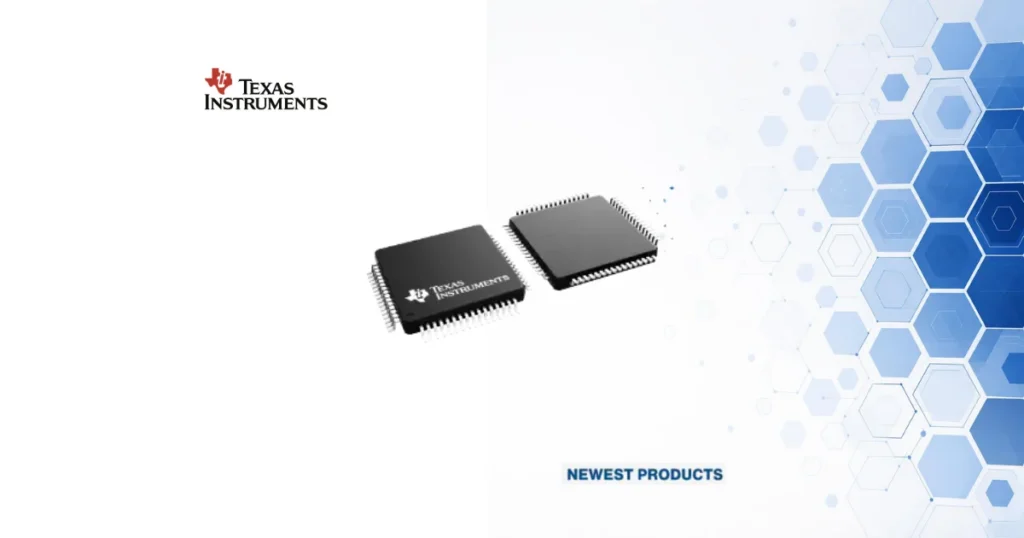
Mouser Electronics, a leading global authorized distributor of semiconductors and electronic components, has announced the immediate availability of the MSPM0G5187 mixed-signal microcontrollers (MCUs) from Texas Instruments (TI). These innovative devices are engineered to revolutionize edge AI applications by combining an ultra-low-power system architecture with a powerful integrated neural processing unit (NPU) accelerator, all built upon the robust 32-bit Arm Cortex-M0+ core platform. The introduction of the MSPM0G5187 series marks a significant advancement in the capabilities of embedded systems, enabling more sophisticated local sensing, processing, and control functionalities across a diverse range of industries.
The MSPM0G5187 series is meticulously designed to cater to a burgeoning market demand for highly efficient and intelligent microcontrollers capable of handling complex computational tasks directly at the edge of networks. This strategic focus addresses the critical need for real-time data processing, reduced latency, enhanced security, and minimized power consumption in modern embedded systems. By integrating an NPU accelerator, Texas Instruments positions these MCUs as a cornerstone for the next generation of smart devices, moving artificial intelligence from the cloud closer to the source of data generation. Mouser Electronics’ role in stocking these components ensures that engineers and developers worldwide have swift access to these cutting-edge technologies, facilitating rapid innovation and product development.
The Strategic Imperative for Edge AI and Low-Power MCUs
The proliferation of the Internet of Things (IoT) has dramatically increased the volume of data generated by connected devices. Processing all this data in the cloud presents challenges related to bandwidth, latency, privacy, and energy consumption. This context underscores the growing importance of edge AI, where data processing and AI inference occur locally on the device itself. Edge AI solutions offer significant advantages: reduced latency for real-time decision-making, enhanced data privacy by keeping sensitive information on-device, lower operational costs by minimizing cloud reliance, and improved reliability in environments with intermittent connectivity.
Microcontrollers, traditionally responsible for basic control tasks, are now evolving to incorporate advanced processing capabilities, including AI acceleration. The Arm Cortex-M0+ core is a popular choice for such applications due to its exceptional energy efficiency and compact footprint, making it ideal for battery-powered devices and cost-sensitive designs. Texas Instruments, a long-standing leader in semiconductor innovation, has consistently driven advancements in the MCU space. The MSPM0 platform, to which the MSPM0G5187 series belongs, represents TI’s commitment to providing scalable, high-performance, and feature-rich microcontrollers that meet the evolving demands of embedded design.
Mouser Electronics: Bridging Innovation and Accessibility
Mouser Electronics plays a pivotal role in the global electronics supply chain by providing engineers with a vast selection of the latest components and development tools. As an authorized distributor, Mouser ensures that customers receive authentic, high-quality products directly from manufacturers like Texas Instruments. The partnership between TI and Mouser is crucial for the widespread adoption of new technologies. By stocking the MSPM0G5187 MCUs and their associated development kits, Mouser empowers designers to integrate these advanced capabilities into their projects without delay, accelerating time-to-market for innovative products. Their efficient global logistics network and comprehensive online resources, including technical documentation and support, further solidify their position as an invaluable partner for the engineering community.
Unpacking the MSPM0G5187: Core Architecture and Performance
At the heart of the MSPM0G5187 series lies the 32-bit Arm Cortex-M0+ core. This processor architecture is renowned for its ultra-low power consumption and efficiency, making it perfectly suited for applications where battery life or energy harvesting are critical considerations. The Cortex-M0+ core offers a compelling balance of performance and power efficiency, capable of executing instructions with minimal clock cycles while maintaining a small silicon footprint. This efficiency is paramount for devices that need to operate autonomously for extended periods, such as wearables, remote sensors, and smart home appliances. The architecture also benefits from the extensive Arm ecosystem, providing developers with a wealth of software tools, libraries, and community support.
Integrated NPU: Accelerating On-Device Intelligence
A standout feature of the MSPM0G5187 MCUs is the integrated edge AI NPU accelerator. This dedicated hardware block is designed to offload computationally intensive AI tasks from the main Cortex-M0+ CPU, significantly improving performance and reducing power consumption for AI inference. The NPU is optimized for common machine learning workloads, such as convolutional neural networks (CNNs) for image processing, recurrent neural networks (RNNs) for sequential data analysis, and various sensor fusion algorithms.
For instance, in a smart home appliance, the NPU could process data from multiple sensors (e.g., temperature, humidity, vibration) to detect anomalies, predict maintenance needs, or optimize operational cycles without sending raw data to the cloud. In medical wearables, it could analyze physiological signals in real-time to identify potential health issues, providing immediate alerts. The benefits are profound: faster response times, enhanced privacy (as raw data stays on the device), and a dramatic reduction in the energy required to run AI models compared to software-only implementations on a general-purpose CPU. This hardware acceleration is key to enabling "tinyML" applications, bringing sophisticated AI capabilities to resource-constrained embedded systems.
Robust Memory Architecture for Reliability and Updates
The MSPM0G5187 MCUs are equipped with a robust memory architecture designed for both performance and reliability. They feature up to 128KB of embedded flash program memory, crucial for storing application code and configuration data. Importantly, this flash memory includes built-in error correction code (ECC), which automatically detects and corrects single-bit errors and detects double-bit errors, thereby enhancing the reliability and integrity of the stored program code. This is particularly vital for safety-critical applications where data corruption could lead to system malfunctions.
Accompanying the flash memory is up to 32KB of SRAM, also fortified with ECC and parity protection. SRAM provides fast access for data processing and temporary storage, and its error protection further ensures system stability during operation. To support modern development practices and product lifecycles, the flash memory is ingeniously organized into two main banks with address-swap support. This dual-bank arrangement enables field firmware updates (FOTA/OTA) with enhanced reliability. A new firmware image can be written to one bank while the device continues to operate from the other. Once the update is verified, the banks can be swapped, allowing for seamless and secure over-the-air updates, a critical feature for long-lifecycle IoT devices.
Seamless Connectivity and Communication
Connectivity is paramount for any modern embedded system, and the MSPM0G5187 series excels in this regard. It integrates a USB 2.0 full-speed interface, complete with an integrated PHY (physical layer), clock source, and termination resistors. This comprehensive integration simplifies board design and reduces external component count, saving cost and board space. The USB interface supports compliant host-mode operation, allowing the MCU to connect and control other USB devices, as well as crystal-less device-mode operation, further reducing system complexity and bill-of-materials. This flexibility makes the MCUs suitable for a wide array of applications, from data logging and human-machine interface (HMI) devices to portable medical instruments.
Beyond USB, the MCUs also include four configurable serial interface modules, collectively known as UNICOMM. These modules offer flexible support for various communication protocols such as UART, SPI, and I2C, enabling seamless interaction with a broad spectrum of peripherals, sensors, and other microcontrollers. Furthermore, a dedicated digital audio interface is included, opening up possibilities for audio applications ranging from voice command processing in smart speakers to industrial sound monitoring and basic audio playback in consumer electronics.

Precision Analog Integration for Mixed-Signal Applications
Many edge AI applications require precise interaction with the physical world through sensors, making mixed-signal capabilities essential. The MSPM0G5187 integrates a high-performance 12-bit, 1.6Msps (Mega samples per second) analog-to-digital converter (ADC). With up to 26 external channels, this ADC can accurately digitize signals from numerous analog sensors, providing the high-resolution data needed for sophisticated analysis by the NPU or CPU. Its high sampling rate is crucial for capturing fast-changing signals, such as those from accelerometers, gyroscopes, or various environmental sensors, ensuring that real-time data is available for processing.
Additionally, a high-speed comparator is integrated, featuring a built-in 8-bit reference digital-to-analog converter (DAC). This combination allows for precise voltage threshold detection and comparison without external components, which is invaluable for power management, motor control, and rapid event detection. For instance, in a medical device, the comparator could monitor critical voltage levels or sensor outputs to trigger immediate responses in case of an abnormality.
Fortified Security at the Edge
With the increasing connectivity of devices, robust security features are non-negotiable. The MSPM0G5187 MCUs incorporate a comprehensive suite of hardware-accelerated security features. An AES (Advanced Encryption Standard) accelerator supports various modes, including GCM/GMAC (Galois/Counter Mode and Galois Message Authentication Code), CCM/CBC-MAC (Counter Mode with Cipher Block Chaining Message Authentication Code), CBC (Cipher Block Chaining), and CTR (Counter Mode). These modes provide different levels of confidentiality, integrity, and authentication for data, crucial for secure communication and data storage.
Furthermore, the MCUs offer secure key storage, allowing up to four AES keys to be securely stored and managed. This protects cryptographic keys from unauthorized access and tampering, which is fundamental for secure boot, device authentication, and encrypted communication. Flexible firewalls are also included to protect application code and data. These firewalls can segment memory regions and control access permissions, preventing malicious software or unauthorized firmware from compromising the device’s integrity or intellectual property. These security measures are vital for compliance with emerging IoT security standards and for building trustworthy connected devices.
Targeting Diverse Industrial and Consumer Applications
The versatility and advanced features of the MSPM0G5187 series make it suitable for a wide array of target applications across various sectors:
- Home Appliances: From smart refrigerators with predictive maintenance capabilities to washing machines that optimize cycles based on load and fabric type, these MCUs can enable enhanced user experiences and energy efficiency. The NPU can handle voice commands or gesture recognition for intuitive control.
- Medical Devices: Wearables for continuous patient monitoring, portable diagnostic tools, and smart drug delivery systems can benefit from the low power consumption, high-precision analog, and integrated AI for real-time data analysis and alerts.
- Building Automation: Intelligent sensors for occupancy detection, environmental monitoring, and access control systems can leverage the NPU for localized data processing, improving energy management and security in smart buildings.
- Mobile Devices and Wearables: Fitness trackers, smartwatches, and other portable electronics can utilize the ultra-low-power capabilities and edge AI for advanced sensor fusion, activity tracking, and personalized health insights, extending battery life while offering sophisticated features.
- Industrial IoT (IIoT): Condition monitoring sensors, predictive maintenance units, and smart factory equipment can use these MCUs for real-time anomaly detection and control, enhancing operational efficiency and reducing downtime.
Accelerating Development with the LaunchPad Kit
To facilitate rapid evaluation and development, Mouser is also stocking the Texas Instruments LP-MSPM0G5187 LaunchPad development kit. The LaunchPad ecosystem is a cornerstone of TI’s development strategy, providing an affordable and user-friendly platform for engineers to get started quickly. The LP-MSPM0G5187 LaunchPad includes an onboard XDS110 debug probe, which eliminates the need for external debug tools, streamlining the development process. It also features user-programmable buttons and USB Type-C connectors, offering immediate hardware interaction and modern connectivity options.
This development kit provides a comprehensive environment for engineers to explore the full capabilities of the MSPM0G5187 MCUs, including experimenting with the NPU, testing analog interfaces, and implementing secure communication protocols. Supported by TI’s robust software development kits (SDKs) and Code Composer Studio™ integrated development environment (IDE), the LaunchPad enables a smooth transition from prototyping to production-ready designs, significantly shortening development cycles.
Industry Reactions and Strategic Significance
While specific official statements were not provided in the initial announcement, the release of the MSPM0G5187 series with its integrated NPU is indicative of Texas Instruments’ strategic focus on the burgeoning edge AI market. A hypothetical statement from a TI spokesperson might emphasize the company’s commitment to delivering innovative, power-efficient, and secure solutions that empower customers to create next-generation intelligent devices, highlighting the scalability of the MSPM0 platform and its ability to meet diverse application needs.
Similarly, a Mouser Electronics representative would likely underscore their dedication to providing engineers with immediate access to leading-edge technologies, enabling innovation across various industries. Such a statement would emphasize Mouser’s role in supporting the design community by offering a comprehensive selection of products, extensive technical resources, and efficient global distribution services.
Broader Implications for the IoT and Embedded Ecosystem
The introduction of MCUs like the MSPM0G5187 carries significant implications for the broader IoT and embedded ecosystem. It signals a clear trend towards decentralization of intelligence, moving processing power closer to the data source. This shift will enable more autonomous, responsive, and secure embedded systems. Developers will find it easier to implement sophisticated AI algorithms on resource-constrained devices, democratizing access to machine learning capabilities.
Economically, this technology is poised to drive innovation in various sectors, leading to new product categories and enhanced functionalities in existing ones. The ability to perform complex analysis locally reduces reliance on constant cloud connectivity, making devices more resilient in varied environments and potentially lowering operational costs for end-users and businesses. Furthermore, the enhanced security features are crucial for fostering trust in connected devices, a key factor for wider consumer and industrial adoption. The continued focus on ultra-low power consumption will also contribute to sustainable technological growth, extending the operational life of battery-powered devices and reducing their environmental footprint.
The Texas Instruments MSPM0G5187 mixed-signal microcontrollers and the LP-MSPM0G5187 LaunchPad development kit are now available for order from Mouser Electronics. This availability marks a crucial step forward in empowering engineers to design and deploy highly intelligent, power-efficient, and secure edge AI solutions across an ever-expanding landscape of embedded applications.