Laser-based manufacturing processes are a cornerstone of modern industry, offering unparalleled versatility and precision in transforming metal components. From the intricate welding of critical parts in the automotive and aerospace sectors to the rapid, automated creation of complex geometries through 3D printing, lasers have become indispensable. Their application extends to highly specialized fields like medical technology, where they enable the production of customized titanium implants with exacting tolerances. The ability of lasers to perform these tasks quickly, precisely, and autonomously underscores their significance in industries where even minute deviations can compromise product integrity and performance.
However, the very precision that makes laser processes so valuable also renders them technically demanding. The intricate interplay between focused laser energy and metallic materials is acutely sensitive to even minor fluctuations in material properties or laser parameter settings. These subtle variations can trigger unintended outcomes, leading to defects, reduced component quality, and costly production errors. This inherent sensitivity has historically necessitated extensive expertise and rigorous calibration, posing a significant barrier to wider adoption and cost-effectiveness.
Recognizing this challenge, researchers at Empa, the Swiss Federal Laboratories for Materials Science and Technology, are pioneering the integration of machine learning to enhance the understanding, monitoring, and control of these complex laser-based manufacturing techniques. Elia Iseli, a research group leader at Empa’s Advanced Materials Processing laboratory in Thun, highlighted the strategic importance of this endeavor. "To ensure that laser-based processes can be used flexibly and achieve consistent results, we are working on better understanding, monitoring, and control of these processes," he stated. Building on this foundational principle, Empa researchers Giulio Masinelli and Chang Rajani are spearheading efforts to make laser-based manufacturing more affordable, efficient, and accessible through the application of artificial intelligence. Their work focuses on two key areas: optimizing additive manufacturing processes and enabling real-time control of laser welding.
Optimizing Additive Manufacturing: Reducing Experiments, Enhancing Quality
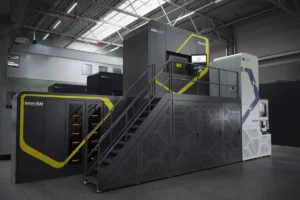
A significant focus of Masinelli and Rajani’s research has been on additive manufacturing, specifically the laser-based 3D printing of metals, a technique known as powder bed fusion (PBF). Unlike traditional manufacturing methods that remove material, PBF builds components layer by layer. In this process, thin layers of metal powder are selectively melted by a laser beam, fusing the powder particles together to gradually construct the final three-dimensional object. This additive approach unlocks the potential to create intricate geometries that are often impossible or prohibitively expensive to produce using subtractive manufacturing techniques.
Before any PBF production run can commence, a critical and often time-consuming phase of preliminary testing is typically required. This is primarily due to the existence of two fundamental modes of laser interaction with metal powders: conduction mode and keyhole mode. In conduction mode, the laser energy gently melts the surface of the metal powder. This mode is characterized by slower processing speeds but offers superior precision, making it ideal for producing thin, delicate components. Conversely, keyhole mode involves a more intense laser interaction where the energy density is high enough to vaporize a portion of the material, creating a transient "keyhole" in the molten pool. While less precise than conduction mode, keyhole mode allows for significantly faster material processing and is better suited for thicker workpieces.
The precise boundary between these two modes is not a fixed threshold but rather a dynamic interplay of various parameters, including laser power, scan speed, beam spot size, and the specific properties of the metal powder being used. Achieving the optimal settings for a given material and desired component quality necessitates careful experimentation. As Giulio Masinelli explained, "The right settings are needed for the best quality of the final product — and these vary greatly depending on the material being processed. Even a new batch of the same starting powder can require completely different settings." This inherent variability means that manufacturers often must re-run extensive calibration tests for each new batch of material, or even for slightly different environmental conditions.
Machine Learning-Driven Optimization for PBF
Traditionally, determining the optimal laser parameters for PBF involves a laborious process of trial and error. A series of experimental prints are conducted, meticulously varying parameters such as scanning speed and laser power. These experiments demand significant quantities of expensive metal powder and require the constant supervision of highly skilled technicians. This extensive preparatory work contributes substantially to the overall cost of PBF, making it inaccessible for many companies, particularly small and medium-sized enterprises.
Masinelli and Rajani have developed an innovative solution to this challenge by applying machine learning to optimize these preliminary experiments. Their approach leverages data captured by optical sensors, which are already standard components in many modern laser machines. The researchers have trained an algorithm to interpret this optical data in real-time during a test run. By analyzing the visual feedback from the laser-material interaction, the algorithm can effectively "see" which processing mode the laser is currently operating in—whether it’s predominantly melting (conduction mode) or vaporizing (keyhole mode). Based on this real-time assessment, the algorithm then intelligently predicts and suggests the optimal settings for subsequent test runs.
This data-driven approach has demonstrated a remarkable reduction in the number of preliminary experiments required. Empa’s findings indicate that their machine learning algorithm can reduce the experimental workload by approximately two-thirds, while simultaneously maintaining or even improving the quality of the final printed components. This significant reduction in testing time and material consumption directly translates into lower production costs, making PBF technology more economically viable.
"We hope that our algorithm will enable non-experts to use PBF devices," summarized Masinelli, underscoring the potential for broader democratization of advanced manufacturing. The integration of this algorithm into the firmware of laser welding machines by device manufacturers is seen as the crucial step for its widespread adoption in industrial settings. This would empower a wider range of engineers and technicians to utilize PBF technology without requiring deep, specialized expertise in laser physics.
Real-Time Control in Laser Welding: Advancing Beyond Human Capabilities
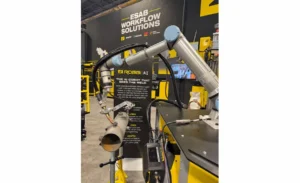
The impact of machine learning on laser processing extends beyond additive manufacturing. In a parallel research initiative, Rajani and Masinelli have focused on optimizing laser welding, pushing the boundaries of process control even further. Their objective was not only to streamline preparatory experiments but also to enable real-time adjustments during the actual welding process. Laser welding, even with ideal initial settings, can be susceptible to unpredictable variations. For instance, minute surface imperfections on the metal, such as tiny pores or oxides, can alter the way the laser beam interacts with the material, leading to weld defects.
"It is currently not possible to influence the welding process in real time," stated Chang Rajani, highlighting the limitations of existing systems. "This is beyond the capabilities of human experts." The sheer speed at which these interactions occur, and the rapid decisions required to compensate for them, present a formidable challenge. Even conventional computers can struggle to process the necessary data and implement corrective actions within the infinitesimal timeframes demanded by high-speed laser welding.
To overcome this hurdle, Rajani and Masinelli have employed a specialized type of computer hardware: a field-programmable gate array (FPGA). Unlike general-purpose processors, FPGAs are designed for highly parallel computation and offer predictable execution times. "With FPGAs, we know exactly when they will execute a command and how long the execution will take — which is not the case with a conventional PC," explained Masinelli. This deterministic behavior is crucial for applications requiring precise timing and rapid response.
The FPGA in their system acts as the primary real-time monitoring and control unit. It continuously analyzes sensor data from the welding process and makes instantaneous adjustments to laser parameters to counteract any deviations. However, the system also incorporates a conventional PC that serves as a sophisticated "backup brain" and learning platform. While the FPGA handles the immediate, real-time control, the algorithm running on the PC continuously learns from the vast amounts of data being generated. This allows for the refinement and improvement of the control strategy over time.
"If we are satisfied with the performance of the algorithm in the virtual environment on the PC, we can ‘transfer’ it to the FPGA and make the chip more intelligent all at once," explained Masinelli. This hybrid approach combines the immediate responsiveness of FPGAs with the advanced learning capabilities of machine learning algorithms, creating a powerful system for adaptive laser welding. This real-time optimization capability promises to significantly enhance weld quality, reduce defects, and improve the overall efficiency of laser welding operations across various industries.
The Broader Implications and Future Outlook
The work undertaken by Giulio Masinelli and Chang Rajani at Empa represents a significant leap forward in the field of laser processing of metals. Their conviction that machine learning and artificial intelligence hold immense potential to revolutionize this domain is shared by many in the advanced manufacturing sector. By developing sophisticated algorithms and models and actively expanding their areas of application, they are paving the way for a future where laser-based manufacturing is not only more precise and efficient but also more accessible and cost-effective.
The implications of this research are far-reaching. For industries that rely heavily on precision metal fabrication, such as aerospace and automotive manufacturing, enhanced process control and reduced costs can lead to significant competitive advantages. In the medical field, the ability to produce complex, customized implants with greater ease and affordability could improve patient outcomes and expand access to advanced treatments. Furthermore, the democratization of technologies like PBF through user-friendly, AI-assisted systems could foster innovation and empower a new generation of manufacturers.
The ongoing collaboration with partners from both research institutions and industry is crucial for translating these laboratory breakthroughs into practical, real-world applications. As these AI-driven solutions mature and become integrated into industrial workflows, we can expect to see a transformative impact on how metal components are designed, manufactured, and utilized across a wide spectrum of technological advancements. The future of laser manufacturing appears brighter and more intelligent, driven by the relentless pursuit of innovation at institutions like Empa.