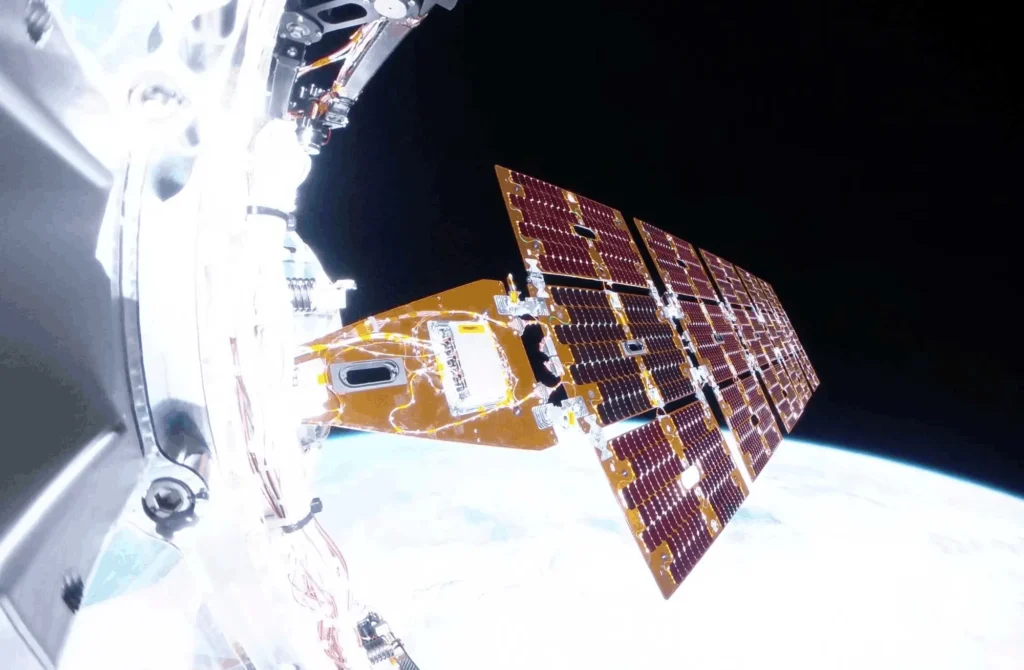
NASA has officially called off its ambitious and high-stakes plan to rescue the Neil Gehrels Swift Observatory, a $500 million scientific asset, from an inevitable fiery reentry into Earth’s atmosphere. The agency announced the decision on Wednesday, marking a significant turning point in the fate of the venerable observatory, which has been instrumental in unraveling the mysteries of gamma-ray bursts for nearly two decades.
The decision stems from persistent "ongoing commercial spacecraft attitude control issues" plaguing the LINK spacecraft, the privately developed servicer tasked with the complex rendezvous and boost maneuver. Developed by Katalyst Space of Arizona, the LINK spacecraft, launched in early July, encountered operational difficulties approximately three weeks after its deployment. These control issues have rendered it incapable of executing the primary objective of its mission: to safely capture and elevate Swift to a higher, more stable orbit.
In a statement released by NASA, the agency confirmed that LINK "will not capture or boost" Swift as originally envisioned. A NASA spokesperson further clarified that the agency "does not currently have plans for another Swift boost mission," effectively signaling the end of the rescue effort.
The Genesis of the Rescue Mission
The Neil Gehrels Swift Observatory, launched in December 2004, was designed with an initial two-year operational lifespan. Its primary mission was to swiftly detect and image gamma-ray bursts (GRBs), the most powerful explosions in the universe, and to study their afterglows across various electromagnetic spectra. Over its nearly 20 years of service, Swift has far exceeded its design parameters, becoming an indispensable tool for astrophysicists and contributing to a wealth of scientific discoveries.
However, as with all orbiting spacecraft, Swift’s orbit has been gradually decaying. This natural process has been exacerbated in recent years by increased solar storm activity. These energetic solar events release charged particles that interact with Earth’s upper atmosphere, increasing its density and creating greater atmospheric drag on satellites in low Earth orbit. This drag pulls spacecraft downwards, gradually lowering their altitude.
Recognizing the imminent threat of atmospheric reentry and the invaluable scientific data Swift continued to provide, NASA initiated plans for a novel solution. Last year, the agency awarded a $30 million contract to Katalyst Space to develop and deploy a specialized spacecraft capable of grappling the observatory and repositioning it into a higher, more sustainable orbit. This endeavor represented a pioneering step in the realm of active satellite servicing, a field with immense potential for extending the life of valuable space assets and mitigating the growing problem of space debris.
A High-Risk, High-Reward Endeavor
The decision to pursue a commercial rescue mission underscored NASA’s commitment to maximizing the scientific return from its investments and its willingness to embrace innovative approaches. Administrator Jared Isaacman, in a statement accompanying the announcement, defended the mission’s initial pursuit. "NASA should be willing to move quickly and take smart risks when the potential return is worth it, and that is exactly what we did with this mission," Isaacman stated. "This is not the outcome we were working toward, but it does not change why this mission was worth attempting."
This sentiment was echoed by Katalyst CEO Ghonhee Lee. "We took on this high-risk, high-reward challenge and are proud of the milestones we reached along the way," Lee said in an emailed statement. "We have already learned a tremendous amount, and now our job is to turn those lessons into something durable—building a repeatable playbook to inform future rendezvous and proximity operations and satellite servicing."
The mission was inherently complex and fraught with challenges. It involved launching a new spacecraft, LINK, to a precise trajectory to intercept Swift, which is traveling at thousands of miles per hour. Once in proximity, LINK’s robotic arm or capture mechanism needed to engage with Swift’s structure without causing damage. The subsequent boost maneuver would then require precise thrust application to alter Swift’s orbital path. The success of such a mission hinged on the flawless integration of multiple advanced technologies and meticulous operational planning.
The Technical Hurdles and Shifting Objectives
The "ongoing commercial spacecraft attitude control issue" with LINK proved to be an insurmountable obstacle for the primary rescue objective. While the specifics of the problem were not detailed in the NASA announcement, such issues can range from malfunctioning thrusters, sensor inaccuracies, or software glitches that prevent the spacecraft from maintaining its desired orientation or executing planned maneuvers.
Despite the inability to perform the boost, NASA and Katalyst are not abandoning the LINK mission entirely. Instead, their focus has shifted. The LINK spacecraft will now undertake rendezvous and proximity operations with Swift. The primary goal of this revised objective is to gather as much data as possible on the interaction between the two spacecraft and the dynamics of operating in close proximity to an aging satellite. This data is considered invaluable for informing and refining future satellite servicing missions, potentially paving the way for more successful endeavors in the future.
Swift’s Legacy and the Path Forward
The Neil Gehrels Swift Observatory has been a cornerstone of gamma-ray burst research. Since its launch, it has detected over 1,000 GRBs, significantly expanding our understanding of these enigmatic cosmic events. Its rapid response capabilities allowed astronomers to slew its instruments to observe GRBs within minutes of detection, providing crucial data on their evolution and the environments in which they occur. Swift’s observations have led to breakthroughs in understanding the progenitors of GRBs, their connection to the formation of black holes and neutron stars, and their role in the evolution of the universe.
Without intervention, NASA anticipates that Swift is likely to re-enter Earth’s atmosphere later this year. While the loss of the observatory is a scientific setback, NASA has stated that it will continue to prioritize finding new options to react rapidly to cosmic events. The agency will leverage its existing fleet of space telescopes and ground-based observatories to help fill the observational gap left by Swift’s demise. Missions like the Fermi Gamma-ray Space Telescope and the upcoming Vera C. Rubin Observatory will play crucial roles in continuing the study of GRBs and other high-energy phenomena.
Implications for the Future of Satellite Servicing
The failed rescue attempt for the Swift Observatory, while disappointing, offers critical lessons for the nascent field of in-orbit satellite servicing. The mission represented a bold experiment in leveraging commercial capabilities for complex space operations. The challenges encountered with LINK highlight the inherent risks associated with pioneering new technologies and operational paradigms in the unforgiving environment of space.
The shift in focus for the LINK mission to data collection for future operations is a pragmatic approach. The insights gained from these proximity operations could prove more valuable in the long run than a single successful rescue. Understanding the nuances of spacecraft docking, orbital maneuvering around aging assets, and the performance of robotic systems in a real-world scenario will be crucial for developing more robust and reliable satellite servicing capabilities.
The cost of the Swift Observatory, approximately $500 million, underscores the significant investment NASA makes in its scientific missions. The desire to extend the operational life of such valuable assets is a strong motivator for pursuing technologies like satellite servicing. However, the challenges encountered with LINK serve as a stark reminder of the technical hurdles that must be overcome.
The experience also highlights the importance of thorough testing and validation of commercial spacecraft systems before they are deployed for critical missions. While innovation often involves taking calculated risks, a robust understanding of a servicer spacecraft’s capabilities and limitations is paramount.
A New Era for Space Operations
The decision to abandon the Swift rescue mission does not diminish the scientific contributions of the observatory nor the ambition behind the rescue attempt. Instead, it marks a critical juncture in the evolution of space operations. It underscores the complexities of maintaining and servicing assets in orbit and the challenges of relying on emerging commercial capabilities for mission-critical tasks.
NASA’s commitment to continuing Swift’s observational role through existing missions and its dedication to learning from the LINK mission’s challenges suggest a pragmatic and forward-looking approach. The lessons learned from this endeavor will undoubtedly shape the future development and deployment of satellite servicing technologies, ultimately contributing to a more sustainable and productive future in space. The universe continues to offer its wonders, and even as one venerable observatory faces its end, the pursuit of knowledge in the cosmos endures, informed by both successes and setbacks.