The additive manufacturing (AM) industry has long mirrored the historical trajectory of industrialization, where military adoption often serves as a catalyst for broader commercialization. Over the next decade, a significant portion of AM’s untapped potential is expected to be unlocked by its integration across NATO member states. While progress in this arena has been gradual, recent developments involving the US-German software company 3YOURMIND suggest a pivotal shift is imminent.
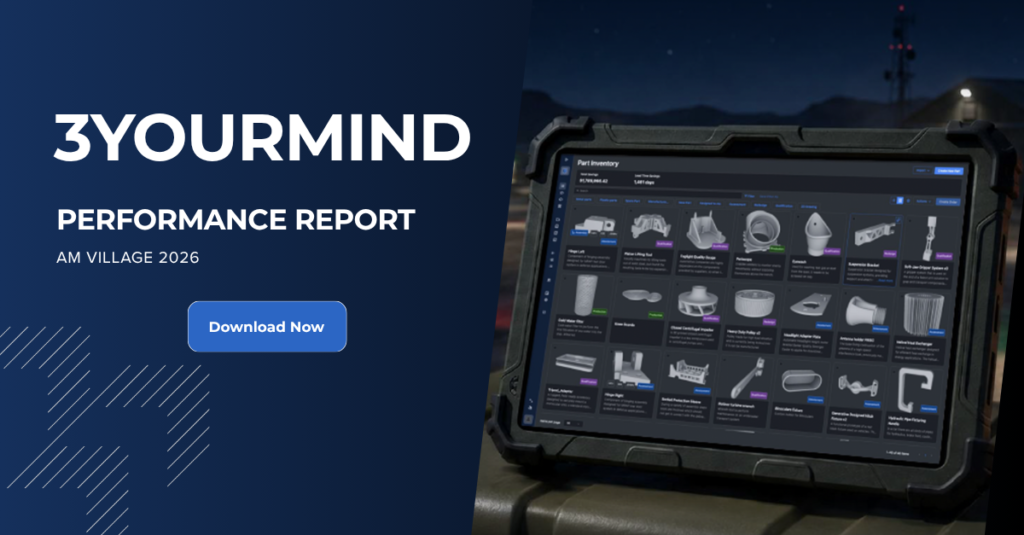
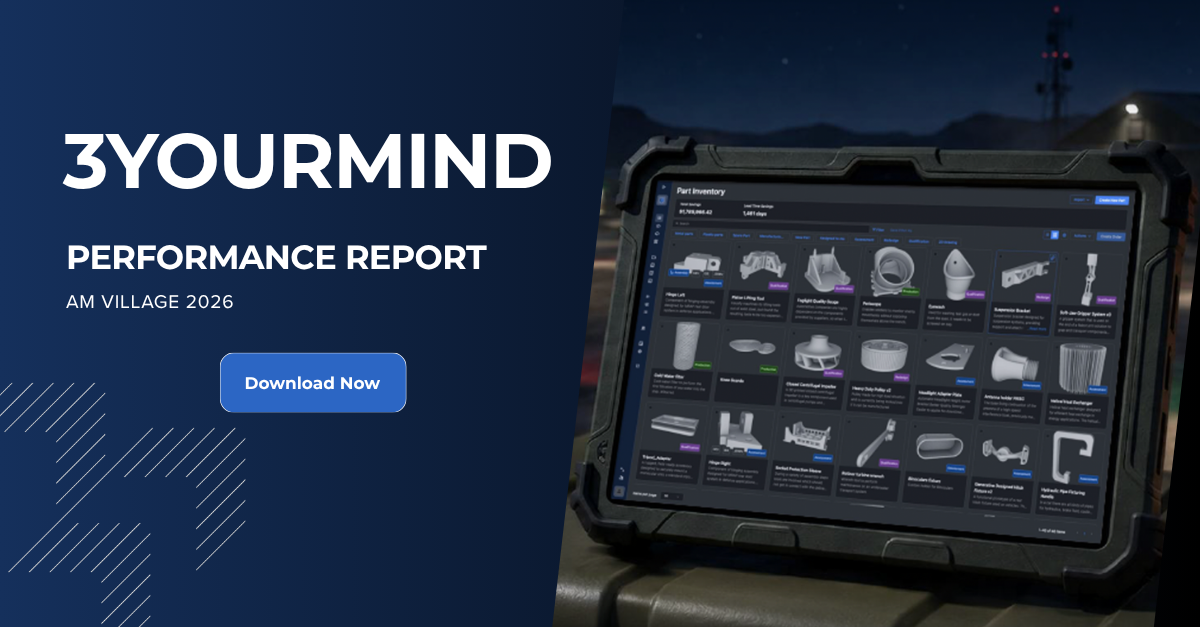
3YOURMIND, a key player in the AM ecosystem, has spent years refining its digital platform. Their work with leading AM original equipment manufacturers (OEMs) such as EOS, and prominent defense clients, including various branches of the U.S. military, has culminated in robust solutions for parts identification and distributed manufacturing workflows. The company recently released a comprehensive eBook detailing the outcomes of its participation in AM Village 2026, the third iteration of a specialized workshop organized by the European Defence Agency (EDA). This report highlights three compelling case studies that definitively prove distributed 3D printing is no longer a theoretical concept but a tangible operational capability.
AM Village 2026: A Milestone for NATO and Distributed Manufacturing
A significant development at AM Village 2026 was the inaugural participation of NATO. 3YOURMIND leveraged this opportunity to showcase the interoperability of NATO’s RAPID-e digital repository through a key case study. The exercise involved a collaborative effort between defense representatives from the Finnish and Dutch militaries, alongside Finnish defense firm Patria. The objective was to demonstrate the seamless routing of a part request from the Netherlands to Finland, a process that has historically been complex and time-consuming.
Chronology of the NATO Case Study:
- Part Request Initiation: A "Dutch micro-factory" identified a need for a cable clip assembly and submitted a request for its Technical Data Package (TDP) through the RAPID-e system. This system, designed to manage digital manufacturing data for defense applications, facilitated the initial request.
- Confirmation and Transfer: Patria, a defense contractor based in Finland, received and confirmed the request via the RAPID-e platform. Following confirmation, the TDP was securely transferred to the Netherlands using 3YOURMIND’s software solutions.
- Distributed Production: The TDP was then utilized to 3D print the cable clip assembly in the Netherlands on an Ultimaker S8 printer. This successful transfer and production validated the distributed manufacturing workflow across national borders within a NATO context.
This particular case study underscored the potential of RAPID-e as a critical component for enabling agile and responsive defense supply chains. The ability to digitally transmit design data and facilitate on-demand production in different geographical locations represents a paradigm shift in military logistics and readiness.
Expanding the Scope: Naval Operations and Multi-OEM Collaboration
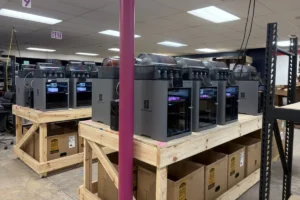
Beyond the NATO-specific demonstration, AM Village 2026 featured additional case studies that further illuminated the practical applications of distributed AM. One notable exhibition focused on the feasibility of printing parts remotely on naval vessels. This initiative, undertaken in partnership with the Royal Dutch Navy, showcased the operational capabilities of AM hardware from three distinct manufacturers: Ultimaker, EOS, and Cosmyx. The successful integration of printers from multiple OEMs highlights the growing interoperability within the AM sector and its readiness to support diverse operational environments.
Furthermore, 3YOURMIND demonstrated the viability of a centralized approach to managing and distributing part designs. This involved sending "part recipes" from a designated Center of Excellence (CoE) to a variety of end-users, including one located in a nation that, while aligned with NATO, is not a full member. This capability is crucial for ensuring consistent quality and adherence to standards across a wide network of distributed manufacturing sites, regardless of their direct affiliation with a primary defense alliance.
The Cybersecurity and Infrastructure Imperative
The challenges associated with deploying distributed AM at scale are increasingly mirroring those encountered in the adoption of Artificial Intelligence (AI) within manufacturing sectors. The primary hurdles are no longer centered on the performance limitations of the AM equipment itself. Instead, the focus has shifted to the critical elements of cybersecurity and the robustness of the network infrastructure that underpins the 3D printing hardware.
"The evolution of distributed manufacturing is heavily reliant on robust digital infrastructure and stringent cybersecurity measures," commented an industry analyst specializing in defense technology. "Ensuring the integrity of digital blueprints, the security of transmission channels, and the authentication of users and machines are paramount to building trust and enabling widespread adoption, especially within sensitive defense contexts."
Interestingly, a well-executed, enterprise-wide implementation of AI could potentially provide the very cybersecurity foundation necessary to accelerate the adoption of distributed manufacturing. As AI and distributed manufacturing advance in parallel, their potential synergies could lead to a more rapid and profound transformation than either technology could achieve in isolation. This suggests a future where intelligent systems not only optimize production but also fortify the digital supply chains that enable it.
Technological and Organizational Readiness Confirmed
3YOURMIND’s compilation of case studies offers a powerful validation of distributed AM from both a technological and an organizational perspective. The technical specifics of the exercises demonstrate that AM software and hardware are now sufficiently mature to meet the demands of users with distributed manufacturing objectives. The collaborative environment of AM Village, with the participation of NATO, multiple AM OEMs, a defense contractor, and various national militaries, signifies a collective readiness to embrace the challenges and opportunities presented by distributed AM.
While end-users will undoubtedly proceed with caution, the overarching message from these developments is clear: AM-enabled decentralized manufacturing has rapidly evolved. What was once considered a cybersecurity concern of significant magnitude is now increasingly a matter of assessing and managing acceptable risk. The participation of NATO in these demonstrations signals a strong indication that the potential rewards of enhanced agility, resilience, and operational efficiency are now widely perceived to outweigh the inherent risks.
Broader Implications for Defense and Industry
The successful validation of distributed AM capabilities has profound implications for the defense sector and beyond. For military organizations, it promises enhanced supply chain resilience, reduced lead times for critical parts, and the ability to conduct repairs and production closer to the point of need, even in austere or remote environments. This could translate into improved operational readiness and reduced logistical burdens.

For the commercial AM industry, the defense sector’s growing embrace of distributed manufacturing serves as a powerful endorsement. As defense requirements drive innovation and standardization, these advancements are likely to trickle down to commercial applications, fostering wider adoption and further technological development across various industries. The emphasis on cybersecurity and interoperability, highlighted by these initiatives, will also set higher benchmarks for the entire AM ecosystem.
The participation of multiple OEMs, such as Ultimaker, EOS, and Cosmyx, underscores a maturing market where interoperability is becoming a key competitive differentiator. This collaborative spirit, fostered through events like AM Village, is essential for building the complex, interconnected digital supply chains that are envisioned for the future.
The Road Ahead: From Theory to Widespread Adoption
The path from demonstrating theoretical possibilities to achieving widespread, operational deployment of distributed AM will continue to be a journey. However, the events and outcomes showcased at AM Village 2026, particularly through the leadership of companies like 3YOURMIND and the engagement of organizations like NATO and the EDA, mark a significant acceleration of this process.
The focus on secure data management, interoperable hardware, and robust network infrastructure addresses the critical non-technical barriers that have historically hindered large-scale adoption. As these challenges are systematically overcome, the transformative potential of distributed additive manufacturing will become increasingly realized, reshaping how goods are produced, supplied, and maintained across global defense and industrial landscapes. The message from the front lines of defense innovation is clear: distributed AM is ready for prime time, and the rewards are substantial.
Images courtesy of 3YOURMIND