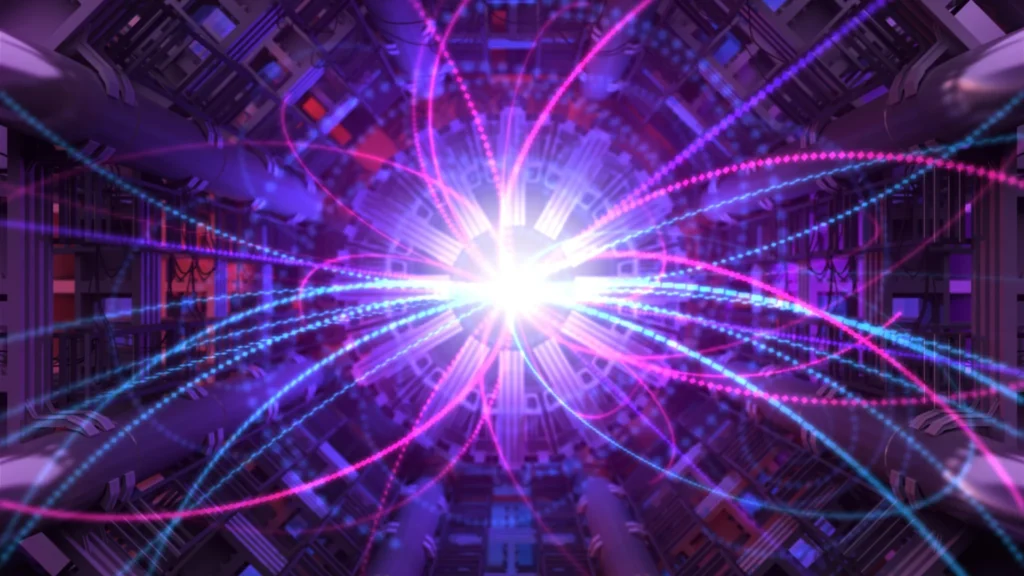
Recent findings from research conducted at the Large Hadron Collider (LHC) at CERN in Geneva suggest that the scientific community may be closing in on signs of undiscovered physics that could fundamentally alter our understanding of the universe. If confirmed by further data, these hints would overturn the Standard Model, a theoretical framework that has dominated particle physics for over half a century. The new results, emerging from the study of specific sub-atomic particles, indicate behaviors that diverge from the predictions of this long-standing theory, potentially opening the door to a new era of scientific discovery.
The Standard Model serves as the most comprehensive description of the fundamental particles and the forces that govern them. It categorizes the basic building blocks of matter—sub-atomic particles that cannot be divided further—and explains how they interact through four fundamental forces: gravity, electromagnetism, the weak nuclear force, and the strong nuclear force. While the Standard Model has been remarkably successful in predicting the existence of particles like the Higgs boson, it is widely acknowledged to be incomplete. Notably, it fails to account for gravity or dark matter, the latter of which is an invisible, unmeasured substance believed to constitute approximately 25% of the universe’s mass-energy content.
The LHC and the Hunt for New Physics
The Large Hadron Collider is the world’s largest and most powerful particle accelerator. Housed in a 27-kilometer-long circular tunnel situated deep beneath the French-Swiss border, the facility is designed to probe the limits of the Standard Model. Within this massive structure, beams of protons are accelerated to nearly the speed of light in opposite directions before being forced into high-energy collisions. These collisions produce a shower of secondary particles, which are then meticulously analyzed by massive detectors to identify anomalies that might hint at new physical laws.
The latest results come from the LHCb (Large Hadron Collider beauty) experiment, one of the primary detectors at the facility. Researchers at LHCb have been focusing on the decay processes of B mesons, which are unstable sub-atomic particles containing a "beauty" quark. A decay in this context refers to the transformation of a particle into other, lighter particles. The team investigated how B mesons transform into a specific set of daughter particles and found that the frequency and characteristics of these transformations do not align with the mathematical expectations set by the Standard Model.
Statistical Significance and the Gold Standard of Discovery
The findings, which have been accepted for publication in the prestigious journal Physical Review Letters, report a statistical tension of four standard deviations (4-sigma) from the Standard Model’s predictions. In the rigorous world of particle physics, statistical significance is the primary metric for evaluating the validity of a discovery. A 4-sigma result indicates that there is only a one in 16,000 chance that the observed anomaly is the result of a random fluctuation in the data.
While 4-sigma is highly compelling, it falls short of the "five sigma" (5-sigma) threshold, which is considered the "gold standard" for a definitive scientific discovery. A 5-sigma result represents a one in 1.7 million chance of a fluke, the level of certainty required to officially claim the observation of a new phenomenon, such as the 2012 discovery of the Higgs boson. However, the evidence for new physics is mounting. These LHCb results are bolstered by independent data from the CMS (Compact Muon Solenoid) experiment, another major detector at the LHC. Published earlier in 2025, the CMS results, while less precise than those from LHCb, show a consistent trend that reinforces the case for an anomaly.
The "Electroweak Penguin" Decay
The specific process under scrutiny is known as an "electroweak penguin decay." This colorful terminology refers to a rare type of transformation where a B meson decays into four other particles: a kaon, a pion, and two muons. The name "penguin" originates from the 1970s, when physicists noted that the Feynman diagrams—visual representations of particle interactions—used to calculate these decays vaguely resembled the flightless bird.
In this particular decay, a beauty quark transforms into a strange quark. Under the Standard Model, this process is incredibly rare; it is estimated to occur only once for every million B mesons produced. Because the process is so infrequent, it is uniquely sensitive to the influence of "new physics." If there are heavy, undiscovered particles that exist beyond the scope of the Standard Model, they could exert a measurable influence on this decay process, even if they are too heavy to be produced directly in current LHC collisions.
This method of indirect observation has a long history in physics. For instance, the phenomenon of radioactivity was observed and studied 80 years before the W bosons—the fundamental particles responsible for the weak force—were directly detected. Similarly, the current anomalies in B meson decays could be the first measurable fingerprints of a new class of particles.
Theoretical Implications: Leptoquarks and New Forces
If the observed deviations are confirmed to be real, they could point toward several revolutionary theories. One of the most prominent candidates is the existence of "leptoquarks." These are hypothetical particles that would bridge the gap between two different classes of matter: leptons (such as electrons and muons) and quarks (the constituents of protons and neutrons). In the Standard Model, these two families are treated as distinct, but leptoquarks would suggest a deeper unification of matter.
Another possibility is the existence of heavier analogues of known particles, such as a "Z-prime" boson. This would imply the existence of a fifth fundamental force of nature, beyond the four currently recognized. Such a discovery would necessitate a complete rewrite of physics textbooks and provide a potential path toward a "Theory of Everything" that unites quantum mechanics with general relativity.
Challenges and the "Charming Penguin" Problem
Despite the excitement, the scientific community remains cautious. There are still unresolved theoretical questions that could explain the data within the existing Standard Model framework. The most significant challenge involves "charming penguins"—a subset of Standard Model processes involving "charm" quarks that are notoriously difficult to calculate with precision.
Some theorists argue that the effects of these charming penguins might be larger than previously estimated, potentially accounting for the observed anomalies without the need for new physics. However, recent calculations and combined data from LHCb suggest that these Standard Model effects are likely insufficient to bridge the gap between theory and observation. To resolve this "charm" ambiguity, physicists require more data and more refined theoretical models.
Chronology of the Research and Future Outlook
The quest to find cracks in the Standard Model has been a decades-long endeavor. The LHCb experiment was first conceived in 1994, with the goal of studying beauty quarks to understand why the universe is made of matter rather than antimatter.
- 2008: The LHC began operations, marking a new era in high-energy physics.
- 2011–2018: The data used in the current study was collected. During this period, the LHCb recorded approximately 650 billion B meson decays.
- 2021–2024: Advanced analysis of this massive dataset led to the identification of the 4-sigma anomaly.
- Early 2025: The CMS experiment released complementary findings, strengthening the statistical case for the anomaly.
- Late 2025: Publication of the formal LHCb results in Physical Review Letters.
Looking ahead, the roadmap for particle physics is clear. The LHCb experiment has already recorded three times more data since 2018 than was used in the current study. This new data is currently being analyzed and is expected to provide a much clearer picture within the next few years.
Furthermore, significant upgrades to the LHC are planned for the 2030s. The "High-Luminosity LHC" (HL-LHC) project aims to increase the number of collisions by a factor of ten, allowing researchers to accumulate a dataset 15 times larger than what is currently available. This massive influx of information will likely push the statistical significance past the 5-sigma threshold, either confirming the discovery of new physics or proving the Standard Model’s continued resilience.
Beyond the 2030s, the global physics community is already discussing the Future Circular Collider (FCC), a planned 100-kilometer-long accelerator that could begin operations in the 2070s. Such a facility would be capable of reaching energy levels far beyond the LHC, potentially creating the heavy particles—like leptoquarks—that are currently only hinted at through indirect observations.
The current findings at CERN represent a pivotal moment in the history of science. While the Standard Model has served as a reliable map of the sub-atomic world for half a century, the "penguin" decays at the LHC suggest that there are vast, uncharted territories yet to be explored. Whether these anomalies are the first glimpses of a new force or a subtle complexity of the known ones, they ensure that the next decade of particle physics will be among the most consequential in the field’s history.