The pursuit of a unified theory that harmonizes the macro-scale certainties of General Relativity with the micro-scale probabilities of Quantum Mechanics has long been the "holy grail" of modern physics. For over a century, the scientific community has operated under the shadow of a fundamental schism: the laws that govern the motion of stars and the expansion of the universe appear fundamentally incompatible with the laws that dictate the behavior of atoms and subatomic particles. This week, a collaborative study published in the journal npj Quantum Information by researchers from Kyushu University, the University of Waterloo, and Stockholm University has introduced a paradigm-shifting framework that suggests many experimental signatures previously thought to indicate "quantum gravity" may actually be explainable through classical means.
The research team, led by Associate Professor Joshua Foo of Kyushu University’s Institute for Advanced Study, has identified a phenomenon they term the "Relativity of Spacetime Superpositions." This theoretical breakthrough suggests that the interpretation of gravity’s nature—whether it is fundamentally quantum or remains classical—depends heavily on the observer’s frame of reference. This finding introduces a critical layer of ambiguity into the design of future experiments, forcing physicists to reconsider what constitutes "proof" of a quantum gravitational field.
The Dual Pillars of Modern Physics
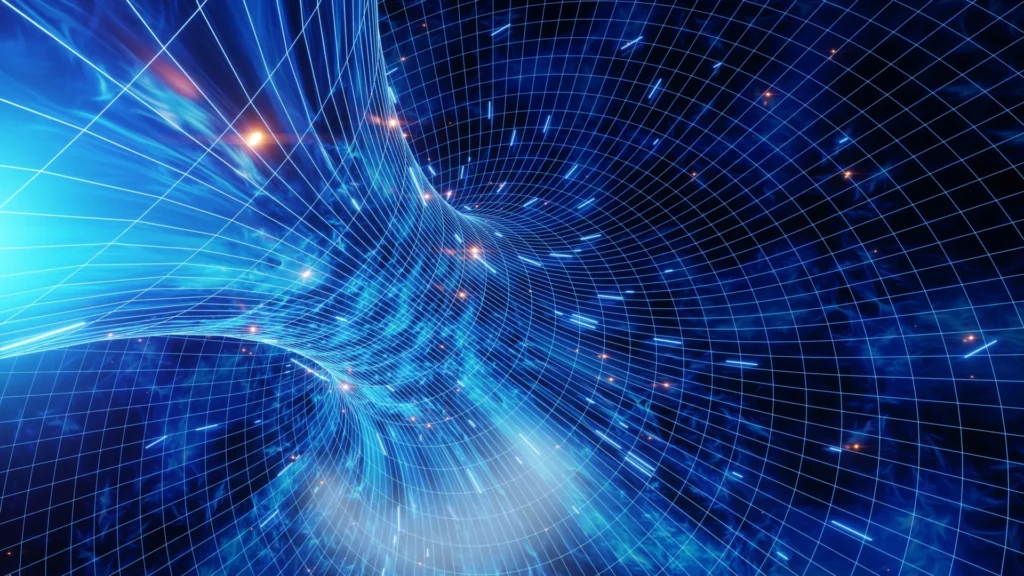
To understand the weight of this new research, one must first look at the two theories that define our current understanding of reality. On one side stands Albert Einstein’s General Relativity, formulated in 1915. It describes gravity not as a force, but as the curvature of spacetime itself. Mass and energy tell spacetime how to curve, and the curvature of spacetime tells mass how to move. This theory has been validated with staggering precision, most recently through the detection of gravitational waves—ripples in the fabric of spacetime caused by the collision of black holes.
On the other side is Quantum Mechanics, which emerged in the early 20th century to explain the behavior of matter at the smallest scales. Quantum mechanics introduces the concept of superposition, where a particle can exist in multiple states or locations simultaneously until it is measured. While this seems counterintuitive, it is the foundation of modern technology, including the transistors in our smartphones and the lasers used in medical surgeries.
The conflict arises when one attempts to apply quantum principles to gravity. If a massive object is in a quantum superposition of two different locations, what happens to the gravitational field it generates? In Einstein’s classical view, gravity is tied to a specific location. If the object is "delocalized," many physicists assume the gravitational field—and thus spacetime itself—must also be in a superposition of different states.
A Theoretical Shift: The Relativity of Spacetime Superpositions
The new framework developed by Foo and his colleagues suggests that the "quantumness" of gravity might be an elusive target. The researchers utilized mathematical modeling to show that a situation described as a quantum superposition of spacetime geometries can, in many instances, be mathematically transformed into a description where gravity remains classical, but the particles moving through it are described using complex quantum states.
"Many researchers have proposed experiments that could potentially reveal the quantum nature of gravity," explains Associate Professor Joshua Foo. "What we found is that some of these scenarios can be viewed from two equally valid perspectives. One interpretation describes gravity as being in a quantum superposition, while the other describes quantum particles moving in an ordinary gravitational field."
This concept is akin to a "change of coordinates" in mathematics. The researchers use the analogy of two different map projections representing the same terrain. A Mercator projection and a Gall-Peters projection look vastly different—one distorts the size of continents, while the other distorts their shapes—but they both describe the same physical Earth. Similarly, the study suggests that what looks like "quantum gravity" in one mathematical "map" might look like "classical gravity" in another.
Chronology of the Search for Quantum Gravity
The effort to bridge the gap between Einstein and quantum theory has a long and storied history, marked by both brilliant insights and persistent dead ends:
- 1916: Einstein himself suggests that quantum effects must eventually be incorporated into his theory of gravity.
- 1930s: Physicists like Léon Rosenfeld attempt the first formal "quantization" of the gravitational field, encountering mathematical infinities that plague the theory for decades.
- 1960s: John Wheeler and Bryce DeWitt develop the Wheeler-DeWitt equation, an attempt to create a wave function for the entire universe, though it lacks a clear "time" component.
- 1980s: String Theory gains prominence, suggesting that all particles are actually one-dimensional "strings" vibrating at different frequencies, with gravity emerging as one of these vibrations.
- 1990s: Loop Quantum Gravity (LQG) emerges as a rival, proposing that spacetime itself is quantized into discrete loops of gravitational field lines.
- 2010s: Breakthroughs in "Tabletop Quantum Gravity" experiments are proposed, aiming to detect the entanglement of two masses via their gravitational interaction.
- 2024: The Kyushu-Waterloo-Stockholm collaboration identifies the "Relativity of Spacetime Superpositions," adding a new layer of complexity to these experimental efforts.
Supporting Data and the "Ambiguity" Factor
The core of the researchers’ data lies in the mathematical equivalence of different quantum reference frames. In classical physics, the "Equivalence Principle" states that the effects of gravity are indistinguishable from the effects of acceleration. The new study extends a similar logic to the quantum realm.
By analyzing the "Hilbert space"—the mathematical space where quantum states live—the team found that a "quantum gravitational state" can be "rotated" into a "classical gravitational state" through a specific set of transformations. This suggests that the experimental signatures we are looking for might not be as "pure" as once thought.
Magdalena Zych of Stockholm University, a co-author of the study, emphasizes that this does not disprove quantum gravity. Instead, it refines the search. "Our work does not tell us that such experiments rule out quantum gravity," Zych says. "Rather, it helps us identify which experimental signatures would genuinely require a quantum description of gravity and which ones could arise from more familiar physics. That distinction is crucial for designing future experiments."
Official Responses and Scientific Implications
While the paper is theoretical, it has already prompted discussions within the theoretical physics community. Experts in the field of "Quantum Information Science" have noted that the study highlights a potential "false positive" problem in high-precision experiments. If a laboratory detects what looks like a quantum effect in a gravitational field, they must now prove that the effect cannot be explained away by the "Relativity of Spacetime Superpositions."
The implications for experimental design are profound. Current efforts, such as those involving ultra-cold atoms in "fountains" or micro-mirrors suspended in vacuums, are designed to detect the tiniest deviations from classical gravity. The Kyushu-Waterloo-Stockholm framework provides a new "checklist" for these scientists to ensure that their results are truly indicative of a quantized spacetime.
Analysis of Broader Impact: From Theory to Technology
Historically, the resolution of abstract physics puzzles has led to the most significant technological leaps in human history. The study of thermodynamics in the 19th century led to the steam engine and the Industrial Revolution. The study of electromagnetism led to the electric grid.
- Navigation and Timing: GPS satellites already require corrections based on General Relativity because time moves faster further from the Earth’s mass. If we successfully unlock the secrets of quantum gravity, it could lead to "quantum positioning systems" with millimeter-level accuracy, unaffected by signal interference.
- Computing and Materials: Understanding the quantum nature of spacetime could provide the ultimate blueprint for quantum computing, potentially allowing for the creation of "topological" qubits that are immune to the "noise" that currently plagues the industry.
- Space Exploration: While still in the realm of speculative science, a theory of quantum gravity is the first step toward understanding "warp drives" or "wormholes," which are theoretically allowed under General Relativity but require a quantum understanding to be practically realized.
A Roadmap for Future Exploration
The immediate impact of this research is a clearer roadmap for the next generation of detectors. Physicists are currently building more sensitive gravitational wave observatories (like LISA, the Laser Interferometer Space Antenna) and more precise atomic clocks.
The work of Foo, Zych, and their colleagues suggests that the path to a "Theory of Everything" is not a straight line, but a complex landscape where the very language we use to describe reality—gravity, particles, and spacetime—can shift depending on how we look at it.
"Understanding how gravity and quantum mechanics fit together is one of the greatest challenges in physics," concludes Associate Professor Foo. "Before we can test gravity’s quantum nature, we first need to know what evidence would prove that we’ve found it. Our work helps clarify that question."
As the scientific community digests these findings, the focus will shift to designing "witness" experiments—tests that are specifically immune to the relativity of superpositions. Only then can humanity hope to finally bridge the gap between the stars and the atoms, providing a singular, consistent description of the universe we inhabit.