In a pivotal move set to redefine the landscape of artificial intelligence (AI) infrastructure, technology giant NVIDIA has announced a strategic minority investment in Cloverleaf Infrastructure, a burgeoning real estate developer specializing in large-scale computing facilities. This partnership signifies a concerted effort by both entities to significantly expedite the development of massive computing centers across the United States, directly addressing one of the most formidable bottlenecks currently impeding the rapid expansion of AI capabilities: the securement of suitable sites endowed with sufficient power and robust infrastructure to support unprecedented computing workloads. The collaboration extends beyond mere capital infusion, integrating NVIDIA’s advanced DSX platform to streamline and optimize the entire lifecycle of data center planning and operation, from initial site selection to energy management.
The Dawn of the AI Factory: A New Infrastructure Paradigm
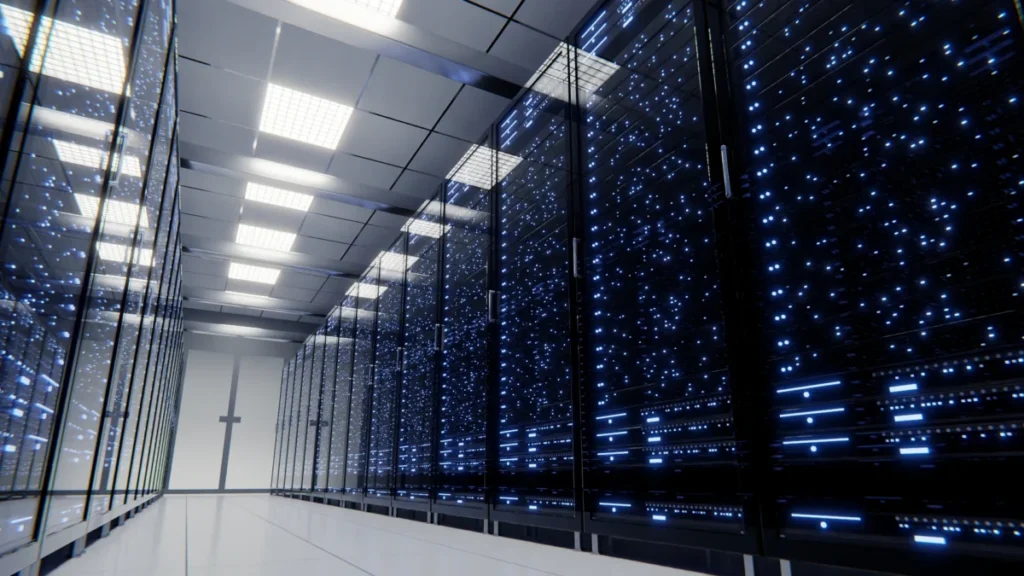
The exponential growth of artificial intelligence, particularly the proliferation of large language models (LLMs) and generative AI applications, has ushered in a new era of computational demand. What were once termed "data centers" are increasingly being conceptualized as "AI factories" – industrial-scale complexes designed not merely to store and process data, but to continuously generate intelligence. This paradigm shift necessitates a radical rethinking of infrastructure development. NVIDIA, a company synonymous with the hardware powering this AI revolution, recognizes that its cutting-edge GPUs require equally advanced and purpose-built environments to unleash their full potential. This realization underpins NVIDIA’s broader strategic pivot towards becoming a comprehensive AI infrastructure provider, moving beyond silicon to encompass the entire ecosystem required for intelligence at scale.
The demand for these "AI factories" is projected to skyrocket in the coming years. According to various industry analyses, global data center electricity consumption, already significant, is expected to double or even triple by the end of the decade, largely driven by AI. The International Energy Agency (IEA) has highlighted that data centers could account for over 4% of global electricity demand by 2030, a substantial increase from roughly 1% in 2022. Each modern AI data center can consume as much electricity as a small city, with power requirements often measured in hundreds of megawatts (MW) or even gigawatts (GW). This unprecedented demand places immense pressure on existing power grids and infrastructure, making the identification and development of suitable sites a critical and complex challenge.
Navigating the Power Bottleneck: The Core Challenge
The primary hurdle in deploying these next-generation computing facilities is not merely finding vast tracts of land, but securing "shovel-ready" sites that possess the intricate confluence of physical space, robust grid connectivity, ample and reliable power supply, and scalable cooling resources. Traditionally, data center site selection focused heavily on proximity to fiber optic networks and low real estate costs. However, the energy intensity of AI workloads has fundamentally altered this equation. A site might offer ample physical space, but without immediate access to gigawatts of electrical capacity and the necessary transmission infrastructure to deliver it, it remains unsuitable for an AI factory.
"AI factories are the infrastructure of the intelligence age, and land, power and shell are their foundation," articulated Nico Caprez, vice president of global AI infrastructure growth at NVIDIA. His statement underscores the foundational nature of these resources in enabling the intelligence age. The sheer scale of power required means that even well-developed industrial parks often lack the instantaneous grid capacity to support such facilities without significant, time-consuming, and costly upgrades to substations, transmission lines, and generation sources. This often involves navigating complex regulatory landscapes, securing environmental permits, and coordinating with multiple utility providers – processes that can add years to a development timeline.
Cloverleaf Infrastructure: A Strategic Entrant in 2024
Cloverleaf Infrastructure, though founded only in 2024, has rapidly established itself as a significant player in this specialized domain. The company’s swift ascent and its claimed pipeline of "multiple gigawatt-scale developments" across North America suggest a leadership team with deep prior expertise and established relationships within the energy and real estate sectors. Their focus is specifically on developing sites that are engineered from the ground up to support the extreme demands of accelerated computing. This includes a profound understanding of power generation, transmission, and distribution, which is increasingly vital for these projects.
The decision by NVIDIA to make a minority investment in Cloverleaf is not merely a financial transaction; it is a strategic alignment. It aims to inject capital and technological prowess to help Cloverleaf accelerate its work, expand its project pipeline, and ultimately better serve customers and utility partners grappling with the escalating demand for high-performance computing infrastructure. Cloverleaf’s stated mission to deliver "clean-powered infrastructure" also aligns with broader industry trends and corporate sustainability goals, which are becoming non-negotiable for major technology firms.
Integrated Design with NVIDIA’s DSX Platform: A Game Changer
The partnership’s innovative core lies in the integration of NVIDIA’s DSX platform into Cloverleaf’s development process. DSX, or Data Center Design Experience, is a sophisticated digital twin platform that allows developers to simulate and evaluate all critical aspects of a data center concurrently and interactively early in the design phase. This includes computing hardware configurations, electrical infrastructure, cooling systems, and the physical facility layout.
Traditionally, these elements were often designed sequentially or in silos, leading to potential clashes, inefficiencies, and costly rework once construction was underway. For instance, a decision on computing capacity might significantly impact electricity demand, which in turn dictates the cooling requirements. These interconnected factors then influence the optimal location, size, and architectural design of the facility. By bringing these disparate parts into a common design process, DSX enables a holistic, integrated approach.
The benefits of this integrated design are manifold:
- Early Constraint Identification: Developers can identify infrastructure limitations, potential bottlenecks, or design incompatibilities before any ground is broken, mitigating expensive changes later in the project lifecycle.
- Optimized Resource Allocation: The platform allows for the comparison of infrastructure tradeoffs, such as balancing different cooling technologies against power consumption or evaluating the impact of varying compute densities on energy use. This ensures optimal resource allocation from the outset.
- Reduced Time to Market: By streamlining the design process and minimizing unforeseen issues, the DSX platform can significantly shorten the development timeline for these complex facilities.
- Enhanced Efficiency: The ability to simulate and optimize power and cooling requirements from the initial stages can lead to more energy-efficient facilities, reducing operational costs and environmental impact.
- Future-Proofing: An integrated design approach can help build in flexibility and scalability, allowing facilities to adapt to future technological advancements and increasing compute demands without necessitating fundamental structural or systemic overhauls.
Once a facility becomes operational, the value of NVIDIA’s DSX infrastructure and software continues. It can assist customers in continuously optimizing energy use and computing capacity, ensuring that every available megawatt is utilized efficiently to produce maximum useful computing output. This focus on operational efficiency and optimization reflects a mature approach to infrastructure management, moving beyond initial construction to long-term performance.
Economic Development and Environmental Stewardship
The development of these gigawatt-scale AI factories carries significant economic and environmental implications. On the economic front, David Berry, co-founder and CEO of Cloverleaf, highlighted that "AI is accelerating demand for digital infrastructure at an unprecedented scale and driving strong economic development opportunities for American communities." These projects represent substantial investments, creating thousands of construction jobs and hundreds of high-paying operational roles. They also attract ancillary businesses and can stimulate local economies.
However, the immense power requirements also bring environmental responsibilities. Cloverleaf explicitly states its commitment to developing "clean-powered infrastructure" while carefully considering "local energy systems, natural resources and surrounding communities." This commitment is crucial in an era of increasing climate awareness and corporate social responsibility. It implies a focus on integrating renewable energy sources, exploring innovative cooling technologies to reduce water consumption, and engaging proactively with local stakeholders to address concerns about land use, noise pollution, and strain on public services. The ability to integrate clean energy solutions from the design phase using platforms like DSX will be paramount in achieving these sustainability goals.
Broader Industry Impact and Future Implications
This partnership reflects a fundamental and broader shift in data center development paradigms. For decades, data centers were largely seen as real estate plays – finding cheap land, building a box, and filling it with servers. However, the advent of power-intensive accelerated computing has transformed this into an integrated engineering challenge. Site selection is no longer a simple real estate decision but a complex equation involving power grid access, cooling methodologies, computing capacity, and facility design, all of which must be planned as a single, cohesive system from inception.
The implications for the industry are profound:
- Acceleration of AI Deployment: By streamlining the development of critical infrastructure, the partnership can significantly accelerate the deployment of advanced AI capabilities, driving innovation across various sectors from scientific research to industrial automation.
- Redefining Data Center Development: It sets a new standard for how large-scale computing facilities are conceived, designed, and operated, pushing the industry towards more integrated, efficient, and sustainable practices.
- Grid Modernization: The demand for gigawatt-scale sites will inevitably spur investments in grid modernization and expansion, particularly in regions with abundant renewable energy potential.
- Competitive Landscape: This strategic alliance could put pressure on other infrastructure developers and cloud providers to adopt similar integrated design approaches and accelerate their own site development efforts to keep pace with AI demand.
- Regional Economic Disparities: The focus on North America and specific regions with robust power infrastructure could exacerbate economic disparities, creating AI infrastructure hubs while other areas lag.
Cloverleaf’s impressive track record of advancing multiple gigawatt-scale projects across North America since its founding, coupled with NVIDIA’s investment and the deployment of its cutting-edge DSX infrastructure technology, positions this alliance as a formidable force. The companies are not merely building data centers; they are constructing the foundational infrastructure of the intelligence age, aiming to accelerate the development of sites capable of supporting the next wave of large-scale computing that will drive global innovation and economic progress for decades to come. The success of this collaboration will serve as a crucial barometer for the future scalability and sustainability of the global AI revolution.