A groundbreaking fabrication technique developed by a research team at Penn State University has paved the way for the creation of multifunctional "smart synthetic skin." This innovative material, led by Hongtao Sun, an assistant professor of industrial and manufacturing engineering (IME), can be programmed to perform a diverse array of tasks, ranging from concealing and revealing information to enabling adaptive camouflage and supporting advanced soft robotic systems. The findings, published in the prestigious journal Nature Communications, have been recognized by the publication’s Editors’ Highlights, underscoring their significant scientific merit.
The core of this breakthrough lies in a novel approach that produces a programmable smart skin from hydrogel, a soft, water-rich material. Unlike conventional synthetic materials, which are typically designed with fixed functionalities, this new smart skin possesses remarkable adaptability. Its visual appearance, mechanical properties, surface texture, and even its ability to change shape can be precisely controlled and altered when the material is exposed to various external stimuli, including heat, solvents, or physical stress. This level of dynamic responsiveness marks a significant departure from current material science capabilities.
A Biological Blueprint for Advanced Materials
The inspiration for this revolutionary technology stems from the natural world, specifically from the remarkable capabilities of cephalopods, such as octopuses. These marine creatures are renowned for their extraordinary ability to rapidly alter the color, pattern, and texture of their skin. This dynamic camouflage serves crucial purposes, allowing them to blend seamlessly with their surroundings for predator avoidance or to communicate with other octopuses.
Professor Sun, the principal investigator for the project, explained the genesis of the idea: "Cephalopods utilize a sophisticated interplay of muscles and nerves to achieve dynamic control over their skin’s appearance and texture. Emulating this biological marvel, we developed a 4D-printing system to translate this concept into a synthetic, soft material." The term "4D printing" is employed because the resulting printed objects are not static; rather, they possess the inherent ability to change and adapt in response to their environmental conditions over time. Sun’s extensive affiliations with Penn State’s departments of Biomedical Engineering, Materials Science and Engineering, and the Materials Research Institute further highlight the interdisciplinary nature of this research.
Halftone Encoding: Printing Digital Instructions into Matter
The key to achieving this sophisticated adaptability lies in a technique called halftone-encoded printing. This innovative method translates digital image or texture data into a binary format of ones and zeros, which are then embedded directly into the material during the printing process. This approach is conceptually similar to how halftone dots are used in printed media like newspapers and photographs to create the illusion of continuous tones and images.
By meticulously encoding these digital patterns within the hydrogel matrix, the researchers can precisely dictate how the smart skin will react to specific stimuli. The printed patterns act as a set of internal instructions, determining how different regions of the material will respond. For instance, certain areas might be programmed to swell or shrink more significantly than others when exposed to variations in temperature or the presence of specific liquids. Similarly, some regions might be designed to soften or harden differently under mechanical pressure. This granular control over material behavior, dictated by the embedded digital patterns, allows for a high degree of customization and programmability.
"In essence, we are printing instructions directly into the material," Professor Sun elaborated. "These instructions then guide the skin’s behavior when external changes occur in its environment."
Concealing and Revealing Information on Demand
One of the most compelling demonstrations of the smart skin’s capabilities is its ability to dynamically conceal and reveal visual information. Haoqing Yang, a doctoral candidate in IME and the lead author of the study, emphasized the profound potential of this feature.
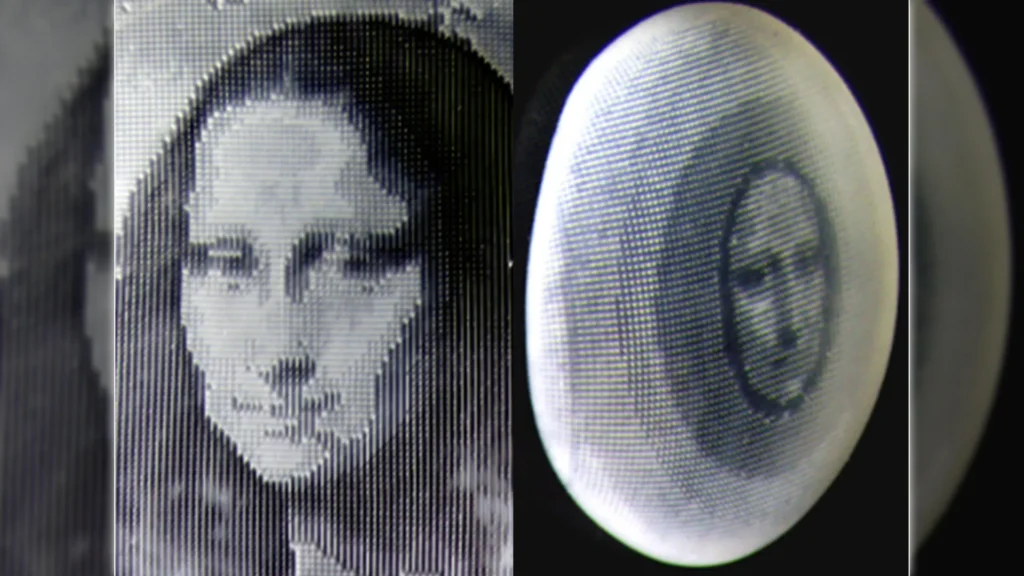
To illustrate this functionality, the research team encoded a high-resolution image of Leonardo da Vinci’s Mona Lisa into a thin film of the hydrogel. When this film was subsequently exposed to ethanol, a common solvent, it became transparent, rendering the embedded image completely invisible. The hidden Mona Lisa then reappeared with remarkable clarity only after the film was immersed in ice water or allowed to gradually warm up. Yang noted that the choice of the Mona Lisa was purely illustrative; the halftone-encoded printing technique is capable of embedding virtually any image or pattern into the hydrogel.
"This capability has significant implications for applications such as adaptive camouflage, where a surface can seamlessly blend into its surroundings, or for advanced information encryption, where sensitive messages can be hidden and only revealed under specific, controlled conditions," Yang explained.
Furthermore, the researchers demonstrated that concealed information could also be detected through mechanical interaction. By gently stretching the material and employing digital image correlation analysis to examine its deformation patterns, they could discern the presence of hidden patterns. This suggests that information can be accessed not only visually but also through physical manipulation, adding an additional layer of security and functionality.
Unifying Shape-Shifting and Texture Control in a Single Layer
The smart skin exhibits exceptional flexibility, capable of transforming from a simple flat sheet into complex, bio-inspired three-dimensional shapes with intricate surface textures. A key differentiator of this technology is that these dramatic transformations do not necessitate the use of multiple layers or dissimilar materials, a common limitation in other shape-changing technologies.
Instead, the entire control over shape and texture changes is managed by the digitally printed halftone patterns within a single, homogenous sheet of hydrogel. This inherent simplicity allows the material to mimic the sophisticated effects observed in cephalopod skin with remarkable fidelity.
Building upon this integrated functionality, the team showcased the ability to program multiple functions to operate in concert. By carefully designing the halftone patterns, they encoded the Mona Lisa image into flat films that subsequently transformed into three-dimensional structures. As these films curved into dome-like shapes, the hidden image gradually became visible, demonstrating that changes in physical form and visual appearance can be seamlessly coordinated within a single material.
"Much like how cephalopods synchronize their body shape and skin patterning, our synthetic smart skin can simultaneously control its visual appearance and its physical deformation, all within a single, soft material," Professor Sun stated.
Expanding the Horizons of 4D-Printed Hydrogels
This latest research represents a significant advancement building upon the team’s prior work on 4D-printed smart hydrogels, also published in Nature Communications. Their earlier study focused on integrating mechanical properties with programmable transitions from flat to three-dimensional forms. The current research significantly expands this paradigm by leveraging halftone-encoded 4D printing to imbue a single hydrogel film with an even greater array of integrated functionalities.
The researchers’ future aspirations involve developing a scalable and versatile platform that enables the precise digital encoding of multiple functionalities within a single adaptive material. This could lead to a new generation of materials with unprecedented responsiveness and utility.
"This interdisciplinary research, situated at the nexus of advanced manufacturing, intelligent materials, and mechanics, unlocks novel opportunities with far-reaching implications," Professor Sun concluded. "These implications span across stimulus-responsive systems, biomimetic engineering, advanced encryption technologies, sophisticated biomedical devices, and numerous other fields."
The collaborative effort involved several key individuals from Penn State, including doctoral candidates Haotian Li and Juchen Zhang from IME, and Tengxiao Liu, a lecturer in Biomedical Engineering. The project also benefited from the expertise of H. Jerry Qi, a professor of mechanical engineering at the Georgia Institute of Technology. This synergistic collaboration underscores the complex and multifaceted nature of the research and its potential to drive innovation across multiple scientific and engineering disciplines. The successful demonstration of this programmable smart skin marks a pivotal moment in the quest for materials that can dynamically adapt and respond to their environment, mirroring the complexity and efficiency of biological systems.