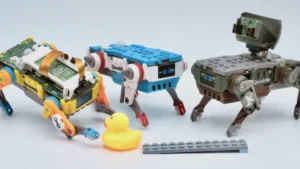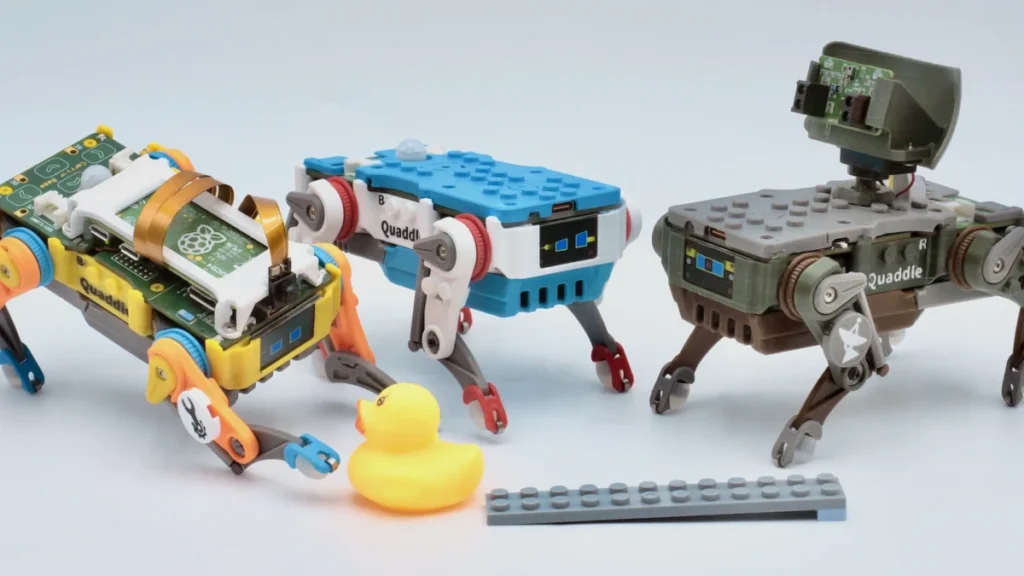
Petoi, a prominent innovator in the field of educational robotics, has officially launched Quaddle, its latest line of entry-level pet robots designed to be smarter, more durable, and significantly more accessible to a wider audience than its predecessors. This launch marks a pivotal moment in Petoi’s ongoing mission to democratize access to advanced robotics, building upon the foundational success of its beloved programmable quadruped robots like the plywood Nybble and the more recent Bittle X and Nybble Q. Quaddle, available in Builder, Buddy, and Scout versions, introduces several key advancements aimed at lowering the barrier to entry for aspiring roboticists, educators, and hobbyists.
The Evolution of Accessible Robotics: Petoi’s Journey
Petoi’s journey into the realm of accessible robotics began with the Nybble, a programmable feline-inspired robot kit that captivated the maker community with its open-source design and engaging mechanics. Featured on the cover of Make: Volume 70, the Nybble quickly became a testament to what could be achieved when complex robotics were made approachable through DIY kits. This initial success paved the way for subsequent iterations, including the Bittle X and Nybble Q, which further refined the design, enhancing durability and user experience while retaining the core open-source philosophy. These earlier models established Petoi’s reputation for creating charming and highly programmable robots that served as excellent platforms for learning about mechanics, electronics, and coding.
The development ethos at Petoi has always centered on fostering a deep understanding of robotics through hands-on engagement. Each robot, from the original Nybble to the Bittle X and Nybble Q, was crafted not just as a toy, but as a comprehensive educational tool. They allowed users to assemble the hardware, understand the underlying electronic components, and program behaviors using the OpenCat software framework, which encouraged community collaboration and shared innovation. This commitment to open-source principles has cultivated a vibrant global community of makers, educators, and students who contribute to and benefit from shared knowledge and behavioral scripts.
Quaddle: A Leap Forward in Design and Accessibility
Quaddle represents a significant evolution in Petoi’s product line, born from an intensive two-year development cycle spearheaded by founder Dr. Rongzhong Li. The primary objectives for Quaddle were to drastically reduce production costs, enhance durability, and simplify the assembly and programming experience without compromising on educational depth. The result is a robot that is both more robust for everyday use and more affordable, making it an ideal entry point for individuals and institutions looking to integrate robotics into their learning curricula.

One of the most striking innovations in Quaddle is the transition from a fixed plastic face to an expressive OLED screen. This upgrade allows for more nuanced and dynamic emotional expressions, significantly enhancing the robot’s personality and user engagement. Beyond aesthetics, the OLED screen also serves a practical purpose by displaying important diagnostic data, providing users with immediate feedback on the robot’s status and performance. This visual feedback loop is invaluable for troubleshooting and understanding the robot’s internal workings, especially for beginners.
Further enhancing Quaddle’s user-friendliness is the integration of sensors directly into the robot’s main body, moving away from the individual, bone-shaped sensor boards found in previous models. This streamlined design simplifies assembly, reduces potential points of failure, and contributes to the robot’s overall sleek aesthetic. The goal of these design choices is clear: to position Quaddle as the definitive go-to robot for anyone embarking on their journey into the captivating world of walking robotics.
Engineering Innovation: The Single-Servo Leg Mechanism
A cornerstone of Quaddle’s enhanced affordability and durability lies in a groundbreaking engineering feat: the reduction of servos from two per leg to a single servo. This significant design change presented considerable challenges, as traditional quadruped robots often rely on multiple servos per limb to achieve complex movements and stability. Dr. Li and his team overcame this by developing an ingenious leg mechanism that utilizes a combination of springs and clever mechanical linkages. This innovative design allows Quaddle to perform a wide range of movements, including walking and even backflips, with fewer active components, thereby reducing cost and increasing reliability.
Dr. Rongzhong Li’s personal dedication to this project is a testament to Petoi’s commitment to innovation. His decision to spend two years living at the servo factory, working hand-in-hand with manufacturers, underscores the rigorous development process. This collaborative approach ensured that the robot and its custom-designed servos were optimized together, resulting in a synergistic system that delivers exceptional performance and longevity. The result of this extensive effort is a robot that is not only more durable but also significantly more affordable, making advanced robotics technology accessible to a broader demographic.
Enhanced User Experience and Programming Capabilities
Quaddle also introduces several user experience improvements that streamline interaction and programming. Demonstrations have showcased built-in object-tracking behavior, allowing the robot to follow designated objects autonomously. A new "sliding trick" highlights the agility and versatility of the updated leg mechanism. Crucially, users can now record new motions and calibrate the servos directly on the robot without requiring a computer, a feature that dramatically lowers the technical barrier for creating custom behaviors. This on-device programming capability empowers users to experiment and iterate quickly, fostering creativity and a deeper understanding of robot kinematics.

While initial samples may have run on older firmware, Petoi has consistently rolled out updates that add new features and polish, ensuring that users receive the most refined experience. The continuous development and support for the OpenCat software further solidify Quaddle’s position as a dynamic and evolving platform. This open-source framework allows users to share their custom behaviors and insights with a global community, fostering collaborative learning and accelerating innovation within the Petoi ecosystem. The ability to leverage community-contributed code and knowledge enriches the learning experience and expands the functional possibilities of the robot far beyond its initial programming.
Educational Impact and Market Context
The introduction of Quaddle comes at a time when STEM (Science, Technology, Engineering, and Mathematics) education is gaining unprecedented global attention. Governments, educational institutions, and parents are increasingly recognizing the critical importance of equipping students with skills in robotics, coding, and artificial intelligence. Educational robots, like Quaddle, play a vital role in this landscape by providing tangible, interactive learning experiences that can demystify complex concepts.
The global educational robotics market was valued at approximately $1.1 billion in 2022 and is projected to grow substantially, reaching an estimated $3.5 billion by 2030, with a compound annual growth rate (CAGR) of over 15%. This growth is driven by increasing demand for interactive learning tools, government initiatives promoting STEM education, and advancements in AI and robotics technology. Quaddle’s combination of affordability, durability, and advanced features positions it strongly within this burgeoning market, offering an accessible solution for schools, coding clubs, and individual learners.
Quaddle’s design directly addresses several pedagogical needs:
- Hands-on Learning: By building and programming Quaddle, students gain practical experience in mechanical assembly, electronics, and software development.
- Problem-Solving Skills: Troubleshooting and debugging code or mechanical issues foster critical thinking and problem-solving abilities.
- Computational Thinking: Programming the robot encourages logical sequencing, algorithmic design, and abstraction.
- Creativity and Innovation: The open-source nature and customizable behaviors allow students to express creativity and innovate within a structured framework.
The online simulator provided by Petoi further enhances Quaddle’s educational value, allowing prospective users and students to experiment with its capabilities in a virtual environment before committing to a physical purchase. This virtual sandbox lowers the initial investment barrier for exploration and serves as an excellent preparatory tool for hands-on learning.

Community Engagement and Future Outlook
Petoi is actively engaging with its community and broader public through various channels. The launch of Quaddle is prominently featured on Kickstarter, a platform that has historically been crucial for Petoi’s funding and community building. Crowdfunding not only provides capital but also generates significant buzz and allows for direct feedback from early adopters, shaping the product’s evolution. Successful crowdfunding campaigns for educational robotics often signify strong community interest and market validation for innovative learning tools.
Beyond online engagement, Petoi is ensuring Quaddle’s visibility through participation in key maker events. The robot will be showcased at Maker Faire Bay Area and Maker Faire Shenzhen, providing invaluable opportunities for potential users to experience Quaddle firsthand. These events are crucial for fostering direct interaction, gathering feedback, and inspiring the next generation of makers and engineers. Maker Faires serve as vibrant hubs where innovation is celebrated, and accessible technologies like Quaddle can demonstrate their potential to a broad and engaged audience.
The broader implications of Quaddle extend beyond individual learning. By making robust, programmable robotics more affordable and user-friendly, Petoi is contributing to the democratization of advanced technology. This accessibility has the potential to inspire a more diverse group of individuals to pursue careers in STEM fields, fostering a future workforce better equipped to tackle the challenges of the 21st century. The open-source nature of Quaddle and its reliance on the OpenCat framework also reinforces the principles of collaborative innovation, allowing a global community to collectively push the boundaries of what these small, versatile robots can achieve.
In conclusion, Petoi’s Quaddle is more than just a new robotic pet; it represents a significant stride in making sophisticated robotics truly accessible to everyone. Through its innovative design, enhanced durability, reduced cost, and focus on user experience, Quaddle is poised to become an indispensable tool for STEM education, inspiring countless individuals to explore the exciting world of robotics, coding, and artificial intelligence. Its strategic blend of advanced features and user-friendly design solidifies Petoi’s leadership in the accessible robotics market, promising a future where the wonders of engineering are within reach for all.