Phase3D, a prominent inspection software and tooling firm, has been awarded a significant contract by the Department of the Air Force, empowering it to integrate its innovative Fringe Inspection platform into the manufacturing processes of advanced ceramic matrix composites (CMCs). This strategic collaboration underscores the U.S. Air Force’s commitment to bolstering its capabilities in high-temperature materials, crucial for next-generation aerospace and defense applications. The Fringe Inspection platform is specifically designed to address the intricate challenges associated with CMC fabrication, aiming to streamline production, enhance quality control, and accelerate the deployment of these cutting-edge materials.
The Critical Role of Ceramic Matrix Composites
Ceramic matrix composites represent a rapidly evolving class of materials engineered for exceptional performance in extreme thermal environments. Their applications are diverse and critical, spanning components such as advanced turbine blades for jet engines, thermal protection systems (TPS) for hypersonic vehicles, and robust gas turbines. These materials are meticulously designed to withstand super-high temperatures, making them indispensable for demanding operational conditions.
The significance of TPS, for instance, cannot be overstated. These thermal protection tiles form the outer skin of rockets, missiles, and spacecraft, shielding them from the intense heat generated during atmospheric entry and high-speed flight. Similarly, complex CMC structures, blankets, and tiles are vital for the burgeoning New Space economy and for maintaining the Air Force’s technological edge. However, the manufacturing of these intricate components has historically presented significant challenges, acting as a bottleneck in the production pipeline.
Unlocking Extreme Performance with Advanced CMCs
The successful and scalable production of TPS alone would justify substantial investment from the U.S. Government. Beyond this, CMCs like Carbon Silicon Carbide (a composite featuring carbon fibers embedded within a silicon carbide matrix) offer a potent combination of high strength and extreme temperature resistance. These materials are capable of functioning effectively in hypersonic body structures and turbo machinery operating at temperatures up to 1500°C.
A further advancement in this material class is Ultra-High Temperature Ceramic Matrix Composites (UHTCMCs). Aptly named, these materials can operate under load at temperatures soaring up to 2000°C. This remarkable performance profile opens doors for applications such as rocket nozzles, scramjet components, and even use within tokamaks and other fusion reactors. Even more extreme examples, such as Carbon Fiber Hafnium Carbide–Tantalum Carbide combinations, can endure temperatures as high as 3500°C. These advanced materials offer distinct advantages over traditional materials like Tungsten, exhibiting lower density, superior property retention at elevated temperatures, and a less brittle failure mode compared to conventional ceramics. This makes them particularly attractive for next-generation aerospace designs.
Addressing Manufacturing Bottlenecks with Innovative Inspection
The inherent properties of these advanced materials, while advantageous for performance, introduce significant manufacturing complexities. Their exceptional hardness makes them exceedingly difficult to machine using conventional subtractive methods. Standard CNC machining relies on shearing material with a tool harder than the workpiece, but for many CMCs, finding a tool sufficiently harder than the material itself is a formidable challenge.

While UHTCMCs are not yet widely commercially available, more conventional CMCs, such as Carbon Silicon Carbide, are gradually entering limited production, often through advanced manufacturing techniques like 3D printing. Processes such as Laser Powder Bed Fusion (LPBF), binder jetting, Direct Ink Write, and continuous fiber extrusion, frequently coupled with a subsequent pyrolysis step, are being explored. However, these methods are often non-standard, and combinations like fiber reinforcement with LPBF can present their own set of challenges. This is precisely where Phase3D’s Fringe Inspection platform is poised to make a substantial impact, offering a window into a future where these complex materials can be manufactured with greater ease and reliability.
The Problem of Defects in CMC Fabrication
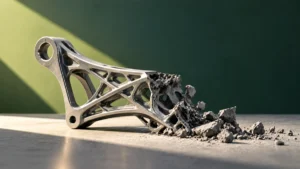
A primary obstacle to the broader adoption of CMCs, particularly within Air Force sustainment and production environments, lies in the inadequacy of conventional non-destructive evaluation (NDE) methods. These techniques, largely developed for metals and polymer composites, struggle to reliably detect critical defects inherent to CMC fabrication. These defects can include matrix cracking, fiber pull-out, porosity, and delamination, which can manifest at various stages of the manufacturing process.
Matrix cracking often arises from differential thermal expansion rates between the constituent materials, leading to stress and fracture within the matrix as the composite cools. Porosity, particularly during the crucial pyrolysis stage, can create voids within the material, leading to unpredictable failures. Fiber pull-out is another concern; while the controlled pull-out of fibers is a desirable mechanism for crack deflection and energy dissipation – a principle similar to that employed in Kevlar body armor and the natural composite structure of bamboo – uncontrolled or excessive fiber pull-out during manufacturing can compromise the material’s structural integrity. Damage to fibers, improper positioning, or insufficient fiber length can all hinder the effectiveness of this toughening mechanism. This is a key differentiator for continuous carbon fiber 3D printing, which aims to preserve fiber integrity, unlike processes that may damage fibers or only accommodate short fibers.
Delamination, the separation of layers within the composite, can occur due to gas evolution during pyrolysis, thermal cycling, or post-processing steps. These later-stage failures are particularly costly, often necessitating the complete remanufacturing of the component. Phase3D’s technology aims to mitigate these issues by providing real-time insights, thereby reducing the time and expense associated with rework and scrap.
The inherent complexity of CMC fabrication means that defects can be introduced at nearly every stage, from the initial tape fabrication and ply stacking, through autoclave consolidation, pyrolysis, melt infiltration, and final machining. Accelerating experimental validation and production by identifying and correcting defects early in the process is therefore of paramount importance.
Phase3D’s Fringe Inspection: A Real-Time Solution
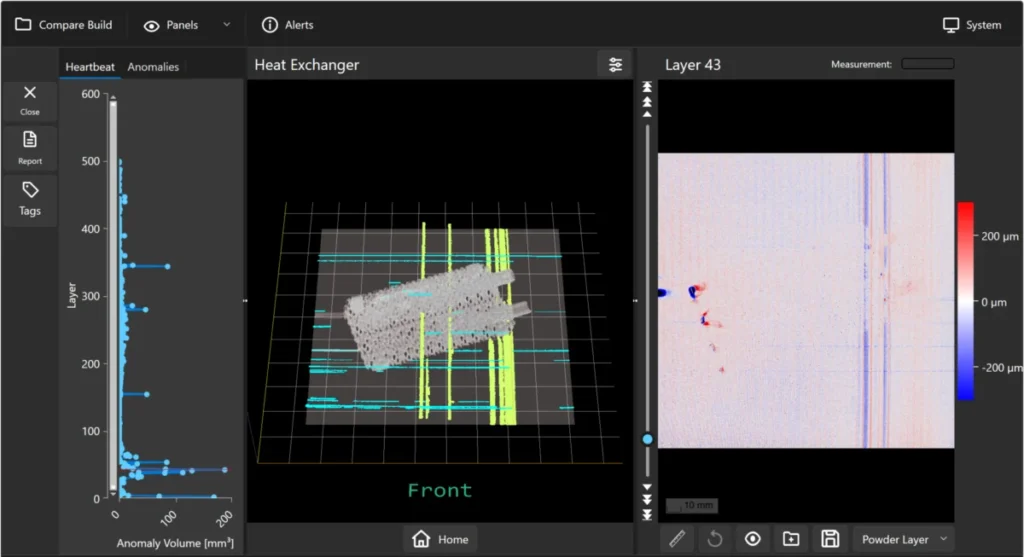
Phase3D’s Fringe Inspection system projects structured light onto a build surface, enabling precise measurement of geometry and the detection of deviations during the printing process. This real-time, layer-by-layer monitoring capability is crucial for addressing the challenges of CMC manufacturing.
Under the new contract, Phase3D will collaborate with key Air Force entities, including the Air Force Life Cycle Management Center’s Propulsion Directorate (AFLCMC/ROD) and Rapid Sustainment Office (AFLCMC/RSO), as well as the Air Force Research Laboratory’s Materials and Manufacturing Directorate (AFRL/RX). The company’s immediate focus will be on developing material-specific calibration routines, sophisticated anomaly-classification models, and rigorous validation protocols. These advancements will empower the Fringe Inspection system to accurately identify surface deformation and defect signatures as CMC parts are being built, eliminating the need to wait for costly post-process Computed Tomography (CT) scanning or destructive sectioning.
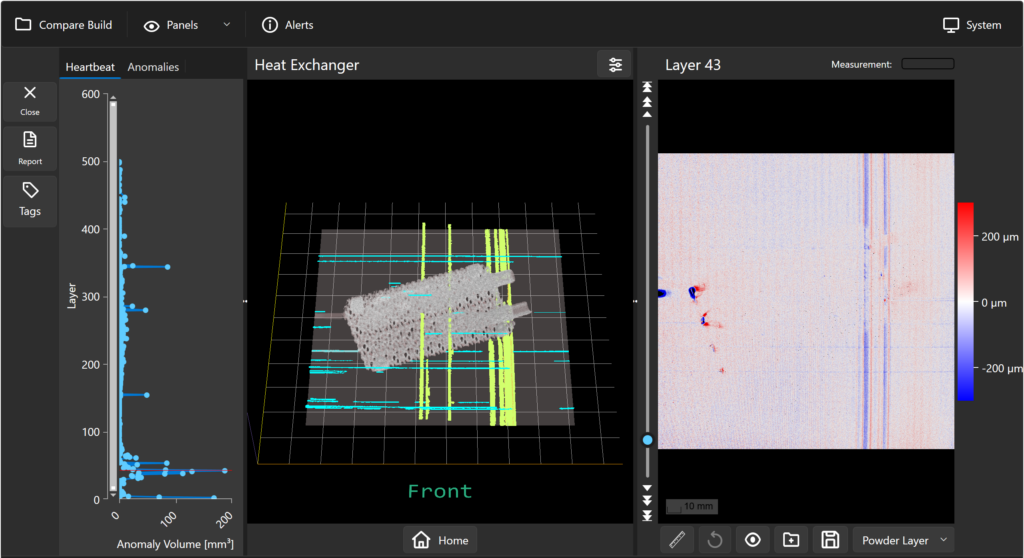
The reduction in CT scanning time and the ability to pinpoint when and where problems arise will represent significant time savings for researchers and engineers experimenting with these advanced materials. The precise control over fiber types, coatings, lengths, and placement can have profound effects on performance and failure modes, making real-time inspection indispensable for optimizing these parameters.
Industry Leaders Weigh In on the Collaboration
Niall O’Dowd, CEO of Phase3D, articulated the core value proposition of the Fringe Inspection platform: "Fringe Inspection was built to answer one question in real time: is the part you are building the part you designed? We’ve spent years proving that out on metal parts for NASA, the Air Force, and leading aerospace primes. This program lets us ask the same question of a completely different material system, one the Air Force is counting on for the next generation of propulsion and thermal protection, and where the cost of finding a defect after the part is finished is even higher than it is in metal."
This sentiment was echoed by Andrew Holiday, Applications Engineering Manager at Phase3D: "Ceramic matrix composites are notoriously hard to qualify because so much can go wrong across so many stages, from tape fabrication all the way through infiltration and final machining. The industry has been trying to solve that with post-process CT scans and destructive testing, the same approach that used to hold back metal additive manufacturing. Real-time, layer-by-layer visibility is exactly what this material needs, and it is exactly what Fringe Inspection already does."
Future Implications and Strategic Importance
In its initial Phase I efforts, the Phase3D team will concentrate on assessing the integration of CMC manufacturing into production environments and exploring deployment strategies. This will involve close collaboration with partners such as the Oklahoma City Air Logistics Complex (OC-ALC) and Ellsworth Air Force Base, providing practical, on-the-ground testing and validation.
This contract represents a significant milestone for Phase3D, positioning the company at the vanguard of developing and industrializing a critical material family. The successful advancement of CMC manufacturing promises to resolve numerous challenges at scale for the Air Force, enabling the development of more capable and resilient aerospace systems. By facilitating faster research cycles and more efficient production, Phase3D is poised for substantial growth and enduring relevance in this vital sector of advanced materials manufacturing. The ability to reliably produce these high-performance materials is not just an incremental improvement; it is a strategic imperative for maintaining national security and driving innovation in aerospace and defense.