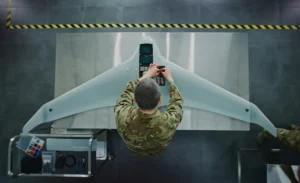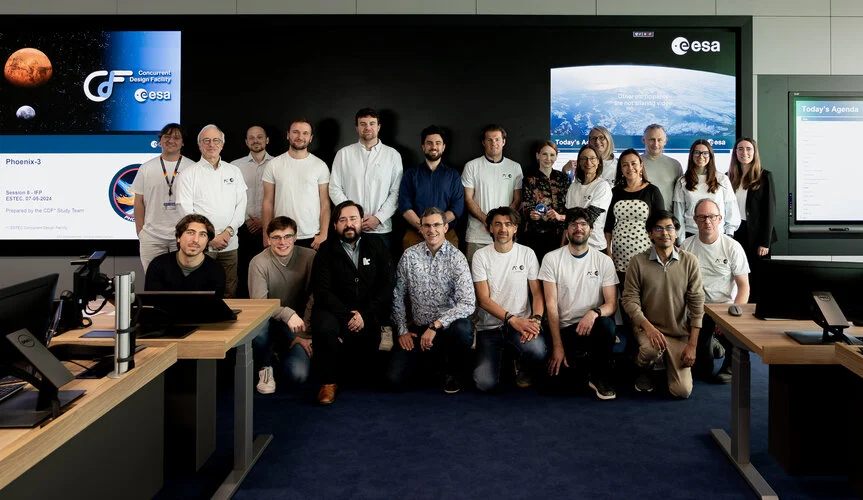
European Space Agency (ESA) engineers and industry partners have successfully concluded an intensive concept study for Phoenix 3, a novel reusable spacecraft designed to transport scientific experiments into microgravity and ensure their safe return to Earth. This milestone marks a significant step forward in developing European capabilities for orbital research and commercial microgravity applications. The study, conducted earlier this year within ESA’s state-of-the-art Concurrent Design Facility (CDF), rigorously evaluated the feasibility of Phoenix 3, a fully European orbital return vehicle proposed by the innovative startup ATMOS Space Cargo.
The Concurrent Design Facility: A Hub for Innovation
The ESA Concurrent Design Facility (CDF), located at ESTEC, the agency’s technical heart in the Netherlands, served as the crucible for this critical evaluation. The CDF is a sophisticated multidisciplinary think-tank, equipped with a networked system of computers, advanced multimedia devices, and specialized software tools. Its unique operational methodology allows diverse engineering disciplines to converge, pooling their expertise in a compressed timeframe – often achieving in weeks what might typically take months. This collaborative environment is instrumental in assessing the viability of complex and ambitious space mission designs, fostering rapid iteration and problem-solving.
During the Phoenix 3 study, a team of experts meticulously reviewed the concept against a set of established templates and stringent guidelines. Their work focused on identifying the primary trade-offs inherent in the design, establishing a robust foundation for subsequent investigation and development. This intensive process has provided ATMOS Space Cargo with a refined initial concept and a clear set of design drivers essential for creating a spacecraft capable of reliably transporting payloads to orbit and retrieving them.
Mission Profile and Capabilities
The core operational scenario assessed during the CDF study envisioned Phoenix 3 being launched into low Earth orbit (LEO) at an altitude of approximately 350 kilometers. From this vantage point, the spacecraft is intended to serve a multifaceted role, supporting a range of crucial space activities.

"For this study, we focused on a scenario where Phoenix 3 would be launched into low Earth orbit, to an altitude of around 350 km," explained Enrico Tormena, ESA’s lead for the study. "There, it would support commercial microgravity manufacturing, science experiments and in-orbit demonstration and validation of new technologies. After several months to one year in orbit, it would perform a controlled deorbit and atmospheric entry before being recovered, refurbished and prepared for a new launch."
The assessed configuration of Phoenix 3 includes a dedicated service module, responsible for providing power and propulsion capabilities to the spacecraft. Crucially, it features a pressurized cabin designed to replicate Earth-like atmospheric conditions, capable of accommodating over 1000 kilograms of scientific and commercial payloads. This configuration, while serving as a vital reference point for the study, is not immutable. Key design choices and trade-offs remain open for exploration during Phase A, the initial stage of a mission’s lifecycle, offering flexibility for future optimization.
Innovative Reentry Technology
A cornerstone of ATMOS’s approach to reusable spacecraft is its development of an inflatable decelerator, a technology the company has been diligently maturing and flight-testing across its Phoenix family of vehicles. This innovative system plays a pivotal role in the spacecraft’s safe return.
Jeffrey Hendrikse, Chief Technology Officer and Co-Founder of ATMOS Space Cargo, elaborated on the significance of this technology: "During reentry, the spacecraft uses its Inflatable Atmospheric Decelerator to slow down through the atmosphere ahead of a safe recovery. What pleases me most is that the study confirmed we can maintain the modularity of the microgravity platform, serving our customers from late access before launch to early access after return, as well as the communication bandwidth they need in orbit." This modularity and enhanced customer access are key differentiators for the Phoenix 3 concept, aiming to streamline the entire experimental lifecycle.
Next Steps and ESA’s Role
The CDF study not only validated the core concept but also pinpointed critical trade-offs and potential risks that require further attention in the upcoming development phases. "The CDF study also identified key trade-offs and risks to be addressed next, providing a solid starting point for Phase A, in which ATMOS will focus on the optimisation of aerodynamics, stability and thermal design, and on improving entry modelling and guidance to increase landing accuracy," added Daniela Lomanto from ESA’s Concurrent Engineering and Future Missions section.

ESA’s commitment to supporting the Phoenix 3 study aligns directly with its core mandate to foster and accelerate the competitiveness of European industry. By providing essential technical support precisely when and where it is needed, the agency empowers emerging companies and consolidates Europe’s position in the global space sector.
Ilaria Roma, Head of the CDF, emphasized the strategic importance of this collaboration: "ATMOS has created a win-win scenario for the future of European space exploration, so their vision and this specific mission assessment is supported by ESA’s Directorate of Human and Robotic Exploration."
Sustainability and Industrialization
A central theme underpinning the Phoenix 3 initiative is sustainability. The development of a new, scalable class of reusable return vehicles directly addresses the growing imperative for circularity in space operations and a reduced environmental footprint. By creating a system designed for multiple missions, Phoenix 3 contributes to a more responsible and efficient use of space resources.
"Central to this collaboration is the topic of sustainability. By defining a new, scalable class of reusable return vehicles, the study addresses the urgent need for circularity in orbit and reduced environmental footprint in space operations. At the same time, ATMOS is developing concepts and solutions that will directly benefit industrialisation capabilities and sovereign infrastructure within Europe," Roma further stated.
The efficiency of the CDF process was highlighted by Marta Oliveira, Chief Operating Officer and Co-Founder of ATMOS Space Cargo: "The value of the CDF is the ability to examine every major subsystem and interface at the same time. Bringing specialists from across disciplines into one concurrent process helped us identify dependencies that would be difficult to resolve through sequential engineering work." This integrated approach proved invaluable in navigating the complexities of the Phoenix 3 design.

The Third Party Activity Initiative
The collaborative framework enabling studies like Phoenix 3 is facilitated through ESA’s Third Party Activity (TPA) initiative. This program opens the agency’s extensive consultancy and testing infrastructure to the entire industrial ecosystem, encompassing everything from nascent startups to established large-scale enterprises. This initiative underscores ESA’s dedication to fostering a vibrant and interconnected European space sector, promoting innovation and shared growth.
The successful completion of the Phoenix 3 concept study represents a significant stride towards a more sustainable, efficient, and capable European space infrastructure. It paves the way for a new generation of reusable orbital vehicles, promising to unlock greater opportunities for scientific discovery, technological advancement, and commercial ventures in orbit. The next phase of development will undoubtedly build upon this solid foundation, bringing the vision of routine, reliable, and reusable microgravity experimentation closer to reality.