In a landmark study that addresses one of the most persistent bottlenecks in the field of quantum information science, an international team of researchers has successfully extended the operational lifespan of magnons by nearly two orders of magnitude. By increasing the coherence time of these magnetic quasiparticles from a few hundred nanoseconds to an unprecedented 18 microseconds, the team has effectively transformed a fleeting physical phenomenon into a viable candidate for high-fidelity quantum memory and information processing. This breakthrough, led by the University of Vienna, suggests a future where quantum computers could be miniaturized to the size of a small coin, fundamentally altering the trajectory of hardware development in the transition from bulky laboratory setups to integrated commercial chips.
The Challenge of Quantum Decoherence and the Magnon Solution
At the heart of the current quantum revolution is the struggle against decoherence—the process by which quantum information is lost due to interference from the surrounding environment. For years, physicists have explored various "information carriers" to facilitate the movement and storage of data within a quantum processor. While superconducting qubits and trapped ions have dominated the headlines, magnons—collective excitations of electron spins in a magnetic lattice—have long been viewed as a promising, albeit problematic, alternative.
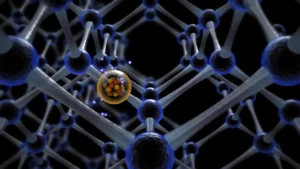
Magnons are often described as "ripples in a magnetic pond." When the magnetic moments (spins) of atoms in a solid material are disturbed, they do not just flip individually; they interact with their neighbors, creating a wave of magnetization that moves through the material. The primary advantage of magnons lies in their scale. Unlike photons, which have wavelengths measured in hundreds of nanometers or micrometers, magnons can have wavelengths as small as a few nanometers. This property allows for the creation of incredibly dense circuitry, potentially packing more quantum processing power into a smaller area than any other current technology.
However, the "magnon lifetime problem" remained a significant hurdle. In previous iterations of this technology, magnons would dissipate almost as soon as they were generated, surviving for only about 200 to 500 nanoseconds. This window was too narrow to perform the complex sequences of logic gates required for meaningful quantum computation. The recent study, published in the journal Science Advances, provides the first evidence that these limitations are not inherent to the physics of magnons themselves but are rather a challenge of material engineering.
A Chronology of the Breakthrough: From Nanoseconds to Microseconds
The journey toward this 18-microsecond milestone was the result of a multi-year international collaboration involving the University of Vienna, the University of Colorado at Colorado Springs, and institutions in Germany and Ukraine. The experimental phase was largely spearheaded by Rostyslav Serha during his doctoral research under the guidance of Professor Andrii Chumak.
The research timeline began with a reassessment of why magnons lose energy. Historically, it was believed that the scattering of magnons—caused by their interactions with heat (phonons) and other magnons—imposed a hard limit on their longevity. To test this, the team designed a two-pronged experimental approach aimed at eliminating these sources of interference.
First, the researchers moved away from "uniform" magnons, which involve the entire magnetic sample vibrating in unison. Instead, they focused on short-wavelength magnons. These smaller waves are less susceptible to surface imperfections and macroscopic defects in the crystal lattice. By "shrinking" the signal, the researchers effectively allowed it to navigate through the material without "tripping" over surface-level irregularities that typically drain energy from the system.
Second, the team utilized extreme cryogenics. The experiments were conducted inside a mixed-phase cryostat, cooling the samples to 30 millikelvin—a temperature only a tiny fraction above absolute zero. At this level, thermal energy is almost entirely removed from the system. In the absence of heat, the "thermal noise" that usually disrupts spin waves is frozen out, allowing the magnons to travel with significantly reduced resistance.
Data Analysis: The Purity of Yttrium Iron Garnet
A critical component of the experiment was the use of Yttrium Iron Garnet (YIG), a synthetic ferrimagnetic material known for having the lowest known magnetic damping of any substance. To understand the relationship between material quality and magnon longevity, the researchers compared three different spheres of YIG, each with varying levels of chemical purity.
The results provided a clear, data-driven correlation:
- Standard Grade YIG: Even the least pure sample showed a significant improvement over previous room-temperature experiments, benefiting primarily from the cryogenic environment.
- High-Purity YIG: The intermediate sample demonstrated a linear increase in lifetime as temperature decreased.
- Ultra-Pure YIG: The highest quality crystal reached the record-breaking 18-microsecond mark at 30 millikelvin.
This data confirmed a revolutionary insight for the field: the lifespan of a magnon is limited primarily by the chemical and structural purity of the host crystal. In practical terms, this means that as the semiconductor and materials science industries improve their ability to grow perfect crystals, the performance of magnon-based quantum computers will likely improve in tandem, without being blocked by an insurmountable physical law.
The Quantum Bus and the "Translator" Capability
The implications of an 18-microsecond lifetime extend far beyond simple data storage. One of the most sought-after components in quantum architecture is a "quantum bus"—a mechanism that can connect distant qubits on a chip and transfer information between them without loss of coherence.
Because magnons can now survive long enough to travel across a chip, they are ideal candidates for this role. A single magnon could potentially link hundreds of superconducting qubits, acting as a high-speed communication channel. Furthermore, magnons possess a unique "universal translator" quality. They interact naturally with both photons (light) and phonons (vibrational energy). This allows them to serve as a bridge between different types of quantum systems that would otherwise be incompatible, such as a system that uses light for long-distance communication and a system that uses superconducting circuits for local processing.
Expert Reactions and Industry Impact
While the research team has maintained a strictly scientific tone, the broader physics community has viewed the results as a "proof of concept" for the feasibility of magnonic quantum chips. Dr. Kaitlin McAllister, a co-author of the study and a member of the Vienna Doctoral School in Physics, emphasized that the collaborative nature of the project was essential for bridging the gap between theoretical magnetism and practical quantum hardware.
Industry analysts suggest that if magnon lifetimes can be pushed even further—perhaps into the millisecond range—they could rival the stability of the best superconducting qubits currently produced by giants like IBM and Google. However, the true "killer app" for magnons is miniaturization. Current quantum computers require massive dilution refrigerators the size of a wardrobe to house a few dozen qubits. Because magnon circuits are nanoscopic, a "coin-sized" quantum processor is no longer a matter of science fiction, but a target for engineering.
Analysis of Future Implications
The shift from 100 nanoseconds to 18 microseconds represents a 10,000% increase in performance. In the context of computer science, such an exponential leap often triggers a shift from laboratory curiosity to industrial development.
However, challenges remain. Operating at 30 millikelvin still requires sophisticated cooling technology, which limits the "portability" of these devices in the near term. The next phase of research will likely focus on two areas:
- Room-Temperature Viability: Can materials science produce crystals so pure that magnons can survive for microseconds even without extreme cooling?
- Integration: How easily can these YIG spheres be integrated into existing CMOS (complementary metal-oxide-semiconductor) fabrication processes?
If these questions are answered affirmatively, the "magnon-on-a-chip" could become the standard for the next generation of quantum sensors, metrology tools, and ultra-compact processors. The study by the University of Vienna and its partners has effectively moved the goalposts, proving that the limits of quantum magnetism are much further away than previously believed. By identifying material purity as the primary constraint, they have handed the baton to materials scientists to lead the next stage of the quantum race.