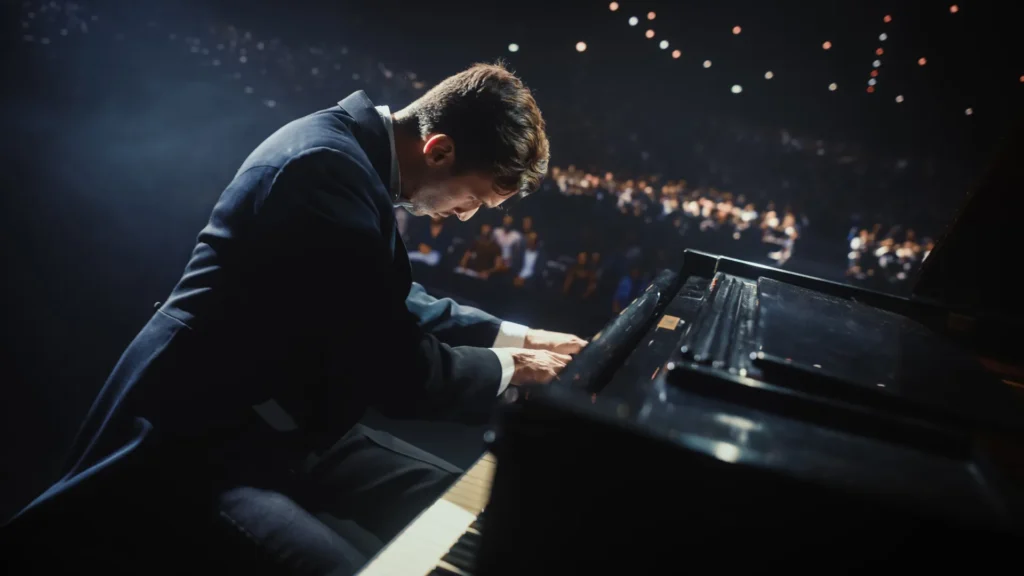
For generations, the nuanced world of piano performance has been characterized by a persistent debate: can a pianist’s individual touch truly alter the inherent character of a piano’s sound, or is the resulting tone merely a product of the instrument’s mechanics? This question, often dividing musicians from scientists, has long been a source of fervent discussion in conservatories and academic circles alike. Skeptics maintained that once a piano hammer strikes a string, the subsequent tone is almost entirely predetermined by the instrument’s construction and acoustics. However, a groundbreaking scientific study has now delivered some of the most compelling evidence to date, unequivocally demonstrating that pianists possess the remarkable ability to sculpt a piano’s timbre through the subtleties of their touch alone.
The pivotal research, spearheaded by Dr. Shinichi Furuya of the NeuroPiano Institute and Sony Computer Science Laboratories, Inc., employed state-of-the-art ultra-high-speed sensing technology to peel back the layers of complexity behind expressive piano playing. Their comprehensive findings, which were subsequently published in the esteemed Proceedings of the National Academy of Sciences (PNAS), illuminate how the minuscule, almost imperceptible motions of a pianist’s fingers and hands exert a profound influence on how listeners perceive critical musical qualities such as brightness, heaviness, and clarity in individual notes. This discovery not only validates a long-held artistic intuition but also opens new avenues for understanding the intricate interplay between human motor control, auditory perception, and musical expression.
A Century-Long Scientific and Artistic Contention
The question of whether pianists could genuinely manipulate timbre through their unique touch has been a hotly contested subject since the early 20th century, if not earlier. While pianists and music teachers frequently employ a rich vocabulary to describe tonal qualities – referring to sounds as warm, dark, bright, heavy, or delicate – many scientific minds of the past believed these perceived differences were largely subjective psychological phenomena, or simply byproducts of variations in volume (loudness) and timing (rhythm or tempo), rather than a direct consequence of the tactile interaction with the keys.
Historically, the scientific perspective was largely influenced by the physical mechanics of the piano. The argument held that a hammer, once propelled by the key, travels independently to strike the string. The force of this impact determines the initial amplitude (loudness) and the specific harmonic content (timbre) of the string’s vibration. Once struck, the string vibrates according to its physical properties, and the resulting sound is then amplified by the soundboard. From this viewpoint, the pianist’s role was primarily to control when and how hard the hammer struck, but not the quality of the sound beyond these parameters.
Prominent figures like American psychologist Carl Seashore, in his influential 1938 work Psychology of Music, challenged the romantic notions of "singing tone" and "velvet touch," suggesting that many perceived timbral differences were illusions or attributable to dynamic and temporal variations. His work, rooted in the nascent field of psychoacoustics, sought to bring scientific rigor to musical phenomena, often at odds with the expressive language of performers. Despite Seashore’s arguments, generations of pedagogues, including legendary figures like Theodor Leschetizky and Josef Hofmann, continued to emphasize the crucial role of "touch" in producing a variegated palette of sounds, instructing students with metaphors that seemed to defy simple physical explanation.
This new research directly confronts and challenges that long-standing scientific assumption, leveraging advanced technology that simply wasn’t available to previous generations of researchers. The ability to meticulously capture and analyze the micro-movements of the pianist and the key action provides an unprecedented window into the biomechanics of expressive performance.
Unveiling the Hidden Mechanics: The HackKey System
To address this enduring mystery, Dr. Furuya’s team developed a custom-built, highly sophisticated noncontact sensing system dubbed "HackKey." This innovative technology represented a significant leap forward in motion capture capabilities for musical instruments. Unlike previous systems that might interfere with the natural key action, HackKey was designed to record the movements of all 88 piano keys with extraordinary precision and speed. It could capture data at an astonishing rate of 1,000 frames per second, paired with microscopic spatial precision, meaning it could detect movements down to fractions of a millimeter. This level of detail was absolutely critical for discerning the subtle, rapid gestures that pianists intuitively employ.
The experimental setup involved inviting twenty internationally acclaimed pianists – musicians at the zenith of their craft, known for their expressive capabilities – to participate. These virtuosos were tasked with playing individual notes while intentionally striving to produce contrasting tonal qualities. For instance, they were asked to play the same note with an intention to create a "bright" sound versus a "dark" sound, or a "light" sound versus a "heavy" sound. This controlled experimental design ensured that any observed differences in movement could be directly correlated with the conscious intent to alter timbre.
Following the performance phase, extensive listening tests were conducted. Participants in these tests, including both individuals with no formal musical training and professional pianists, were asked to identify and describe the perceived tonal qualities of the recorded performances. The results were remarkably consistent: listeners, across both groups, consistently recognized the intended timbres (e.g., distinguishing between bright and dark sounds). Crucially, professional pianists, with their finely tuned auditory perception honed by years of training, demonstrated particular sensitivity to these subtle differences, often articulating them with greater precision. This robust listener consensus provided strong empirical evidence that the timbral variations produced by the pianists were not merely subjective interpretations but objectively perceivable acoustic phenomena.
The Micro-Movements of Musical Expression
The meticulous analysis of the data collected by the HackKey system revealed that only a select handful of extremely precise movement features were strongly correlated with changes in perceived timbre. These features included incredibly tiny variations in acceleration profiles of the fingers and keys, subtle adjustments in the timing of finger-to-key contact, and minute synchronizations between the hands, even when playing a single note or chord. These findings highlight the extraordinary motor control developed by expert pianists.
One of the most significant and conclusive findings of the study was the demonstration that altering even a single, specific movement feature could reliably change how listeners described the sound. This provided direct, causal evidence that the pianist’s touch itself plays a fundamental role in shaping timbre, rather than merely acting as an accessory to other musical effects like loudness or tempo. This finding directly refutes the long-held scientific skepticism and validates the experiential knowledge of generations of pianists.
The study characterized these subtle gestures not as random actions, but as integral components of a highly refined, shared motor skill, meticulously developed through years of advanced piano training and dedicated practice. According to the researchers, this implies that the artistry behind producing a rich variety of piano tones is far from being merely metaphorical or subjective; it is, in fact, grounded in measurable, repeatable physical actions. Dr. Furuya articulated this profound insight, stating that the research effectively "helps bring a long-standing artistic intuition into the realm of science." He emphasized that these findings not only corroborate what many pianists have believed for decades but also offer a clearer, scientifically grounded understanding of how skilled physical movement translates into the creation of profound emotional and aesthetic experiences in music.
Broader Implications Beyond the Concert Hall
The ramifications of this groundbreaking research extend far beyond the confines of concert halls and music conservatories, reaching into diverse fields such as education, neuroscience, robotics, and human-computer interaction.
In music education, these discoveries hold the potential to revolutionize pedagogical approaches. Instead of relying solely on often vague and subjective instructions – such as "play warmer," "use a lighter touch," or "make it sing" – future training systems could leverage this scientific understanding to provide students with precise, objective feedback. Imagine a system that could visually display the exact physical movements (e.g., finger acceleration curves, precise timing of key depression and release) associated with specific tonal qualities, allowing students to train more efficiently and effectively. This could transform how pianists learn to master expressive techniques, making the abstract concrete and accelerating skill acquisition. Furthermore, it could aid in the development of sophisticated AI-driven tutors and virtual reality environments that offer real-time biomechanical feedback.
For neuroscience and rehabilitation science, the study offers crucial insights into the brain’s mechanisms for complex motor control and how these fine motor skills influence sensory perception. Understanding how the brain integrates intricate movements with auditory feedback to produce desired aesthetic outcomes could have profound implications. This knowledge could inform new therapeutic strategies for individuals recovering from neurological conditions like stroke or those managing movement disorders such as Parkinson’s disease, by designing interventions that utilize musical movement to improve dexterity, coordination, and motor planning. It highlights the brain’s remarkable capacity for plasticity and learning, where highly specialized motor actions are directly linked to perceptual outcomes.
The findings are also highly relevant to robotics and human-computer interaction. The ability to quantitatively link subtle human movements to specific expressive outcomes could inspire the development of more sophisticated and expressive robotic systems. For instance, robotic hands designed for delicate manipulation could be programmed with a deeper understanding of human touch nuances. In human-computer interaction, this research could lead to more intuitive and responsive interfaces that better interpret nuanced human input, allowing for richer and more natural interaction with digital systems. This could manifest in highly responsive digital musical instruments that mimic the subtleties of acoustic performance, or even in prosthetics that offer more refined tactile feedback and motor control.
Indeed, researchers in related fields are already actively exploring technologies inspired by expressive musical performance. Recent advancements in artificial intelligence and music technology have increasingly focused on modeling timbre, generating realistic piano motion for virtual performers, and building intelligent systems capable of reproducing subtle expressive nuances in performance. The Furuya study provides foundational data and a clearer roadmap for these endeavors. Some scientists anticipate that this trajectory could eventually lead to the creation of vastly more expressive digital instruments, smarter and more personalized training tools for musicians, and even innovative rehabilitation systems that harness the power of musical movement to enhance physical capabilities.
The Science of Creativity and "Dynaformics"
Beyond its immediate applications, this study makes a significant contribution to a burgeoning scientific effort aimed at understanding creativity itself. For decades, much of the research on perception in music predominantly focused on quantifiable elements such as pitch, loudness, and rhythm. Timbre, however, has consistently proven far more elusive to study due to its inherent complexity, involving higher-level sensory interpretation, cognitive processing, and deep emotional response.
By successfully identifying specific physical actions that are causally linked to timbre perception, the researchers have effectively opened a new door to empirically studying how artistic expression emerges from the intricate and dynamic interaction between the performer’s body, the brain, and the resulting sound. This represents a crucial step in demystifying the creative process, grounding it in observable physical phenomena.
The work is part of a broader, interdisciplinary movement often referred to as "dynaformics," which can be understood as the science of music performance. Proponents of dynaformics believe that a deeper, scientifically informed understanding of the biomechanics and neurophysiology of musical performance could eventually help musicians train more efficiently, optimize their movements to avoid injuries – a common issue among dedicated performers – and even overcome physical limitations that frequently accompany years of intense and repetitive practice. It seeks to integrate principles from biomechanics, motor control, neuroscience, and acoustics to create a holistic view of how music is made and experienced.
The palpable excitement surrounding these findings stems from more than just the resolution of a century-old musical mystery. It profoundly reveals that some of the most potent emotional power and aesthetic impact of music may, in fact, originate from movements so infinitesimally small they are almost imperceptible to the naked eye. Yet, these movements are precise enough, and carry sufficient information, for human listeners – both trained and untrained – to distinctly feel and interpret the difference, connecting the physical act of playing directly to the profound emotional resonance of the music. This convergence of art and science not only validates the subjective experience of countless musicians but also propels our understanding of human ingenuity and artistic expression into a new, measurable dimension.