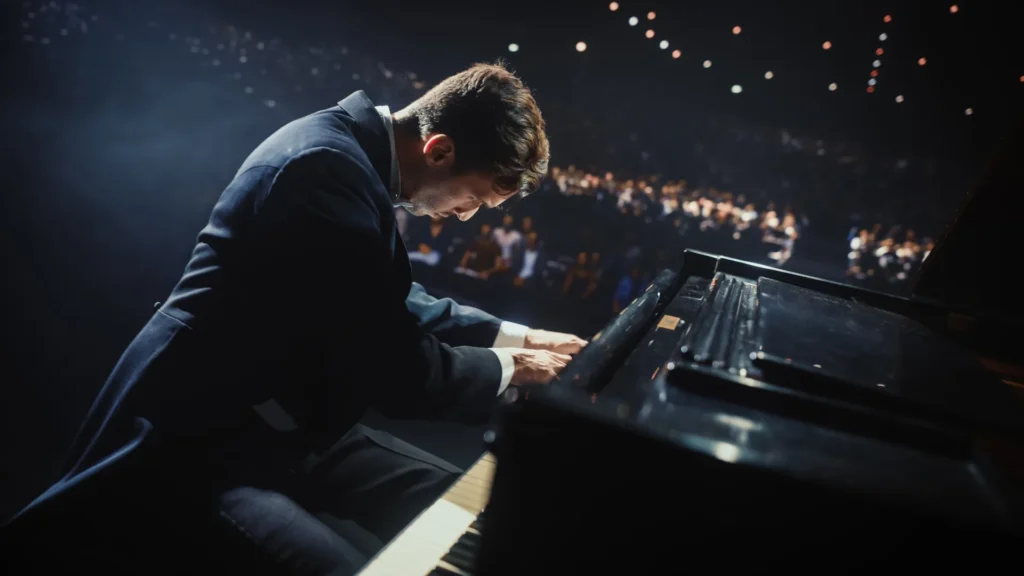
For generations, the nuanced world of piano performance has been characterized by a profound, yet often scientifically unverified, belief: that a performer’s unique touch can fundamentally alter the character of a piano’s sound. This artistic intuition frequently clashed with the more rigid assertions of skeptics, who argued that once a piano hammer strikes a string, the resulting tone is determined almost entirely by the instrument’s inherent physics, leaving little room for subtle human manipulation. Now, a landmark scientific study has provided some of the clearest, most compelling evidence to date, definitively validating the long-held conviction of countless pianists and music teachers: pianists truly can shape a piano’s timbre through touch alone.
Researchers led by Dr. Shinichi Furuya of the NeuroPiano Institute and Sony Computer Science Laboratories, Inc., utilized cutting-edge ultra-high-speed sensing technology to meticulously uncover the intricate, often hidden movements that underpin expressive piano playing. Their groundbreaking findings, recently published in the prestigious Proceedings of the National Academy of Sciences (PNAS), offer profound insights, suggesting that the subtle, almost imperceptible motions of a pianist’s fingers and hands exert a tangible influence on how listeners perceive qualities such as brightness, heaviness, clarity, and warmth in musical notes. This revelation not only settles a century-old debate but also opens new avenues for understanding the intricate interplay between human motor control, acoustic physics, and aesthetic perception.
A Century-Long Conundrum: The Great Piano Timbre Debate
The question of whether pianists possess the ability to truly alter the timbre—the unique quality or "color"—of a piano’s sound through their touch has been a subject of intense academic and artistic debate since the early 20th century. Musicians, deeply immersed in the expressive possibilities of their instruments, have consistently employed a rich lexicon to describe tonal qualities, referring to notes as "warm," "dark," "bright," "heavy," or "singing." They instinctively believed these qualities were directly controllable through specific physical approaches to the keyboard.
Conversely, many scientists and acousticians of the era, guided by the burgeoning understanding of sound physics, often viewed these descriptions as largely subjective, metaphorical, or psychological phenomena. Figures like Carl Seashore, a pioneer in the psychology of music, while acknowledging the importance of expression, focused heavily on measurable attributes like pitch, loudness, and rhythm. The prevailing scientific consensus leaned towards the idea that the hammer’s velocity determined loudness, and its point of impact influenced overtone content, but the subtle "touch" was largely discounted as a direct determinant of timbre beyond these basic parameters. Once the hammer had imparted its energy to the string, the string’s vibration and the instrument’s resonance structure were thought to dictate the final sound, immutable by the pianist’s preceding actions. This skepticism was further fueled by the limitations of early sound recording and analysis technologies, which struggled to isolate and quantify the extremely subtle variables involved in human motor control at the keyboard. The debate thus remained largely unresolved, a chasm between artistic experience and scientific explanation.
Unveiling the Mechanisms: Precision Technology Meets Artistic Expression
To bridge this long-standing divide, Dr. Furuya’s team developed a custom-built, noncontact sensing system, ingeniously named HackKey. This innovative technology was designed to record the movements of all 88 piano keys with unprecedented precision, capturing data at an astonishing speed of 1,000 frames per second and with microscopic spatial accuracy. The noncontact nature of the system was crucial, ensuring that the measurement process itself did not interfere with the natural kinematics of the pianist’s interaction with the keys, preserving the authenticity of their touch.
The experimental design was rigorous. Twenty internationally acclaimed pianists, chosen for their exceptional skill and expressive range, were recruited to participate. They were instructed to play individual notes and short musical phrases while intentionally striving to produce contrasting tonal qualities. These included pairs such as "bright versus dark" and "light versus heavy" sounds. This deliberate manipulation of expressive intent was critical, allowing researchers to observe how specific physical actions correlated with desired sonic outcomes.
Following the performance phase, the recorded sounds were subjected to extensive listening tests. Participants, comprising both individuals with no formal musical training and professional pianists, were asked to identify the intended timbres. The results were remarkably consistent: listeners, regardless of their musical background, consistently recognized the tonal distinctions the pianists aimed to create. Professional pianists, as might be expected, demonstrated an even greater sensitivity to these subtle differences, underscoring the validity of the performers’ expressive control and the listeners’ perceptual acuity. These findings provided robust empirical evidence that the perceived differences in timbre were not merely subjective interpretations but were indeed consistently generated and recognized.
The Hidden Choreography of Musical Expression
The true breakthrough came from the meticulous analysis of the kinematic data captured by the HackKey system. Researchers discovered that only a select handful of extremely precise movement features were strongly and consistently connected to the changes in perceived timbre. These features included minute variations in acceleration patterns of the keys, precise timing of finger releases and attacks, and subtle synchronization adjustments between the hands when playing multiple notes. For instance, a "brighter" sound might be associated with a slightly faster initial key depression but a more controlled follow-through, while a "warmer" sound could involve a more gradual acceleration into the keybed.
One particularly significant finding was the demonstration of causality: altering a single, isolated movement feature could reliably and predictably change how listeners described the sound. This provided direct scientific evidence that touch itself plays a causal role in shaping timbre, rather than merely accompanying or correlating with other musical effects like loudness or tempo. The study was able to statistically decouple these variables, showing that even when loudness and tempo were held constant, subtle kinematic variations still produced discernible timbral differences. This level of granular control and causal linkage had previously eluded scientific investigation.
The study conceptualized these subtle gestures not as arbitrary actions, but as integral components of a "shared motor skill" — a highly refined and intricate physical vocabulary developed through years of dedicated, advanced piano training. This implies that the artistry behind piano tone is far from metaphorical or purely subjective; it is, in fact, deeply grounded in measurable, repeatable physical actions. As Dr. Furuya articulated, this work represents a pivotal moment, successfully translating a long-standing artistic intuition into the quantifiable realm of science. The findings not only empirically support what generations of pianists have inherently understood but also offer a clearer, data-driven understanding of how skilled movement generates the profound emotional and aesthetic experiences that define music.
Broader Implications: Beyond the Concert Hall
The reverberations of this research extend far beyond the confines of concert halls and music conservatories, promising to reshape various scientific and technological domains.
Transforming Music Education: One of the most immediate and impactful implications lies within music education. For decades, piano teachers have relied on metaphorical language – "play warmer," "use a lighter touch," "make it sing" – to guide students in developing expressive tone. While effective for some, these abstract instructions can be challenging for others to internalize. The NeuroPiano Institute’s discoveries could revolutionize this pedagogical approach by making expressive techniques quantifiable, easier to teach, and visually demonstrable. Imagine future training systems equipped with high-speed sensors and AI-powered feedback, capable of showing students the exact physical movements – the precise accelerations, timing nuances, and hand synchronizations – associated with specific desired tonal qualities. This objective feedback could accelerate learning, refine technique, and unlock expressive potential for a wider range of students. It could also aid in standardizing aspects of advanced performance training that were once considered unteachable.
Advancements in Rehabilitation Science and Neuroscience: The study’s insights into advanced motor control and its impact on perception hold significant promise for rehabilitation science. Conditions affecting fine motor skills, such as stroke recovery, Parkinson’s disease, or various neurological disorders, could benefit from therapies that leverage the precise movements involved in expressive musical performance. Understanding how subtle physical actions translate into sensory outcomes could inform the design of new therapeutic exercises aimed at improving dexterity, coordination, and proprioception. In neuroscience, the findings offer a window into how the brain integrates complex motor commands with sensory feedback to create a rich perceptual experience. It contributes to our understanding of motor learning, sensorimotor integration, and the neural underpinnings of artistic expression.
Innovation in Robotics and Human-Computer Interaction: The data generated by this research could profoundly influence the fields of robotics and human-computer interaction. For robotics, the ability to quantify and replicate the subtle human movements behind expressive piano playing could lead to the development of more sophisticated, human-like robotic performers capable of nuanced musical interpretation. This goes beyond simply playing notes accurately; it involves imbuing machines with the capacity for artistic sensibility. In human-computer interaction, the principles could inspire more intuitive and expressive interfaces, allowing users to control digital systems with greater finesse and emotional nuance, potentially moving beyond simple button presses to more gestural, performance-like interactions. Researchers are already exploring technologies inspired by expressive musical performance, focusing on modeling timbre, generating realistic piano motion, and building systems that can reproduce subtle expressive nuances in performance, paving the way for more expressive digital instruments and AI companions.
The Science of Creativity: Unlocking Artistic Expression
Beyond its practical applications, this study makes a profound contribution to the broader scientific effort to understand creativity itself. For many decades, research into musical perception largely concentrated on easily measurable elements such as pitch, loudness, and rhythm. Timbre, with its elusive, multi-faceted nature, has proven far more challenging to study scientifically, precisely because it involves higher-level sensory interpretation, complex acoustic phenomena (like the overtone series and attack transients), and deeply ingrained emotional responses.
By meticulously identifying specific physical actions that are causally linked to timbre perception, the researchers have opened a critical door. They have provided a concrete framework for studying how artistic expression emerges from the intricate, dynamic interaction between the human body, the brain, and the resulting sound. This work is a significant component of a burgeoning interdisciplinary field often referred to as "dynaformics," the science of music performance. Supporters of dynaformics believe that a deeper scientific understanding of performance mechanics can ultimately help musicians train more efficiently, avoid the debilitating injuries that often accompany years of intense practice, and overcome physical limitations, thereby extending their careers and enhancing their artistic output.
The widespread excitement surrounding these findings stems from more than just the satisfaction of solving a long-standing musical mystery. It lies in the profound realization that some of the most potent emotional power and aesthetic beauty in music may originate from movements so small, so precise, that they are nearly invisible to the naked eye. Yet, these subtle gestures are powerful enough for human listeners to consistently feel and respond to the profound differences they create, affirming the human element at the heart of musical artistry. This research underscores that the magic of music is not just in the notes, but in the intelligent, finely tuned choreography of the human body interacting with the instrument, making the invisible audible and the intangible deeply felt.