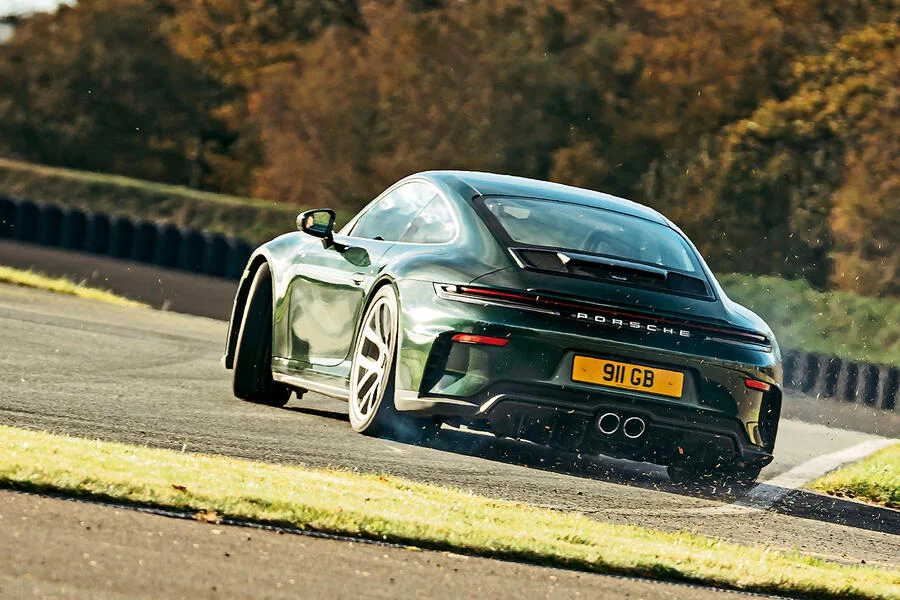
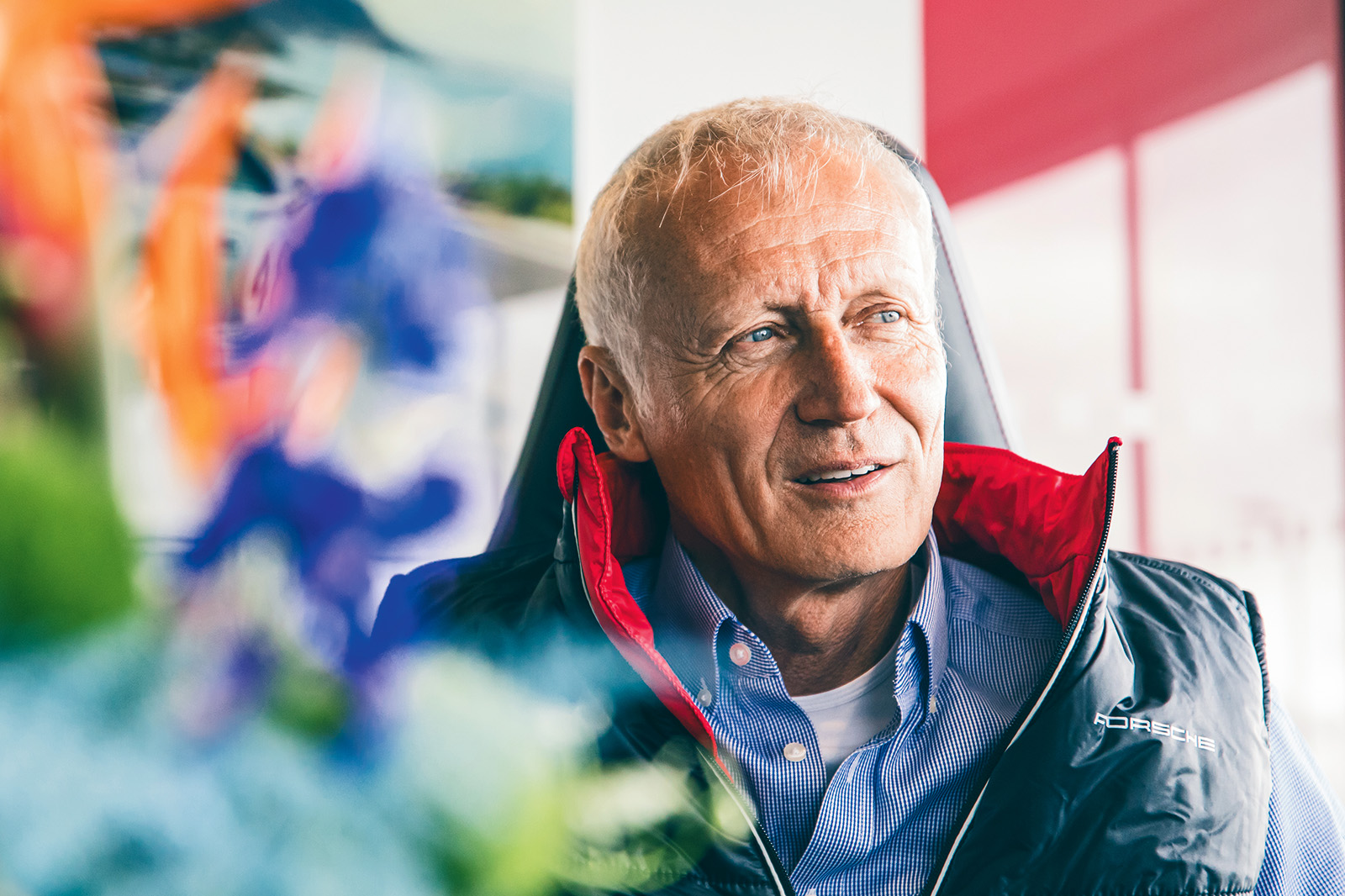
Andreas Preuninger, the man who has helmed Porsche’s esteemed GT division for a quarter of a century, has offered a compelling glimpse into the future of the iconic 911 GT3 line, asserting that its relentless pursuit of enhancement is far from over. Speaking at the Sunstede Festival, a celebratory event marking 75 years of Porsche in the UK and held at the prestigious Porsche Experience Centre in Silverstone, Preuninger’s presence resonated with the brand’s most dedicated followers, drawing parallels to a headline act at a major music festival, a testament to the string of highly acclaimed models he has overseen.
The Sunstede Festival, a significant occasion for the marque’s enthusiasts in Britain, provided a fitting backdrop for these pronouncements. The event itself is part of a broader global celebration of Porsche’s enduring legacy, a heritage built on a foundation of performance, engineering excellence, and an unwavering commitment to the driving experience. For 75 years, Porsche has captivated automotive aficionados, and the 911, in its various iterations, stands as the undisputed icon of this lineage. The GT models, in particular, represent the zenith of this performance philosophy, blending track-bred capability with road-legal usability.
Preuninger’s tenure at the helm of Porsche’s GT division is a narrative of continuous evolution and refinement. Since taking charge 25 years ago, he has been instrumental in shaping the identity of models like the 911 GT2 RS, 911 GT3 RS, and the standard 911 GT3. These vehicles have consistently pushed the boundaries of what is achievable in a production sports car, earning critical acclaim and a devoted following among driving purists. His philosophy, deeply rooted in the pursuit of analogue feel and driver engagement, has become a hallmark of the GT range.
The Philosophy of Continuous Improvement
Preuninger’s core message regarding the future of the 911 GT3 is one of unwavering dedication to improvement. He emphasized that the GT division’s mission is not to rest on past laurels but to continuously elevate the performance and driving dynamics of its flagship models. This commitment is not merely about increasing horsepower or shaving fractions of a second off lap times; it’s about refining the overall driving experience, ensuring that each iteration of the GT3 offers a more engaging, intuitive, and ultimately, more rewarding connection between driver and machine.
This philosophy is underpinned by Porsche’s renowned engineering prowess and a deep understanding of motorsport. The lessons learned from decades of racing, particularly in endurance events like the 24 Hours of Le Mans, are systematically trickled down into the road-going GT models. This symbiotic relationship between the track and the road ensures that the 911 GT3 remains at the cutting edge of automotive performance technology, while retaining the visceral feel that enthusiasts crave.
Addressing the Challenges of Modern Automotive Development
The automotive landscape is in a state of rapid transformation, with an increasing focus on electrification and digital integration. For a performance-oriented brand like Porsche, and particularly for a purist’s car like the 911 GT3, these shifts present unique challenges. Preuninger acknowledged this evolving environment, suggesting that the GT division is actively exploring how to integrate new technologies without compromising the fundamental character of the 911 GT3.
While the broader automotive industry is accelerating towards full electrification, Porsche’s approach, particularly for its halo performance models, has been more measured. The company has invested heavily in hybrid technology, as seen in models like the 918 Spyder and the Panamera Turbo S E-Hybrid, and is also developing its first all-electric sports car, the Taycan. However, for the GT division, the focus remains on maximizing the potential of the internal combustion engine, while also exploring how hybridisation might be employed to enhance performance and efficiency without sacrificing the driving experience.
Preuninger’s statements suggest a pragmatic approach, where any technological advancements will be implemented only if they demonstrably enhance the performance and driver engagement of the 911 GT3. This could involve sophisticated energy recovery systems, advanced torque vectoring, or other innovations that augment the existing mechanical setup rather than replacing it wholesale. The emphasis, it seems, will be on augmenting the analogue experience with intelligent digital assistance, rather than surrendering to a fully digital interface.
The Significance of the 911 GT3 in Porsche’s Lineup
The Porsche 911 GT3 is more than just a high-performance variant; it is a symbol of the brand’s commitment to driving purity. Its development is a testament to Porsche’s engineering philosophy, which prioritizes driver involvement, precise handling, and track-inspired performance. Over the years, the GT3 has evolved from a track-focused machine to a highly capable road car that can also excel on the circuit.
The current generation 911 GT3, for instance, benefits from significant aerodynamic advancements, a motorsport-derived chassis, and a naturally aspirated flat-six engine that revs to an exhilarating 9,000 rpm. These characteristics have cemented its reputation as one of the most engaging and rewarding sports cars available. The demand for these vehicles remains exceptionally high, with production slots often selling out long before cars reach dealerships. This sustained demand underscores the enduring appeal of Porsche’s performance-oriented philosophy.
Supporting Data and Market Context
The continued success of Porsche’s GT models can be partly attributed to a segment of the market that values driving engagement and mechanical purity above all else. While the automotive industry faces increasing pressure to adopt electric powertrains, there remains a significant and passionate customer base that cherishes the sensory experience of a high-revving naturally aspirated engine and the tactile feedback of a finely tuned chassis.
Global sales figures for performance cars, while subject to market fluctuations, often show resilience for models that offer a genuine driving connection. Porsche has consistently been a leader in this niche, with its GT cars commanding strong resale values and attracting a dedicated following. The average transaction price for a new 911 GT3 often exceeds its MSRP due to high demand and limited production. For example, a 911 GT3 RS, which typically has a base price in the region of £170,000, can often command prices well over £200,000 on the used market, reflecting its desirability and perceived value.
The 75th anniversary of Porsche in the UK, as celebrated at the Sunstede Festival, highlights the brand’s long-standing presence and influence in a key market. The UK has historically been a strong market for performance vehicles, and Porsche’s dedication to its enthusiast base through events like this festival is crucial for maintaining brand loyalty.
Future Outlook and Implications
Preuninger’s forward-looking statements suggest that Porsche’s GT division is not afraid to innovate, but will do so with a clear focus on preserving the essence of the 911 GT3. This approach is likely to resonate with existing customers and attract new ones who are seeking a driving experience that transcends the ordinary.
The implication of Preuninger’s remarks is that the future 911 GT3 models will likely continue to be powered by highly evolved versions of internal combustion engines, potentially augmented by hybrid technology. The emphasis will remain on driver feedback, chassis dynamics, and aerodynamic efficiency. This strategy allows Porsche to cater to its core customer base while also navigating the evolving regulatory landscape and technological advancements in the automotive sector.
The continued development of the 911 GT3 under Preuninger’s leadership signifies a commitment to a specific vision of automotive performance – one that values engagement, purity, and the thrill of driving. As the automotive world continues its rapid evolution, Porsche’s steadfast dedication to these principles, embodied in the ongoing pursuit of perfection for the 911 GT3, offers a compelling prospect for enthusiasts worldwide. The success of this strategy will be measured not just in sales figures, but in the enduring legacy of a car that continues to inspire and excite, a true testament to the vision of its custodians.