ARLINGTON, Va. – HII, America’s largest shipbuilder and a leading defense industrial technology provider, has announced the signing of long-term, performance-based production agreements with two pioneering robotics companies, Path Robotics and GrayMatter Robotics. These agreements, valued at up to $900 million over their seven-year duration, represent a monumental strategic investment aimed at dramatically expanding automation across critical U.S. Navy programs. The initiative leverages advanced physical AI and autonomous manufacturing technologies to address persistent challenges within the defense industrial base, including increasing shipbuilding capacity, mitigating workforce shortages, and enhancing manufacturing efficiency and resilience.
The Strategic Imperative: Modernizing Naval Shipbuilding
The U.S. Navy faces an increasingly complex global security environment, necessitating a robust and technologically advanced fleet. Maintaining superiority against near-peer adversaries requires not only cutting-edge ship designs but also the industrial capacity to produce and sustain these vessels at an accelerated pace. However, the American shipbuilding industry has contended with significant headwinds, including an aging workforce, a scarcity of skilled labor, and the inherently complex and labor-intensive nature of ship construction. Traditional shipbuilding processes, often reliant on manual labor and specialized craftsmanship, present bottlenecks that limit production speed and increase costs. This strategic investment by HII is a direct response to these challenges, seeking to infuse state-of-the-art robotics and artificial intelligence into the very fabric of naval manufacturing.
HII’s decision to partner with Path Robotics, known for its AI-driven robotic welding systems, and GrayMatter Robotics, which specializes in intelligent automation for high-mix manufacturing, underscores a commitment to integrating best-in-class solutions. These partnerships are not merely about acquiring robots; they are about fundamentally transforming the production paradigm for complex naval structures. The structured nature of the agreements, tied to technology, manufacturing readiness, and performance milestones, emphasizes a pragmatic, results-oriented approach. HII intends to award actual shipbuilding work to these robotics companies only after their autonomous production systems rigorously demonstrate adherence to the stringent quality, schedule, and manufacturing standards imperative for U.S. Navy programs. This performance-based model ensures that technological advancements translate directly into tangible operational benefits and cost efficiencies.
Deep Dive into the Technology and Partnership Structure
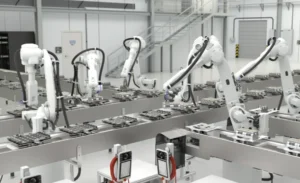
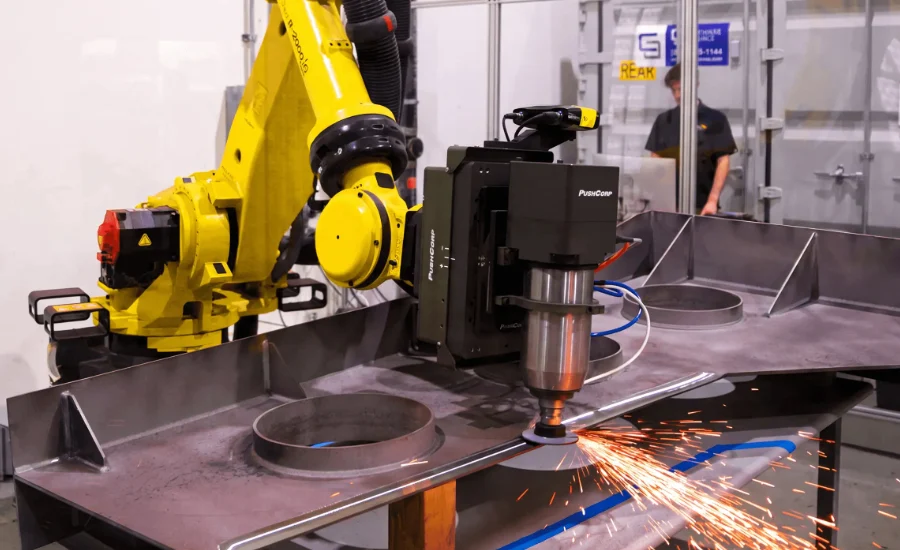
The collaboration’s initial focus is on developing and validating autonomous processes for a range of critical shipbuilding tasks. These include welding, grinding, blasting, painting, assembly, and inspection. Each of these operations is characterized by extreme complexity, often involving large, heavy, and uniquely shaped components with tight tolerances. Manual execution of these tasks is physically demanding, time-consuming, and susceptible to variability. By automating these processes, HII aims to achieve higher precision, greater consistency, and faster throughput.
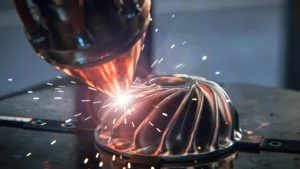
Autonomous welding, for instance, requires robots to not only execute precise welds but also to adapt to variations in material, joint geometry, and environmental conditions—challenges that Path Robotics’ AI-driven systems are designed to overcome. Similarly, autonomous grinding and blasting demand sophisticated perception and control systems to ensure uniform material removal and surface preparation without compromising structural integrity. Autonomous painting, especially for complex geometries, requires advanced robotic manipulation and spray control to achieve optimal coating thickness and coverage. Inspection, often a bottleneck, can be dramatically accelerated and made more accurate through AI-powered vision systems capable of detecting microscopic flaws and ensuring compliance with exacting naval specifications.
The ultimate vision is to integrate these disparate autonomous capabilities into a cohesive, highly efficient autonomous production line. Once qualified, this new production system will initially be utilized for smaller steel structures, allowing for a phased implementation and iterative refinement of the technology and processes. This crawl-walk-run approach minimizes risk and provides valuable feedback loops, ensuring that the systems are robust and reliable before scaling up. Over time, HII plans to expand the application of these autonomous lines to larger units and modules, progressively incorporating more complex components of naval vessels into automated manufacturing workflows. This incremental strategy is crucial for a sector where the cost of failure is exceptionally high, both in financial terms and in national security implications.
Addressing Workforce Challenges and Expanding Capacity
A cornerstone of HII’s strategy is to address the burgeoning workforce shortages that have plagued the manufacturing sector, particularly in specialized fields like shipbuilding. The average age of a skilled tradesperson in the U.S. is increasing, and attracting younger generations to physically demanding industrial jobs has proven challenging. Rather than viewing automation as a job replacement strategy, HII frames it as an augmentation tool designed to enhance human capabilities and alleviate the burden of repetitive or hazardous tasks. By automating certain processes, skilled workers can be redeployed to higher-value activities, such as complex assembly, quality assurance, and system integration, which still require human ingenuity and oversight.
Moreover, these agreements are central to HII’s broader ambition to significantly increase its shipbuilding capacity and expand distributed manufacturing across its supplier network. Distributed manufacturing, in this context, refers to a more geographically dispersed and interconnected network of production facilities, rather than relying solely on large, centralized shipyards. This model enhances supply chain resilience, reduces logistical complexities, and can potentially tap into regional talent pools. By leveraging robotics companies that can operate semi-autonomously or with minimal human intervention, HII can potentially establish smaller, specialized manufacturing hubs that feed into its main shipyards, thereby increasing overall output and reducing reliance on a single point of failure.

The company’s projections underscore the urgency and scale of this initiative: HII expects to outsource more than 2.5 million hours of shipbuilding work in 2026, marking a substantial 30% increase from 2025 levels. This projection is a testament to the anticipated efficiency gains and increased capacity that these autonomous systems are expected to deliver. Such an increase in outsourced work also indicates a strategic shift towards leveraging specialized external capabilities and potentially fostering a more agile and responsive defense industrial ecosystem.
Voices from the Industry: Leadership Perspectives
Eric Chewning, Executive Vice President of Maritime Systems and Corporate Strategy at HII, articulated the profound significance of this collaboration. "This collaboration represents a strategic investment in the future of American shipbuilding," Chewning stated. "Together, we are defining a new approach to robotics in shipbuilding: automation that can adapt to extreme levels of complexity, mix, and size." His statement highlights the unique challenges of shipbuilding automation, where no two components are exactly alike, and the scale of operations far exceeds typical industrial manufacturing. The ability of robots to adapt to such variability, rather than requiring highly standardized inputs, is a critical breakthrough enabled by advanced AI and machine learning.
While specific statements from Path Robotics and GrayMatter Robotics were not detailed in the initial announcement, it is logical to infer their enthusiastic commitment to these partnerships. For these cutting-edge technology firms, securing a multi-year, multi-million-dollar agreement with a defense industry giant like HII represents a significant validation of their technological prowess and a gateway to applying their innovations in one of the most demanding manufacturing environments globally. Such collaborations often lead to accelerated research and development, as the stringent requirements of naval shipbuilding push the boundaries of what is currently possible in robotics and AI. Industry analysts are also likely to view these agreements as a positive indicator of the defense sector’s commitment to modernization and a potential model for other heavy industries facing similar challenges.
Broader Implications for the Defense Industrial Base
The HII-Path Robotics-GrayMatter Robotics partnership carries significant implications far beyond the immediate confines of HII’s shipyards. It signals a broader shift within the U.S. defense industrial base towards embracing advanced manufacturing technologies as a strategic imperative. In an era of great power competition, the capacity to rapidly and cost-effectively produce and sustain naval assets is as crucial as the technology embedded within the ships themselves. By demonstrating the viability of extensive automation in shipbuilding, HII could set a precedent for other defense contractors and manufacturing sectors.
This initiative also contributes to the national conversation around industrial resilience and supply chain security. By expanding distributed manufacturing and reducing reliance on purely manual processes, the defense supply chain becomes less vulnerable to localized disruptions, labor shortages, or geopolitical pressures. It encourages investment in domestic robotics and AI capabilities, fostering a robust ecosystem of innovation that can serve both defense and commercial sectors. Furthermore, the integration of physical AI into such a critical industry has potential ripple effects, driving advancements in sensor technology, real-time data analytics, and human-robot collaboration methodologies that can be applied across various manufacturing domains.
The long-term vision is not just about building ships faster; it’s about building smarter, more efficiently, and with greater adaptability. It’s about creating a future where the defense industrial base is more resilient, innovative, and capable of responding to evolving threats and technological landscapes. This includes the potential for digital twins and predictive maintenance integrated into the manufacturing process, further enhancing quality and reducing lifecycle costs.
The Future of Autonomous Manufacturing in Shipbuilding
Looking ahead, the success of these agreements could fundamentally redefine the future of shipbuilding. Imagine highly automated shipyards where massive robotic arms meticulously weld structural components, AI-powered systems conduct instantaneous quality checks, and autonomous vehicles transport sub-assemblies with unparalleled precision. Human workers, rather than performing repetitive tasks, would supervise these advanced systems, manage complex projects, and focus on the intricate final assembly and system integration that still demand unique human cognitive abilities.
This evolution is not without its challenges. The integration of complex robotics into legacy infrastructure requires substantial capital investment and sophisticated project management. Cybersecurity will be paramount, as autonomous production lines present new attack vectors that must be rigorously defended. Furthermore, the workforce will require significant retraining and upskilling to manage and maintain these advanced systems, necessitating new educational programs and industry-academia partnerships.
Despite these challenges, the potential rewards are immense. HII’s $900 million investment with Path Robotics and GrayMatter Robotics represents a bold leap forward, positioning American shipbuilding at the forefront of the global manufacturing revolution. It underscores a strategic commitment to harnessing the power of artificial intelligence and advanced robotics not just to meet current defense needs, but to secure a competitive edge for decades to come, ensuring the U.S. Navy continues to operate with a technologically superior and robust fleet.