The landscape of modern cosmology is currently being reshaped by a series of gravitational ripples originating from the furthest reaches of space and time. For decades, the existence of primordial black holes—objects theorized to have formed in the chaotic immediate aftermath of the Big Bang—remained a purely mathematical possibility. However, a groundbreaking study from the University of Miami suggests that a recent, unusual signal detected by the Laser Interferometer Gravitational-Wave Observatory (LIGO) may finally provide the "smoking gun" evidence needed to confirm these ancient entities. This discovery does more than just validate a 50-year-old theory; it offers a compelling solution to the mystery of dark matter, the invisible scaffolding of the universe that has eluded direct detection for nearly a century.
The Anomalous Signal: A Breach in Stellar Logic
In late 2023, the international network of gravitational wave detectors, led by LIGO in the United States, issued an automated alert that sent shockwaves through the astrophysical community. The signal described a merger event involving at least one object with a mass significantly lower than that of our Sun. In the standard model of stellar evolution, black holes are the remnants of massive stars that have exhausted their nuclear fuel and collapsed under their own gravity. According to the Tolman-Oppenheimer-Volkoff limit, the smallest possible black hole created by a collapsing star should be roughly 2.5 to 3 times the mass of the Sun. Anything smaller typically results in a neutron star.
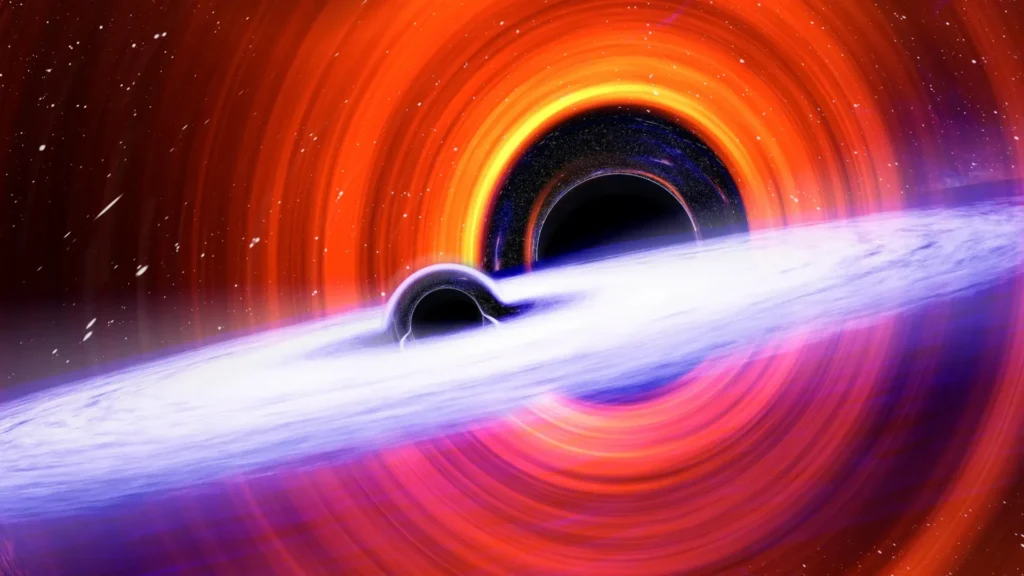
The detection of a "subsolar mass" black hole—an object with less mass than the Sun—presents a profound paradox. Because no known stellar process can produce a black hole of this size, its existence suggests a different origin story altogether. Nico Cappelluti, an associate professor in the University of Miami’s Department of Physics, and Ph.D. student Alberto Magaraggia, believe this anomaly is the signature of a primordial black hole (PBH). Unlike their stellar cousins, PBHs would not be born from dying stars but from the direct collapse of overdense regions in the plasma of the infant universe, occurring within the first trillionth of a second after the Big Bang.
Understanding the Primordial Hypothesis
The concept of primordial black holes is rooted in the early 1960s and 70s. Soviet physicists Yakov Zeldovich and Igor Novikov first proposed that the high-pressure environment of the early universe could compress matter into black holes. Later, in 1971, Stephen Hawking refined this theory, suggesting that these objects could range in mass from a fraction of a gram to thousands of solar masses. Hawking famously noted that while very small PBHs would have "evaporated" by now due to Hawking radiation, those with masses comparable to asteroids or small stars would remain stable and scattered throughout the modern cosmos.
The University of Miami study, published in The Astrophysical Journal, posits that the LIGO signal is the most significant evidence to date for this class of objects. "We believe our study will aid in confirming that they actually do exist," said Cappelluti. By creating complex statistical models, the researchers estimated the density of PBHs required to match the frequency of detections made by LIGO. Their findings indicate that while such subsolar mergers are rare, their occurrence rate is perfectly consistent with a universe where primordial black holes exist as a fundamental component of the cosmic fabric.
The Dark Matter Connection
The confirmation of primordial black holes would solve one of the most persistent "missing piece" puzzles in physics: the nature of dark matter. Observations of galaxy rotation speeds and gravitational lensing suggest that visible matter—stars, planets, gas, and dust—accounts for only about 15 percent of the total matter in the universe. The remaining 85 percent is dark matter, an invisible substance that does not emit, absorb, or reflect light, yet exerts a massive gravitational pull.
For years, the leading candidates for dark matter were Weakly Interacting Massive Particles (WIMPs). However, decades of experiments using deep-underground detectors have failed to find a single WIMP. This "null result" has led many scientists to reconsider the "MACHO" (Massive Compact Halo Object) theory, specifically in the form of primordial black holes.
If the universe is populated by a vast number of PBHs, they would behave exactly like dark matter. They are gravitationally powerful, they do not emit light, and they are distributed throughout galactic halos. "Our research indicates that these primordial black holes could account for a significant portion, if not all, of dark matter," Cappelluti noted. This would mean that the "missing mass" isn’t a new, exotic particle, but rather a relic of the Big Bang itself.
A Chronology of Gravitational Discovery
The journey toward this potential breakthrough has been a century in the making, defined by theoretical leaps and engineering marvels:
- 1915: Albert Einstein publishes the General Theory of Relativity, predicting that massive accelerating objects would create ripples in the fabric of spacetime.
- 1966: Zeldovich and Novikov propose that the high densities of the early universe could create black holes without the need for stars.
- 1971-1974: Stephen Hawking calculates the mechanics of PBHs and suggests they could be a candidate for dark matter.
- 2015: LIGO makes the first-ever direct detection of gravitational waves (GW150914), confirming Einstein’s theory and proving that black holes merge in binary systems.
- 2019: The LIGO-Virgo-KAGRA (LVK) collaboration begins detecting more frequent and diverse merger events, including those involving neutron stars.
- 2023: An automated alert identifies a subsolar mass candidate, providing the raw data for the Miami study and reigniting the debate over PBHs.
Scientific Skepticism and the Search for a "Smoking Gun"
Despite the excitement, the scientific community remains cautious. The detection of gravitational waves is an incredibly delicate process. LIGO’s detectors, located in Hanford, Washington, and Livingston, Louisiana, use lasers to measure changes in distance smaller than the width of an atomic nucleus. Because the instruments are so sensitive, they can be affected by "noise"—vibrations from distant earthquakes, traffic, or even ocean waves.
Some astrophysicists argue that the subsolar signal might be a statistical fluke or an instrumental "glitch" rather than a physical object. Others suggest the object could be an extremely light neutron star, though current physics makes that explanation nearly as difficult to justify as a primordial black hole.
"LIGO picked up what is very strong evidence that these types of black holes exist," Cappelluti admitted. "But we’ll need to detect another such signal or even several others to get the smoking-gun confirmation that they are real." The current strategy involves waiting for the LVK collaboration to complete its fourth observing run (O4), which features upgraded sensors and improved noise-reduction algorithms.
The Future of Gravitational Wave Astronomy
As LIGO and its partners, Virgo in Italy and KAGRA in Japan, continue to refine their capabilities, the next decade promises a new era of "high-fidelity" astronomy. Planned upgrades will allow these facilities to look deeper into space, effectively looking further back in time. However, ground-based detectors have limitations; they are best at catching high-frequency waves from relatively recent events.
To truly see the birth of the universe, scientists are looking toward space-based missions. The European Space Agency’s Laser Interferometer Space Antenna (LISA), set for launch in 2035, will consist of three spacecraft flying in a triangular formation millions of miles apart. Free from the seismic noise of Earth, LISA will be able to detect low-frequency gravitational waves, potentially capturing the "hum" of primordial black holes forming just moments after the Big Bang.
Additionally, the proposed "Cosmic Explorer" in the U.S. and the "Einstein Telescope" in Europe represent the third generation of ground-based observatories. These facilities will be ten times more sensitive than LIGO, capable of detecting every black hole merger in the observable universe.
Broader Implications for Physics
The existence of primordial black holes would do more than just explain dark matter; it would provide a vital link between general relativity and quantum mechanics. Because PBHs are theorized to have formed in a regime where the universe was both incredibly massive and incredibly small, they sit at the intersection of the two great pillars of physics.
If the University of Miami’s findings are confirmed by subsequent detections, it would mark the end of a century-long search for the universe’s hidden mass. It would suggest that we are living in a cosmos teeming with "invisible" ghosts of the Big Bang—ancient, dark, and powerful remnants that have been steering the evolution of galaxies since the dawn of time.
For now, the research by Cappelluti and Magaraggia serves as a roadmap for the next phase of exploration. By narrowing down the expected frequency and mass of these objects, they have given observers a target to aim for. As the LVK collaboration continues its watch, the scientific world remains on the verge of a discovery that could finally illuminate the darkest corners of our cosmic history.