The Proba-3 mission, a pioneering European Space Agency (ESA) endeavor designed to create artificial solar eclipses and study the Sun’s corona, has successfully overcome a significant operational challenge and is now fully back online. Both the Coronagraph spacecraft and its primary scientific instrument, ASPIICS (Association for Solar Physics in Belgium – Instrument for the Study of the Inner Corona), are in excellent health and have resumed routine formation flying operations. This marks a triumphant return for the mission, which faced a critical anomaly in February that led to a temporary loss of contact and threatened its groundbreaking scientific output.
Recovery From Anomaly: A Testament to Engineering Prowess
In February of 2026, the Proba-3 mission encountered an unforeseen anomaly aboard its Coronagraph spacecraft. This event resulted in a complete loss of communication between the spacecraft and ground control, a situation that understandably caused significant concern among the ESA team, mission operators, engineers, and industry partners. The ensuing months were characterized by an intensive, around-the-clock effort to diagnose the problem, brainstorm solutions, and meticulously test recovery procedures. This period of dedicated work has culminated in the successful restoration of contact and full operational capability, demonstrating remarkable resilience and expertise within the European space sector.
The successful recovery is a testament to the dedication and ingenuity of the Proba-3 mission team. Following the anomaly, a global network of engineers and scientists collaborated tirelessly, leveraging their collective expertise to pinpoint the root cause and devise a robust strategy for regaining control and ensuring the spacecraft’s long-term viability. This collaborative spirit was crucial in navigating the complex technical challenges and ultimately paving the way for the mission’s return to its vital scientific objectives.
Resumption of Routine Operations and Scientific Pursuits
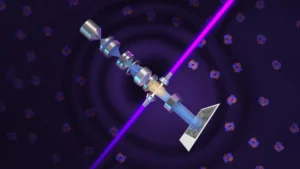
With the Coronagraph spacecraft now fully functional, Proba-3 is once again performing its unique formation flying maneuvers. These operations involve precisely positioning two spacecraft – the Coronagraph and the Occulter – in a specific orbital configuration to block the Sun’s bright disk, thereby creating a stable, artificial eclipse. This allows the ASPIICS instrument to observe the Sun’s faint outer atmosphere, the corona, with unprecedented clarity and detail, far beyond what is possible from ground-based observatories or even during natural solar eclipses.
"Last week, we performed the first formation flight since the anomaly, and we can now say with confidence that all systems are working as they should," confirmed Damien Galano, Proba-3 Mission Manager. "With the Coronagraph spacecraft successfully recovered, the mission can now resume its routine operations." This statement underscores the critical milestone achieved in re-establishing the complex orbital ballet that is central to Proba-3’s scientific mission.

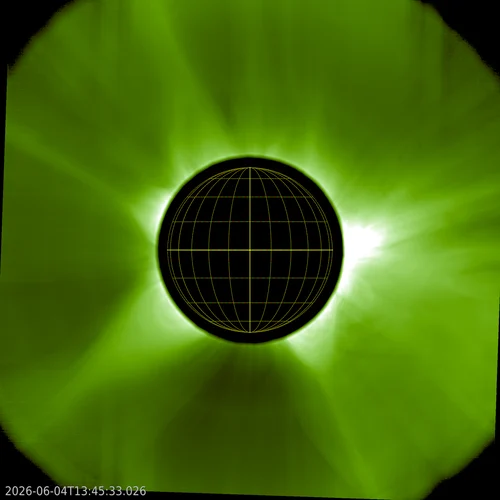
The ASPIICS instrument itself has also been thoroughly checked and is performing optimally. Andrei Zhukov, the principal investigator for ASPIICS from the Royal Observatory of Belgium, expressed his satisfaction: "After performing very careful checks of the ASPIICS coronagraph instrument, I’m very happy to confirm that it’s healthy and fully functional. Last week’s formation flight allowed us to capture new images of the corona, and they look as spectacular as the ones taken before the incident occurred." The ability to resume capturing such high-quality data is a significant victory for the mission and the scientific community eagerly awaiting further insights into solar physics.
Early Scientific Discoveries and Future Prospects
Even before the recent anomaly, Proba-3 had already begun to yield significant scientific results. Initial data collected by the mission has provided surprising insights into the behavior of the solar wind. Published findings suggest that solar wind structures within the inner corona can accelerate to speeds three to four times faster than previously estimated by scientists. This discovery has important implications for our understanding of space weather, the continuous stream of charged particles and magnetic fields emanating from the Sun that can impact Earth’s technological infrastructure, including satellites and power grids.
"Our first results are very promising, and I can’t wait to see the future science that Proba-3 has in store for us," added Andrei Zhukov, expressing optimism about the mission’s continued contributions to solar physics. The resumption of routine operations means that Proba-3 will continue to gather crucial data that will refine our models of solar wind acceleration and its outward propagation through the heliosphere.
A Chronology of the Recovery Effort
The successful recovery of Proba-3’s Coronagraph spacecraft involved a meticulously planned and executed sequence of events, highlighting the challenges and triumphs of space mission operations.
- February 2026: An anomaly occurs aboard the Proba-3 Coronagraph spacecraft, leading to a loss of contact with ground control. This marks the beginning of an intensive recovery period.
- February – May 2026: The Proba-3 mission team, including operators, engineers, and industry partners, works around the clock. This phase involves extensive troubleshooting, brainstorming, and the development of a comprehensive recovery strategy. Teams analyze telemetry data (when available) and simulate potential failure modes to understand the anomaly’s cause and its impact on the spacecraft’s subsystems.
- Late May 2026: Contact with the Coronagraph spacecraft is re-established. This critical moment, after weeks of silence, brings immense relief to the mission team. However, the work is far from over, as the spacecraft’s condition and the ability to resume operations remain uncertain.
- Early June 2026: A rigorous checklist of diagnostic and recovery tasks is initiated. This involves systematically checking the status of each spacecraft subsystem to assess its health after the period of inactivity and potential system stress.
- Mid-June 2026: Critical operations that were implicated in the February anomaly are successfully performed. This is a crucial validation step, demonstrating that the root cause of the problem has been identified and patched in the spacecraft’s software, ensuring that these operations can be conducted safely.
- Late June 2026: The first formation flying operations are successfully conducted since the anomaly. This signifies a major turning point, confirming that the spacecraft is capable of resuming its primary scientific mission in conjunction with the Occulter.
- July 2026: Official confirmation is issued that both the Coronagraph spacecraft and the ASPIICS instrument are in full health and ready to resume routine scientific operations. The mission is declared officially recovered.
The "Coma" and the Checklist: Navigating the Unknown
The period of lost contact for the Coronagraph spacecraft can be metaphorically described as a "coma." When the first signals were received, it was akin to waking up from a deep sleep, with the immediate priority being to assess the patient’s vital signs and overall condition.
"When we received the first signal from the Coronagraph spacecraft after a month of silence, everyone was so relieved," recalled Damien Galano. "But we knew then that the work was not over yet – we still had no idea how a month without energy affected the spacecraft, or if we will be able to resume the mission at all."

Even for an event as rare as a spacecraft emerging from such a prolonged period of inactivity, there is a well-defined procedure. Experienced operators follow a meticulous checklist of tasks designed to thoroughly assess the spacecraft’s health and readiness for further operations. This structured approach is vital for ensuring that no critical issues are overlooked and that the mission can be safely brought back to its full operational potential.
Technical Deep Dive: The Software Patch and Subsystem Checks
The recovery process involved a detailed examination of the spacecraft’s internal systems. "One by one, we have checked the status of each of the spacecraft’s subsystems," stated Damien Galano. This diagnostic phase likely involved verifying the functionality of power systems, attitude control, communication modules, and the scientific payload’s essential components.
Crucially, the team was able to successfully re-perform the operations that had triggered the anomaly in February. "Back then, it triggered the unfortunate chain reaction that led to loss of connection with the spacecraft, but after patching the root cause in the software, we were confident that this activity will cause no further issues," Galano explained. This indicates that a software vulnerability or configuration error was identified as the primary culprit, and a targeted software update or patch was implemented to rectify the issue. This is a common and effective method for resolving anomalies in complex spacecraft systems, allowing for continued operation without requiring extensive hardware modifications.
Inspiring Commitment and Professional Exhilaration
The recovery of Proba-3 has been described by those involved as an inspiring and fascinating experience, highlighting the dedication and resilience of the human element in space exploration. "It has been inspiring and fascinating to witness the team’s energy and commitment in investigating the issue and recovering the system," commented Galano. He further added, "For some of us, it has also been one of the most intense and exhilarating periods of our professional lives."
This sentiment speaks to the deep personal investment and professional satisfaction derived from overcoming significant technical hurdles and successfully restoring a valuable scientific asset. The challenges presented by the anomaly, while stressful, also provided an opportunity for unparalleled learning and growth for the engineers and operators involved, solidifying their expertise in handling complex mission-critical situations.
Broader Implications for ESA and Solar Physics
The successful recovery of Proba-3 has significant implications beyond the immediate resumption of its scientific mission. Firstly, it reinforces ESA’s reputation for robust engineering and effective crisis management in the space sector. The ability to diagnose, troubleshoot, and recover from a complex anomaly on a sophisticated spacecraft demonstrates a high level of technical competence and operational maturity.

Secondly, it ensures the continued flow of invaluable data for solar physics research. The Sun’s corona is a region of intense activity that drives space weather phenomena, and understanding its dynamics is crucial for protecting our increasingly technology-dependent society. Proba-3’s unique capabilities allow scientists to probe regions of the corona previously inaccessible, leading to a deeper understanding of fundamental processes like solar wind acceleration and coronal mass ejections.
The early scientific findings already published by the Proba-3 mission highlight the potential for transformative discoveries. The revelation that solar wind can accelerate much faster in the inner corona than previously thought challenges existing theoretical models and necessitates a re-evaluation of our understanding of solar physics. The continuation of these observations will undoubtedly lead to further refinements of these models and potentially uncover entirely new phenomena.
In conclusion, the Proba-3 mission’s recovery is a remarkable achievement, showcasing the power of human ingenuity, international collaboration, and unwavering dedication. As the Coronagraph spacecraft and ASPIICS instrument resume their vital work, the scientific community anticipates a wealth of new data that will advance our knowledge of the Sun and its profound influence on our solar system. The mission’s journey from anomaly to full operational status serves as a powerful example of resilience and success in the challenging yet rewarding field of space exploration.