Fractional-horsepower gearmotors are fundamental components in a myriad of industrial and consumer applications, often specified by OEM design engineers to meet highly specialized operational requirements. Among these, gearmotors incorporating worm gearing are frequently chosen for their perceived "self-locking" characteristic. This property, while undeniably valuable in specific contexts, is often fundamentally misunderstood and subsequently misapplied, leading to significant safety and performance implications across various industries. The critical distinction lies in recognizing that the static self-locking behavior of a worm gear is not synonymous with the dynamic braking capabilities required to actively slow or stop a moving axis.
Understanding Worm Gear Technology and the Illusion of Dynamic Braking
Worm gears consist of a worm (a screw-like threaded shaft) that meshes with a worm wheel (a spur gear). This configuration offers several advantages, including high reduction ratios in a compact space, smooth and quiet operation, and, crucially, a characteristic often referred to as "self-locking." The self-locking property arises from the geometry of the worm and wheel, specifically the helix angle of the worm and the friction coefficient between the meshing surfaces. When the helix angle is sufficiently small, and the friction is high enough, it becomes impossible for the worm wheel to drive the worm. In essence, the gear train locks up when an attempt is made to backdrive it from the output shaft.

However, the common misconception arises when engineers equate this static self-locking behavior with dynamic braking. The thought process often runs along the lines of: "If I install a self-locking gearbox, when I cut power to the motor, the machinery will come to an immediate halt and maintain its position." This premise is flawed because the locking behavior of worm gears is primarily exhibited from a static, or stopped, state. It is a mechanism for holding a position after motion has ceased, not for actively arresting motion.
The fundamental issue is the inertia of the system. When an electromechanical system, driven by a worm gearmotor, is in motion and electrical power is removed, the inertia of the moving components will keep the output shaft turning. This kinetic energy must be dissipated. A self-locking worm gear, by itself, does not provide the active resistance necessary to rapidly overcome this inertia and bring the system to a quick, controlled stop. The assembly only becomes truly "self-locking" once its motion has already decayed to a dead stop, at which point the worm gear prevents it from being backdriven. This distinction between "static self-locking" and "dynamic braking" is paramount for safe and effective design.
For clarity, when discussing "dynamic braking" in this context, it refers to an electromechanical design’s intrinsic ability to actively slow or stop an axis. This is distinct from electrical braking methods, such as regenerative braking (where the motor acts as a generator to dissipate kinetic energy via resistors or feed it back into the power supply) or dynamic braking using resistors across motor terminals. The focus here is on the mechanical ability to halt motion.

The Critical Role of Dedicated Braking Systems
Given the limitations of self-locking gearmotors in dynamic stopping scenarios, many applications necessitate the integration of a dedicated braking mechanism. This is particularly true for systems where safety, precision, or immediate halting of motion is critical. The design philosophy shifts from relying solely on the gear’s inherent properties to a synergistic approach where a brake handles the dynamic stopping, and the self-locking gear maintains the static hold.
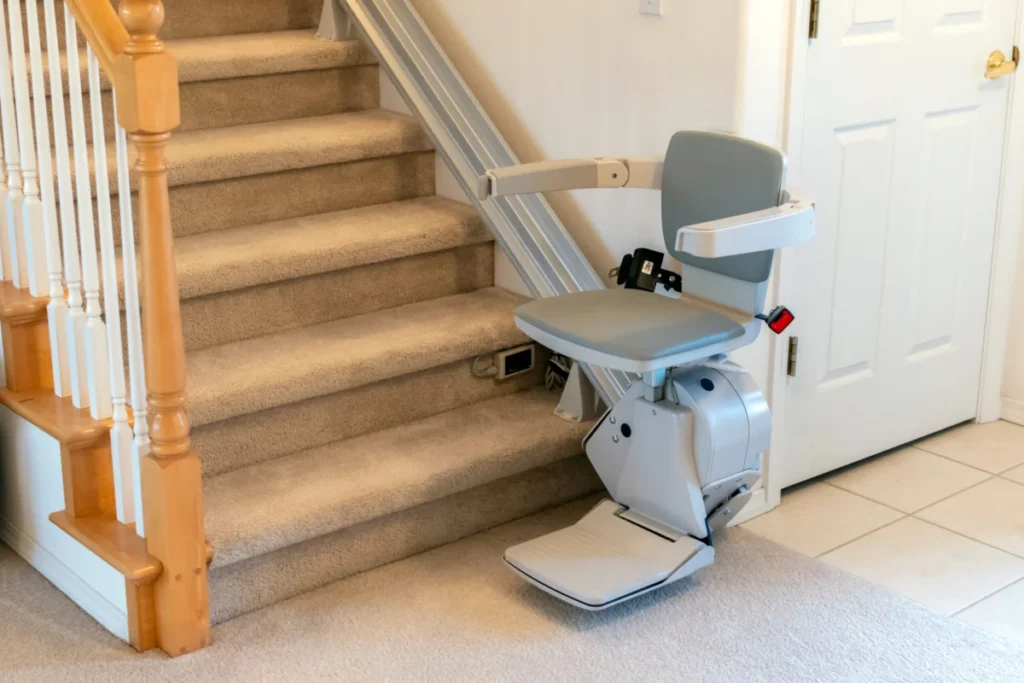
One prominent example is stair lifts designed for mobility assistance. These devices transport individuals up and down staircases, demanding the highest levels of safety and reliability. Efficiency is often a key design priority, leading to the selection of fractional-horsepower DC gearmotors. In such applications, a brake is indispensable to quickly and reliably slow and stop the chair lift assembly, especially in an emergency or upon reaching its destination. Once the lift has come to a complete stop, the self-locking worm gearbox then takes over, holding the carriage securely in place, even if power is interrupted. This dual-system approach ensures that the lift will not drift or descend unexpectedly, protecting the user from falls or injuries. The brake provides the immediate, controlled deceleration, while the worm gear offers a passive, fail-safe holding mechanism.
Similarly, commercial rotisserie ovens illustrate another compelling case for this combined approach. These ovens continuously rotate meat or other food items for even cooking. When an oven door is opened, the rotation must immediately cease to prevent operators from touching moving hot spits, which could cause severe burns. Gravity can complicate this, especially if the load is imbalanced (e.g., two chickens on one side and none on the other), potentially causing the spits to continue turning slowly. Here, a robust brake is essential to bring the rotisserie spits to a rapid, full stop. Once stationary, the self-locking gearbox ensures that the spits remain in their arrested position, preventing any gravitational drift or unintended movement while the door is open, thus safeguarding personnel.

These examples underscore a fundamental engineering principle: safety-critical applications, or those requiring precise and immediate stopping, cannot rely solely on the static locking characteristic of worm gears. A dedicated braking system, carefully selected and integrated, is a non-negotiable component to manage the kinetic energy of the moving load.
When Backdrivability is Paramount: The Opposite Design Challenge
While many applications seek to prevent backdriving, there are equally critical scenarios where a gearmotor must be easily backdrivable. This means that an external force applied to the output shaft can readily turn the input shaft and the motor. Interestingly, engineers rarely explicitly ask for "backdrivable gearing" in their specifications; rather, the need for low resistance to backdriving is implicitly requested through other functional requirements.
A classic illustration is railroad crossing gates. These gates have extremely stringent requirements for their fail-safe operation. In the event of a power failure, the gate arms must fall down and block vehicle traffic. This is a crucial safety measure because, without power, there is no other signal to alert drivers of an oncoming train. This critical function relies on a gearbox that is designed to be so easily backdrivable that the force of gravity acting on the arm’s weight alone is sufficient to bring it down into its failsafe, horizontal position. The design of these seemingly simple systems is, in fact, highly complex. The arms are often fitted with counterweights to reduce the load on the motor during lifting, allowing a relatively small, low-power motor to operate the gate efficiently. However, these counterweights must be carefully balanced to ensure that gravity can still reliably overcome any frictional resistance in the gearbox to lower the arm when power is lost.

Another common scenario is parking garage barrier arms. If the gate system fails due to a power outage or a ticketing error, there must be a way for an attendant or emergency personnel to manually lift the gate. This necessitates an electromechanical assembly, including the motor’s gearbox, that is easily backdrivable. Without this feature, vehicles could be trapped inside or outside the facility, causing significant inconvenience, traffic congestion, and potential safety issues. Some modern designs might incorporate electronic overrides, but the inherent mechanical backdrivability often provides a simpler, more robust fail-safe.
These applications highlight that the choice of gear type and its backdriving characteristics is not a trivial decision but a fundamental aspect of system architecture, driven by safety regulations, operational contingencies, and user interaction requirements.
Industry Insights and Best Practices
The persistent confusion surrounding "self-locking" gearmotor behavior has prompted many manufacturers to de-emphasize the term or provide extensive clarification. Industry leaders like Bodine Electric Co., whose insights inform this discussion through contributions from experts such as Terry Auchstetter, actively work to educate OEM design engineers. Their "Motor University" series, for instance, often delves into these critical distinctions, guiding engineers toward proper application and avoiding common pitfalls.

The consensus among motion control specialists is that comprehensive application analysis is paramount. Engineers must thoroughly understand:
- Load Characteristics: The magnitude and nature of the load (static, dynamic, inertial).
- Operational Profile: Speeds, acceleration/deceleration rates, duty cycles.
- Safety Requirements: The level of risk associated with uncontrolled motion or failure.
- Environmental Conditions: Temperature, moisture, contaminants, which can affect friction and performance.
Consulting with gearmotor specialists during the design phase is highly recommended. These experts can provide invaluable guidance on selecting the appropriate gear technology, motor, and supplementary braking systems to ensure both functionality and safety. They can help navigate the nuances of gear ratios, efficiency, friction coefficients, and the specific performance curves of various motor-gearbox combinations.
Furthermore, adherence to relevant industry standards and regulatory compliance is crucial. For instance, machinery used in public spaces (like stair lifts or barrier gates) often falls under specific safety certifications (e.g., ISO, ANSI standards) that mandate particular fail-safe mechanisms and performance criteria. These standards often implicitly or explicitly require dedicated braking systems for dynamic stopping and reliable holding.

Broader Implications for Engineering Design and Safety
The correct understanding and application of self-locking gearmotors versus dedicated braking systems carry significant implications across several dimensions:
- Enhanced Safety and Risk Mitigation: The most critical implication is safety. Misapplying a self-locking gearmotor as a dynamic brake can lead to uncontrolled motion, potential equipment damage, and, most importantly, severe injury or even fatalities to operators or end-users. Proper design, integrating appropriate braking solutions, is fundamental to mitigating these risks and ensuring the reliability of machinery.
- Optimized Performance and Efficiency: While a dedicated brake might seem like an added cost or complexity, it often leads to a more optimized and efficient overall system. By allowing the gearmotor to focus on its primary function (power transmission) and the brake to handle dynamic stopping, designers can achieve better control, faster cycle times, and reduced wear on components compared to systems attempting to rely on inadequate "self-braking" mechanisms.
- Cost-Effectiveness and Longevity: Investing in the correct components upfront, including appropriate braking systems, can prevent costly redesigns, emergency repairs, and warranty claims down the line. Moreover, operating machinery within its intended parameters extends its lifespan, reducing total cost of ownership.
- Regulatory Compliance and Liability: In industries with strict safety regulations, failure to implement appropriate stopping mechanisms can lead to non-compliance, heavy fines, product recalls, and significant legal liability in the event of an accident. Manufacturers and design engineers bear the responsibility for ensuring their products meet or exceed safety standards.
- Advancements in Integrated Solutions: The continuous evolution of motion control technology is seeing the development of more sophisticated integrated motor-brake units and advanced control systems. These solutions often combine the motor, gearbox, and brake into a single, pre-engineered package, simplifying selection and integration while ensuring harmonious operation. However, even with these advancements, the fundamental principles of static holding versus dynamic stopping remain unchanged.
In conclusion, while the self-locking characteristic of worm gearmotors offers a valuable benefit for passively holding a load in a static position without continuous power, it is imperative that design engineers understand its limitations. A self-locking gearbox is not a substitute for a dynamic braking system when active deceleration and stopping are required. From passenger safety in stair lifts to preventing burns in rotisserie ovens or ensuring critical fail-safe operations in railroad gates, the judicious selection and integration of appropriate braking mechanisms alongside gearmotors are cornerstones of responsible and effective engineering design. Manufacturers like Bodine Electric Co. continue to play a vital role in educating the market, ensuring that the unique advantages of each component are leveraged correctly for safe, reliable, and high-performance applications.