Fractional-horsepower gearmotors are fundamental components in a vast array of industrial and commercial applications, tasked with meeting highly specific and often critical operational requirements. Within this domain, Original Equipment Manufacturer (OEM) design engineers frequently specify gearmotors incorporating worm gearing, primarily drawn by the perceived "self-locking" characteristic inherent to this gear type. However, a pervasive misunderstanding surrounds the true nature and limitations of worm gear locking behavior, leading to its frequent misapplication, particularly when it comes to critical safety functions traditionally assigned to dedicated braking systems. This crucial distinction, between a gearmotor’s static holding capability and its dynamic braking capacity, is paramount for ensuring operational safety, system reliability, and compliance with stringent industry standards.
Understanding the Misconception: Static Hold vs. Dynamic Stop
The core of the misunderstanding lies in interpreting "self-locking" as an active braking mechanism. Many engineers erroneously believe that integrating a self-locking gearbox into a system will automatically bring a moving axis to a rapid halt and maintain its position once power is disengaged. This notion, however, overlooks a critical engineering reality: no gear assembly, including worm gears, is absolutely or dynamically self-locking in the way a dedicated brake operates. The locking behavior of worm gears is primarily exhibited from a static, or stopped, state. This "static self-locking" is fundamentally different from "dynamic braking," which refers to an electromechanical system’s ability to actively decelerate and stop a moving load.

In practical terms, when electrical input is removed from a worm gearmotor-driven axis that is already in motion, the inertia of the moving load will typically keep it turning. The gear assembly only assumes its "self-locking" characteristic once the system has already come to a complete standstill, or very close to it. The high friction inherent in worm gear designs, particularly those with small lead angles, creates a condition where the worm cannot easily be back-driven by the gear. This high friction is what contributes to the static holding capability, but it does not equate to the active dissipation of kinetic energy required for dynamic stopping. It’s important to clarify that in this context, "dynamic braking" refers to the mechanical act of slowing or stopping an axis, distinct from electrical braking methods that might render an electric motor a generator for kinetic-energy dissipation via resistors or regenerative means.
The Mechanics of Worm Gearing and Its Limitations
Worm gears consist of a worm (a screw-like shaft) meshing with a worm wheel (a gear resembling a spur gear). Their unique geometry allows for high reduction ratios in a compact space, and it is this geometry, specifically the helix angle of the worm and the friction between the worm and gear, that dictates the potential for self-locking. When the lead angle of the worm is sufficiently small, and the coefficient of friction between the worm and gear teeth is high enough, the gear cannot drive the worm. This condition is what gives worm gears their "self-locking" property. However, this locking is highly dependent on manufacturing tolerances, lubrication, temperature, and the specific materials used, meaning the degree of self-locking can vary and is rarely 100% reliable for dynamic stopping without assistance.
The inherent friction that contributes to self-locking also means worm gears are less efficient than other gear types, such as helical or spur gears. Energy is lost as heat during operation due to sliding friction. While this inefficiency is often tolerated for the benefit of static holding, it underscores that the "locking" is a byproduct of friction, not a dedicated braking function. For dynamic scenarios, where a moving mass needs to be decelerated, the kinetic energy must be actively absorbed and dissipated. A worm gear, by itself, cannot reliably achieve this rapid energy dissipation from a moving state.

Critical Applications Requiring True Braking
The distinction between static holding and dynamic braking becomes critically important in applications where safety and precise control are paramount. Relying solely on the self-locking nature of worm gears in dynamic situations can lead to catastrophic failures, injuries, and significant operational downtime.
-
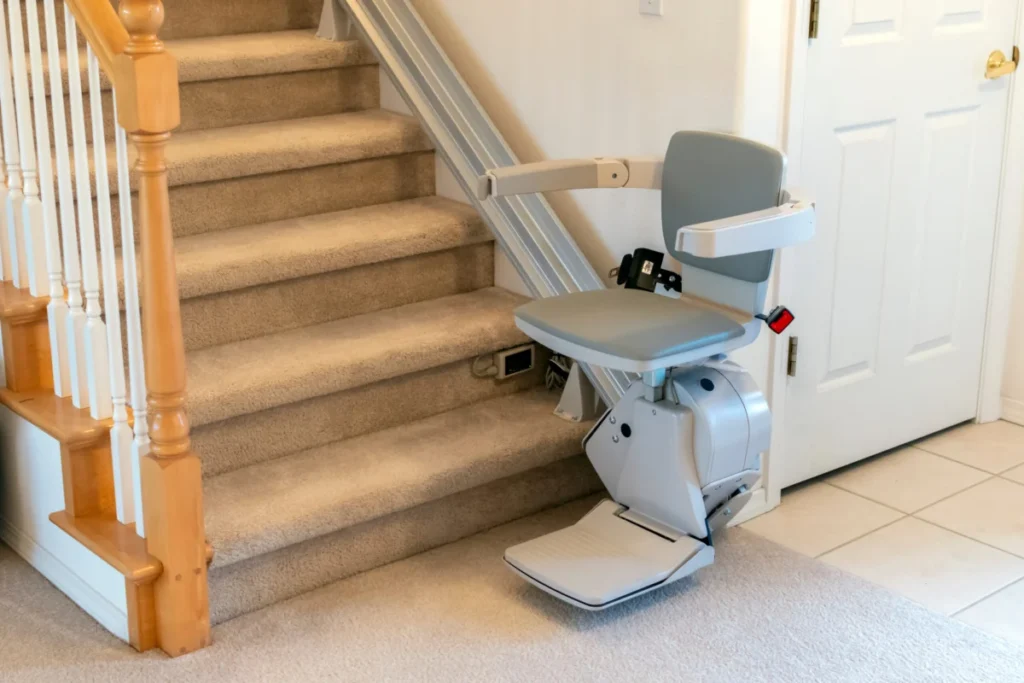
Stair Lifts and Mobility Applications: Consider the design of stair lifts, which transport individuals up and down stairs. These systems prioritize efficiency and, crucially, passenger safety. If a stair lift loses power while in motion, a dedicated brake is essential to quickly and reliably slow and stop the assembly, preventing uncontrolled descent. Once stopped, a self-locking gearbox can then effectively hold the lift in place, ensuring the passenger remains secure until assistance arrives or power is restored. Without a robust braking system, the inertia of the moving carriage and passenger could cause the lift to continue moving, posing a severe risk. Industry standards like EN 81-40 for stairlifts explicitly mandate comprehensive safety mechanisms, including reliable braking systems independent of the primary drive.
-
Rotisserie Ovens: In commercial rotisserie ovens used for roasting meats, safety protocols often dictate that the turning of the meat spits must immediately pause when the oven door is opened to prevent burns or injury to operators. If the spits are unbalanced (e.g., two chickens on one side, none on the other), gravity could continue to turn them even after power is cut. Here, a true brake is indispensable to bring the rotisserie spits to a complete, immediate stop. Only then can the self-locking gearbox reliably hold them in position, safeguarding personnel during loading, unloading, or inspection.

-
Hoists, Cranes, and Lifting Equipment: Perhaps one of the most critical areas where dedicated braking is non-negotiable is in lifting and lowering heavy loads. Hoists, cranes, and winches must be equipped with robust braking systems that can arrest motion immediately upon power loss or operator command, preventing uncontrolled descent of the load. While a worm gear might offer some static holding, the dynamic forces involved in lifting heavy objects necessitate a spring-applied, power-released brake or similar failsafe mechanism to ensure worker safety and prevent property damage. The consequences of misapplying a worm gear’s self-locking property as a dynamic brake in these scenarios are dire, potentially leading to fatal accidents.
-
Robotics and Automation: In many robotic applications, arms or effectors need to hold precise positions against gravity or external forces. While some worm gear-driven joints might offer static holding, the ability to quickly and safely stop a robotic arm mid-motion, especially in collaborative robot applications or those operating near humans, often requires active braking. This is crucial for both operational precision and human safety protocols.
When Backdrivability is Paramount: The Opposite Requirement
While many applications demand robust braking, an equally important consideration for design engineers is backdrivability – the ability for a mechanism to be driven in reverse through the output side. Some designs specifically require axes to be fully backdrivable, often for safety or manual override purposes. The need for low resistance to backdriving is frequently requested in specifications, even if not explicitly termed "backdrivable gearing."

-
Railroad Crossing Gates: These gates have extremely strict requirements for their operation, particularly in the event of a power failure. The primary safety directive is that the gates must fall down and block vehicle traffic. This "fail-safe" position is critical because a power failure also means no other signal will alert drivers of an oncoming train. This function relies on a gearbox that is so easily backdriven that the force of gravity alone on the arm’s weight brings it down into its failsafe position. The design of these gates is deceptively complex; they are often fitted with counterbalances to allow a relatively small, low-power motor to lift the arm, yet still ensure gravity can overcome any resistance to bring it down. A self-locking worm gear would prevent this crucial fail-safe operation, rendering the system unsafe.
-
Parking Barrier Arms: Similar to railroad gates, barrier arms on parking garages often need to be backdrivable. This allows for manual lifting of the gate by an attendant in case of power failure, system malfunction, or if a driver loses their ticket. While some modern systems incorporate electronic overrides, the inherent backdrivability of the electromechanical assembly, including the motor’s gearbox, provides a fundamental layer of reliability and accessibility. If the gate were to remain locked in the raised position during a power outage, it could create significant traffic bottlenecks and safety hazards.
Industry Insights and Best Practices
The confusion surrounding "self-locking" gearmotor behavior is a persistent challenge in the motion control industry. Recognizing this, many manufacturers, including Bodine Electric Co., as highlighted by Terry Auchstetter, actively work to educate their clients and sometimes even deemphasize references to "self-locking" in their general marketing materials to prevent misinterpretation. They instead focus on the gearmotor’s specific performance characteristics and recommend appropriate auxiliary components.

The onus ultimately falls on OEM design engineers to fully understand the implications of their component choices. Best practices dictate a thorough understanding of the application’s dynamic requirements, including:
- Risk Assessment: A comprehensive analysis of potential failure modes and their consequences.
- Regulatory Compliance: Adherence to relevant safety standards (e.g., OSHA, ISO, ANSI, EN) which often mandate specific braking and safety mechanisms for machinery.
- Consultation with Experts: Engaging with gearmotor manufacturers’ application engineers, who possess deep knowledge of their products’ capabilities and limitations. These experts can guide OEMs in selecting the correct combination of gearmotors, brakes, and control systems to meet both performance and safety objectives.
- Dedicated Braking Solutions: For any application requiring dynamic stopping or failsafe holding under load, incorporating a purpose-built brake (e.g., spring-applied, electrically released brakes; electromagnetic brakes) is almost always the safer and more reliable solution.
The broader impact of this understanding extends to cost-effectiveness and long-term reliability. While the initial thought might be to save costs by relying solely on a "self-locking" gear, the potential for accidents, equipment damage, and liability can far outweigh any perceived savings. Investing in the correct braking solution from the outset ensures system integrity, prolongs equipment life, and most importantly, protects human lives. As automation and robotics continue to advance, the need for precise, safe, and reliable motion control components will only grow, making the accurate understanding and application of gearmotor capabilities more critical than ever. The distinction between a gear’s static holding characteristic and a brake’s dynamic stopping power is a foundational principle that must guide every design decision in motion control engineering.






