The rapid integration of Large Language Models (LLMs) into the daily lives of teenagers has prompted a significant shift in the global educational landscape, leading the Raspberry Pi Foundation and Google DeepMind to announce a new strategic partnership. The collaboration has resulted in the release of a specialized unit of research-informed lessons titled "Using LLMs Strategically for Learning," which is now a core component of the Experience AI initiative. This curriculum is specifically designed for students aged 13 to 16, aiming to move beyond the superficial use of AI chatbots and toward a deeper, more metacognitive engagement with generative technology.
The launch comes at a critical juncture for secondary education. As generative AI tools like ChatGPT, Gemini, and Claude become ubiquitous, educators are reporting a surge in "cognitive offloading," a psychological phenomenon where individuals outsource mental tasks to external tools, potentially weakening their own problem-solving and critical thinking capabilities. By providing a structured framework for using these tools, the Raspberry Pi Foundation and Google DeepMind seek to ensure that the next generation of learners uses AI to enhance, rather than replace, their intellectual development.
The Evolution of AI in the Classroom: A Brief Chronology
The journey toward this curriculum began shortly after the public release of advanced generative AI models in late 2022. By 2023, schools worldwide were grappling with the immediate impact on academic integrity, with many initial responses focusing on bans or the use of AI detection software. However, by 2024, a shift in perspective occurred as research from institutions like the Harvard Graduate School of Education (GSE) highlighted that teenagers were not just using AI to "cheat" in the traditional sense, but were turning to chatbots for life advice, complex explanations, and creative brainstorming.
In early 2025, the Experience AI program—a joint venture between the Raspberry Pi Foundation and Google DeepMind—expanded its scope to address the specific mechanics of LLMs. Throughout late 2025 and early 2026, the curriculum underwent rigorous pilot testing across diverse geographic and socio-economic regions, including South Africa, Nigeria, Kenya, India, and the United Kingdom. This international testing phase was crucial in ensuring that the pedagogical strategies were effective across different languages and cultural contexts. The final unit, released in late 2026, represents the culmination of this multi-year research and development cycle, addressing a reality where over half of all teenagers in major economies now regularly utilize AI for their schoolwork.
Addressing the Data: The Reality of Teen AI Usage
The necessity for this new curriculum is underscored by recent longitudinal studies. According to data from Pew Research (2026), the prevalence of AI in the lives of young people has reached a saturation point. The report indicates that in the United States and the United Kingdom, more than 50% of teenagers utilize AI tools for homework assistance. Perhaps more concerning for educators is the finding that one in ten students admits to using chatbots for "most or all" of their academic assignments.

Qualitative data from the Harvard GSE (2024) further reveals the depth of this reliance. Interviews with students show a spectrum of use, from using AI as a sophisticated search engine to allowing it to draft entire essays and book reports. Researchers argue that without intervention, this trend could lead to a decline in "productive struggle"—the necessary mental effort required to master new concepts. When a student receives a structured answer in seconds, they bypass the iterative process of trial and error that is fundamental to neuroplasticity and long-term memory retention.
Research-Informed Pedagogies: Feedback Literacy and Prompting
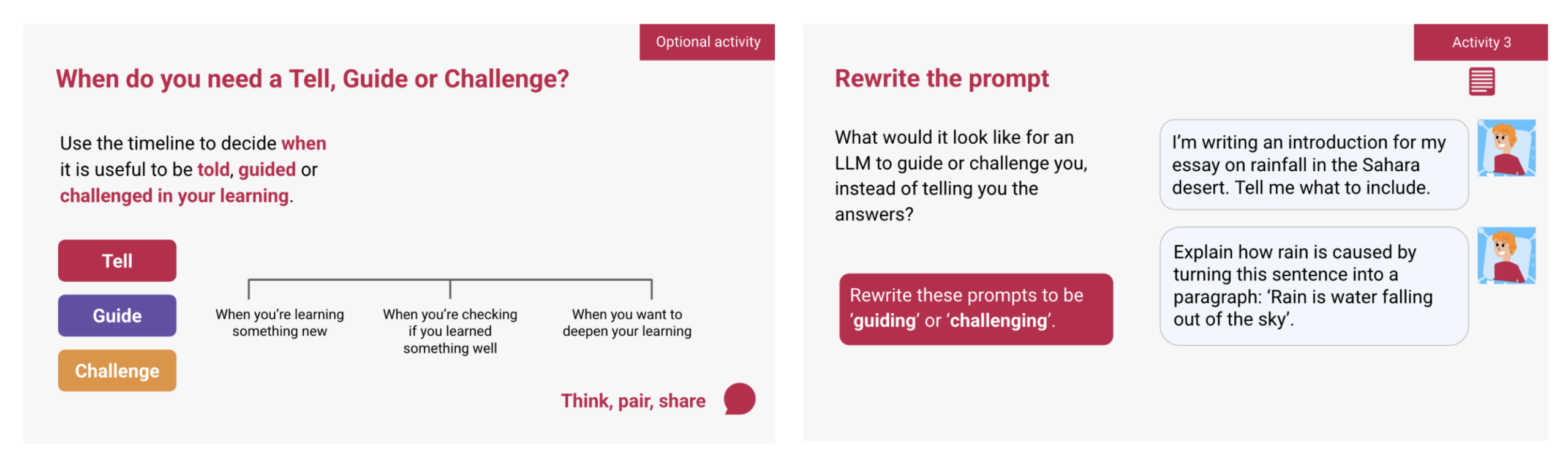
The "Using LLMs Strategically for Learning" unit is built upon several key pillars of learning science. At the forefront is the concept of "feedback literacy." In an educational context, feedback literacy is the ability of a learner to actively interpret, judge, and apply information to improve their performance, rather than simply accepting it as fact. The unit identifies three distinct types of feedback that LLMs can provide:
- Tell: The AI provides the direct answer or completes the task for the user.
- Guide: The AI provides hints, scaffolds the problem, or explains the steps without giving the final answer.
- Challenge: The AI plays the role of a tutor or critic, questioning the user’s logic and forcing them to defend their conclusions.
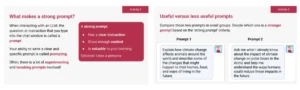
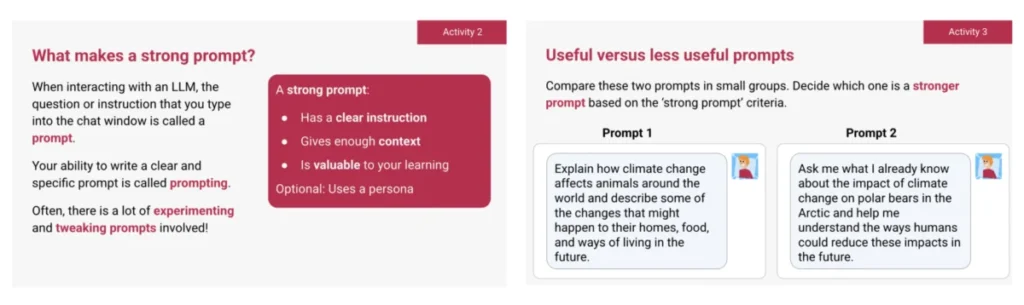
The curriculum teaches students that while LLMs default to the "Tell" format, deep learning requires a strategic shift toward "Guide" and "Challenge." By mastering "learning-centered prompt engineering," students learn to instruct the AI to act as a mentor rather than a ghostwriter. Unlike many industry-standard prompting frameworks that rely on English-language acronyms, this unit utilizes platform-agnostic, descriptive strategies. This approach ensures that the techniques remain effective as AI models evolve and can be easily translated for global audiences without losing their pedagogical value.
Building Metacognition and Future-Ready Skills
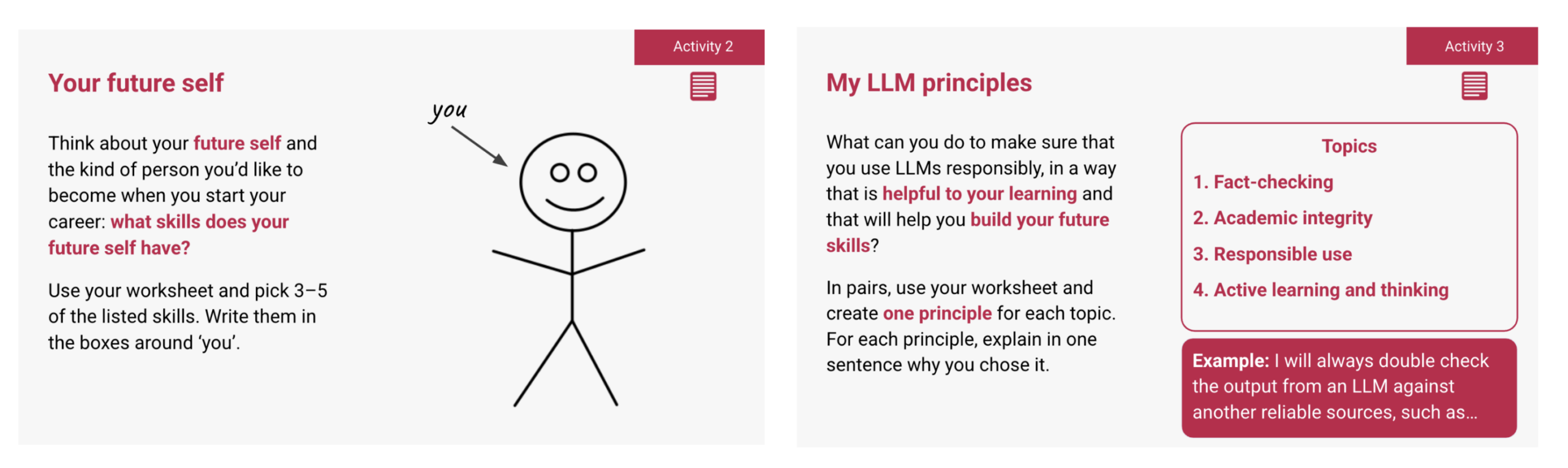
A central goal of the Raspberry Pi Foundation and Google DeepMind is to align AI literacy with the skills identified by the World Economic Forum (WEF) as essential for the future labor market. The WEF’s "New Economy Skills" report (2025) emphasizes that as technical tasks become automated, human-centric skills such as critical thinking, collaboration, creativity, and communication become increasingly valuable.
The new AI unit includes reflective activities where learners assess how their use of LLMs affects their skill development. By analyzing the long-term impacts of cognitive offloading, students are encouraged to make intentional choices. For instance, if a student allows an AI to write every essay, they may lose the "communication" and "creativity" skills required for high-level professional roles. The curriculum fosters metacognition—thinking about one’s own thinking—by asking students to identify which parts of a task they should do themselves to ensure they are actually "getting the learning."
Uncovering Training Data and the Mechanics of Bias
Beyond the practical application of AI tools, the lessons delve into the technical and ethical underpinnings of Large Language Models. A common misconception among young users is that LLMs operate like traditional search engines, pulling verified facts from a central database. In reality, LLMs are probabilistic models trained on vast datasets that include social media platforms like Reddit and Facebook.
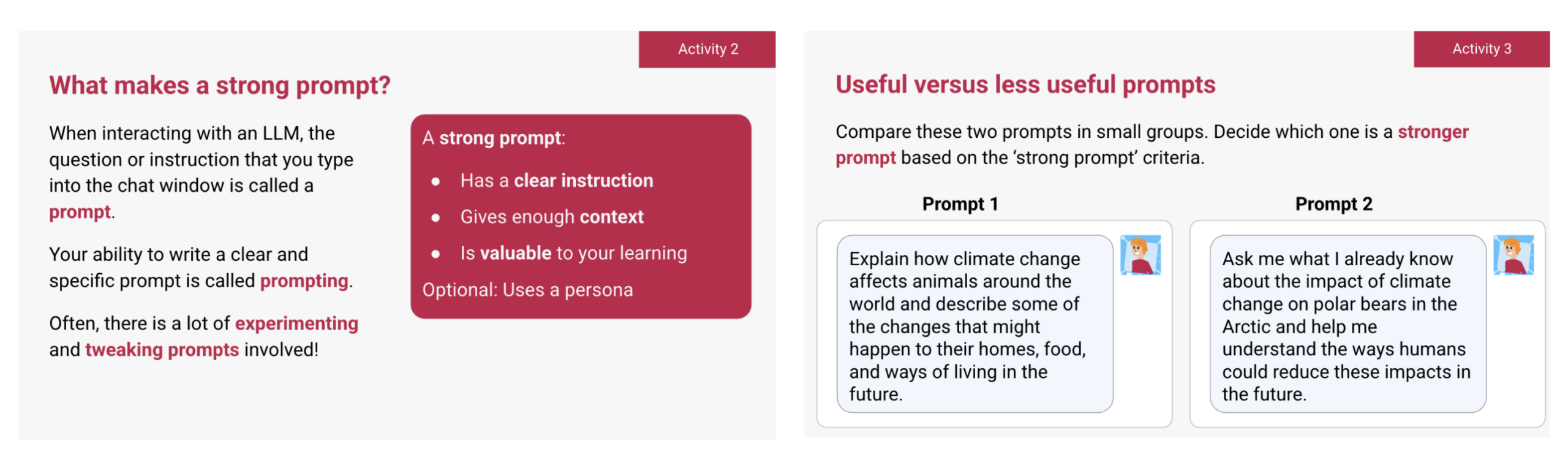
The curriculum includes exercises that require students to question the quality, factuality, and origin of the data that trains these models. Classroom discussions are designed to highlight whose voices, languages, and cultures are represented in the training data—and, more importantly, whose are excluded. By understanding that AI is a reflection of its training data rather than an objective source of truth, students develop a healthy skepticism. This "algorithmic bias" awareness is critical for preventing the uncritical adoption of AI-generated misinformation or cultural stereotypes.
Official Responses and Global Impact
The release of the unit has been met with positive reactions from the international education community. Educators who participated in the pilot programs have noted a marked difference in how students approach AI. "Before these lessons, students saw the chatbot as an ‘answer machine,’" noted one educator from the Nigerian pilot group. "Now, they are starting to see it as a ‘thinking partner.’ The shift from asking ‘What is the answer?’ to ‘Can you help me understand how to find the answer?’ is transformative."
Google DeepMind’s Learning team emphasized that the curriculum is designed to preserve "learner agency." By scaffolding AI use, the lessons ensure that the student remains the primary driver of the intellectual process. The Raspberry Pi Foundation has made the resources available for free via the Experience AI website, ensuring that schools with limited budgets can still provide high-quality AI literacy to their students.
Broader Implications for the Future of Education
The launch of this curriculum represents a broader shift in the philosophy of education in the age of artificial intelligence. It acknowledges that AI is not a passing trend that can be ignored or banned, but a permanent fixture of the modern world. The challenge for 21st-century pedagogy is no longer just teaching students how to find information, but teaching them how to process information that is being generated for them at an unprecedented scale.
As the "Using LLMs Strategically for Learning" unit gains traction, it may serve as a blueprint for future curriculum development. The focus on "productive struggle" suggests that the most successful students of the future will not be those who can use AI the fastest, but those who know when to put the AI aside to do the heavy lifting of thinking for themselves. The mantra of the initiative—"Who does the thinking, gets the learning"—serves as a reminder that in an era of automated intelligence, the human element of education remains the most critical component of all.
By equipping 13- to 16-year-olds with these skills, the Raspberry Pi Foundation and Google DeepMind are not just teaching technology; they are safeguarding the cognitive development of a generation. As AI tools continue to evolve, the ability to remain in control of one’s own learning and skill development will likely be the most important "future-proof" skill a young person can possess.