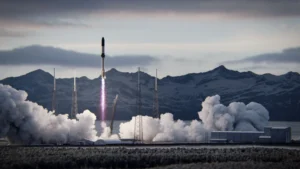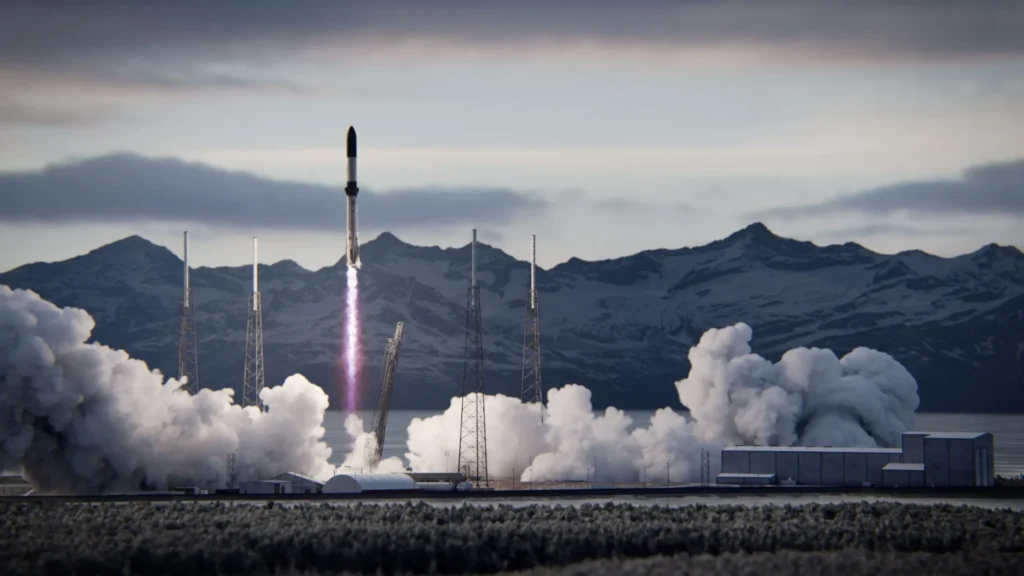
Toronto-based Canada Rocket Company (CRC) is poised to enter a pivotal phase of its development, with plans for hot-fire testing of engine components for its R-2 rocket slated for later this year. This milestone marks a significant step in CRC’s ambition to contribute to Canada’s burgeoning domestic launch capabilities, a strategic initiative bolstered by substantial government investment. The company is aiming for a medium-lift rocket, capable of delivering payloads up to 15,000 kilograms to low-Earth orbit.
CRC is one of three Canadian startups that collectively received $8.3 million in government funding earlier this year to advance their launch vehicle development. This funding underscores a national commitment to establishing an independent capacity for space access, a critical element for national security, scientific advancement, and economic competitiveness in the increasingly vital space sector. The other recipients, Nordspace of the Toronto area and Reaction Dynamics of the Montreal area, are focusing on small-lift designs with capacities under 1,100 kg. Nordspace, however, has also articulated plans for a larger rocket, targeting a 5,000 to 10,000 kg payload range.
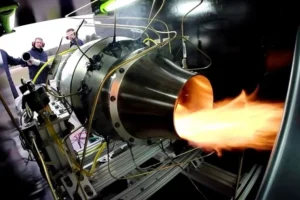
The initial CRC test, scheduled for December, will concentrate on a gas generator crucial for turbine ignition, as confirmed by CEO and co-founder Hugh Kolias. "We’ll be hot-firing that generator at our test facility in December of this year," Kolias stated in an interview. "That really kicks off the beginning of our core test and development cycle for our engine that will extend to about 2028, when we should have a fully assembled engine with turbopump ready for hot fire. And then we’re looking at about a 2032 launch attempt." This timeline positions CRC’s R-2 as a potential player in the medium-lift market within the next decade.
A Strategic National Investment in Space Access
The federal government’s support for CRC and its counterparts is part of a broader strategy to enhance Canada’s presence in space. Beyond direct funding for launch vehicle development, the Department of National Defence announced in March a significant allocation of $200 million towards the development of a spaceport on the Atlantic coast of Nova Scotia. This facility is currently under construction, signifying a tangible commitment to providing the necessary infrastructure for domestic launches.
An official announcement regarding the spaceport highlighted the strategic imperative: "With military, emergency response, and government services increasingly dependent on space-based systems, sovereign launch protects national interests and enables continuity of operations." This statement underscores the recognition within governmental circles that independent access to space is no longer a luxury but a necessity for national security and the reliable functioning of critical public services.
R-2: Design and Propellant Choices
The R-2 rocket, CRC’s flagship project, is designed to be powered by nine engines utilizing methalox – a propellant combination of liquid methane and liquid oxygen. This choice aligns CRC with leading global players in the space industry. SpaceX’s Starship, Blue Origin’s New Glenn, and Rocket Lab’s Neutron launchers all employ methalox for their first stages. This fuel choice is often favored for its potential for reusability, cost-effectiveness, and environmental benefits compared to traditional kerosene-based propellants.
The structural integrity of the R-2 is planned to be largely composed of an aluminum-lithium alloy. This advanced material is renowned for its high strength-to-weight ratio, a critical factor in rocket design where minimizing mass is paramount to maximizing payload capacity. SpaceX also utilizes this alloy for its Falcon 9 boosters, indicating a shared engineering philosophy focused on performance and efficiency.
Funding and Expansion Plans
CRC has already secured $22 million in funding, a figure that includes the recent government investment. However, the company’s ambitious development roadmap necessitates further capital. CRC aims to raise an additional $650 million over the next few years to support its ongoing testing and manufacturing expansion. To facilitate the critical December hot-fire test and subsequent testing phases, CRC is reportedly building the necessary facility this fall.
Looking beyond immediate testing needs, CRC is also evaluating the acquisition of a substantial 500,000-square-foot (46,450-square-meter) facility dedicated to the manufacturing of R-2 rockets. The strategic location of this potential manufacturing site is a key consideration, with Kolias emphasizing that it "needs to be near water." This requirement stems from the logistical plan to transport the assembled rockets via barge to the Atlantic launch site in Nova Scotia, highlighting the integrated approach to Canada’s emerging space ecosystem.
Market Dynamics and the Falcon 9 Factor
CRC’s strategic planning is significantly influenced by current and projected market demand for satellite launches. The company’s research indicates a substantial gap between the demand for launches and the available rocket capacity. This situation is exacerbated by SpaceX’s stated intention to phase out its highly successful Falcon 9 rocket. Elon Musk, SpaceX founder, posted on X in August that Falcon operations would be "winding down" once Starship is operational multiple times a week.
A CRC spokesperson elaborated on this market assessment via email: "We have found that about 80% of satellite launch demand is currently without a contracted ride to orbit, and CRC expects that number to rise." This statistic underscores the urgency and opportunity for new launch providers to enter the market. The potential retirement of Falcon 9, a workhorse of the commercial launch industry for over a decade, could create a significant void, particularly in the medium-lift category where CRC is positioning itself.
Expert Analysis: Filling the Launch Gap
Industry analysts concur that the demand for medium-lift launchers is on the rise, and the potential retirement of Falcon 9 presents a significant industry challenge. Chris Quilty, a Florida-based space business analyst, commented on the evolving landscape: "It’s unclear what will fill the gap. SpaceX took 83% of global mass to market in 2025, and they are switching over to Starship, but it is unlikely they will make Starship available to commercial customers for two to three years while they focus on their own needs, such as launching Starlink or orbital data centers and government launches, such as those for NASA’s Artemis moon program."
Quilty further noted that while Blue Origin’s New Glenn is a contender in the heavy-lift category, the medium and small-lift segments are seeing intense competition. "To fill the gap, Blue Origin’s New Glenn is the only contender in the heavy-lift category, while there are a dozen small, medium and heavy launch vehicles racing to begin operations," he stated. This indicates that while the market is ripe for new entrants, the path to market is competitive.
However, not all analysts are convinced that SpaceX will completely retire the Falcon 9 in the near future. Liang Sim, a space analyst with Michigan consultancy AeroDynamic Advisory, offered a contrasting perspective: "It would be silly to retire what is one of the biggest cash cows." The Falcon 9 has proven to be an exceptionally reliable and profitable launch vehicle, and its continued operation, perhaps in a reduced capacity, could influence the timeline for new providers to capture market share.
Canada’s Launch Cadence and Future Outlook
While the Canadian government has not publicly specified its desired launch cadence, Kolias anticipates that CRC and other domestic providers could collectively conduct up to a dozen launches annually by the 2030s. This projection suggests a measured but significant growth in Canada’s space launch activity, driven by both commercial demand and national strategic objectives.
The development of CRC’s R-2, alongside the efforts of Nordspace and Reaction Dynamics, signifies a concerted push by Canada to carve out a distinct niche in the global space launch market. The combination of government funding, strategic infrastructure development in Nova Scotia, and the ambition of private companies like CRC points towards a future where Canada plays a more prominent role in accessing space, from the ground up. The coming years, marked by critical testing and ongoing fundraising, will be crucial in determining the success of these endeavors and Canada’s trajectory in the new space age.