
The Raspberry Pi Foundation, a global leader in computing education, has officially unveiled a comprehensive set of eight guiding principles designed to govern the development and deployment of educational technology (edtech). This initiative comes at a critical juncture for the technology sector, as public scrutiny intensifies regarding the impact of digital platforms on the mental health, privacy, and cognitive development of young people. By formalizing these commitments, the Foundation seeks to address the growing "trust deficit" in the tech industry while providing a scalable model for responsible innovation that prioritizes the wellbeing of children over commercial growth metrics.
The announcement follows a period of significant shifts in global public policy. Governments worldwide are increasingly intervening to mitigate the perceived harms of digital environments, with UNESCO reporting an uptick in school-based smartphone bans and several nations proposing age-restricted access to social media. Against this backdrop, the Raspberry Pi Foundation’s new framework represents a proactive attempt by a major tech entity to align its operations with international human rights standards, specifically the United Nations General Comment No. 25 on children’s rights in the digital environment.
Contextual Background: The Crisis of Trust in Digital Spaces
For over a decade, the narrative surrounding technology in education was primarily focused on "disruption" and rapid expansion. However, a growing body of longitudinal research has begun to highlight the unintended consequences of this growth. Studies have linked prolonged exposure to algorithmic platforms and high-frequency social media use to declining attention spans and increased rates of anxiety among adolescents.
In response to these trends, the Raspberry Pi Foundation has argued that technology is not a neutral force. The organization posits that design choices—such as the use of "infinite scrolls," push notifications, and data-intensive tracking—are active decisions that can either support or undermine a child’s development. The Foundation’s move to codify its ethical stance is an acknowledgment that the industry can no longer operate under the assumption of inherent benefit. Instead, edtech providers must prove their positive impact through transparent, evidence-led practices.
Chronology of the Framework’s Development
The path to these eight principles was not an overnight development but the result of years of interdisciplinary research and collaboration.
- The Foundation of Digital Rights (2021): The United Nations Committee on the Rights of the Child published General Comment No. 25. This landmark document clarified that the rights of children—including protection from exploitation and the right to play—apply fully to the digital world. This served as the primary legal and ethical catalyst for the Raspberry Pi Foundation’s internal review.
- Integration of Global Frameworks (2022–2023): The Foundation began synthesizing existing research from various international bodies. Key influences included UNICEF’s "Responsible Innovation in Technology for Children" (RITE) framework and the "EdTech for Good Framework 1.0." These documents provided the pedagogical and technical basis for what would become the Foundation’s core principles.
- Drafting and Stakeholder Engagement (Early 2024): Preliminary versions of the principles were developed by internal teams, led by senior figures including Laura Kirsop. The drafting process involved evaluating current products, such as the Raspberry Pi Code Editor, against hypothetical "worst-case" scenarios to identify vulnerabilities in child safety and data privacy.
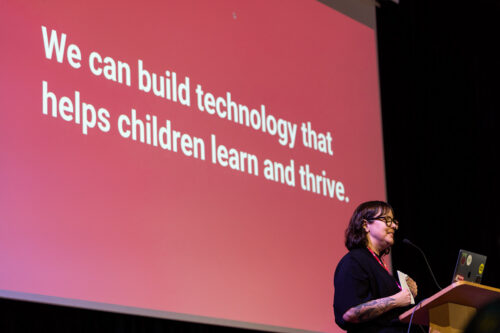
- Public Unveiling (July 2024): The draft principles were presented at the Raspberry Fields summit in Cambridge. This event marked the transition from internal policy to public commitment, inviting feedback from a global community of researchers, educators, and policymakers.
The Eight Principles: A Detailed Breakdown
The framework is structured around eight core pillars, each designed to address a specific challenge in the modern edtech landscape.
1. Prioritizing the Best Interests of the Child
The Foundation asserts that the wellbeing of the child must take precedence over traditional business KPIs such as user growth, engagement time, or speed of deployment. This principle extends beyond basic physical safety to encompass emotional health, agency, and the "right to be forgotten."
2. Supporting Human Relationships
In an era increasingly dominated by automated instruction and generative AI, this principle emphasizes that technology should serve as a bridge, not a barrier. The Foundation commits to building tools that strengthen the bond between students, teachers, and parents, ensuring that machines do not make autonomous decisions regarding a child’s educational trajectory.
3. Minimal Data Collection and Privacy by Design
Perhaps the most significant technical commitment is the pledge to collect only the minimum data necessary for learning. Statistics cited by the 5Rights Foundation indicate that by the age of 13, a child in a digitally developed nation will have had over 72 million pieces of personal data collected about them. The Raspberry Pi Foundation has pledged never to sell user data and to strictly limit data retention to functional and impact-measurement purposes.
4. Evidence-Led Design and Impact Verification
The Foundation intends to combat "addictive design" by grounding its products in cognitive science. This means avoiding features that trigger dopamine loops (common in gamified apps) and instead focusing on designs that facilitate deep concentration and problem-solving.
5. Co-Design with Educators and Children
Moving away from top-down development, the fifth principle mandates the involvement of end-users—children and teachers—in the research and testing phases. This ensures that the technology addresses real-world classroom needs rather than perceived market gaps.
6. Accessibility and Inclusivity
Recognizing the "digital divide," the Foundation’s technology is designed to be resilient in various contexts. This includes building for low-bandwidth environments and ensuring compatibility for users with diverse physical and cognitive abilities, acknowledging that a "standard" classroom environment does not exist globally.
7. Transparency and Accountability
The framework demands that all systems be "legible" to the user. This involves using plain language to explain data usage and providing clear mechanisms for users to challenge or question algorithmic decisions.
8. Universal High Standards
In a globalized market, many tech firms vary their safety standards based on local regulations. The Raspberry Pi Foundation has committed to applying the highest international standards—such as the UK’s Age Appropriate Design Code or the EU’s GDPR—to all its operations worldwide, regardless of whether local laws require them.
Supporting Data: The Magnitude of the Digital Footprint
The urgency of this framework is underscored by recent data regarding children’s digital lives. According to the 5Rights Foundation and the Digital Futures Commission, the "datafication" of childhood begins often before birth and accelerates through the use of educational platforms. Many edtech tools used in schools have historically lacked the rigorous privacy protections found in other sectors.
Furthermore, UNESCO’s 2023 Global Education Monitoring Report highlighted that while technology can support learning, its benefits disappear if it is used excessively or without pedagogical oversight. The report noted that "the mere presence of technology in the classroom can be a distraction," a finding that the Raspberry Pi Foundation’s fourth principle—focusing on impact over "hooked" engagement—directly addresses.
Official Responses and Industry Implications
The initiative has garnered support from various sectors of the non-profit and educational communities. While commercial competitors have often been slow to adopt such restrictive principles due to pressure from shareholders, the Raspberry Pi Foundation’s status as a UK-based charity allows it to prioritize social impact.
"We are not claiming to be perfect," a spokesperson for the Foundation stated during the framework’s release. "This is a statement of intent. As regulation changes and as we learn more from the research, these principles will evolve. Our goal is to build a coalition of like-minded organizations to raise the bar for the entire sector."
Industry analysts suggest that this move could trigger a "race to the top" in the edtech market. As schools and governments become more discerning about the tools they procure, organizations that can demonstrate a "child rights by design" approach may gain a competitive advantage over those that prioritize data harvesting.
Analysis of Broader Impact and Future Outlook
The Raspberry Pi Foundation’s eight principles represent a shift from "reactive" to "proactive" ethics. Historically, tech companies have waited for legislation—such as the UK’s Online Safety Act—to force changes in their product design. By establishing these principles now, the Foundation is setting a precedent for "Responsible Innovation."
However, the implementation of these principles is not without challenges. Adhering to "Universal High Standards" (Principle 8) in regions with limited infrastructure or different legal frameworks requires significant resource investment. Furthermore, the commitment to "Minimal Data Collection" (Principle 3) can make it more difficult to provide the highly personalized learning experiences that many modern educators demand.
Despite these hurdles, the Foundation’s approach addresses a fundamental truth of the 21st century: children are no longer just "using" the internet; they are "living" in it. By treating digital spaces with the same level of safety and ethical rigor as physical playgrounds or classrooms, the Raspberry Pi Foundation is advocating for a future where technology empowers the next generation without compromising their privacy or mental wellbeing.
The Foundation has now opened a call for feedback, inviting researchers, parents, and policymakers to critique the draft principles. This transparent "open-source" approach to policy-making mirrors the organization’s history in hardware and software development, suggesting that the final version of these principles will be a collaborative effort aimed at safeguarding the digital future of millions of young learners.