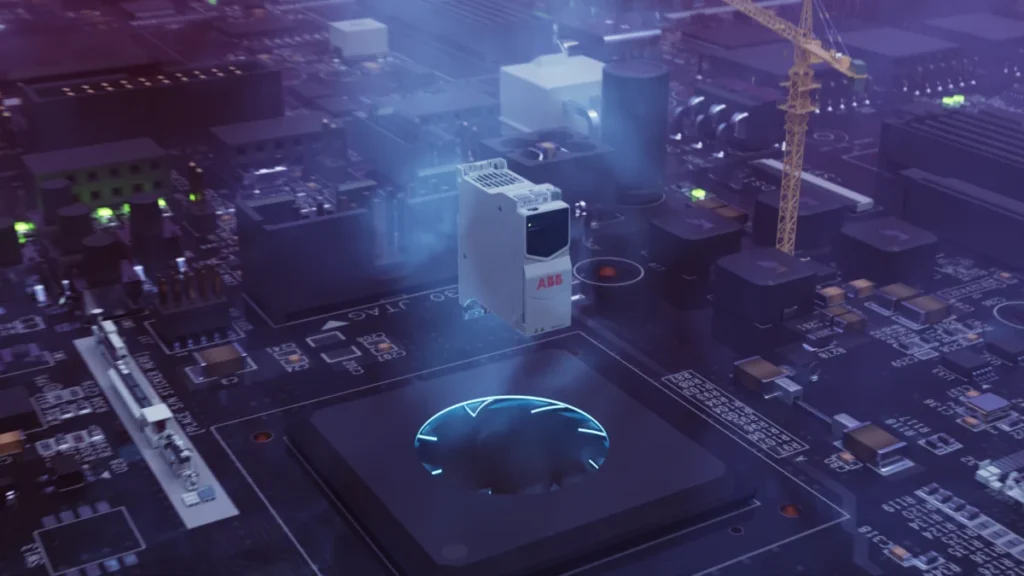
Global circularity has alarmingly slipped to 6.9%, a stark indicator that industries worldwide are consuming finite resources at a pace significantly faster than their natural recuperation or recycling rates allow. This critical imbalance poses profound environmental and economic challenges, demanding urgent reevaluation of industrial practices and technological solutions. In this context, the role of efficient motor drives emerges as a pivotal strategy to mitigate resource depletion and help bridge this widening circularity gap, particularly within the energy-intensive industrial sector.
The urgency of this situation is underscored by the most recent Circularity Gap Report, an authoritative annual assessment produced by Circle Economy. This report serves as a global barometer for the transition from a linear "take-make-dispose" economy to a circular model, providing crucial insights into material flows, consumption patterns, and their environmental consequences. The 2024 report (or 2025, as referenced in the original article’s implied future context) has consistently highlighted not only today’s pressing environmental challenges but also the structural impediments faced by companies striving for sustainable operations. For industries navigating this complex landscape, long-term competitiveness is inextricably linked to their capacity to innovate – designing industrial assets that inherently consume fewer resources, boast extended operational lifetimes, and meticulously preserve critical raw materials (CRMs) upon which modern technologies are increasingly reliant.
The Foundational Role of Variable Frequency Drives in a Circular Economy
For manufacturers and operators responsible for supplying or operating motor-driven automation systems, Variable Frequency Drives (VFDs) represent more than just components; they are long-life infrastructure assets. These sophisticated devices, which control the speed and torque of AC motors by varying the frequency and voltage of their power supply, fundamentally shape a system’s energy consumption, operational uptime, and the volume of waste generated over decades of continuous use. Given their integral role in industrial processes globally, the design, deployment, and end-of-life management of VFDs carry significant weight in the pursuit of circularity.
Traditionally, the definition of "premium" in industrial equipment, including VFDs, has often been narrowly confined to factors such as initial purchase price, peak efficiency ratings, and immediate performance metrics. However, the pressing realities of resource scarcity, climate change, and evolving regulatory landscapes necessitate a profound shift in this paradigm. Anne Franzas, Global Product Manager for Circularity at ABB, a leader in electrification and automation technologies, emphasizes this evolving perspective: "Premium should mean efficiency, long operating life, high reliability, low CRM demand, upgradeability, and recoverability at end of life." This statement encapsulates a holistic view where true value extends far beyond upfront costs, encompassing the entire lifecycle impact of an asset.
Beyond Efficiency: A Holistic Redefinition of Premium

The modern understanding of a "premium" VFD must therefore evolve to embrace a broader spectrum of attributes. It must inherently include exceptional durability, unwavering reliability, a design philosophy rooted in material efficiency, and crucially, the inherent ability to retain value and functionality throughout multiple lifecycle stages. This redefinition aligns with the core tenets of the circular economy, moving away from a linear model where products are designed for obsolescence, towards one where they are conceived for longevity, adaptability, and eventual regeneration.
Circularity, often mistakenly perceived as a consideration solely relevant at a product’s end-of-life, actually commences much earlier in the value chain. For industrial drives, this journey begins at the very earliest stages of design, material selection, and the engineering of their intended operating life. The preservation and efficient utilization of Critical Raw Materials (CRMs) have ascended to a central strategic priority for industries worldwide. CRMs, essential for a vast array of high-tech applications including electronics, renewable energy technologies, and defense, face increasing demand and geopolitical supply risks. This necessitates that equipment, especially complex electronics like VFDs, be designed with a minimized dependency on scarce resources, engineered for significantly longer lifetimes, optimized for higher recoverability of components and materials, and equipped with clear traceability mechanisms throughout their lifecycle.
For drive manufacturers, this strategic imperative translates into a series of concrete design and operational commitments:
- Reduced Material Footprint: Actively seeking to minimize the total volume and diversity of materials used, particularly CRMs, through intelligent design and material substitution.
- Extended Lifespan and Reliability: Engineering for maximum operational durability, reducing the frequency of replacements and the associated resource consumption.
- Modularity and Upgradeability: Designing VFDs with modular architectures that allow for component replacement, upgrades, or refurbishment, extending the overall useful life of the core unit.
- Enhanced Reparability and Maintainability: Ensuring that products are easily repairable, facilitating component-level servicing rather than full unit replacement.
- Design for Disassembly and Recycling: Planning for the efficient dismantling and separation of materials at end-of-life, maximizing the recovery of valuable components and raw materials.
- Transparency and Traceability: Implementing robust systems to track material origins, manufacturing processes, and product lifecycles to enable effective circularity strategies.
Therefore, reliability, traditionally an engineering target focused on operational uptime, now simultaneously functions as a fundamental resource-conservation strategy. A drive that performs reliably for longer directly reduces the need for new material inputs and minimizes waste.
Material Efficiency: The Unseen Savings
A significant part of the circularity approach involves the judicious use of fewer materials. Every kilogram of avoided material in manufacturing and every kilowatt-hour saved over a drive’s extensive operating life directly contributes to the preservation of non-renewable resources and aids in achieving ambitious climate goals. Recent redesign efforts by some leading suppliers exemplify this principle, showcasing how innovative modularity and lightweight construction techniques can substantially reduce overall material demand. These design advancements also often bring ancillary benefits, such as boosting installation flexibility and simplifying logistics, further enhancing their appeal.
Companies like ABB, through their rigorous quality and reliability testing, including advanced facilities such as their Helsinki laboratory, are at the forefront of this material-efficient design revolution. Their engineers meticulously investigate the mechanisms of component degradation using sophisticated techniques like electron microscopy, accelerated aging tests, and exposure to extreme vibration and corrosive environments. This deep understanding of material science and failure modes directly informs design work, ensuring that VFDs are engineered to last as long as possible. By extending product lifespans through superior design and materials, the pressure on critical raw material supply chains is alleviated, and the embedded energy and resources in each unit are maximized.

Energy Efficiency: The Most Potent Circularity Lever
While material efficiency is crucial, the single biggest circularity impact stemming from VFDs comes from their unparalleled energy efficiency. Globally, a substantial proportion of industrial motors, estimated to be over 40% of the world’s electricity consumption, still operate "direct-on-line" (DOL). This means they run at full speed regardless of the actual load conditions, with mechanical throttling often used to adjust output, a notoriously inefficient method. This prevalence of DOL operation represents one of the largest untapped opportunities for industrial decarbonization and energy savings worldwide.
The adoption of speed control through VFDs can drastically reduce a motor’s energy consumption, with potential savings ranging from 25% to an impressive 70%, depending on the application and load profile. Beyond mere energy conservation, VFDs offer a multitude of operational advantages: they boost process yield by enabling precise control, reduce wear and tear on mechanical systems by eliminating harsh starts and stops, and significantly avoid unnecessary electricity use by matching motor speed precisely to demand. Increasing the adoption rates of VFDs across diverse industries is, therefore, one of the most effective and immediate ways to reduce the total lifecycle material and energy consumption footprint of industrial operations.
Beyond Ratings: Long-Term Performance and Adaptability
However, as the article aptly points out, efficiency ratings alone only tell a part of the story. A truly premium drive, in the context of the circular economy, must perform reliably over an extended duration, effectively delaying replacement cycles and minimizing costly downtime. This long-term reliability directly lessens the strain on critical raw material supply chains, embodying the core principle of circular design: using less, for longer.
Furthermore, VFDs must be designed with inherent adaptability to remain relevant in a rapidly evolving industrial landscape. Customer requirements, digital ecosystems, and regulatory expectations are in constant flux. Modular, forward- and backward-compatible architecture in VFDs becomes crucial here. Such designs reduce the necessity for complete system replacements, allowing core, CRM-intensive components to remain in productive use even as surrounding technologies or operational needs change. This approach extends the economic and functional life of the investment, enhancing circularity.
Practical examples of this adaptability include upgradable electronics and cooling modules, which can be swapped out for newer, more efficient versions without discarding the entire drive. Similarly, firmware-based performance enhancements can extend the usefulness and capabilities of existing units, improving efficiency or adding new functionalities without consuming new materials. Digital diagnostics play a vital role in this extended lifecycle management, preventing premature replacement by accurately identifying issues, optimizing maintenance schedules to avoid unnecessary spare-parts usage driven by fixed service intervals, and predicting potential failures before they lead to costly downtime.

Closing the Loop: End-of-Life Strategies
Even with the longest possible operational life, every industrial asset eventually reaches its end-of-life. In a linear economy, this typically means disposal. In a circular economy, it signals an opportunity for resource recovery. When the time comes for VFDs, the materials and components from end-of-life units must be systematically reclaimed and reintroduced into the manufacturing stream through robust takeback and remanufacturing programs. This ensures that their significant technical and material value is not squandered in waste streams but instead preserved and recirculated, closing the material loop. This requires collaboration between manufacturers, users, and specialized recycling or remanufacturing facilities.
Broader Implications: Economic, Environmental, and Strategic Imperatives
The rethinking of "premium" in industrial drives, moving beyond mere initial cost and efficiency to embrace comprehensive circularity, carries profound implications across multiple dimensions:
- Economic Implications: For businesses, adopting circular VFDs translates into substantial long-term cost savings through reduced energy consumption, extended asset lifespans, lower maintenance costs, and minimized waste disposal fees. It also enhances supply chain resilience by reducing dependency on volatile CRM markets and positions companies favorably for future regulatory compliance and ESG reporting.
- Environmental Implications: The environmental benefits are immense. Reduced energy consumption directly contributes to lower greenhouse gas emissions, aiding in climate change mitigation. Minimized material use and increased recycling significantly reduce resource depletion, habitat destruction associated with mining, and the environmental burden of waste.
- Strategic Imperatives: For nations and industries, embracing circularity in industrial drives is a strategic imperative. It fosters innovation, creates new economic opportunities in remanufacturing and services, and enhances energy security. Companies that lead this transition will gain a competitive edge, demonstrating leadership in sustainability and attracting environmentally conscious investors and customers.
Conclusion: A Leaner, Cleaner, and More Profitable Future
In the decade ahead, the question is not merely "how" to rethink premium, but "why" it is absolutely essential. Industrial drives and motors are formidable levers for global change, converting more than 40% of global electricity into motion. Their collective ability to accelerate the green transition is enormous, but this potential can only be fully realized if two critical conditions are met: firstly, if their adoption dramatically increases in the currently under-automated Direct-On-Line (DOL) applications; and secondly, if the drives themselves are meticulously engineered for circular material flows throughout their entire lifecycle.
This dual approach — maximizing energy efficiency through widespread VFD adoption and ensuring the circularity of VFDs themselves — offers a compelling pathway for end-users to simultaneously boost operational performance and profitability while creating a leaner, cleaner, and more resilient industrial landscape. The redefinition of premium for industrial drives is not just a technological upgrade; it is a fundamental shift towards a sustainable future where economic growth and environmental stewardship are intrinsically linked. This holistic perspective is crucial for navigating the challenges of resource scarcity and climate change, paving the way for a truly sustainable industrial era.






