A groundbreaking startup, Reflect Orbital, is poised to revolutionize our relationship with the sun by developing technology that could deliver sunlight on demand, even after sunset. The company is preparing for its first in-space demonstration of mirror satellites designed to reflect solar energy back to Earth, potentially illuminating disaster zones, boosting solar power generation, or even creating unique nighttime events. This ambitious project, which has already secured regulatory approval and a significant award from the U.S. Air Force, faces both technical hurdles and ethical considerations, particularly regarding its impact on astronomical observation and the environment.
The Vision: Sunlight on Demand
The core concept behind Reflect Orbital’s innovation is deceptively simple yet technically complex: using satellites equipped with large, ultra-thin mirrors to redirect sunlight to specific locations on Earth. This "sunshine as a service" model aims to overcome the inherent limitations of solar energy – its intermittency due to the Earth’s rotation. Imagine solar farms able to extend their operational hours into the night, or search and rescue teams having powerful, readily available illumination for critical operations in remote or dark environments. These are the scenarios Reflect Orbital envisions.
"The sun is the most powerful resource in the solar system," stated Ben Nowack, CEO of Reflect Orbital. "And we currently have no control over where and when it shines, so we’re trying to do that." This ambition underscores a fundamental challenge in harnessing renewable energy and addressing immediate human needs during periods of darkness.
The First Step: Eärendil-1 Takes Flight
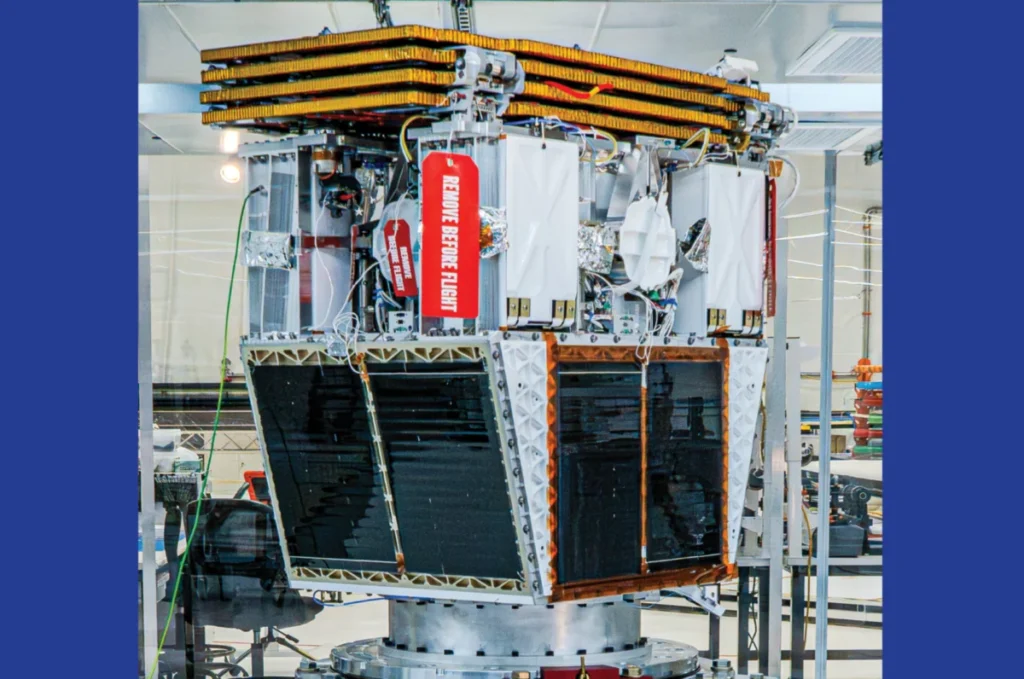
The initial phase of this grand vision will unfold later this year with the launch of Eärendil-1, Reflect Orbital’s first prototype mirror satellite. The launch vehicle will be a SpaceX Falcon 9 rocket, carrying a satellite roughly twice the size of a microwave oven. This compact spacecraft will house an array of extremely thin and highly reflective panels.
Reflect Orbital, headquartered in Los Angeles, has kept the specifics of the rideshare mission and the exact launch date under wraps. However, the company did announce that it received a license from the Federal Communications Commission (FCC) for Eärendil-1 on July 9th. This FCC approval is a critical milestone, signaling regulatory compliance and paving the way for the satellite’s deployment and operation.
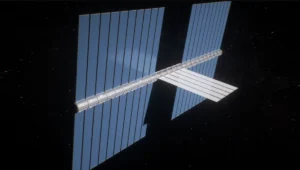
Eärendil-1 is destined for a low-Earth orbit at an altitude of approximately 500 kilometers. Once in position, the 134-kilogram satellite will deploy its solar array, consisting of four triangular reflector panels. When fully unfurled, these panels are designed to form an impressive 18-meter square, creating a significant reflective surface.
Following deployment and a thorough checkout period, Nowack explained that the satellite would ascend to an operational altitude of 650 kilometers. It is at this higher vantage point that the crucial demonstration phase will commence.
The Demonstration: A Glimpse of Nighttime Sunshine
During the planned demonstrations, ground operators will meticulously maneuver Eärendil-1 to precisely orient its mirror panels. The objective is to reflect sunlight towards a designated target location on Earth for approximately five minutes. The anticipated illumination intensity is described as being "about the brightness of a full moon," capable of covering a 24-square-kilometer area.
While Nowack declined to reveal the specific locations for these initial demonstrations, he indicated they are being conducted in coordination with "dozens" of entities that are considering purchasing Reflect Orbital’s future services. This suggests a strong market interest and a deliberate effort to tailor the technology to potential clients’ needs.
Potential Applications: A Spectrum of Uses
The potential applications for this technology are remarkably diverse, spanning commercial, humanitarian, and even defense sectors.
- Solar Energy Enhancement: The most immediate and perhaps economically significant application lies in augmenting solar power generation. By reflecting sunlight onto solar farms during nighttime hours, Reflect Orbital could effectively extend their operational capacity, increasing energy output and potentially reducing reliance on grid power storage solutions. This could be a game-changer for the renewable energy industry, addressing a key limitation of solar power.
- Emergency Response and Search & Rescue: In disaster scenarios, where power grids may be down and natural light is absent, the ability to provide targeted, high-intensity illumination could be invaluable. Search and rescue teams could utilize this "on-demand sunshine" to extend their operational windows, locate missing persons more effectively, and conduct vital tasks in challenging conditions.
- Event and Entertainment: The prospect of illuminating large outdoor events, festivals, or even sporting competitions with a controlled beam of light could offer unique creative possibilities for organizers and enhance the attendee experience.
- Military Applications: Reflect Orbital also acknowledges potential military uses, such as providing powerful illumination for helicopter searchlights or acting as an artillery flare. These applications highlight the versatile nature of controlled light projection.
The Technology: Engineering Precision
The success of Reflect Orbital’s mission hinges on two key technological components: the ultra-thin, highly efficient mirrors and the sophisticated control systems that orient them.
The reflector panels themselves are a marvel of engineering. Designed by Reflect Orbital, they feature an aluminum front surface for maximum reflectivity and a space-grade plastic backing for structural integrity and light weight. Each panel weighs a mere 500 grams and is astonishingly thin, measuring only 15,000 atoms in thickness – significantly thinner than a human hair. Nowack described them as being "just like a bathroom mirror," but with enhanced efficiency and shininess. "It’s not new physics, but it’s new engineering," he emphasized, highlighting the innovation in material science and manufacturing.
To achieve the precise pointing accuracy required for targeted illumination, Eärendil-1 is equipped with what Nowack described as "massively oversized" reaction wheels. These wheels, typically found in much larger spacecraft weighing around 650 kilograms, are essential for attitude control. By spinning these wheels, the satellite can change its orientation without expending propellant, allowing for fine-tuned adjustments to the angle of reflection. According to the company’s FCC filings, Eärendil-1 will utilize three such reaction wheels.
Complementing the hardware is proprietary software developed by Reflect Orbital. This software is designed not only to stabilize the reflections but also to ensure that the projected light is kept away from sensitive areas, such as designated dark sky parks or astronomical observatories, a crucial consideration given the potential for light pollution.
Funding and Development: A Phased Approach
Reflect Orbital is primarily self-funding the upcoming demonstration mission. However, the company has received a significant boost in the form of a $1.25 million award from the U.S. Air Force in 2025. This award signifies governmental recognition of the technology’s potential value.
The prototype satellite, Eärendil-1, cost approximately $2 million to build. Looking ahead, the company estimates that subsequent production units could be manufactured for around $300,000 each, a significant cost reduction that would be critical for commercial viability. The full cost of the mission, including launch and ground operations, remains undisclosed.
Concerns and Criticisms: The Astronomical Opposition
Despite the promising technological advancements and potential benefits, Reflect Orbital’s project has not been without its critics. The American Astronomical Society (AAS) has voiced significant concerns, filing a petition with the FCC in March. Their primary arguments revolve around the potential for interference with professional and amateur stargazing, the risk of public nuisance due to unwanted illumination, and the disruption of natural environmental cycles.
The AAS petition argued that "While the AAS supports U.S. commercial space innovation, the potential for catastrophic interference with federally funded astronomical research, in addition to potentially serious impacts to human health and the Earth’s environment, outweigh the limited experimental utility of this satellite." This statement underscores the delicate balance between technological advancement and the preservation of scientific and natural resources.
In response to these concerns, Nowack stated that Reflect Orbital has actively incorporated feedback and implemented "a lot of design changes based on the feedback that we’ve been getting over the years." He emphasized the company’s sense of responsibility and the weight of these considerations in their development process.
The Path Forward: Towards a Constellation of Light
Reflect Orbital harbors a long-term vision of deploying a constellation of mirror satellites. The successful demonstration of Eärendil-1 is the critical first step in validating the technology and its operational capabilities. The company hopes to launch a second prototype satellite by the end of the current year, further refining the system.
Eärendil-1 itself has a designed operational life of one year. Post-demonstration, it is slated for deorbiting, meaning it will not become part of the planned future constellation. This approach allows for testing and data collection without contributing to long-term space debris concerns from the initial prototype.
The ultimate goal is to create a network of satellites that can provide continuous, controllable sunlight. With more satellites, Reflect Orbital aims to increase the duration of illumination for any given location, enable sunlight delivery to virtually any point on the globe, and even enhance brightness by coordinating multiple satellites to focus their beams on the same area.
"What we learn from the demonstration mission will shape everything that comes next," Nowack concluded. The success of Eärendil-1 will not only determine the future of Reflect Orbital but could also usher in a new era of human interaction with one of nature’s most fundamental forces – the sun. The journey from a conceptual idea to a tangible demonstration of controlled, nighttime sunlight is a testament to human ingenuity, but it also necessitates careful consideration of its far-reaching implications.