A groundbreaking discovery by a collaborative team from the Department of Energy’s Oak Ridge National Laboratory (ORNL), The Ohio State University, and Amphenol Corporation has unveiled a surprising new mechanism to control how heat moves through solid materials. Their findings, which challenge long-held assumptions in thermal physics, demonstrate an unprecedented ability to enhance heat transport by nearly 300% in a specific direction within a specialized ceramic, holding immense promise for the development of significantly more efficient cooling systems, advanced energy devices, and next-generation electronic technologies. This represents a significant leap forward in the critical field of thermal management, a persistent bottleneck in the advancement of numerous high-tech applications.
A Paradigm Shift in Thermal Management
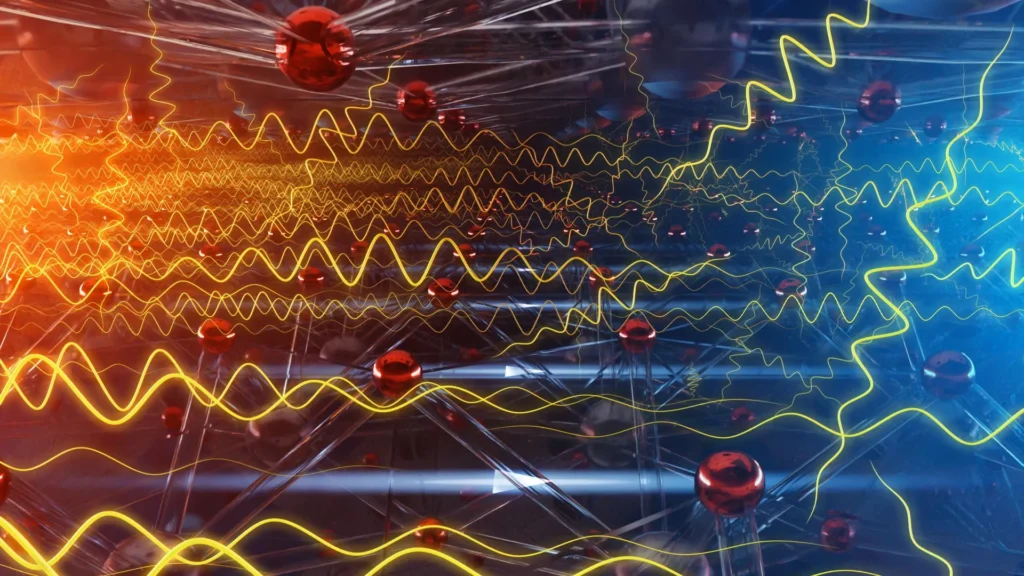
The core of this transformative research, published in the esteemed journal PRX Energy, centers on the manipulation of phonons – the tiny atomic vibrations that are the primary carriers of heat in solid materials. The study reveals that by applying an electric field to a relaxor-based ferroelectric ceramic, researchers can profoundly alter the behavior of these phonons. Specifically, when the atomic vibrations align with the direction of the applied electric field, known as the "poling direction," these phonons persist for significantly longer durations and travel farther before scattering. This directional control leads to a remarkable outcome: heat travels almost three times more efficiently along the electric field’s direction than it does perpendicular to it.
"Being able to control both how fast and in what manner heat flows could lead to devices that manage thermal energy far more efficiently than currently possible," stated Puspa Upreti, an ORNL postdoctoral research associate involved in the study. This precise control over thermal energy flow is akin to developing a sophisticated traffic management system for atomic vibrations, allowing heat to bypass previous roadblocks and accelerate along designated pathways.
The Critical Need for Advanced Heat Control
The ability to efficiently direct and dissipate heat is not merely an academic curiosity; it is a foundational requirement for the continued advancement of a vast array of modern technologies. In an era where electronic devices are becoming smaller, more powerful, and densely packed, waste heat poses a significant challenge, often limiting performance, reliability, and lifespan. For instance, in high-performance computing, data centers, and advanced microprocessors, inefficient heat dissipation can lead to overheating, throttling, and even system failure. Current cooling solutions often involve bulky fans, liquid systems, or complex heat sinks, which add to device size, cost, and energy consumption.
Beyond electronics, efficient heat management is crucial for:
- Solid-state electronic cooling systems: Devices with no moving parts, offering silent operation and increased reliability, vital for sensitive applications.
- Thermoelectric devices: Systems that convert waste heat directly into electricity or vice versa, crucial for energy harvesting and niche cooling applications.
- Advanced chip-based electronics: Enabling smaller, faster, and more energy-efficient integrated circuits.
- Cogeneration systems: Industrial processes that capture and reuse waste heat to produce electricity or provide heating, significantly improving overall energy efficiency.
Improving control over heat transfer directly translates to gains in both performance and energy efficiency. The concept is elegantly illustrated by the Carnot cycle, an idealized thermodynamic model that defines the maximum theoretical efficiency of a heat engine. The Carnot cycle underscores that the ability to precisely regulate the movement of heat between hot and cold regions is paramount for maximizing energy conversion. In the context of this new research, the electric field effectively reduces the "obstacles" or scattering events that typically impede phonon movement. This allows the heat-carrying vibrations to travel farther through the material, much like easing congestion on a busy highway allows vehicles to reach their destination more quickly and efficiently, ultimately leading to vastly superior heat conduction in the desired direction.
The Role of Specialized Ceramics: Relaxor-Based Ferroelectrics
The researchers focused their efforts on a specific class of materials known as relaxor-based ferroelectrics. Ferroelectric materials are characterized by their ability to exhibit a spontaneous electric polarization that can be reversed by an external electric field. In relaxor ferroelectrics, this polarization is not uniform but exists as numerous tiny, fluctuating polar regions. When these materials are exposed to an electric field – a process known as "poling" – these tiny electric charges within the material become aligned. This alignment is critical because it fundamentally alters the lattice dynamics of the material, specifically reducing the scattering of the heat-carrying phonons. The consequence is a dramatic increase in the distance phonons can travel, allowing thermal energy to move through the crystal much more efficiently.
The specialized crystals used in these groundbreaking experiments were meticulously grown and then "poled" by Raffi Sahul at Amphenol Corporation, a global leader in interconnect products. Amphenol’s expertise in material synthesis and processing proved vital in producing the high-quality, precisely structured ceramic samples necessary for this intricate research. The resulting materials demonstrated an unprecedented level of controllable heat transport, far exceeding what was previously thought achievable.
Michael Manley, an ORNL senior researcher who led the inelastic neutron scattering experiments alongside ORNL senior R&D staff member Raphaël Hermann, highlighted the magnitude of this breakthrough. "Earlier work on bulk ferroelectric materials achieved modest improvements in thermal conductivity of 5 percent to 10 percent," Manley noted, "while the new measurements reveal an enhancement close to 300 percent – mainly because the phonons are able to travel much longer before they stop." This substantial leap from single-digit improvements to a nearly threefold increase underscores the revolutionary nature of the discovery.
Probing the Atomic Realm: Neutron Experiments Reveal Hidden Motion
To gain a definitive understanding of the intricate atomic-level phenomena driving this enhanced heat transport, the collaborative team conducted sophisticated experiments at the Spallation Neutron Source (SNS), a Department of Energy Office of Science user facility operated by ORNL. The SNS is one of the world’s most powerful pulsed neutron sources, providing unparalleled capabilities for probing the atomic and molecular structure and dynamics of materials.
Utilizing advanced inelastic neutron scattering techniques, the researchers were able to observe both the precise positions of atoms within the crystal lattice and, crucially, how those atoms moved and vibrated. Neutrons are uniquely suited for this type of analysis because, unlike X-rays, they interact with the nuclei of atoms rather than their electron clouds. This allows them to effectively "see" light elements like oxygen and precisely track atomic vibrations (phonons) without causing damage to the sample. This methodology builds directly on the foundational work recognized by the Nobel Prize in Physics in 1994, awarded to Clifford Shull and Bertram Brockhouse for their pioneering contributions to neutron scattering techniques for condensed matter studies. Shull developed neutron diffraction for structure determination, while Brockhouse perfected inelastic neutron scattering for studying atomic dynamics, directly enabling the kind of phonon analysis conducted in this study.
The precise measurements carried out at SNS provided irrefutable evidence that applying an electric field not only increased the speed at which phonons propagated through the material but also significantly extended their "lifetimes" – the duration they survived before scattering off other atoms or defects. These longer lifetimes are the direct and primary reason the material became dramatically more efficient at conducting heat in the poling direction. By combining these detailed atomic-level observations from neutron scattering with macroscopic thermal conductivity measurements, the team was able to directly link the dramatic increase in heat flow to the fundamental changes in the atomic vibrations within the crystal.
A Collaborative Journey: From Hypothesis to Breakthrough
This multi-institutional research project represents a convergence of specialized expertise and state-of-the-art facilities. While the exact chronology of the project spans several years of dedicated effort, the collaborative workflow can be inferred. The initial hypothesis, likely stemming from theoretical insights or preliminary observations on ferroelectric materials, would have spurred the need for specialized material synthesis, led by Amphenol’s Raffi Sahul, to create the high-quality relaxor-based ferroelectric crystals.
Subsequently, the meticulous thermal conductivity experiments were designed by the late Professor Joseph Heremans of Ohio State University, a distinguished expert in thermoelectrics and thermal transport. Professor Heremans guided doctoral candidate Delaram Rashadfar through the complex process of conducting the measurements and analyzing the resulting data. His intellectual leadership and mentorship were pivotal in this phase of the research.
Meanwhile, the ORNL team, spearheaded by Michael Manley and Raphaël Hermann, conducted the critical inelastic neutron scattering experiments at the SNS. The data from both thermal conductivity measurements and neutron scattering were then synthesized and interpreted, leading to the astonishing realization of the 300% enhancement.
Delaram Rashadfar reflected on the unexpected magnitude of the discovery: "While earlier work led us to expect only a modest effect, observing a threefold difference turned out to be a significant result. Professor Heremans always stressed the importance of trusting the data first and letting the theory follow." This testament to empirical observation over preconceived notions underscores the scientific rigor applied throughout the project. The research itself was supported by the DOE Basic Energy Sciences program, along with additional contributing partners, highlighting the importance of federal funding for fundamental scientific inquiry.
Statements and Reactions: Voices from the Forefront
The scientific community has reacted with considerable interest to this breakthrough. Dr. Upreti’s emphasis on controlling both the speed and manner of heat flow points to a future where thermal energy can be precisely engineered. Dr. Manley’s comparison to previous modest gains highlights the scale of this achievement, positioning it as a significant milestone in thermal physics. Delaram Rashadfar’s reflection on Professor Heremans’s guidance adds a poignant human element to the scientific narrative, underscoring the role of mentorship and open-mindedness in discovery.
From a broader perspective, officials at Oak Ridge National Laboratory would likely emphasize the power of interdisciplinary collaboration and access to world-class user facilities like the SNS in enabling such discoveries. A representative from Amphenol Corporation would foresee significant opportunities for integrating these advanced ceramic materials into their next-generation products, particularly in high-performance electronics and sensor technologies. The Department of Energy, through its Basic Energy Sciences program, would underscore how foundational research directly translates into potential solutions for national energy challenges and economic competitiveness. Leading materials scientists not directly involved in the study would likely laud the work as a crucial advancement, opening new avenues for theoretical modeling and experimental exploration in the field of phononics and thermal metamaterials.
Transformative Implications: Reshaping Energy and Electronics
The implications of being able to control heat flow with such precision and efficiency are profound and far-reaching, potentially revolutionizing multiple industries and contributing significantly to global energy efficiency goals.
-
Electronics and Computing:
- Data Centers: With global data center energy consumption projected to increase, efficient cooling is paramount. This technology could enable smaller, more powerful, and significantly greener data centers by facilitating rapid, directional heat removal from processor arrays.
- High-Performance Computing & AI: Modern CPUs and GPUs generate immense heat. This discovery could lead to silent, solid-state cooling solutions that allow chips to operate at higher clock speeds and densities without thermal throttling, boosting performance in AI, scientific simulations, and gaming.
- Quantum Computing: The extremely low temperatures required for quantum computers pose immense thermal management challenges. While this discovery works at room temperature, the fundamental insights into phonon manipulation could inform new strategies for thermal isolation or heat removal in cryogenic environments.
-
Energy Conversion and Harvesting:
- Thermoelectric Generators: By improving the efficiency of heat transport, these materials could enhance the performance of thermoelectric devices that convert waste heat into usable electricity. This has applications in automotive exhaust, industrial processes, and even body heat harvesting for wearables. The global thermoelectric generator market, valued at around $600 million in 2022, is projected to grow substantially with such efficiency gains.
- Cogeneration and Waste Heat Recovery: Industries generate vast amounts of waste heat. Materials that can efficiently direct and recover this heat could be integrated into advanced cogeneration systems, significantly reducing energy consumption and carbon emissions in sectors like manufacturing and power generation.
-
Advanced Cooling Systems:
- Solid-State Cooling: The ability to move heat directionally without moving parts opens the door for compact, reliable, and maintenance-free solid-state cooling modules. These could find applications in aerospace, medical devices, and portable electronics where traditional fans or compressors are impractical.
- Thermal Management in Batteries: Efficiently managing heat within battery packs is crucial for their safety, lifespan, and performance, especially in electric vehicles. This technology could lead to smarter battery thermal management systems.
Economically, this breakthrough has the potential to spawn entirely new product categories and significantly enhance existing ones. The global market for thermal management solutions is already massive, estimated to be tens of billions of dollars annually, and innovations like this can drive substantial growth and create new economic opportunities. Furthermore, by improving energy efficiency across various sectors, this research aligns with broader environmental sustainability goals, contributing to reduced carbon footprints and lower energy costs.
Future Trajectories and Challenges
While the discovery is revolutionary, the path from laboratory breakthrough to widespread commercial application involves several critical steps and challenges. Future research will likely focus on:
- Material Optimization: Exploring other relaxor-based ferroelectrics or related materials to identify even better performance characteristics, lower cost, or easier manufacturability.
- Scaling Up: Developing methods to synthesize these specialized ceramic materials in larger quantities and in forms suitable for integration into devices.
- Device Integration: Overcoming engineering challenges to effectively integrate these materials into functional cooling systems, electronic packages, or energy converters. This includes developing robust electrical contacts and packaging solutions.
- Fundamental Understanding: Continuing to deepen the theoretical understanding of the exact phonon-electric field interactions, potentially leading to even more advanced control mechanisms.
- Long-Term Stability: Assessing the long-term stability and durability of the material’s enhanced thermal properties under various operating conditions.
Despite these challenges, the unprecedented threefold increase in directional heat conduction represents a monumental achievement. It underscores the power of fundamental scientific research and collaborative efforts in unlocking novel physical phenomena with the potential to reshape our technological landscape. This discovery is not merely an incremental improvement; it is a fundamental shift in our understanding and control over one of the most pervasive and critical aspects of physics: the movement of heat. The future of energy and electronics may very well be cooler, more efficient, and more powerful, thanks to this pioneering work.