The European Space Agency (ESA) is extending an unprecedented invitation to European researchers and companies: the chance to run cutting-edge software in the harsh, dynamic environment of deep space, aboard ESA’s Hera spacecraft, millions of kilometers from Earth. This initiative represents a significant shift in how space missions are utilized, transforming a critical planetary defense asset into a unique platform for pioneering software development and testing.
Hera’s Evolving Mission: From Asteroid Defense to Orbital Innovation Hub
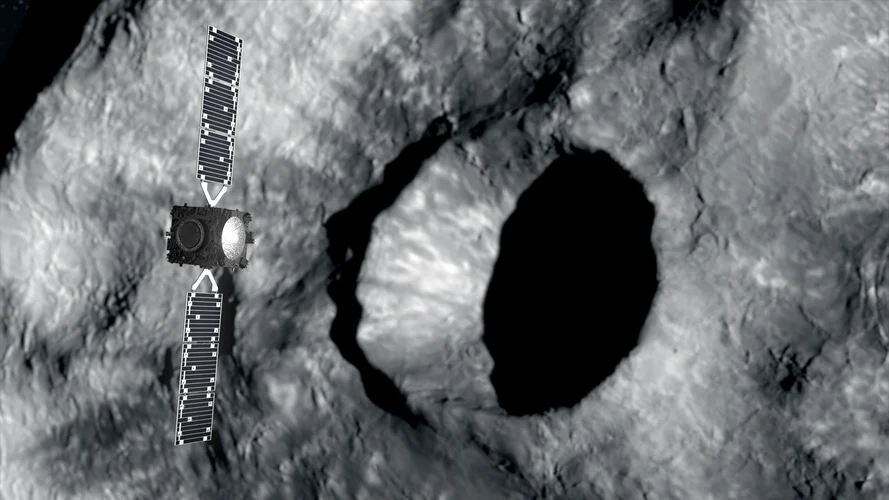
Scheduled to conclude its primary planetary defense objectives around the Didymos and Dimorphos asteroid system in mid-2027, the Hera spacecraft is poised to embark on a remarkable second act. Following its detailed investigation of the aftermath of NASA’s Double Asteroid Redirection Test (DART) impact, Hera will transition into a sophisticated, in-orbit software laboratory. This exceptional vantage point, approximately 150 million kilometers from Earth, will provide European innovators with a rare opportunity to test next-generation onboard intelligence, advanced image processing algorithms, and artificial intelligence (AI)-driven operational autonomy directly within a real space mission environment.

The Hera mission, launched in 2024, is currently en route to its destination. Its primary scientific goal is to conduct a thorough post-impact analysis of Dimorphos, the small moonlet of the larger asteroid Didymos. This investigation is crucial for understanding the effectiveness of kinetic impact as a planetary defense strategy, a concept validated by NASA’s DART mission in 2022 when it intentionally struck Dimorphos, successfully altering its orbit around Didymos. Hera’s arrival, anticipated this autumn, will mark the first time humanity will conduct such a detailed, close-up examination of an asteroid system that has been physically altered by human intervention. The data collected will be invaluable for refining asteroid deflection techniques and enhancing global asteroid threat assessment capabilities.
A "Sandbox" for Next-Generation Space Intelligence
Dietmar Pilz, ESA’s Director of Technology, Engineering and Quality, underscored the significance of this endeavor. "This is an exceptional opportunity that will help accelerate European innovation, enabling researchers and industry to push the boundaries of onboard intelligence and autonomy," Pilz stated. "We invite Europe’s innovators to shape the next generation of intelligent, robust, and autonomous space missions. We are looking for targeted, innovative experiments that push onboard intelligence beyond today’s procedural boundaries, while running safely alongside Hera’s flight-critical systems in a protected ‘sandbox’ environment. These ideas will help ESA mature technologies that reduce reliance on ground control, increase mission resilience, and enable more capable future exploration missions."
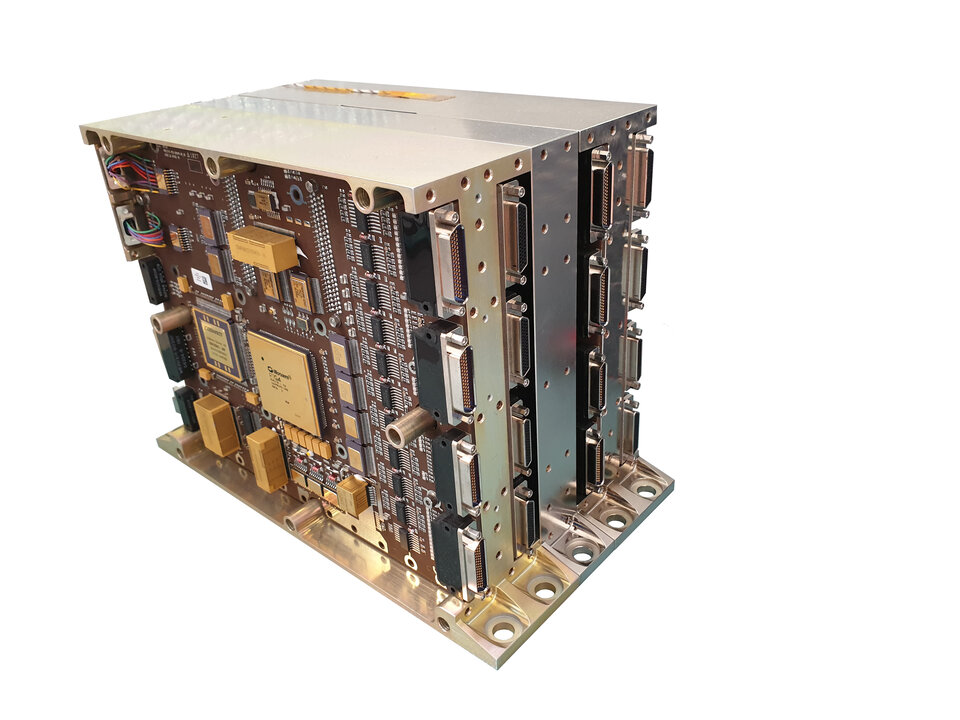
The "sandbox" environment is a critical component of this initiative. Hera’s onboard computer system is built upon a European-developed dual-core LEON3 processor. One core will remain dedicated to the mission’s essential flight operations, ensuring the spacecraft’s continued safety and functionality. The second core, however, will be allocated as a secure, isolated environment specifically designed to host and execute the experimental guest software. This separation guarantees that even if the experimental software encounters unexpected issues, it will not jeopardize the integrity or operational status of the main Hera mission.

Accelerating European Leadership in Space Systems
By opening its mission infrastructure to external innovators, ESA aims to foster a more dynamic and collaborative approach to technology development. This strategy is designed to significantly accelerate the maturation of advanced space technologies and solidify Europe’s position as a global leader in sophisticated space systems. The initiative is a testament to ESA’s commitment to nurturing a vibrant European space ecosystem, encouraging cross-pollination of ideas between academic institutions and commercial enterprises.
The call for innovative software experiments is being channeled through ESA’s Open Space Innovation Platform (OSIP), a dedicated portal designed to facilitate the submission and evaluation of novel space-related concepts. This platform streamlines the process, allowing for initial ESA review of proposed experiments.
A Timeline for Innovation and Implementation

The timeline for this ambitious program is carefully structured to ensure thorough preparation and safe execution:
- Mid-2027: Hera completes its primary planetary defense objectives and transitions into its role as a flying software laboratory.
- October 2026: ESA will select the winning software experiment proposals.
- May 31, 2027: Deadline for selected teams to submit their full implementation packages, including source code, for detailed validation and integration testing.
- August 2027: Planned execution of the selected software experiments during a one-month period, with each experiment typically running for a few hours at a time.
Rigorous Safety Protocols for Deep Space Experiments
Jorge Lopez Trescastro, a software engineer on the Hera mission, emphasized the paramount importance of safety. "Our priority is to perform these experiments in an entirely safe way," Lopez Trescastro explained. "We are taking advantage of the fact that Hera’s onboard computer runs on a European-developed dual-core LEON3 processor. One core will operate the actual spacecraft, while the other has a safe sandbox environment that has been optimized to host guest software. Access to spacecraft instruments and subsystems will be fully facilitated, while the hosted software will only run for two to three hours at a time, and be shut off immediately if any problems are identified. Setting all this up to execute in a safe and reliable way has been really challenging, but now we are ready, and really excited to see what ideas the community brings forward!"
This meticulous approach to safety is crucial. The deep space environment is inherently challenging, with factors such as radiation, extreme temperatures, and communication delays posing significant risks. By confining experimental software to a protected sandbox and implementing strict monitoring and shutdown protocols, ESA aims to mitigate these risks effectively.

Redefining Spacecraft Autonomy and Resilience
Ian Carnelli, Hera Mission Manager, highlighted the transformative potential of this program. "Usually, we operate precious deep-space missions based on carefully validated procedures and frequent ground control oversight," Carnelli noted. "But in this case, we are inviting European innovators to work in a real mission environment to help redefine how spacecraft might think, decide, and operate in the future. The goal is not to hand over control of Hera, but to safely test ideas that could light the way towards more capable, more autonomous, and more resilient spacecraft operations."
The implications of this initiative extend far beyond the Hera mission itself. The technologies and methodologies developed and tested in this deep-space laboratory could pave the way for a new era of space exploration and utilization. Increased onboard intelligence can reduce the reliance on constant communication with ground control, which is particularly vital for missions to distant planets or celestial bodies where communication latencies can range from minutes to hours. This autonomy can enable spacecraft to react more swiftly to unexpected events, make complex decisions independently, and optimize their operations in real-time, leading to more efficient and successful missions.
A Legacy of In-Orbit Technology Demonstration

ESA has a well-established history of utilizing its missions for in-orbit technology demonstration, providing crucial testing grounds for novel systems and software. The Proba family of satellites, culminating in the current Proba-3 formation flying mission, has consistently pushed the boundaries of what is possible in space. Similarly, the planned Henon CubeSat for deep space exploration represents ESA’s ongoing commitment to exploring new frontiers.
These missions serve multiple purposes: they allow Europe to validate new technologies in the actual space environment, thereby reducing the technical and financial risks associated with future, larger-scale programs. They also accelerate the crucial process of transferring innovations from research laboratories into operational space missions.
A notable precedent for this initiative was ESA’s OPS-SAT CubeSat. This "flying laboratory" explicitly invited software developers to run standard software in orbit, famously including a demonstration of the classic video game Doom. While seemingly playful, such demonstrations highlight the potential for diverse software applications in space and the ingenuity required to adapt and run them in such a constrained and demanding environment.
The Hera initiative builds upon this spirit of innovation, offering a far more sophisticated and integrated platform for advanced software development. The ability to test AI algorithms, advanced image processing for scientific analysis, and autonomous decision-making systems on a spacecraft millions of kilometers away represents a significant leap forward. This endeavor not only promises to enhance the capabilities of future ESA missions but also aims to foster a new generation of European expertise in space-based artificial intelligence and autonomous systems.
The Future of Autonomous Spacecraft Operations
The success of this program could have profound implications for the future of space exploration. Imagine future missions to Mars, the outer planets, or even interstellar space where spacecraft can independently navigate complex environments, identify scientific targets of interest, and execute intricate maneuvers without continuous human intervention. This level of autonomy is essential for exploring regions where real-time communication is impractical or impossible.
Furthermore, enhanced onboard intelligence can lead to more resilient spacecraft. By being able to diagnose and resolve issues independently, spacecraft can overcome minor malfunctions or adapt to unforeseen circumstances, significantly increasing their operational lifespan and the likelihood of mission success. This is particularly important for long-duration missions where the cost and complexity of sending repair missions are prohibitive.
The call for ideas through the OSIP platform is an open invitation to the brightest minds in Europe to contribute to shaping the future of space exploration. By providing access to a real deep-space mission, ESA is not just testing software; it is fostering a collaborative spirit and empowering a new wave of innovation that could redefine humanity’s presence in the cosmos. The Hera mission, in its evolved role, stands as a beacon for a future where spacecraft are not just tools, but intelligent partners in our quest to understand the universe.