Imagine a T-shirt that could monitor your heart rate or blood pressure, or a pair of socks that could provide real-time feedback on your running stride. These futuristic visions are moving closer to reality thanks to groundbreaking research from Washington State University (WSU), where a novel 3-D ink printing method has been developed for "smart fabrics" that retain their functionality even after rigorous washing and abrasion tests. This advancement, detailed in the latest issue of the journal ACS Omega, represents a significant leap forward in the comfort, durability, and environmental sustainability of wearable technology.
For years, the pursuit of integrating technological capabilities into everyday clothing has been a central focus for researchers. However, a persistent challenge has been the trade-off between functionality and wearability. Traditional methods often resulted in stiff, uncomfortable materials that detracted from the user experience. The WSU team, led by textile researcher Hang Liu, has directly addressed this limitation by prioritizing both technological performance and the tactile qualities essential for comfortable apparel.
Bridging the Gap: Functionality Meets Fabric Feel
"The materials used, or the technology used, generally produce very rigid or stiff fabrics," explained Hang Liu, an associate professor in the Department of Apparel, Merchandising, Design and Textiles at WSU and the corresponding author of the paper. "If you are wearing a T-shirt with 3-D printed material, for example, for sensing purposes, you want this shirt to fit snugly on your body, and be flexible and soft. If it is stiff, it will not be comfortable and the sensing performance will be compromised."
Historically, the integration of electronic components into textiles has involved labor-intensive techniques such as gluing, weaving, or sewing conductive threads and sensors directly into the fabric. While more recent printing-based approaches have shown promise, they have often struggled with the dual challenges of maintaining comfort and withstanding the wear and tear of regular use, particularly washing.
The Innovation: Direct Ink Writing and Biodegradable Materials
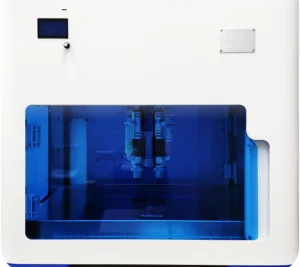
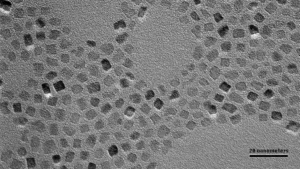
The WSU team’s breakthrough lies in their adoption of direct ink writing (DIW) 3-D printing technology. This method allowed them to precisely deposit solutions of polybutylene succinate (PBS) – a biodegradable polyester known for its compatibility with natural fibers – embedded with carbon nanotubes onto two distinct fabric types. Carbon nanotubes are nanoscale structures renowned for their exceptional electrical conductivity and mechanical strength, making them ideal candidates for creating conductive pathways within textiles.
The key to the success of this process is the ability of the ink solution to effectively penetrate and bond with the fabric fibers. This intimate connection ensures that the printed conductive elements are not merely superficial additions but are deeply integrated into the textile’s structure. This deep integration is crucial for achieving the enhanced washability and resistance to abrasion that have long eluded smart fabric development.
Rigorous Testing: Durability Under Stress
The researchers subjected the printed fabrics to a comprehensive battery of tests to validate their performance and durability. These evaluations included measuring tensile strength, electrical conductivity, and the fabrics’ efficacy as motion sensors. The results were highly encouraging, demonstrating the robust nature of the newly developed smart fabrics.
Crucially, the fabrics maintained their electrical conductivity and sensing capabilities even after undergoing 20 complete cycles of washing and drying – a standard benchmark for textile durability. Furthermore, the printed surfaces exhibited remarkable resilience, showing no signs of scratching or cracking after 200 cycles of abrasion testing, simulating the friction and wear encountered during everyday use. The fabrics also withstood 500 cycles of tensile testing, a process that repeatedly stretches and relaxes the material, proving their ability to endure mechanical stress.
Environmental Responsibility: A Greener Approach
Beyond performance and durability, the WSU research also emphasizes a commitment to environmental sustainability. The team utilized Cyrene, a biodegradable and non-toxic solvent, for processing the ink. This choice stands in stark contrast to many conventional solvents used in similar technological applications, which are often harmful to the environment and pose risks to human health. By opting for greener alternatives, the researchers are paving the way for a more responsible future in smart textile manufacturing.
The Broader Landscape of Smart Fabrics
Smart fabrics, also known as e-textiles, are poised to revolutionize the wearable technology market. They offer the potential for clothing that can seamlessly perform many of the functions currently handled by dedicated devices like smartwatches and fitness trackers, but with an integrated, unobtrusive approach.
The implications of this advancement are far-reaching and extend across multiple sectors:
- Healthcare: Imagine garments that continuously monitor vital signs such as heart rate, blood pressure, and even blood oxygen levels, providing early warnings of potential health issues or aiding in the management of chronic conditions. This could lead to more personalized and proactive healthcare, reducing hospital visits and improving patient outcomes.
- First Responders and Military: For individuals operating in demanding or hazardous environments, smart fabrics could offer critical situational awareness. This might include integrated sensors for environmental monitoring (e.g., detecting gas leaks), communication capabilities, or even physiological monitoring to assess stress and fatigue levels, enhancing safety and effectiveness.
- Athletics and Fitness: Athletes could benefit immensely from fabrics that provide detailed biomechanical feedback. Socks that analyze gait, shirts that track muscle exertion, or shorts that monitor joint angles could offer personalized training insights, helping to optimize performance, prevent injuries, and accelerate recovery.
- Everyday Convenience: Beyond specialized applications, smart fabrics could enhance daily life by providing unobtrusive notifications, personalized climate control, or even integrated charging capabilities for small electronic devices.
A Phased Approach to Integrated Systems
Hang Liu has been a consistent innovator in the field of smart fabrics for several years. Her previous work includes the development of a novel fiber that combines the inherent flexibility and comfort of cotton with the electrical conductivity of advanced polymers, a breakthrough detailed in a paper published in 2023. This ongoing research underscores a long-term vision for creating truly integrated and user-friendly wearable technology.
However, Liu is pragmatic about the current stage of development. "This is only one part of the whole smart system," she noted. While the WSU research has successfully addressed the critical challenges of fabric comfort, durability, and sensing capabilities, the realization of fully functional smart garments will also necessitate advancements in power source and data transmission technologies. The integration of efficient, lightweight, and washable power supplies, as well as robust wireless communication protocols, will be the next frontiers in bringing these smart textiles to widespread adoption.
A Foundation for Future Innovation
The research was a significant undertaking, with a substantial portion of the work forming the core of the doctoral dissertation for one of Liu’s students, Zihui Zhao, who served as the lead author on the ACS Omega paper. This collaborative environment, fostering student-led innovation under expert guidance, is a hallmark of leading research institutions.
The project received crucial financial support from a grant awarded by the National Science Foundation (NSF). The NSF plays a vital role in funding fundamental scientific research that has the potential for transformative societal impact, and this grant exemplifies their commitment to advancing cutting-edge technological fields.
The development of these highly durable and comfortable smart fabrics marks a pivotal moment in the evolution of wearable technology. By successfully overcoming the long-standing obstacles of wearability and washability, the WSU team has laid a robust foundation for a future where our clothing can actively contribute to our health, safety, and daily lives in ways previously confined to the realm of science fiction. The continued integration of these advanced textile materials with power and data technologies promises to unlock a new era of intelligent apparel.