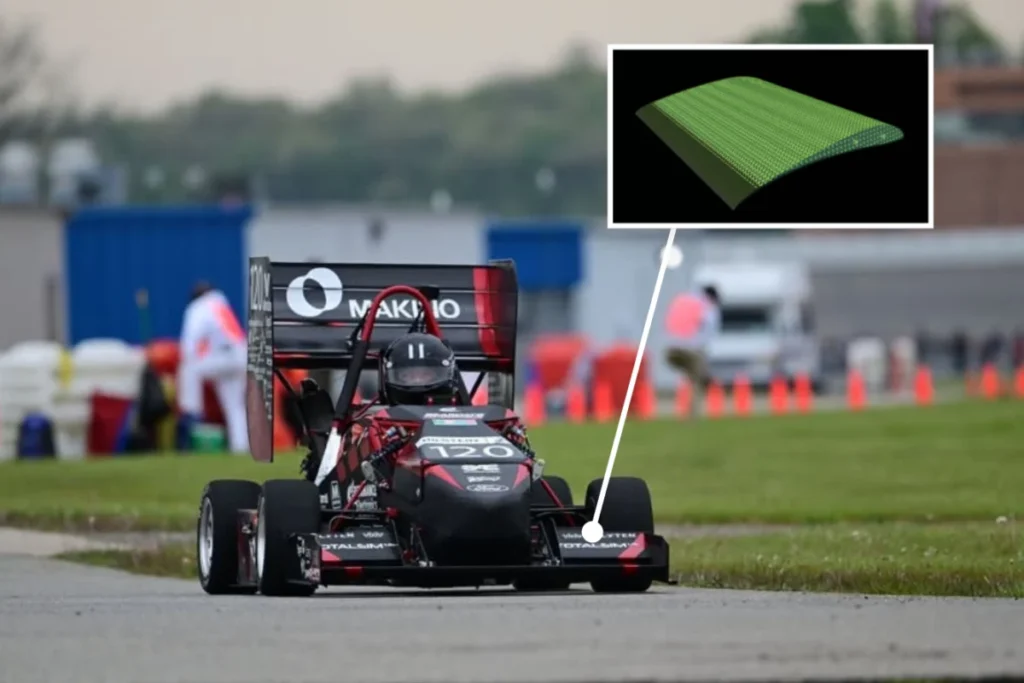
The University of Cincinnati Bearcats Motorsports team has achieved a significant leap in performance and efficiency with the adoption of an innovative, 3D-printed front wing second element. This cutting-edge component, developed in collaboration with industry partners Vixiv, GZero Additive, and Lyten, represents a paradigm shift in the design and manufacturing of high-performance automotive parts for collegiate racing. The new wing not only drastically reduces weight and manufacturing complexity but also demonstrates remarkable durability, contributing to the team’s success at the demanding FSAE Michigan competition.
The Genesis of an Advanced Aerodynamic Component
The original front wing second element, a critical aerodynamic surface designed to generate downforce and enhance vehicle stability, was a testament to traditional engineering methods. Constructed from a combination of carbon fiber and aluminum, the component demanded approximately 65 hours of intricate design, meticulous manufacturing, and careful assembly. This labor-intensive process resulted in a final weight of 621 grams. While functional, the team recognized the potential for optimization, particularly in the pursuit of marginal gains that are paramount in the highly competitive world of motorsports. The objective was clear: to reduce weight, streamline production, and potentially enhance aerodynamic efficiency, all while maintaining or exceeding structural integrity.
A Collaborative Approach to Innovation
The transformation of the front wing second element was a multi-stage process, leveraging the specialized expertise of three distinct industry leaders:
Vixiv: The AI-Powered Design Catalyst
The journey began with Vixiv, a specialist in advanced design solutions. The existing CAD model of the front wing second element was uploaded into Vixiv’s sophisticated cloud-based AI engine. This powerful platform is designed to intelligently fit lattice geometries into a given volume, adhering to user-defined parameters such as maximum load-bearing capacity and desired shell thickness. In an astonishing display of computational efficiency, Vixiv’s AI engine processed the complex design requirements and generated an optimized, 3D-printable design in a mere 34 seconds. This rapid iteration capability is a stark contrast to traditional design workflows, which can often span days or weeks. The AI’s ability to explore a vast design space and identify optimal structural configurations for additive manufacturing is a game-changer for rapid prototyping and performance enhancement.
Timeline of Vixiv’s Contribution:

- Initial Input: Existing CAD design of the front wing second element.
- Processing: Upload into Vixiv’s AI engine with specified load and thickness requirements.
- Output: Optimized 3D printable design with integrated lattice structures.
- Time Elapsed: Approximately 34 seconds.
GZero Additive: Bridging Design to Reality
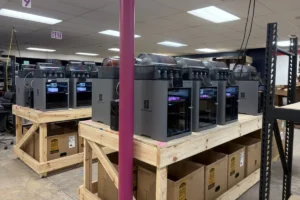
With the optimized design in hand, the baton was passed to GZero Additive, a prominent manufacturer of large-format additive manufacturing (LFAM) systems and a provider of 3D printing services. GZero Additive undertook the crucial task of translating the digital design into a physical component. Utilizing their advanced LFAM platform, they meticulously manufactured the front wing second element. The choice of material was equally critical to the success of the project.
Lyten: The Graphene-Reinforced Material Advantage
The material selection was a key factor in achieving the desired performance characteristics. GZero Additive employed a specialized filament from Lyten, a materials supplier renowned for its innovative graphene-reinforced polymers. This advanced composite material offers a compelling combination of high strength, low weight, and excellent thermal properties. The incorporation of graphene into the nylon filament significantly enhances its mechanical performance, making it an ideal candidate for demanding applications like motorsport components.
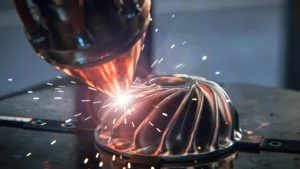
The manufacturing process itself, facilitated by GZero Additive’s LFAM capabilities, allowed for the creation of complex geometries and internal structures that would be challenging or impossible to achieve with traditional subtractive manufacturing methods. The resulting 3D-printed front wing second element achieved a remarkable weight of just 395 grams, a significant reduction from the original 621 grams. Furthermore, the integrated nature of the 3D-printed component completely eliminated the need for assembly, saving valuable time and reducing potential points of failure.
Manufacturing and Material Breakdown:
- Manufacturing Platform: GZero Additive’s Large Format Additive Manufacturing (LFAM) system.
- Material: Graphene-reinforced nylon filament from Lyten.
- Resulting Component Weight: 395 grams.
- Assembly Time: Eliminated.
Performance Under Pressure: FSAE Michigan
The true test of the redesigned front wing came at the prestigious FSAE Michigan competition. This event, a cornerstone of collegiate engineering challenges, pits student-designed and built race cars against each other in a series of dynamic and static events designed to evaluate their engineering prowess. The FSAE competition encompasses disciplines such as acceleration, skid pad, autocross, endurance racing, and a rigorous design and business presentation. Success demands a holistic approach, where every component, from the engine to the aerodynamic surfaces, must perform flawlessly.
During the competition, the 3D-printed front wing second element proved its mettle by enduring substantial structural loads, ranging from 60 to 80 pounds-force (lbf), throughout the demanding events. Its performance was not merely about withstanding normal operating conditions; it also demonstrated exceptional resilience in an unforeseen incident. In a critical moment, an impact occurred that fractured the endplates of the car’s first front wing element. In many racing scenarios, such damage could lead to immediate disqualification or force a withdrawal from the event.

However, the robust design and superior material properties of the 3D-printed second element came to the rescue. The component acted as a crucial support, effectively holding the broken assembly off the ground for the remainder of the race. This remarkable feat of structural integrity not only allowed the Bearcats Motorsports team to continue competing but also prevented further damage to the vehicle, underscoring the critical role of advanced materials and manufacturing in enhancing vehicle reliability and survivability in high-stress environments.
Supporting Data and Analysis
The quantifiable improvements brought about by this collaborative project are substantial:
- Weight Reduction: A reduction of 226 grams (36.4%) in the weight of the front wing second element. This is a significant achievement, as reducing unsprung mass and overall vehicle weight is a primary objective in motorsport to improve acceleration, braking, and handling.
- Manufacturing Time Reduction: From approximately 65 hours (design, manufacturing, assembly) to a drastically reduced timeframe dominated by the AI design optimization and additive manufacturing process. While the exact manufacturing time for the 3D print is not specified, it is implied to be significantly less than the 65 hours required for the previous method. The elimination of assembly time further contributes to this efficiency.
- Structural Load Capacity: Demonstrated ability to withstand 60-80 lbf, indicating that the lightweight, 3D-printed component possesses the necessary strength for competitive racing.
- Impact Resilience: The component’s ability to sustain the vehicle after a major failure in another part of the wing highlights its exceptional durability and the reliability of the chosen materials and manufacturing process.
The implications of this project extend far beyond the University of Cincinnati’s motorsports program. It serves as a compelling case study for the transformative potential of additive manufacturing and advanced materials in collegiate engineering competitions and, by extension, in the broader automotive industry. The ability to rapidly iterate on designs, optimize for weight and strength, and produce complex geometries on demand offers a significant competitive advantage.
Broader Impact and Future Implications
The success of the Bearcats Motorsports team with their 3D-printed front wing is a microcosm of larger trends within the automotive and engineering sectors.
The Democratization of Advanced Manufacturing
Collaborations like this, where universities partner with industry leaders, are crucial for democratizing access to cutting-edge technologies. Vixiv’s AI-driven design platform, GZero Additive’s LFAM capabilities, and Lyten’s advanced materials are typically found in high-end industrial settings. By integrating these technologies into academic projects, students gain invaluable hands-on experience with the tools that will shape the future of manufacturing. This prepares them for careers in industries that are increasingly reliant on additive manufacturing for innovation and efficiency.
The Role of AI in Design Optimization
The 34-second design optimization by Vixiv’s AI is particularly noteworthy. This rapid iteration capability allows engineering teams to explore a wider range of design possibilities and fine-tune components for specific performance metrics far more quickly than traditional methods. As AI continues to advance, its role in generative design and performance simulation will only grow, enabling engineers to achieve levels of optimization previously thought unattainable.

The Rise of Advanced Materials
The use of graphene-reinforced nylon highlights the ongoing evolution of materials science. As researchers develop new composites with enhanced properties, their adoption in demanding applications like motorsports will become more widespread. These materials offer solutions to long-standing engineering challenges, enabling lighter, stronger, and more durable products. The successful application of Lyten’s filament in a real-world racing scenario provides strong validation for its performance and potential.
Implications for Collegiate Motorsports
For collegiate motorsports programs, projects like this offer a pathway to elevated performance and a deeper understanding of modern engineering practices. The ability to design and produce bespoke components tailored to specific needs can provide a distinct competitive edge. Furthermore, it fosters a culture of innovation and encourages students to push the boundaries of what is possible with available technologies.
Official Responses and Industry Recognition (Inferred)
While direct quotes are not available in the provided text, the successful integration and performance of the 3D-printed component at a major competition like FSAE Michigan would undoubtedly elicit positive feedback and recognition from the involved parties.
- University of Cincinnati Bearcats Motorsports: The team would likely express immense satisfaction with the improved performance, reliability, and efficiency gained from the new component. The success serves as a testament to their engineering ingenuity and their ability to effectively collaborate with industry partners.
- Vixiv: The company would likely view this project as a successful demonstration of its AI design optimization capabilities, showcasing its value proposition for industries seeking rapid design iteration and performance enhancement.
- GZero Additive: This collaboration would serve as a strong endorsement of their LFAM technology and their expertise in manufacturing advanced components. The successful deployment of the wing in a competitive environment highlights their ability to deliver high-quality, functional parts.
- Lyten: The real-world application of their graphene-reinforced filament in a demanding motorsport setting would be a significant validation of their material technology, potentially leading to further adoption and interest from other performance-oriented sectors.
Conclusion
The University of Cincinnati Bearcats Motorsports team’s adoption of a 3D-printed front wing second element is a compelling narrative of how cutting-edge technologies can revolutionize traditional engineering disciplines. Through a synergistic collaboration with Vixiv, GZero Additive, and Lyten, the team has not only achieved significant weight reduction and manufacturing efficiency but has also demonstrated the remarkable durability and performance benefits of additive manufacturing and advanced materials. This project serves as a powerful indicator of the future direction of engineering design and production, particularly within the competitive and innovation-driven world of motorsports. The implications for student education, industry adoption, and the ongoing evolution of automotive technology are profound, marking this as a significant advancement in collegiate engineering and beyond.