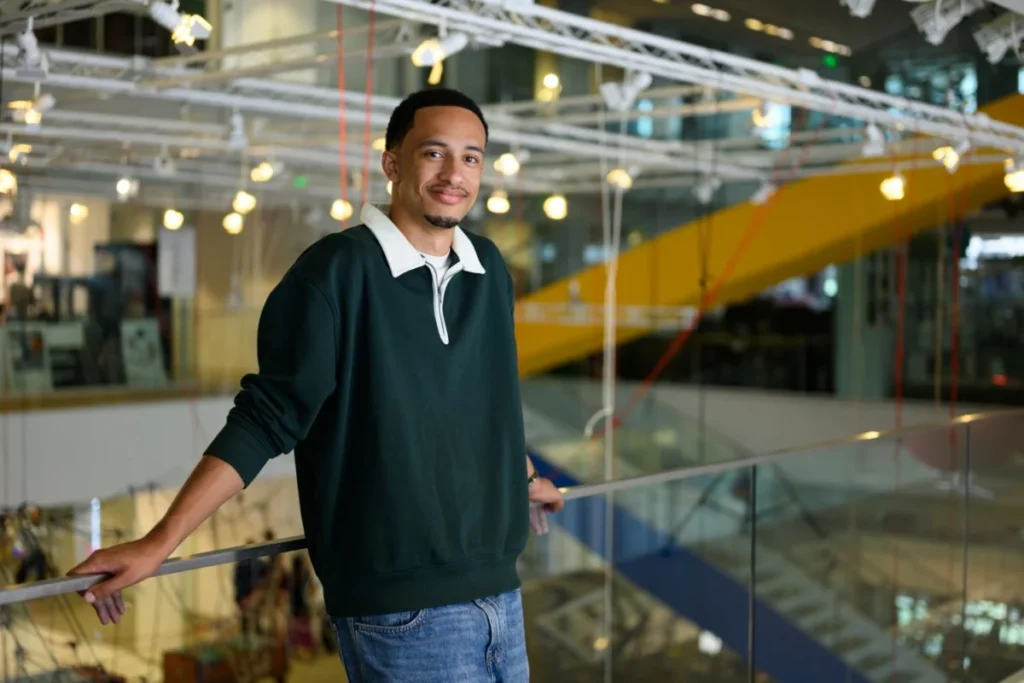
Kayode Dada, a rising senior majoring in mechanical engineering at the Massachusetts Institute of Technology (MIT), has channeled a lifelong passion for game design into an ambitious project aimed at fostering community among the institution’s incoming class of 1,100 first-year students. His creation, a refined trading card game titled "Campus Trade," is set to be a cornerstone of the late August MIT Orientation, serving not only as an engaging activity but as a meticulously designed social lubricant to connect new students. Dada, whose journey underscores the belief that "a game can be made about anything," emphasizes that crafting a truly effective game demands significant "time and effort and thinking about it." This philosophy has guided his intricate design process, culminating in a game poised to redefine initial social interactions within MIT’s highly dynamic environment.
A Lifelong Affinity for Play: The Roots of a Designer
Dada’s deep engagement with games began in childhood, cultivated in the vibrant gaming culture of his Louisville, Kentucky, home. Alongside his brother, he spent countless hours immersed in a diverse array of card, board, and video games. His recollections paint a vivid picture of these formative experiences, his face lighting up as he enumerates beloved titles such as the immersive role-playing epic "Dungeons and Dragons," the strategic resource management of "Catan," the collectible card duels of "Yu-Gi-Oh!," and the global conquest of "Risk." These games, each with its unique blend of mechanics, strategy, and social interaction, laid the groundwork for his analytical approach to play. The collaborative storytelling of "Dungeons and Dragons," for instance, instills imaginative problem-solving and teamwork, while "Catan" demands negotiation and resource allocation. Even the notoriously competitive "Monopoly" played a significant role, becoming a nightly ritual during the Covid-19 pandemic for weeks on end. This intense, prolonged engagement with various game systems cultivated an early fascination with the underlying rules, decisions, and psychological impacts that shape player experiences.
Even as a young boy, Dada possessed an innate curiosity about the "mechanics and decisions" embedded within the games he enjoyed. This analytical bent transformed into active creation during his high school years. His inaugural foray into game design involved crafting custom dice from arts and crafts materials, each side imbued with unique properties. This initial experiment ignited a prolific period of innovation, during which he estimates designing approximately 25 distinct games. Of these, nine were brought to tangible form and gifted to friends, serving as early prototypes and testaments to his burgeoning talent. This period of self-driven experimentation was crucial, allowing him to explore various game genres and mechanics without formal constraints.
Navigating MIT Admissions: The Unconventional Path
Dada’s unique portfolio of board game designs formed a significant portion of his application to MIT, an institution renowned globally for its technological prowess. Initially, he harbored doubts about his acceptance, believing his focus on "cardboard games" rather than "real tech stuff" might render him an outlier. This apprehension is common among prospective students who perceive MIT as solely valuing traditional STEM achievements. However, his perspective shifted dramatically after delving into the MIT Admissions blogs. A particular post by a computer science major, who openly shared her lack of prior coding experience before enrolling at MIT, resonated deeply with him.
This revelation provided crucial motivation and hope. "That gave me motivation and hope that I could apply with a bunch of cardboard games, and I got in," Dada recounts. The experience shattered preconceived notions about the archetypal MIT student, revealing a community that values passion, creativity, and unconventional paths to problem-solving. "It was really cool to see, through the eyes of current students, that they are not all super-duper geniuses in an unattainable sense. They’re real," he adds, highlighting the human element often overlooked in the perception of elite academic institutions. MIT’s holistic admissions process, which seeks out intellectual curiosity, initiative, and a diverse range of talents beyond standardized metrics, ultimately recognized Dada’s unique blend of analytical thinking and creative drive.
Building Community: Dada’s Multifaceted Engagement at MIT
Upon arriving at MIT, Dada quickly immersed himself in a vibrant array of extracurricular activities, temporarily diverting some of his time from dedicated game design. His commitments reflect a deep-seated desire to contribute to the campus community and foster an inclusive environment. He is an MIT Admissions blogger himself, now offering the same inspiration he once received to prospective students. He serves as an orientation captain, guiding new students through their initial days at the institute. Further showcasing his diverse interests, Dada is a leader in MIT Cru, a campus Christian group; a drummer in MIT Live, a student music ensemble; and a DJ on WMBR 88.1 FM, where his show, "Midwest Pizzeria," features the distinctive sounds of Midwest emo math rock.
These roles are not merely pastimes; for Dada, they represent meaningful avenues for community building and increasing awareness about the myriad opportunities available to students. He recalls the significant impact of a blog post he authored about being a Christian at MIT, which elicited numerous emails from interested students, parents, and high school counselors expressing gratitude for the insight. He also frequently engages with students who doubt their capacity to gain admission to MIT, offering encouragement: "I tell them, ‘I think you should still apply… and regardless if you get into MIT or not, you’re going to do amazing things.’" This empathetic approach underscores his commitment to mentorship and support, echoing the transformative impact the admissions blogs had on his own journey.
This summer marks Dada’s third involvement with MIT Orientation, an experience he describes with genuine enthusiasm. "It’s a lot of fun to talk to students, hear what they are interested in, and then be like, ‘Oh, you should definitely go check out this thing. I’ll connect you to this person that you should talk to,’" he explains. This proactive networking and guidance are critical for new students navigating a complex university system. In a delightful twist, some of the orientation leaders he now works alongside are individuals who read his blogs during their own application processes. Dada emphasizes the strong bonds formed through this shared commitment: "[They] are as interested as I am in helping out the people coming in… giving it back to MIT and contributing towards building up the next class." This sentiment highlights a powerful cycle of mentorship and community stewardship at MIT.
The Genesis of "Campus Trade": Reimagining Orientation Engagement
Dada’s passion for game design and his dedication to MIT Orientation converged last year when orientation staff sought innovative ways to keep incoming students engaged during intervals between scheduled events. Recognizing an opportunity to leverage his expertise, Dada proposed creating a trading card game that would simultaneously function as an ice-breaker. The result was the inaugural version of "Campus Trade." The game capitalized on MIT’s orientation structure, where students are divided into 12 distinct groups, each identified by a specific color. Every student began with 12 trading cards corresponding to their group’s color. The objective was to collect one card from each of the other 11 groups, accumulating a set of 12 different colored cards by week’s end.
The initial iteration of "Campus Trade" proved to be an immediate success. "They got so invested immediately, and we couldn’t get them to stop playing and go back inside to the next meeting," Dada enthusiastically recalls. The game effectively captured the students’ attention and provided a structured reason for interaction. However, Dada, ever the keen observer and designer, made critical observations during gameplay. He noticed that while students readily traded cards, many interactions were superficial; students would often exchange cards and move on without engaging in significant conversation. This insight, born from direct user feedback and observation, prompted his decision to redesign the game for the upcoming year, aiming for deeper, more meaningful social connections.
A Collaborative Redesign: Integrating Social Science and Engineering Principles
To refine "Campus Trade" and address the observed limitations, Dada sought academic guidance and resources. He connected with Cassandra Lee, a research designer at the MIT Media Lab’s Center for Constructive Communication. Lee’s research interests, particularly the intricate relationship between games and social interaction, made her an ideal mentor. Under her supervision, Dada embarked on an Undergraduate Research Opportunities Program (UROP) project during his junior year. This project was conducted through the realtalk@MIT program, an initiative specifically designed to support students who conceive, design, and organize their own creative community infrastructure projects. The UROP program, a cornerstone of MIT’s educational philosophy, provides undergraduates with unparalleled opportunities to engage in cutting-edge research alongside faculty, transforming academic concepts into practical applications.
The redesign process was rigorous and iterative, a testament to applying engineering design principles to a social challenge. It involved months of dedicated effort, including extensive prototyping, interviewing students who had participated in the previous year’s orientation, comprehensive testing of new mechanics, and continuous iteration based on feedback. This systematic approach ensured that the revised game would not only be engaging but also highly effective in achieving its primary goal: fostering genuine social interaction. The collaboration with the Center for Constructive Communication provided a robust theoretical framework, allowing Dada to integrate insights from social psychology and communication studies into his game mechanics.
The Evolution of "Campus Trade": Mechanics for Meaningful Connection
The result of this intensive redesign process is a significantly enhanced version of "Campus Trade," meticulously crafted to encourage deeper engagement and collaboration. The new cards are notably larger – tarot-sized – providing a more substantial and visually appealing canvas. A key innovation is the artwork featured on one side of each card: original pieces contributed by current MIT students, depicting various people, places, or objects from the campus environment. This artistic element not only adds aesthetic value but also grounds the game firmly within the MIT experience, creating immediate points of shared reference for new students.
Crucially, the reverse side of each card now features an icebreaker question. This simple yet profound addition directly addresses Dada’s observation from the previous year. Instead of a quick, transactional card swap, students are now prompted to engage in a brief conversation, sharing personal insights or opinions related to the question. This mechanism transforms a passive exchange into an active dialogue, encouraging participants to learn about each other beyond the immediate game objective. Furthermore, the game’s design now incorporates multiple pathways to victory, a deliberate choice aimed at fostering collaboration rather than purely competitive trading. This encourages students to work together, perhaps forming alliances or assisting others in completing their sets, thereby building nascent social bonds through shared objectives.
Cassandra Lee praised Dada’s contribution to the project, stating, "Working on ‘Campus Trade’ with Dada was a sincerely rewarding collaboration." She underscored the essential qualities Dada brought to the endeavor: "Community development work really requires a student who understands and is willing to fight for the value of people, stories, and being in community. Consistently throughout this project, it was clear that Kayode is more than capable of balancing his own spirit with the grueling organizing work that makes a project like ‘Campus Trade’ possible." Lee’s commendation highlights Dada’s unique blend of empathy, vision, and organizational prowess, crucial for translating a creative concept into a large-scale, impactful initiative.
Broader Implications: Fostering Belonging in a Competitive Environment
The refined "Campus Trade" game offers significant implications for student integration and community building within a demanding academic environment like MIT. New students often face challenges related to social anxiety, imposter syndrome, and the sheer overwhelming nature of a new institutional setting. Traditional orientation activities, while valuable, sometimes struggle to create truly organic opportunities for connection. "Campus Trade," by embedding social interaction directly into its mechanics, acts as a sophisticated tool for social engineering. It provides a low-stakes, playful framework that naturally encourages communication, empathy, and collaboration – essential soft skills that complement MIT’s rigorous technical curriculum.
This student-led initiative also underscores MIT’s commitment to supporting innovative solutions for campus challenges. By empowering students like Dada through programs like UROP and realtalk@MIT, the institute cultivates a culture where creative problem-solving extends beyond scientific and engineering disciplines to encompass social and community development. The success of "Campus Trade" has the potential to become a recurring tradition, a beloved and effective mechanism for future incoming classes, solidifying Dada’s legacy within the orientation program. It demonstrates that genuine community formation can be achieved through thoughtfully designed interactive experiences, transforming potentially awkward initial encounters into opportunities for lasting friendships.
The Future of Game Design: Dada’s Aspirations and Impact
Looking beyond his upcoming graduation, Kayode Dada hopes to pursue a professional career in game design. The extensive experience gained from conceptualizing, developing, and refining "Campus Trade" on such a large scale has solidified his conviction. "Before, I didn’t really believe I could do it," he admits, reflecting on past uncertainties. "But now that I have this project under my belt, some real experience working on a game on a large scale, I definitely have a lot of ideas." This tangible achievement provides not just a portfolio piece, but a profound sense of self-efficacy.
He envisions two primary paths: either applying for a position at a prominent game design company, such as Wizards of the Coast – the acclaimed creators of "Magic: The Gathering" and publishers of "Dungeons & Dragons" – or venturing into entrepreneurship by starting his own game development studio. His confidence is palpable: "just see how it goes," he states, echoing the adventurous spirit that led him to MIT. After all, his decision to apply to MIT, despite his initial doubts and unconventional portfolio, proved to be a pivotal and ultimately successful move. Dada’s journey from a childhood fascination with games to designing a large-scale community-building tool for one of the world’s leading universities serves as a powerful testament to the value of pursuing one’s passions and the transformative power of interdisciplinary thinking. His story is a compelling example of how creativity, when coupled with rigorous design principles and a commitment to community, can yield impactful and innovative solutions.