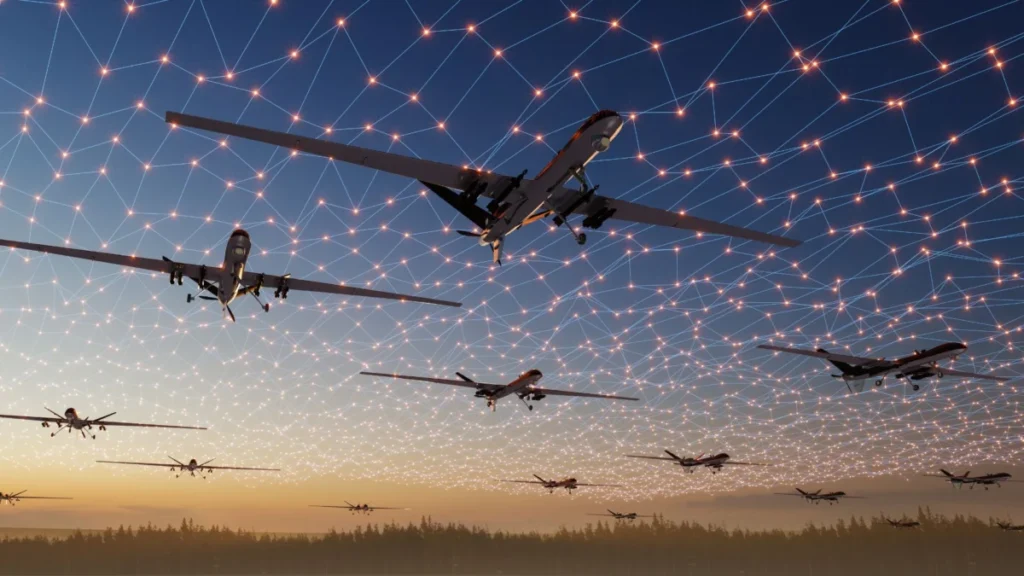
The persistent challenge of limited battery life, an unavoidable constraint for small unmanned aerial vehicles (UAVs), is now at the forefront of a groundbreaking research initiative spearheaded by the U.S. Air Force. This ambitious effort seeks to fundamentally alter the operational paradigm of unmanned aircraft, potentially allowing them to maintain deployment for significantly extended periods without the necessity of returning for recharging or battery swaps. This advancement holds profound implications for military logistics, intelligence gathering, and communication networks in dynamic operational theaters.
Reach Power, a pioneer in wireless energy solutions, and the University of Nebraska-Lincoln’s NIMBUS Lab have jointly secured a coveted Small Business Technology Transfer (STTR) Phase I contract. Awarded through AFWERX, the innovation arm of the Department of the Air Force, this contract mandates a comprehensive study into the feasibility and efficacy of wireless power transmission specifically for perched drones. The core objective of the project is to determine whether remotely delivered energy can sustain these specialized drones, enabling them to function as persistent communications and intelligence, surveillance, and reconnaissance (ISR) nodes during critical military missions. Should this research prove successful, the ramifications could be transformative, drastically reducing the frequency of battery replacements, extending operational endurance from hours to potentially weeks or months, and significantly simplifying the logistical burden on deployed forces in complex environments.
The Strategic Imperative: Sustaining Persistent Presence
In modern warfare and surveillance operations, the ability to maintain a continuous, unblinking eye over vast or contested territories is paramount. Traditional drones, while invaluable, are inherently limited by their onboard power sources. A typical small tactical drone might offer flight times ranging from 30 minutes to a few hours, necessitating frequent landings for recharging or battery swaps. This constant cycle introduces operational downtime, increases the risk of detection or compromise during recovery, and demands a significant logistical footprint to support numerous battery packs, charging stations, and personnel. The U.S. military, and indeed defense organizations globally, have long sought solutions to this endurance dilemma.
Persistent ISR and communications are not merely conveniences; they are critical enablers for real-time situational awareness, target identification, battle damage assessment, and maintaining connectivity among dispersed units. Perched drones represent a partial solution to this endurance challenge by eliminating the energy expenditure of continuous flight. These drones are designed to affix themselves to structures, trees, or other vantage points, conserving energy while performing their observation or communication tasks. However, even perched, they still draw power for their sensors, processors, and communication relays, eventually succumbing to battery depletion. The concept of wirelessly powering these static assets is thus a logical and potentially revolutionary next step. By removing the tether to onboard battery capacity, perched drones could theoretically operate indefinitely, transforming into true persistent platforms.
Unpacking the Technology: Wireless Power Beaming and Perched Drones
The research initiative marries two distinct yet complementary technological domains. Reach Power brings to the table its proprietary wireless power-beaming technology. While specific technical details are often proprietary, such systems typically involve transmitting energy through focused radio frequency (RF) waves or lasers over distances. The receiver on the drone converts this transmitted energy back into electrical power, which then charges the drone’s internal battery or directly powers its systems. The critical challenges in this field include efficiency of transmission, range, safety (especially with higher power levels), and the ability to maintain a stable link in dynamic environments. The efficiency of energy conversion is particularly important; even minor losses over distance can significantly impact the feasibility for long-duration operations.
The University of Nebraska-Lincoln’s NIMBUS Lab, renowned for its expertise in autonomous systems, field robotics, and intelligent machine research, provides the essential understanding of how drones operate, their energy consumption profiles, and the practicalities of deploying and managing them in various scenarios. Their involvement will be crucial in evaluating the performance of wireless power transmission within real-world operational constraints. This includes understanding how environmental factors (weather, obstacles) might affect transmission, optimizing receiver placement on the drones, and integrating the wireless charging mechanism seamlessly into the drone’s existing power management architecture.
Chris Davlantes, founder and CEO of Reach Power, underscored the foundational importance of reliable energy for autonomous systems. "Wireless power could allow small unmanned systems to stay in position longer and support communications and ISR missions," Davlantes stated, highlighting the strategic advantage. He further elaborated on the operational benefits, noting that "reducing battery replacement and recovery cycles could lower the operational burden on military personnel while helping warfighters maintain connectivity and situational awareness in contested environments." This reduction in logistical overhead directly translates into fewer personnel exposed to risk and more resources dedicated to core mission objectives.
AFWERX: Accelerating Defense Innovation
This research is funded through the Department of the Air Force’s Open Topic Small Business Innovation Research/Small Business Technology Transfer (SBIR/STTR) program. Launched in 2018, this initiative is a cornerstone of AFWERX’s broader mission to inject commercial innovation into defense programs with greater speed and efficiency. AFWERX, in collaboration with the Air Force Research Laboratory (AFRL), designed the program to streamline the contract award process for startups and research institutions. Historically, government procurement processes have been characterized by layers of bureaucracy and lengthy timelines, often stifling smaller companies with promising technologies. The Open Topic program aims to dismantle these administrative hurdles, enabling innovative solutions to transition from concept to military application much more rapidly.
The STTR program, specifically, encourages collaboration between small businesses and research institutions, leveraging the specialized expertise of both sectors. Phase I contracts, such as the one awarded to Reach Power and UNL, are specifically designed to assess the technical feasibility of a given concept. This initial phase involves rigorous theoretical modeling, simulations, and preliminary experimental validation to prove that the proposed technology can work. Successful Phase I projects then become eligible to compete for larger follow-on awards in Phase II, which typically focus on prototype development, extensive testing, and demonstration of the technology in relevant environments. Phase III often involves commercialization and scaling, ideally transitioning the technology into operational use within the military or commercial markets.
The emphasis on wireless power within the defense sector is not new but has gained significant traction recently. Beyond drones, the concept holds promise for sustaining a myriad of sensors, communications equipment, and other autonomous platforms that currently rely solely on finite onboard batteries or cumbersome wired power infrastructure. Imagine remote outposts or forward operating bases where critical equipment could be continuously powered without the need for fuel deliveries or extensive cable networks. The potential for enhancing operational flexibility and reducing logistical vulnerabilities is immense.
The Research Partnership: Complementary Strengths
The University of Nebraska-Lincoln’s NIMBUS Lab brings a wealth of specialized knowledge to this collaborative endeavor. Their expertise spans autonomous systems, field robotics, and intelligent machine research – areas that are directly applicable to understanding the operational nuances of perched drones. This includes developing robust control algorithms, optimizing sensor integration, and ensuring reliable communication links under various conditions.
Dr. Brittany Duncan, the NIMBUS Lab director, articulated the synergy inherent in the collaboration. She emphasized that the partnership brings together "complementary capabilities to evaluate whether perched drones can function as reconfigurable mission nodes for communications and sensing." The concept of "reconfigurable mission nodes" is particularly insightful, suggesting that these wirelessly powered drones could adapt their roles and locations as mission requirements evolve, offering unprecedented flexibility. "Our goal is to evaluate how perched drones can support persistent communications and sensing," Duncan reiterated, highlighting the practical, mission-oriented focus of the research.
Dr. Duncan also situated this specific study within the broader context of the NIMBUS Lab’s overarching mission. The lab is dedicated to advancing technologies that bolster national security, foster scientific discovery, and enhance operational resilience. The current study is a direct embodiment of this mission, seeking to determine if wireless power can evolve into a practical, reliable tool for maintaining small drones in position for extended operations. A positive outcome from this research could have far-reaching implications, potentially leading to reduced operational downtime for critical assets, significantly improved battlefield communications capabilities, and a fundamental expansion of how the military leverages unmanned aircraft for persistent ISR missions. The ability to deploy a drone, have it perch, and then continuously power it for days or weeks would redefine "persistence" in aerial observation.
Broader Impact and Future Outlook
The successful development and deployment of wirelessly powered perched drones would usher in a new era of autonomous operations. For the military, the benefits extend beyond mere endurance. It could lead to:
- Reduced Risk to Personnel: Fewer missions required to recover or service drones mean fewer personnel exposed to hostile environments.
- Enhanced Situational Awareness: Continuous ISR coverage provides an unbroken stream of intelligence, crucial for decision-making.
- Improved Communication Networks: Perched drones could act as mobile, persistent communication relays, extending network reach in remote or contested areas.
- Logistical Simplification: A drastic reduction in the need for batteries, charging infrastructure, and associated transportation simplifies supply chains and reduces costs.
- Increased Operational Flexibility: Drones could be deployed and left on station for extended periods, freeing up other assets for different missions.
- Adaptability in Austere Environments: The technology could be particularly valuable in environments where traditional power sources are scarce or unreliable.
Beyond military applications, the implications for commercial and civilian sectors are equally compelling. Imagine drones deployed for extended infrastructure inspection (power lines, pipelines), environmental monitoring (wildlife, forest fires), border security, or even delivering persistent Wi-Fi connectivity to remote communities. Industries like agriculture, logistics, and disaster response could all benefit from drones that are not constrained by battery life.
However, significant challenges remain. The efficiency of wireless power transmission over varying distances and through different atmospheric conditions needs to be maximized. The safety aspects, particularly concerning higher power levels, must be rigorously addressed and regulated. Furthermore, the integration of power receivers into existing drone platforms, and the development of new drone designs optimized for wireless charging, will be crucial. Cybersecurity for wirelessly charged systems will also be a critical consideration.
This AFWERX-backed initiative represents more than just a research project; it is a strategic investment in the future of autonomous systems. By tackling the fundamental limitation of power, the U.S. Air Force, in collaboration with innovative private sector partners like Reach Power and academic powerhouses like the University of Nebraska-Lincoln, is paving the way for a new generation of unmanned capabilities that could redefine endurance, enhance operational effectiveness, and fundamentally transform how persistent presence is achieved in the 21st century. The journey from Phase I feasibility study to widespread deployment will be complex, but the potential rewards are immense, promising a future where drones are not just airborne, but truly persistent.